
Joseph Babcock and mahjong: Who invented American mahjong?
Last updated: Nov 23, 2026
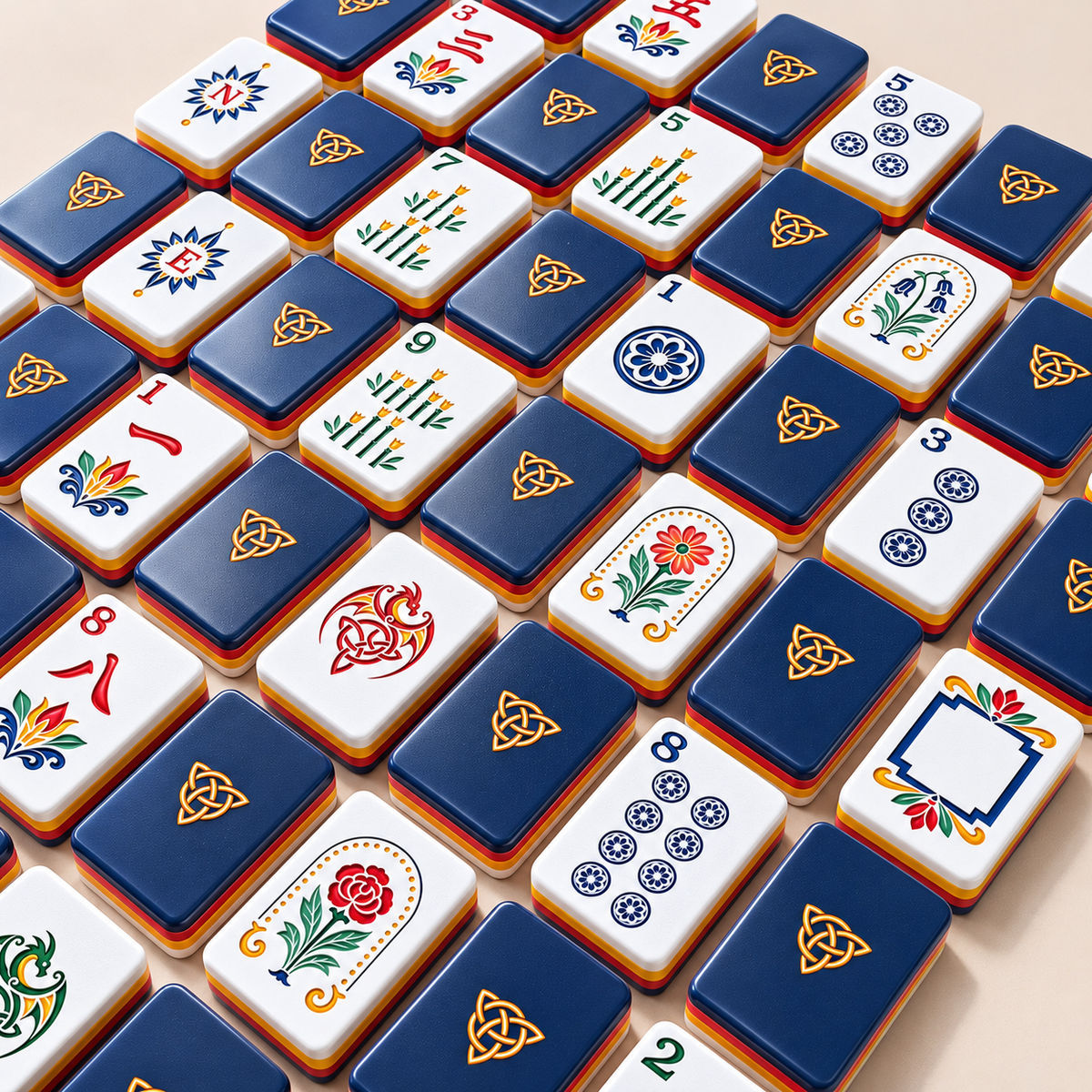
Joseph Babcock (1893–1973), a Shanghai-based American businessman, introduced mahjong to the United States around 1920. He simplified the complex Chinese rules, standardized tile counts at 152 tiles plus 8 jokers, and published the first English-language rulebook. Babcock's 1923 "Red Book" became the blueprint for American mahjong: he removed chow sequences (runs), limited exposed melds to pungs and kongs, and created a system that non-Chinese players could learn in weeks rather than years. The National Mah Jongg League, founded in 1937, codified Babcock's framework into the American variant we play today, still using his core tile structure. His genius was seeing mahjong not as an unchangeable ancient game but as a flexible system ripe for Western adaptation.
Who was Joseph Babcock, and why did he invent American mahjong?
Babcock was an American businessman working in Shanghai during the 1920s. He observed Chinese mahjong but found its rules bewildering for Western players. Rather than import the game unchanged, he redesigned it: removing sequences, simplifying hand patterns, and introducing jokers as wild tiles. His aim wasn't authenticity—it was accessibility. Within a year of publishing his rules, mahjong clubs sprang up across America, driven by Babcock's stripped-down, faster-playing version that made sense to people unfamiliar with Chinese game traditions.

How did Babcock's rules differ from Chinese mahjong?
Chinese mahjong allows chows—three consecutive numbered tiles in the same suit (like 4–5–6 Dots)—which players can declare or expose. Babcock eliminated them entirely. He also introduced jokers as universal wild tiles, standardized the tile set at 152 tiles, and limited exposed melds to fixed groups only. Chinese play emphasizes concealment; Babcock's version uses an annual hand card and open strategy. These changes made American mahjong faster, less reliant on memorized patterns, and far easier to teach. Today, American and Chinese mahjong are effectively different games played on the same tile set—a legacy of Babcock's radical simplification.
What is the National Mah Jongg League, and how did it build on Babcock's invention?
The National Mah Jongg League (NMJL), founded in 1937, took Babcock's framework and formalized it. The League publishes an official hand card every spring—a booklet of legal winning combinations—that every American player uses. This card is the heartbeat of American mahjong: it standardizes winning patterns, prevents disputes, and ensures consistency across all games. Where Babcock provided the skeleton, the NMJL built the muscle and bone. The card changes annually, keeping the game fresh while preserving Babcock's core structure. Without the League's organization, American mahjong would lack the unified ruleset that makes it playable anywhere in the country.
🀄 Shop best-selling mahjong sets →
How does Babcock's design influence modern American mahjong strategy?
Babcock's removal of chows created a strategy unlike any other tile game: every meld must be identical (three or four 5 Dots, never 4–5–6). This constraint forced players to think differently—you hunt for sets, not sequences; you plan hand patterns months ahead by studying the annual card. The joker system Babcock introduced shifted the game's luck profile: a hand with fewer available jokers is tougher to complete, teaching newer players the value of reading tile distribution. The tile count he chose (152 plus 8 jokers for 160 total) balances probability and playability. Every strategic principle in American mahjong flows from these early choices: we study the card, count jokers, track discards, and prioritize identical melds because Babcock designed the game to reward those habits.

Why did American mahjong succeed when other Western game adaptations failed?
Babcock succeeded because he didn't try to preserve Chinese mahjong—he translated it. He saw that Western players wanted speed, clarity, and achievable learning curves. His 1923 rulebook was written for Americans, not for players already fluent in Chinese variants. The timing helped too: 1920s America was hungry for novelty, and mahjong arrived with exotic appeal and genuine complexity underneath. By removing barriers to entry, Babcock created a game that club players, casual friends, and families could all enjoy together. The NMJL reinforced this by publishing an affordable annual card rather than leaving rules to oral tradition. American mahjong succeeded because Babcock understood that a simpler game, clearly explained, spreads faster than a complex one guarded by cultural gatekeeping.
How to start playing American mahjong today—Babcock's legacy in your first game
Starting American mahjong means embracing Babcock's core: a 152-tile set, 8 jokers, one current-year hand card, and three friends. You don't need to know Chinese history or memorize endless rules. The hand card does the heavy lifting. Begin with a set from our best-selling collection, which arrives ready to play. Learn how to play American mahjong and the Charleston tile-passing ritual. Read how jokers work so you understand Babcock's wildest innovation. Study how to read the mahjong card for 20 minutes. Then deal. Babcock's design means you can play your first complete game within an hour, with friends who have no prior experience. That's the whole point.
Aspect | Chinese Mahjong | Babcock's American System |
Chows allowed? | Yes, core mechanic | No, removed entirely |
Jokers | None in original | 8 per game, universal wild tiles |
Tile count | Varies by variant | Standardized at 152 + 8 jokers |
Hand patterns | Memorized, traditional | Published annually on card |
Exposed melds | Sequences and sets | Sets only (pung, kong, quint, sextet) |
Learning time | Weeks to months | Days to one week |
Strategy depth | High complexity | Clear, card-based patterns |
🎁 See our most-loved mahjong sets & accessories →
What to check before you buy your first American mahjong set
A true American set contains exactly 152 playing tiles plus 8 jokers. Our 160-tile sets include spares so nothing is lost mid-season. Count tiles when your set arrives: three suits (36 tiles each), winds (16), dragons (12), flowers (8), jokers (8), totaling 152 in play. Verify that jokers are never used alone or as a pair—they're wildcards only within melds. Check that the hand card you're using is from the current year (the NMJL releases a new one every spring). Buy a mat so tiles don't scatter and a rack with pushers if hand management matters to you. Babcock's design is bulletproof; your execution depends on gear that keeps the game organized.
✨ Find your Mahstead set — free US shipping →

FAQ
Did Joseph Babcock play in tournaments or publish anything else about mahjong?
Babcock published his rulebook in 1923, which became the foundation for American mahjong rules. He did not play in tournaments; his role was as an inventor and rule codifier. His work was largely complete by 1925, and the NMJL took over standardization from there.
How do I know if my mahjong set is truly "American" and not Chinese?
American sets contain 152 tiles plus 8 jokers and are designed for the NMJL hand card system. Chinese sets often have 144 tiles and include chow sequences. The jokers and the hand card are the clearest markers of American mahjong—a direct legacy of Babcock's design.
Can I play American mahjong with an older hand card, or does it have to be current-year?
You can play with any hand card, but the NMJL issues a new card every spring. Most groups play with the current card to keep everyone on the same page. Using an older card is like using last year's tax code—technically possible but not recommended.
Was Babcock's system the only Western adaptation of mahjong, or were there others?
Several Americans published mahjong rules in the 1920s, but Babcock's version—simpler, faster, and published first—became the standard. Other variants faded because they didn't offer the same combination of simplicity and strategic depth.
If I learn American mahjong, can I play Chinese or Riichi mahjong later?
The tile sets are similar, but rules are very different. Chows, hand concealment, and scoring systems vary widely. Learning American first gives you tile familiarity and strategic thinking but not direct crossover to other variants.
What size mahjong set should I buy—does Babcock's design specify dimensions?
Babcock specified tile count (152 plus jokers), not physical dimensions. Modern sets range from compact travel sizes to full-sized display sets. Choose based on hand comfort and table space; all play identically.


View More
View More
View More
