
Mahjong Reading Discards: Tips to Spot Patterns and Win
Last updated: Nov 23, 2026
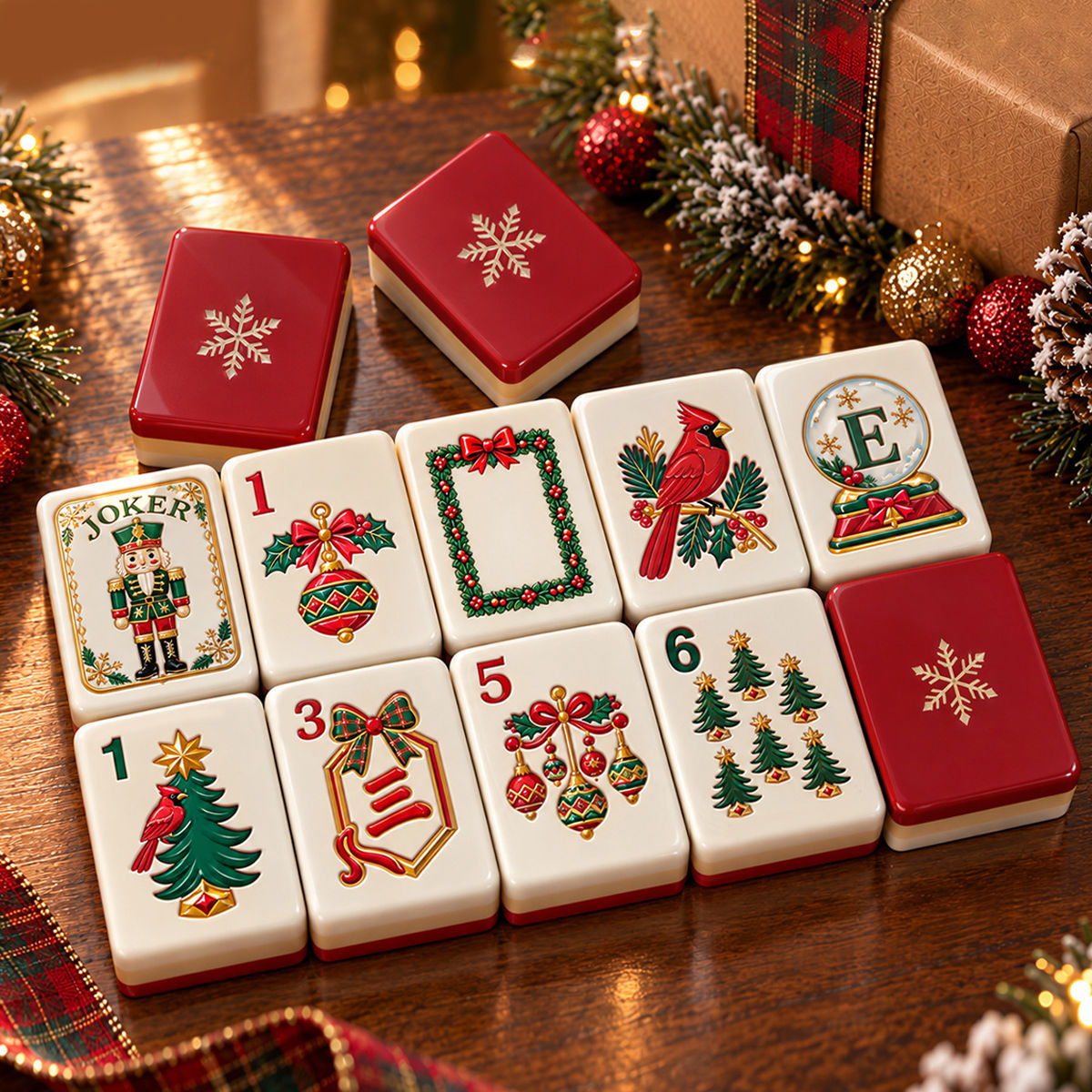
Reading discards means tracking which tiles each player has thrown, in order, to infer what hand they're chasing and what suits or numbers they've abandoned. Watch the discard order (early vs. late throws), patterns (consecutive tiles, all from one suit), and hesitation (a long pause before discarding often signals a close choice). In American mahjong, players cannot expose chows—only pungs (3), kongs (4), quints (5), and sextets (6)—so you're reading raw discards, not exposed melds. The goal is simple: avoid throwing tiles into dangerous suits (ones your neighbors clearly need) and recognize when a player has likely stopped collecting certain numbers or suits. Most players focus on their own hand and miss this; understanding the flow of discards from each seat transforms your win rate. Mahstead players hosting weekly games often keep score sheets with discard sequences to train this skill.
What does "reading discards" actually mean in American mahjong?
Reading discards means tracking which tiles have left the table and inferring what your opponents are not building. Since players only throw tiles they don't need, a tile on the table is a negative signal: "this person doesn't want this number or suit—at least not yet." The earlier a tile was discarded, the safer it usually is to throw it later. If someone threw the 3 Dot on turn two, they're unlikely to need it now; if they threw it on turn ten, they might have picked it up and discarded it again (a red flag that it's dangerous).
American mahjong differs from other variants because there are no exposed sequences—you cannot call a chow or expose sets mid-game. This means every discard is your only clue to what someone is holding, making the order and pattern of discards your primary tool for defense.

How do you track which tiles are "safe" to throw?
The safest tiles to discard are those discarded by other players earlier in the round. If East threw the 5 Crak on turn three and South threw it on turn five, you know North and West didn't pick it up—so it's safer than a tile no one has yet thrown. Create a mental map: "Bam discards live on the left table edge, Crak in the middle, Dot on the right" (or use a mat with corner zones). Some players use a mahjong mat with clear discard areas to anchor this habit.
The order matters more than the tile count. If your left neighbor (the player before you) throws a 7 Bam, and two turns later throws a 6 Bam, then a 5 Bam, you're seeing a reverse sequence—likely a sign they stopped collecting that suit. Conversely, if someone throws one 1 Crak on turn three and nothing else from Craks until turn nine, they may have paused collecting Craks and restarted; be cautious throwing Craks near the end.
🀄 Shop best-selling mahjong sets →
What are the key patterns in opponent discards?
Suit clustering: If a player throws three Bams in a row, they've likely abandoned Bams altogether (or are culling their hand). A Bam thrown again later is safer than one never thrown. Use this: throw old suit discards before new ones.
Number avoidance: A player who throws 1, 2, and 3 of one suit but then throws 5, 6, 7 of another suit may be collecting only high numbers or odd numbers—clues from the current year's National Mah Jongg League card structure.
Consecutive vs. scattered: Consecutive discards (2, 3, 4) suggest a pung break or a kong exposure pattern. Scattered discards (2, 5, 9) from the same suit suggest they're abandoning that suit.
Pause and throw: If a player picks up a tile and hesitates before discarding, they're torn—that tile is close to their hand. Don't throw that tile; it's hot. If they throw instantly, you're safe.
Flowers and winds: Flowers are rarely collected; if someone throws a flower early, they're not going for a flower hand. Winds are suit-specific: throwing East winds early means they're not chasing an East-wind hand.
Keep a short memory: discard sequences from the last 3–4 turns are most relevant. After 8+ turns, older discards are less predictive (players evolve their hands).
How does seat position change what discards tell you?
Your left neighbor (the player before you): Their discard is your immediate input. You see what they threw, and within one turn you decide whether it's safe. Prioritize reading their pattern over distant players—you throw after them, so you get real-time feedback.
Your right neighbor (the player after you): Their discards are less actionable because you throw before them; but watch for patterns that hint they're close to mahjong (rapid discard changes, or long pauses before throwing).
Opposite player: Their discards matter when you're building a competitive hand. Study what they're avoiding to avoid throwing into their waiting hand.
Yourself: Keep your discard line visible and strategic. Don't create a pattern that teaches opponents what you're not collecting—be unpredictable, especially near mahjong.
A practical tip: in a weekly game, rotate seats. This trains you to read all four viewpoints and breaks habits that let opponents predict your moves.

What mistakes do beginners make when reading discards?
Mistake | What happens | How to avoid it |
Ignoring discard order; only counting tile types | You throw the 3 Dot because you see three 3 Dots discarded, but ignore that two were thrown ten turns ago and one was fresh—throwing into a danger zone | Mentally tag: "Old = safe, new = risky." Note the turn number. |
Focusing only on your hand | You're so focused on your own melds that you don't track neighbors' patterns | Set a rule: after drawing, glance at the last two discards before deciding what to throw. Takes 2 seconds. |
Assuming one throw = one hand | Because someone threw a 5 Crak early, you assume they're not collecting Craks—but they picked it back up three turns later | Watch for reversals. If they discard a suit again after a gap, it's hot. |
Trusting only your immediate left neighbor | You prioritize one player's discards and ignore the other three | Actively scan all four discard lines every turn. Rotate your attention. |
Throwing "old" discards too confidently | You throw a 2 Bam from turn two—but a new player picked it up and needs it now | If the game is competitive or close to mahjong, no tile is safe. Unpredictability matters. |
A beginner at your table once threw a 6 Dot because she saw three 6 Dots on the line, not realizing one belonged to the player now waiting for mahjong. Reading discards isn't memorization—it's active attention every turn.
🎁 See our most-loved mahjong sets & accessories →
How do advanced players use discard reading for offense, not just defense?
Defense is half the battle; offense is using discard patterns to time your discards. If you notice your right neighbor is collecting 1s and 2s from all three suits, and they've discarded no 3s or 4s, you know they're chasing a hand heavy in lows. Wait to throw your low tiles until after they discard, so they can't call them.
Conversely, if a player has thrown no winds in five turns, winds are hot—use them to bait a call if you're near mahjong yourself (risky, but sometimes wins a round when played at the right moment).
Advanced timing: Some players track discard speed. A player who throws instantly for four turns, then hesitates and throws slowly, is likely closer to mahjong. Accelerate your defense: throw old, obvious discards, and avoid new suits altogether.
Bluffing with discards: Never create a false pattern on purpose early (it wastes turns and signals weakness); instead, mask your pattern late. If you need 5 Bams and you've thrown one early, throw unrelated tiles mid-game, then throw a 4 Bam late. Neighbors may think Bams are safe.
Recognizing bluffs: A player who suddenly shifts their discard pattern (was throwing Craks, now throws Dots) might be signaling a hand change—or might be faking. Compare to their past rounds at your table. Consistent players are easier to read than erratic ones.
For weekly games, keep a notebook on each regular opponent: "Alice always commits to one suit early; Bob switches mid-round; Carlos throws in numerical order." Over time, you'll spot tells.
Understanding how jokers work also sharpens your read—jokers are rarely in discards, so when one hits the table, a hand just broke. Someone's hand strategy just changed.
✨ Find your Mahstead set — free US shipping →
What to check before you buy a mahjong set for learning to read discards
If you're hosting weekly games, invest in a mahjong mat with clear discard zones. Marked zones for each player's discards reinforce the reading habit—beginners naturally track discards better when they're spatially organized. A mat also protects acrylic tiles and keeps the game organized during long rounds, which is when discard reading becomes crucial (players get tired, patterns blur).
For regular players, a set of engraved or titled acrylic tiles with a matching rack with pushers keeps your hand compact and prevents tells. If your tiles are scattered on a rack, opponents read your discard hesitation more easily. A clean, controlled hand signals confidence.
Consider a set with an included travel bag or case if your game moves between homes or community centers. Consistency (same set, same mat) trains your eye to recognize discard patterns faster—you're not distracted by unfamiliar tile designs or mat layouts.
What to check before you buy
Tile readability: Can you read suit symbols and numbers from across the table? Acrylic sets with clear engraving let you track discards at a glance.
Discard space: Does your mat have clear corners or zones for each player's line? This anchors the habit of reading in order.
Rack stability: Do your racks keep tiles hidden from neighbors, so your hand doesn't leak tells? Racks with pushers are ideal for serious play.
Consistency: Use the same set every week. Muscle memory + familiar tile designs = faster pattern recognition.

FAQ
If a tile is discarded early, is it always safe to throw later?
Mostly, but not always. Early discards are usually safer than fresh ones, but a player can pick up the same tile later and discard it again (meaning they picked it back up from the wall and don't need it now). Watch for reversals. If someone threw a 5 Bam on turn two and again on turn eight, the 5 Bam is hot—they re-encountered it and still don't want it, or they want it for a future discard bait.
How many turns of discard history should I remember?
Focus on the last 3–5 turns actively. After 8+ turns, the discard pattern is less predictive because hands evolve. For crucial decisions (when you're near mahjong or someone else is), scan the full line, but don't memorize it—notice gaps (suits not thrown recently) and clusters (tiles thrown in bursts).
Can I use discard reading in other mahjong variants, like Chinese or Riichi?
Yes, but with differences. Chinese mahjong allows exposed sequences (chows), so discards alone don't tell the full story—exposed melds are primary. Riichi mahjong has no exposed melds and heavy discard tracking, similar to American rules. The core principle (safe = old, dangerous = new) applies everywhere, but the strategy around exposed sets differs.
What if an opponent always throws randomly?
Random discards are harder to read, but not impossible. Look for what they never throw (e.g., never a 1 Crak, ever). The absence is a signal. Also, true randomness is rare—even erratic players have unconscious patterns (they might favor middle numbers, or always throw one suit early). Play a few rounds, then update your mental model.
Should I tell beginner players when they're throwing hot tiles?
Not mid-game; it ruins the learning. After the hand ends, say, "You threw the 3 Dot early and fresh, and they were collecting low Dots—watch the discard order next time." Teaching over time builds the skill faster than play-by-play advice during a round.
How do I balance reading discards with reading the current year's Mah Jongg League card for legal hands?
They're complementary. The card tells you what hands exist; discard reading tells you which hands your opponents are chasing. Study the card before or after the game, not during. During play, focus on discards and defense. Once you know the card well (after a few seasons), you can link discard patterns to specific hand types instantly.


View More
View More
View More
