
How to Play Any Like Numbers Hands in American Mahjong
Last updated: Nov 23, 2026
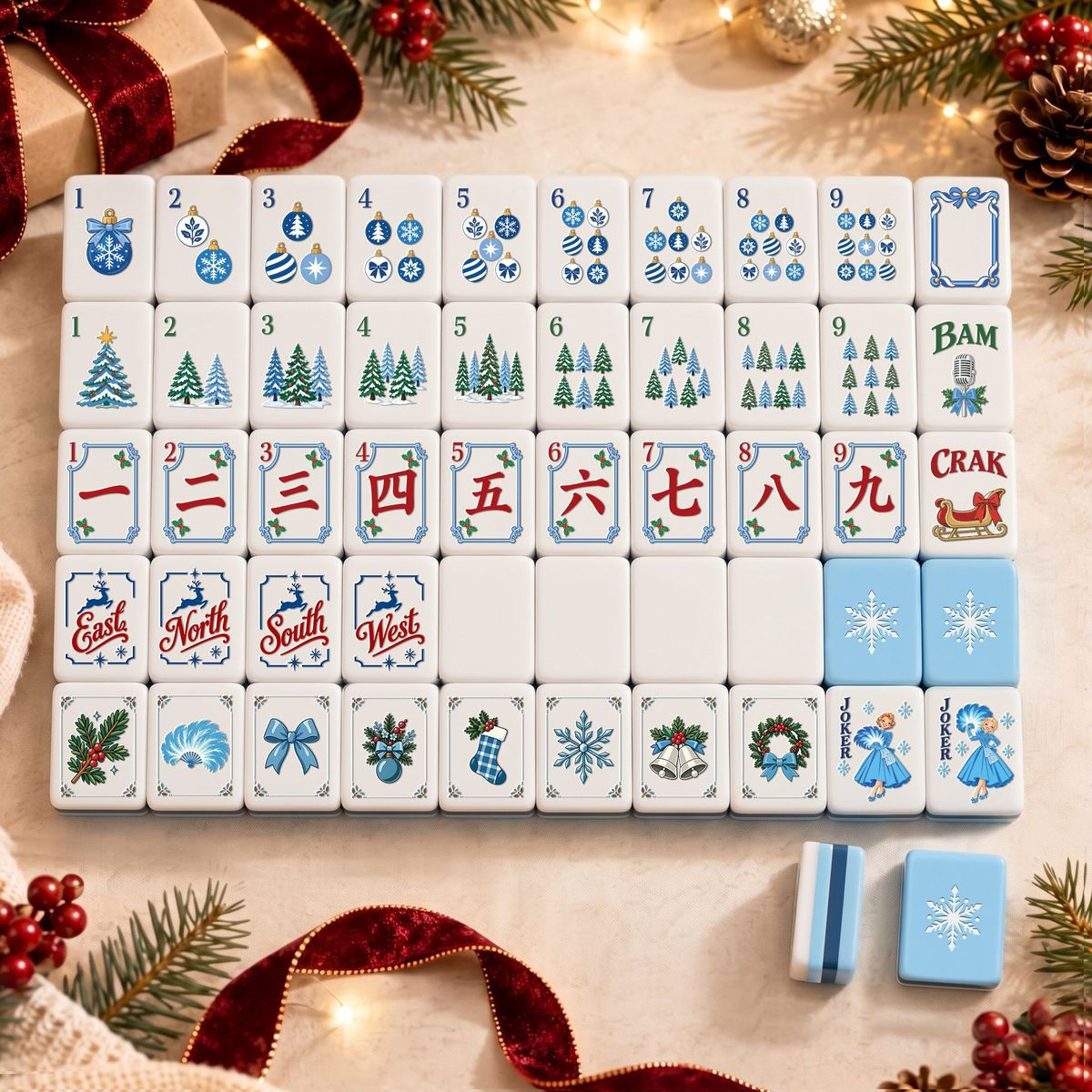
Any-like-numbers hands in American mahjong allow you to collect tiles with identical digits across different suits—for example, three 5 Bams, two 5 Craks, and a 5 Dot in a single hand. The key rule: all tiles in the hand must share the same number, but suits can differ freely. You'll find these patterns on the current National Mah Jongg League card, usually labeled in a dedicated section. They rank mid-table for point value. Common mistakes include mixing 0 (White Dragon) with number tiles incorrectly, or forgetting that 1 Bam (the bird) still counts as a "1" in these hands. We recommend learning them early because they feel more intuitive than suit-based patterns once you grasp the core mechanic. 🀄 Shop best-selling mahjong sets →
What exactly is an any-like-numbers hand?
An any-like-numbers hand groups tiles by digit only, ignoring suit boundaries. In American mahjong, you can hold any combination of Bams, Craks, and Dots that share the same number. For instance, you might play three 3 Craks, two 3 Bams, a 3 Dot, and a joker substituting for another 3. The hand wins when all tiles match that single digit—no sequences allowed, only identical numbers across suits.

Where do you find any-like-numbers on the card?
The National Mah Jongg League card organizes hands by pattern type. Any-like-numbers sections typically appear after suit-based (like Craks, Dots, Bams-only) and often before dragon or wind hands. Learn how to read the full card structure so you can spot these layouts instantly during play. Each year's card includes dozens of any-like-numbers variations: some ask for specific sequences of numbers, others for pairs and pungs, still others for mixed exposed and concealed groups.
How do you build an any-like-numbers hand step-by-step?
Step 1: Pick your target digit (1–9). Step 2: Collect eight tiles that are all that digit, across any mix of Bams, Craks, Dots—plus one pair (two identical tiles of your digit) or two jokers for the pair. Step 3: Expose groups (pungs, kongs, quints, sextets) as you draw and claim from discards. Step 4: Your concealed portion must match the card's layout exactly. Step 5: Call Mahjong when all tiles are in place and match the pattern.
Example: You're building a hand that calls for a pair of 7s, plus four pungs of 7s. You already hold a 7 Bam pair, three 7 Craks, three 7 Dots, and a 7 Bam. When you draw or claim the fourth 7, you'll expose one pung and keep the pair and other groups concealed until you win.
What common mistakes do players make with any-like-numbers hands?
Mistake 1: Mixing White Dragon as zero with number tiles. White Dragon (Soap) is a zero when called as a dragon, not when used in any-like-numbers hands. If a hand asks for "all 0s," you may include Whites; if it calls for "all 5s," Whites don't belong there.
Mistake 2: Forgetting 1 Bam is still a 1. The bird on the 1 Bam tile doesn't change its identity. A hand asking for "all 1s" includes 1 Bam, 1 Crak, 1 Dot, and White Dragons only if the card specifies.
Mistake 3: Overcounting jokers. You may use jokers freely in exposed groups, but the card still dictates the exact tile composition. If you need eight 4s and hold only six genuine 4s, two jokers fill the gap—but no more.
Mistake 4: Misreading the card layout. Some any-like-numbers hands ask for specific groupings (e.g., "pair + two kongs + two pungs"), not just "eight matching tiles." Always verify the grouping structure before you commit tiles.
Mistake 5: Exposing tiles too early. If the card requires concealment, premature exposure loses the hand or changes its point value.
When should you pursue any-like-numbers vs. other patterns?
Compare three situations:
Scenario | Why Any-Like Numbers Works | Why It Might Stall |
You've collected 2 Bams, 2 Craks, 2 Dots early and see easy draws | One number is easier to track than three suits. | You need 14 tiles; a blocked number dries up quickly. |
Multiple players are also building number hands | Competition forces fast decisions; obvious tiles stay unclaimed longer. | Everyone discards your number; fewer fresh picks. |
You hold eight of one digit but no pair yet | The pair is a single draw away; pungs can be built gradually. | If no pair appears, the hand collapses mid-game. |
Table-tested tip: Lock in an any-like-numbers hand only if you hold at least five matching tiles by turn four. Otherwise, pivot to a suit-based or honor hand. This keeps you flexible and avoids a dead hand.
How do jokers fit into any-like-numbers hands?
Jokers substitute for any single tile, including number tiles in any-like-numbers hands. You can expose a pung of three 6s with one genuine 6 and two jokers. However, jokers never form a pair alone—the pair must be two identical genuine tiles. If you draw your last joker and still need a pair, you're stuck. Plan your joker use early: save at least one for the pair unless the card forbids it.

What's the difference between any-like-numbers and "like number" hands in other variants?
American mahjong any-like-numbers hands are purely numeric—no sequences, no chows. Chinese and Hong Kong mahjong allow chows (1-2-3, 2-3-4, etc.) within a single suit; any-like-numbers there would mean mixing digits and suits, which breaks the chow rule. Riichi and Taiwanese variants have stricter definition: "like numbers" often refers to patterns like "all 5s and 6s" or "all terminals and honors," not freely mixed suits. American mahjong's flexibility—any suit, any number, just keep the digit consistent—makes it simpler to learn but requires careful card reading.
What to check before you buy a set for any-like-numbers play
Clear tile markings: Verify digits 1–9 and suit symbols (Bam plant, Crak character, Dot pattern) are deeply engraved or printed. During fast play, you'll need instant recognition across three suits.
Joker count: A standard American mahjong set contains 8 jokers. If you regularly play multiple any-like-numbers hands in one session, confirm your set has enough spares so you don't run short mid-game.
Tile size consistency: Smaller tiles (under 1 inch) slow down mixed-suit recognition; larger tiles (1.25+ inches) let you sort by number and suit more quickly.
Weight and feel: Heavier acrylic tiles resist shuffling slips, especially when you're exposing groups mid-hand.
Explore our best-selling mahjong sets to find an option that matches your play style—whether you prioritize speed, durability, or aesthetics.
How do racks help you organize any-like-numbers tiles?
Mahjong racks with pushers let you slot tiles upright so you can see all digits and suits at once without accidentally revealing your hand to opponents. When building any-like-numbers hands, a rack is invaluable: you can sort by number on one side and by suit on the other, then rearrange in real-time as you draw or claim new tiles. Pushers help you advance exposed groups forward while keeping concealed tiles back. This organization cuts decision time and reduces misreads.
🎁 See our most-loved mahjong sets & accessories →
Playing any-like-numbers hands: a real-world example
It's your turn. The card calls for:
Hand: Pair of 3s + Kong of 3s + Pung of 3s + Pung of 3s + Pair of 1s
You hold:
3 Bam, 3 Bam, 3 Crak (concealed pair and part of first pung)
3 Crak, 3 Crak, 3 Dot (first pung, nearly complete)
3 Dot, 3 Dot (second pung foundation)
1 Bam, 1 Crak (pair foundation, separate number)
Another player discards a 3 Dot. You claim it for your second pung and expose: three 3 Craks. You still need a third 3 Dot and a second 1 for the 1s pair. On your next draw, you pick a 1 Dot—not your pair number yet. You discard it. Next turn, someone discards a 3 Bam. You claim it, complete your second pung (3 Dot, 3 Dot, 3 Bam substitute), and expose. You still need the fourth 3 for your kong and the matching 1. You draw a joker and a genuine 1 Bam on your next two turns—pair complete. When the fourth 3 lands, you call Mahjong: pair of 1s, three pungs of 3s (one includes a joker), one kong of 3s, all exposed except the 1s pair and concealed reserve.
Why this matters: You kept the 1s pair separate in your mind from the 3s and didn't get distracted by mid-game claims. You exposed as soon as groups were safe, freeing mental space to track the remaining tiles. You used the joker strategically—for an exposed group, not the pair.
Why start with any-like-numbers if you're new to American mahjong?
Any-like-numbers hands teach the fundamentals faster than multi-suit patterns. You're focusing on one variable (the digit) rather than balancing three suits. Once you master any-like-numbers, suit-based hands and honor-mixing patterns feel natural because you've already internalized the pung/kong rhythm and the card's layout logic. Read our guide to American mahjong rules for the complete framework.
✨ Find your Mahstead set — free US shipping →

FAQ
Can I use White Dragon in an any-like-numbers hand?
Only if the card explicitly lists it. If the hand calls for "all 5s," White Dragon (0) doesn't belong. If it calls for "0 with mixed numbers," White is included. Always check the card first.
What if I draw a tile that matches my any-like-numbers digit but I already have eight tiles?
You must discard it or hold it in your concealed hand. You can't have more than eight tiles in play. If that tile completes an exposed group, you can swap it with a joker in an exposed pung to refresh your options.
Can I switch which number I'm building mid-game?
Yes, if you haven't committed to the card pattern yet. The moment you expose a group or declare which hand you're playing, you're locked in. Before that, you can pivot to a different digit or pattern entirely.
How do I know if my any-like-numbers hand is worth pursuing over a suit-based hand?
If you hold five or more of the same digit by turn four and see easy draws, pursue it. If you're forced to rely on jokers for the pair, switch patterns. If another player is clearly building the same number, abandon ship—they'll block your draws.
Do any-like-numbers hands score higher or lower than suit hands?
Points vary by hand and year. Check American mahjong scoring for the exact values. Generally, hands requiring specific groupings (like "pair + three kongs") score higher than simpler patterns, regardless of whether they're any-like-numbers or suits.
If I have a pung of 3 Bams, 3 Craks, and a joker, can I expose it as a 3-pung for an any-like-numbers hand?
Yes. The joker substitutes for the missing third 3 (likely a 3 Dot). You expose all three tiles, and the joker counts as that missing suit. You've successfully built a three-tile pung for your any-like-numbers hand.


View More
View More
View More
