
American Mahjong Minimum Points to Win: The Real Rules
Last updated: Nov 23, 2026
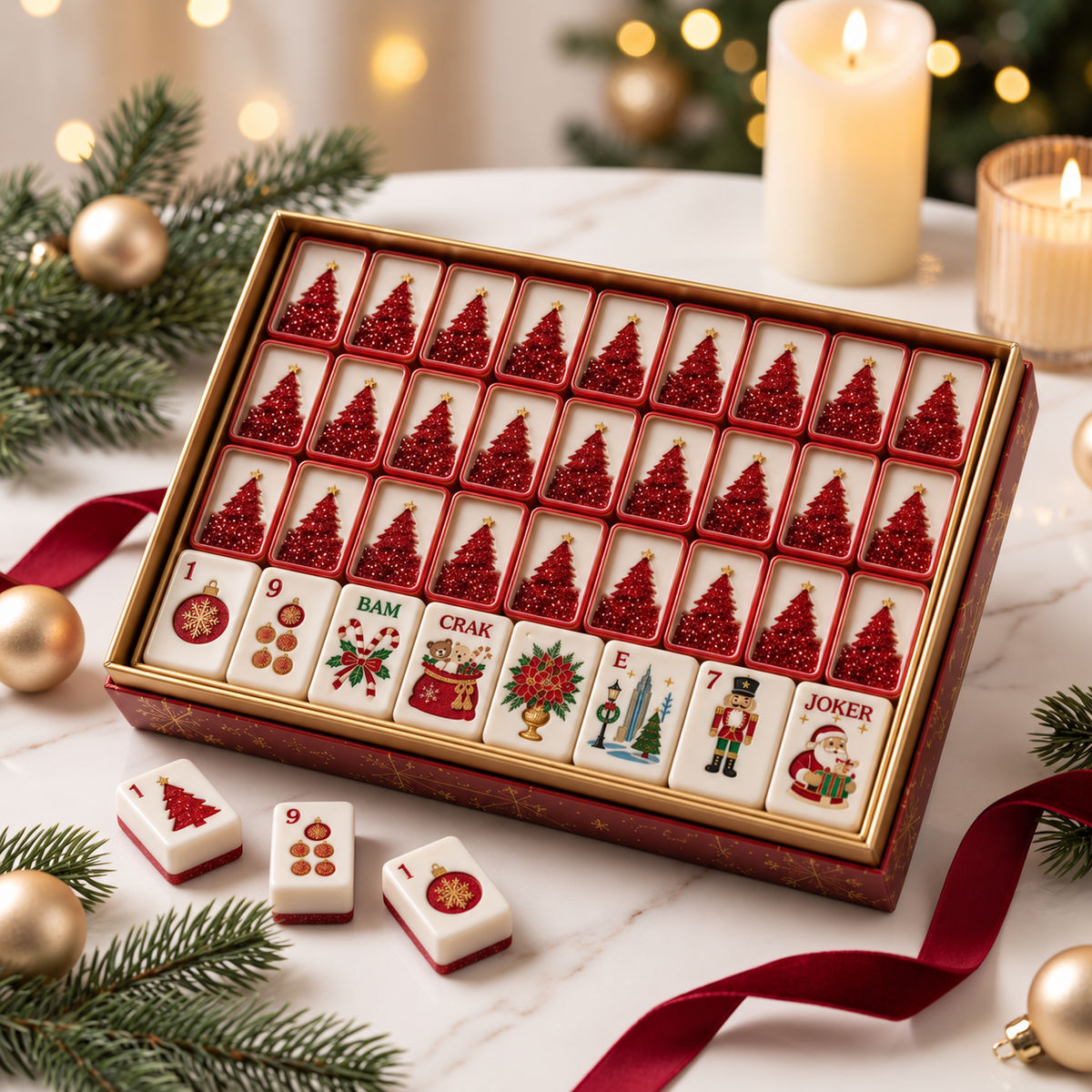
American mahjong scoring works backward from how most players imagine it. You win by laying down a complete, legal hand that matches one of the patterns printed on the current year's National Mah Jongg League card—not by accumulating a target number of points. Once your hand is exposed and verified, you've won the round immediately; the "minimum points" rule doesn't exist. Scoring happens after you've already won: the point value of your hand (printed on the card) determines payouts between players, but there's no floor or ceiling that grants or denies victory. Jokers in your hand add bonus points, and certain patterns on the card carry higher values, but again, these multiply your payout, not your win condition. New players often confuse this with Chinese mahjong, where players race to a target score like 8,000 points; American mahjong is simpler and faster because the card itself is the law. Understanding this distinction before your first game—and keeping a best-selling mahjong set with a readable card at the table—saves confusion and speeds up play.
What Does "Win" Actually Mean in American Mahjong?
You win the moment you complete a legal hand. That hand must match exactly one of the patterns on the current NMJL card: the same number of tiles, the same suit composition, the same exposure sequence (pung, kong, pair, etc.), and the same use of jokers. No points threshold exists; matching the card is the only victory condition. Your hand is either playable or it isn't.

How Does the National Mah Jongg League Card Work?
The NMJL card, released every spring, shows rows of legal hand patterns. Each pattern specifies tile types, quantities, joker placement, and bonus point value. You may only play hands that appear on the current card. The card is your rulebook, your validator, and your scoring guide combined. Every player must see the same card; disputes are resolved by reading what's printed there. If you've been playing for years but haven't looked at the actual card text in detail, you're likely missing patterns you could play—or playing invalid combinations without knowing it. Learning to read the card correctly takes a single sitting and transforms your game.
What's the Difference Between Winning and Scoring?
Aspect | Winning | Scoring |
Trigger | Match a hand to the NMJL card | Verify the hand is legal, then calculate points |
Timing | First player to expose a legal hand wins; game stops | Happens after win is declared |
Determines what? | Who won the round | How much money/chips change hands |
Can you tie? | No; first complete hand wins | N/A (one winner per round) |
Can points prevent a win? | No; there is no minimum | No; points only affect payout |
The moment you lay down your tiles and they match the card, you've won. Scoring begins after that victory is confirmed. Your hand's point value (printed on the card next to the pattern) becomes the multiplier for payouts—typically 2 points, 4 points, or higher depending on difficulty and joker use.
How Many Points Do You Need to Actually Declare "Mahjong"?
You need zero points to win. The phrase "I have mahjong" simply means you've completed a legal hand. The card tells you whether your hand is legal; it also prints the point value you've earned. Beginners sometimes ask, "Is my hand worth enough?" The answer is: if it's on the card, it counts. If it's not on the card, it doesn't—no matter how many points you'd assign to it off-table. This is the hardest mental shift for players switching from Chinese or Hong Kong mahjong, where you might hold a strong hand that doesn't meet a point minimum and must keep drawing. In American mahjong, if it's on the card, you're done.
Why Does the Card Change Every Year?
The NMJL releases a new card each spring to keep the game fresh, prevent memorization of static patterns, and balance difficulty. Hands that were legal in 2025 may not appear in 2026. This design choice means you must play with the current card every session—no exceptions, no house rules substituting old cards. A set of acrylic tiles with excellent card readability and a clear card holder mat makes switching between cards and verifying patterns fast and friction-free.
🀄 Shop best-selling mahjong sets →

Common Scoring Mistakes That Lose You Money
Mistake 1: Playing a hand not on the card. You can't invent a hand and assign it points. It must match the card exactly, or it's a foul and you pay penalties instead of winning.
Mistake 2: Assuming joker placement doesn't matter. A hand showing three 5 Dots and one joker as 5 Dot is different from three 5 Dots and one joker as something else. The card specifies. Wrong joker placement = wrong hand = no win.
Mistake 3: Confusing "points" with a win threshold. If your hand is legal, you've won, period. Don't wait for points to exceed a number. Don't think, "My hand is only 2 points so I should keep playing." If you've got a legal hand on the card, declare it.
Mistake 4: Playing with an old or wrong card. All four players must agree on which year's card is in play. If one player has 2025 and another has 2026, disputes are inevitable. Before the first hand, lay the card flat where everyone can see it—ideally on a mat with a card slot so it stays in place.
Mistake 5: Misreading exposure rules. American mahjong limits what you can expose or call. You cannot call or expose a chow (sequence). You can only expose pungs, kongs, quints, and sextets. Jokers cannot be used in a single tile or a pair on the card. These rules have nothing to do with points but everything to do with whether your hand is legal.
What Point Values Actually Appear on the Card?
The NMJL card prints a point value for most hands, typically ranging from 2 to 8 points (or higher for rare patterns). These values reflect difficulty: simpler hands are worth fewer points, complex ones worth more. Some hands carry a joker bonus (e.g., +2 points per joker used, or a fixed bonus). The card tells you the exact value. You don't negotiate or calculate—you read and multiply by the payout per point your table agreed on before play started. If your table plays "2 cents per point," a 4-point hand costs the losers 8 cents each. If your table plays with chips, a 4-point hand might transfer 4 chips. The card values don't change; only the real-money conversion depends on your house rules.
How Payouts Work After You've Won
Once you've declared mahjong (matched the card), the other three players each pay you the hand's point value, multiplied by your table's agreed rate per point. If the hand is worth 4 points and the rate is 1 unit per point, each player pays you 4 units. If someone went out (called a winning tile), they typically pay double. Exceptions vary by house rules—some tables use no doubling, others reward or penalize specific calling scenarios. Before sitting down, confirm your table's payout rules with the host.
🎁 See our most-loved mahjong sets & accessories →
What You'll Need to Avoid Scoring Confusion
The NMJL card for the current year, legible and visible to all. Most card stock fades or creases after heavy use; a laminated card or a card in a protective sleeve lasts longer. Many players keep a laminated backup.
A mat with a clear card slot so the card stays flat and upright during play, reducing disputes about what patterns are legal.
Tile organization. Players with racks and pushers can arrange tiles by suit and number, making it faster to spot legal hands on the card before declaring.
Agreement on payout rates. Before the first hand, write down or state aloud: How many cents/units per point? Does going out (calling a winning tile) double the payout? Is there a minimum or maximum hand payment? Record it so no one disputes payouts after you've won.
What to Check Before You Buy a Set
Does the set include the current NMJL card? Some sets don't; you must purchase it separately or print it online from the NMJL website. If you're new, confirm the set includes a card.
Is the card legible? Small or faded text leads to misreads and arguments. Choose a set with a readable, clearly printed card or buy a replacement card and have it laminated.
Are the tiles engraved or printed? Engraved tiles last longer and don't fade, especially if you play weekly. Sets with engraved titles and clear character design spare you the cost of replacing tiles mid-year.
Does the set come with a mat? A mat protects your table, holds the card, and organizes tiles. If the set doesn't include one, budget for it separately.
✨ Find your Mahstead set — free US shipping →

FAQ
If I have a hand that's not on the card, can I play it anyway and just accept fewer points?
No. If it's not on the card, it's not a legal hand, and you cannot declare mahjong. You must keep playing and draw until you match a valid pattern or the game ends. Playing an off-card hand is a foul and typically results in penalties.
Do I have to reach a certain point total across multiple rounds to "win" the game or session?
Not in standard American mahjong. Each round is independent. The player who completes a legal hand wins that round and collects points. Some casual groups play "tournament" formats where the highest cumulative score after N rounds wins a prize, but that's a house rule, not a standard rule. The game itself has no cumulative point threshold.
Can two players have mahjong at the same time?
No. Only the first player to complete and declare a legal hand wins the round. Play stops immediately. If two players expose hands simultaneously, the order of declaration determines the winner (the player closest to the dealer going clockwise typically wins ties, but house rules vary—clarify before play).
What happens if I declare mahjong but my hand doesn't actually match the card?
You've made a foul. Typically, you pay a penalty (e.g., 2–4 points to each other player) and the round ends, though house rules vary. Always double-check your hand against the card before declaring. Seasoned players or a designated scorekeeper can verify if you're unsure.
Does the color or suit of tiles matter in the point value?
Not directly. The card specifies which suits and tiles form each hand; the point value is fixed on the card. You don't earn bonus points for using red tiles or bonus points for Bams over Dots. The pattern and joker usage determine points. Suit choice matters only because the card says so.
If my hand has two jokers instead of one, does it double my points?
Not automatically. The card specifies the exact joker count and position for each hand. If the card shows one joker, you must use exactly one. If you use two where one is required, your hand is invalid. If the card allows two jokers, you receive the point value printed for that pattern—typically higher than the one-joker version.


View More
View More
View More
