
Bridal Shower Mahjong Tournament Format: Rules & Setup
Last updated: Nov 23, 2026
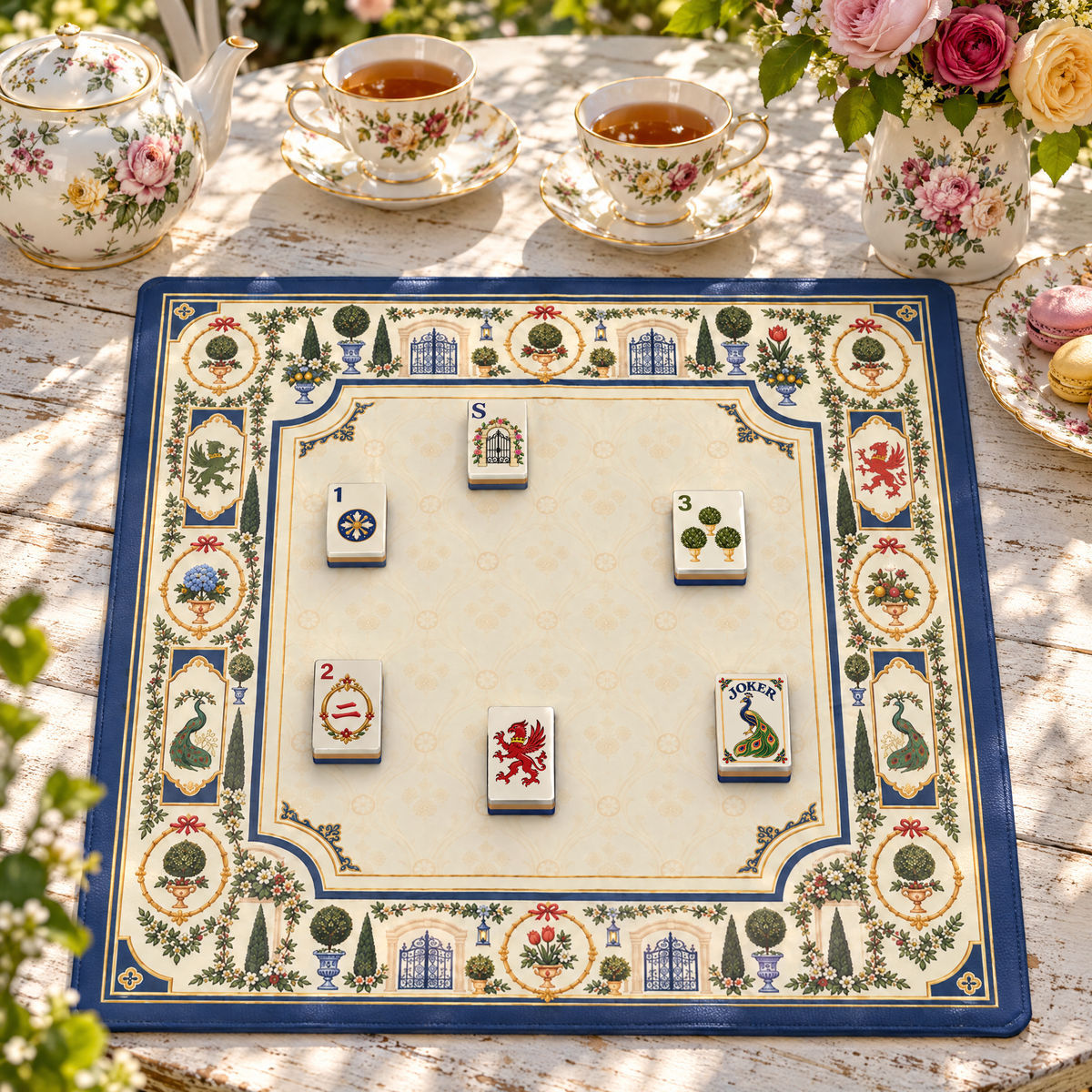
A bridal shower mahjong tournament is a 4–8 player event using American mahjong rules (played from the current year's National Mah Jongg League card) across multiple rounds, with winners determined by cumulative score rather than a single hand. Rounds typically last 10–15 minutes each; a full tournament takes 1.5–3 hours depending on player count and skill level. Players rotate seats after each round. Scoring follows standard American mahjong (points depend on the hand type and whether it's self-drawn or called from another player). Avoid mixing players of vastly different skill levels in the same round—seed teams or tables strategically. You'll need one 160-tile American mahjong set per table, plus engraved or personalized sets as keepsakes, mats to protect surfaces, and racks with pushers to keep play smooth and tiles organized.
Why Tournament Format Works for Bridal Showers
Mahjong tournaments level the playing field by rotating opponents and measuring skill across multiple rounds rather than crowning one lucky winner. Unlike a single best-of-one hand, a tournament shows who understands the card, manages risk, and calls decisively. Bridal showers benefit because guests arrive with mixed experience—some regulars, some first-timers—and a tournament structure gives everyone fresh opponents and a natural break between rounds. The bride can play casually, sit out a round, or host-referee without disrupting flow. Round-robin or Swiss-style play also creates conversation time during set-up and scoring, turning the game into the entire event rather than a distraction within it.
What's the Simplest Tournament Structure?
Round-robin (every player faces every other player once) works best for 4–6 people and one table. Run 3–5 rounds; each round, shift one player clockwise after scoring. With 8+ players, use two tables and rotate pairings: East table vs. West table, reshuffle after round two. For a bridal shower with 12 players, run three tables (4 per table) for 4 rounds; players visit each table once. Each format keeps the event under control without complicated brackets. The National Mah Jongg League card is the only legal hand reference; hands change every spring, so confirm you're using 2026 cards before play.
How Do You Score a Tournament Round?
American mahjong scoring assigns points based on hand type and draw method. A non-dealer self-draw (winning by drawing your own tile) is worth fewer points than a non-dealer hand called from another player; dealer hands pay double. The card lists each hand with its point value. After each round, record each player's score for that round, then sum cumulative totals across all rounds. The player with the highest cumulative score wins. Jokers (up to 8 in a standard 160-tile set) can substitute for any tile except in a pair, and a pung (three identical tiles) must be all the same number—never 1–2–3 (that's not allowed in American mahjong). Common mistake: players forget that the 1 Bam shows a bird and confuse it with the 1 Crak. Clarify tile faces at the start; if someone is new, show them the card reference once before round one.
🀄 Shop best-selling mahjong sets →
What Equipment Do You Need for a Bridal Shower Tournament?
Setup Item | Why It Matters | Bride-Friendly Feature |
160-tile acrylic set per table | Durable, shuffles fast, easier reads than bone | Engraved with bride's name = keepsake |
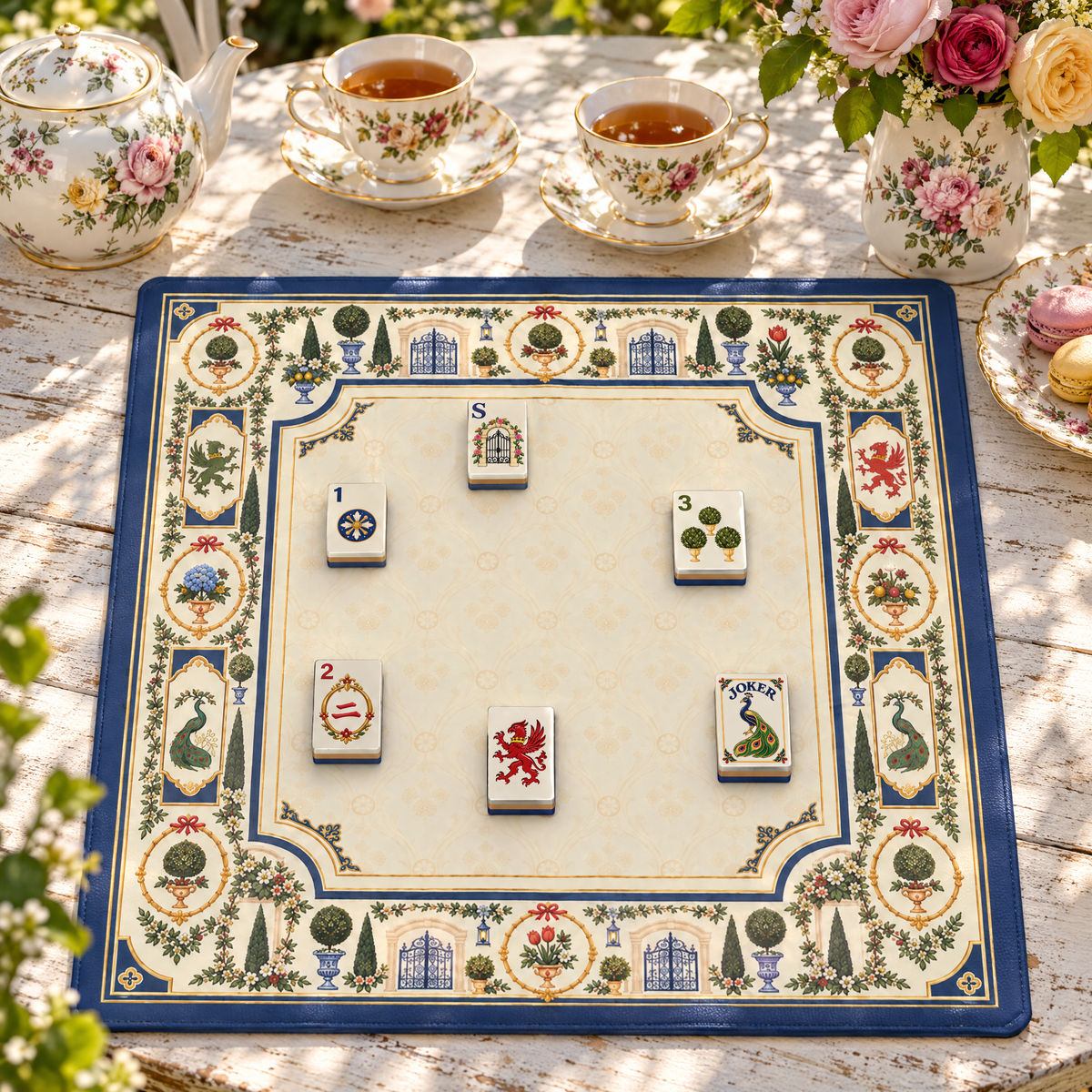
Mahjong mat | Protects furniture, quiets tile clack | Personalized mat doubles as decor |
Racks with pushers | Organizes tiles, speeds play, hides hands | Pushers prevent "accidental" peeks |
2026 card (printed or laminated) | Reference for hand combos | Mounted on mat or at table edge |
Pen & paper or tablet | Track cumulative scores | No math errors mid-game |
Beyond the table, consider a small gift or token (custom tile set or bracelet) for the tournament winner and runner-up. A personalized mahjong set with the bride's initials or wedding date printed on the tiles also serves as the party favor every guest takes home—practical, memorable, and links the game to the celebration. Pack sets in protective bags if transporting to a venue; acrylic tiles are hardy but travel safer with cushioning.

How Many Rounds Should a Bridal Shower Tournament Have?
For a 2–3 hour event, run 4–5 rounds (10–15 minutes each, plus 3–5 minutes for scoring and seat rotation). Fewer rounds (2–3) risk a lucky hand deciding the winner; more than 5 tires players and stretches the party. If a round runs long—say, someone is very new or plays very deliberately—you can skip the final scoring round and declare a "friendly" winner based on highest score after round 3 or 4. Communicate the timeline upfront: "We'll play four 15-minute rounds, wrap around 2 p.m." Guests can relax and play rather than watch the clock.
Handling Mixed Skill Levels Without Bruising Egos
Seed players if you know them beforehand. Pair one experienced player at each table with newer players, or ask regulars to sit out one round and coach. Frame this diplomatically: "Jen, you're the best teacher—can you help the East table round one?" The bride should never feel pressured to be competitive; let her play as the "gracious host dealer" who calls hands loosely and keeps energy high. If someone hasn't played before, give them the full beginner guide or a quick 5-minute walkthrough of how jokers work and the Charleston tile-pass ritual before round one. A quick card-reading lesson prevents confusion mid-hand.
What to Check Before You Buy
Set durability & tile count. Confirm you have exactly 152 playable tiles plus 8 jokers (160 total in a standard set). Acrylic tiles won't chip easily if guests are enthusiastic or new; resin or bone can crack. Count at home before the party.
Mat size for your table. Measure your hosting surface (dining table, card table, etc.). Choose a mat that fits with 2–3 inches of overhang so tiles don't spill into laps.
Card year. Hands on the 2026 National Mah Jongg League card only. Older cards = invalid hands = arguments. Print or laminate a card and keep it at the table.
Racks—do you need them?Racks with pushers hide hands and speed play. If players are casual and new, racks help—they level the skill gap by preventing accidental tile reveals. Non-negotiable for mixed groups.
🎁 See our most-loved mahjong sets & accessories →
Keeping Score Stress-Free
Appoint a "scorekeeper" (often the host or a bridesmaid who's not playing that round). Use a simple paper sheet with columns for Round 1, Round 2, etc., and rows for each player's name. After each hand, the winning player calls their score, the scorekeeper writes it, and everyone adds it to their running total. Use a calculator or phone if math feels fuzzy. At the end, the highest cumulative score wins. Avoid passing score sheets around—one person tracking keeps disputes minimal. If a tie occurs, either declare co-winners or play one final tie-breaker hand (East player only, using the card).
✨ Find your Mahstead set — free US shipping →

FAQ
Can I use an older mahjong card from a previous year?
No. American mahjong hands are legal only if they appear on the current year's National Mah Jongg League card, which changes every spring. Using a 2025 card in 2026 invalidates hands and creates disputes. Print or buy a 2026 card before the party.
How many sets do I need for 8 players?
Two 160-tile sets—one per table (4 players per set is standard). Never split a set across tables or add spare tiles into play; a game must use exactly 152 playable tiles and 8 jokers per set.
What if someone wins by a huge margin in one round—does that ruin the tournament?
No. Cumulative scoring across multiple rounds smooths out lucky streaks. One 70-point win in round one is offset by another player's 65 points in round two. By round 4 or 5, skill and consistency matter more than one hot hand.
Do I need to teach everyone the Charleston before we start?
Yes, if anyone is new. The Charleston is the pre-game tile-pass ritual that randomizes starting hands. Spend 2–3 minutes walking through it or have an experienced player demo it once before round one. See the Charleston explained for a full breakdown.
Can the bride sit out a round?
Absolutely. If she wants to mingle or rest, she can skip a round or two. Tournament scoring only counts rounds she plays in, so her final rank reflects her actual games. Alternatively, let her play all rounds but don't count her score—she's "hosting" rather than competing.
What's the difference between a pung and a quint?
A pung is three identical tiles; a quint is five. In American mahjong, both can be exposed (laid face-up on the table). A kong is four identical tiles. Jokers can substitute in any grouping except a pair, and never as the sole tile.


View More
View More
View More
