
American Mahjong Setup: Tiles, Mat, Racks & Rules
Last updated: Nov 23, 2026
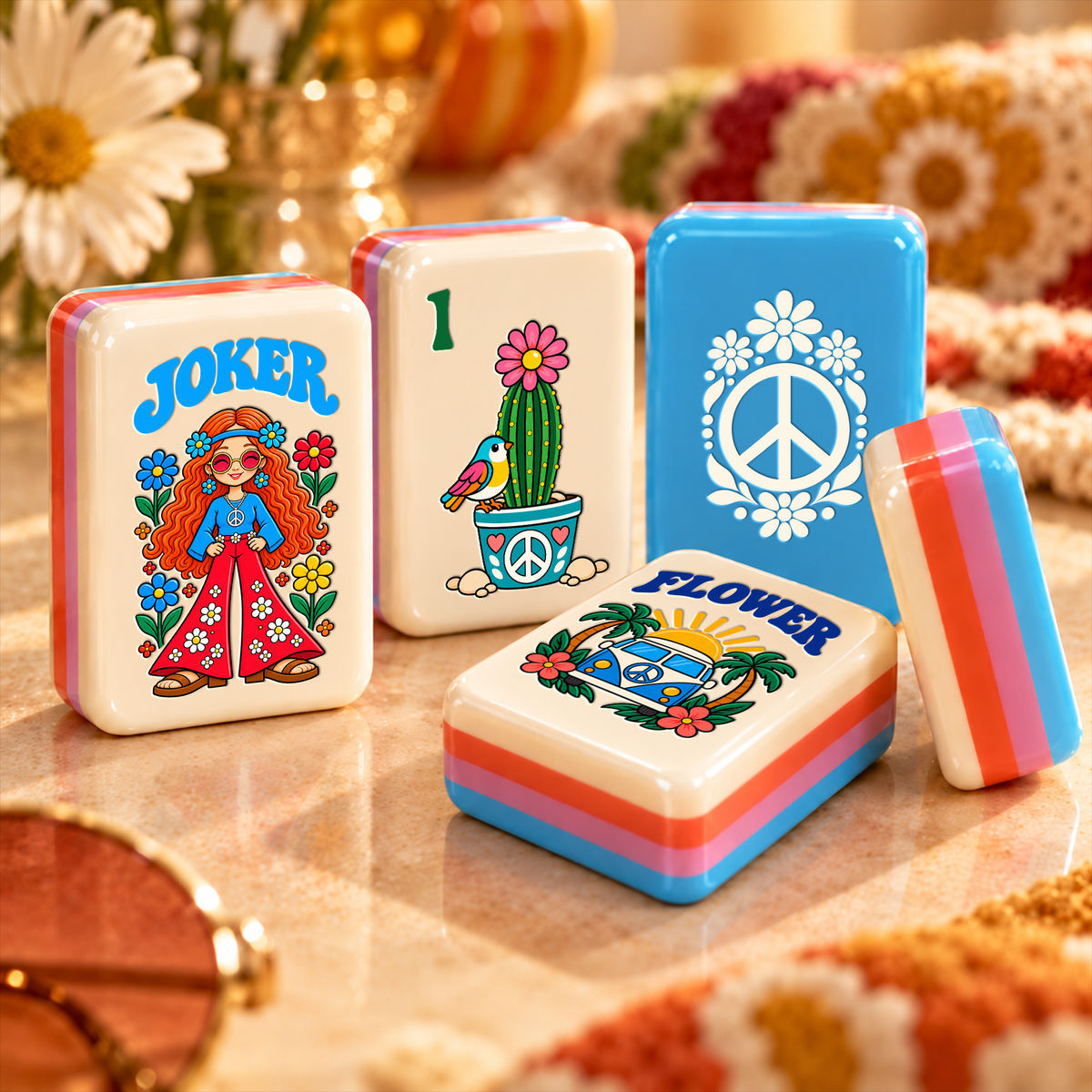
An American mahjong setup includes exactly 152 tiles (108 in three numbered suits—Bams, Craks, Dots—16 winds, 12 dragons, and 8 flowers), plus 8 jokers and a discard mat marked with player positions. Each player receives a wooden or acrylic rack to hold and organize their tiles; pushers help manipulate them without touching. A current-year National Mah Jongg League card is essential—hands come only from that card. The mat shows the center well and four walls where players sit. You'll also need dice (usually three) to determine who goes first and wall position. Setup takes 5–10 minutes including the Charleston (the tile-passing ritual before play begins). A complete set from Mahstead or another vendor includes tiles, jokers, and sometimes dice; many players pair this with a separate mat and racks.
🀄 Shop best-selling mahjong sets →
What tiles do I actually need?
American mahjong uses exactly 152 playing tiles. That's three numbered suits (Bams, Craks, Dots)—each numbered 1 through 9, with four copies of each number, giving 36 tiles per suit. Add 16 winds (four North, East, West, South winds, four of each), 12 dragons (four Red, four Green, four White), and 8 flowers. Four complete sets of these—not individual suits, but full 152-tile collections—can play simultaneously, though one game uses only one set. What's in an American mahjong set breaks down every tile by its role in play. Many sets sold today include 160 tiles: 152 playing tiles plus spares (extra jokers). Never use those spares during play—they're backups if a tile cracks or goes missing.

Why can't I just use last year's card?
The National Mah Jongg League releases a new card every spring—it changes the legal hands. Hands from 2025's card will not match 2026's card; plays valid last year might not score this year. American mahjong enforces this rule strictly: your hand must appear on the current card, period. If you're joining a weekly group, ask which year's card they're using before you arrive. If you're starting your own game, buy the current year's card from the League directly or ask your tile set vendor if they include one. Without the card, you cannot determine if your winning hand is legal. This is a common mistake among new players: they assume the card is timeless, then build a hand that doesn't exist on the current year's list.
How do mats, racks, and pushers fit together?
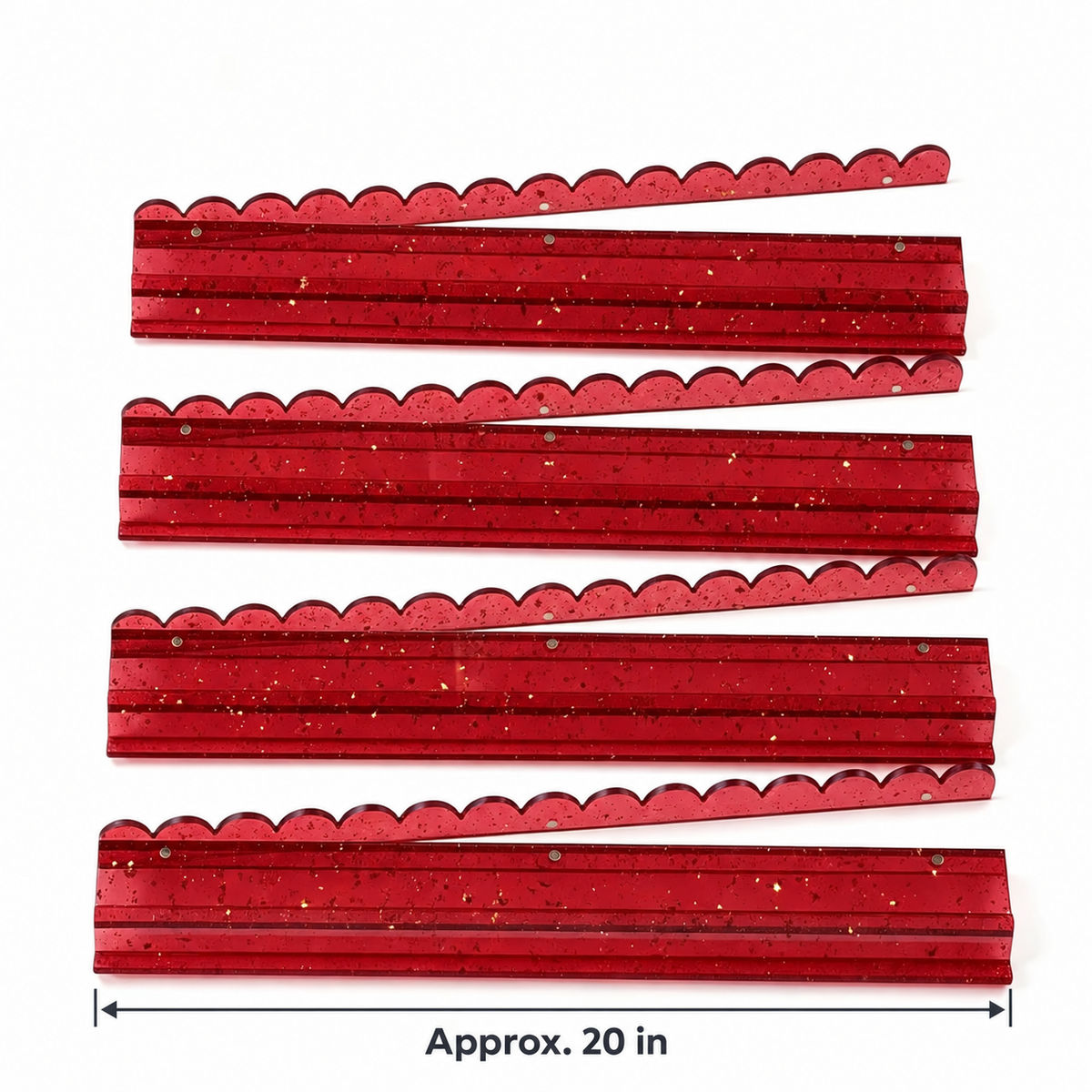
A mat is your playing surface—typically a cloth or vinyl rectangle marked with four player positions, a center well, and a wall section. The mat keeps tiles organized and defines where discards go. How to choose a mahjong mat covers materials (travel mats are rolled nylon; home mats are thicker fabric or rubber-backed) and sizes (most fit a 36–48-inch table). Racks are personal tile holders—each player gets one. Wooden racks slot into the mat's edge or stand on the table; acrylic racks are lighter and travel better. Pushers are small sticks you use to move tiles within your rack without your fingers touching them—this keeps the game fair and prevents accidental reveals. Racks with pushers guide explains which materials suit travel (compact acrylic) versus home play (larger wood). Many new players skip the pushers and regret it; once you learn to use them, touching tiles by hand feels clumsy and risky.
🎁 See our most-loved mahjong sets & accessories →
How do I lay out the game physically?
Arrange four players around a table, each facing a mat section labeled North, East, South, West. The mat's center well holds the wall of undrawn tiles (72 tiles, stacked two-high in a 36-tile row that curves around the well). The mat also marks a discard zone in the middle. Each player sits with their rack in front of them, pushers beside it. Place the current year's card where all four players can see it—prop it up or lay it flat at the table's edge. Put the three dice nearby; whoever is "East" (dealer) rolls first to determine the break point in the wall. Before anyone draws tiles, execute the Charleston: players pass tiles left, then right, then left again, exchanging 6 tiles per pass. The Charleston explained shows the exact sequence. After the Charleston, East draws 14 tiles, the other players draw 13 each, then play proceeds counterclockwise. The mat's layout prevents confusion; without it, you'll spend half the game clarifying whose discard is whose.
What small mistakes disrupt a setup?
Forgetting to use the current card. We've seen entire games dissolve when a player's winning hand wasn't on the card in play. Always verify the year before dealing.
Mixing tiles from two sets. If you borrow a friend's tiles and add them to yours, you'll have duplicates or mismatches. Keep sets separate; use one complete 152-tile set per game.
Skipping the Charleston. New players sometimes assume the Charleston is optional decoration. It's not—it's the legal draw phase. Without it, the game is invalid.
Not checking that tiles are read-ability on your rack. Acrylic tiles can sit at angles; wood tiles sometimes stick together. Spend 30 seconds before play ensuring each player can read their own tiles clearly.
Placing the mat on an unstable table. A wobbly surface will shift tiles during play, leading to disputes. Test the table first.
Not using pushers. Touching tiles by hand can nudge them, reveal them accidentally, or be seen as signaling. Pushers prevent all three problems.
Setup Equipment Comparison
Need | Material | Best for | Why |
Tiles | Acrylic (160-tile set) | Travel & everyday | Durable, lightweight, includes spares |
Mat | Nylon (rolled) | Travel | Compresses into a bag; sets up in seconds |
Mat | Fabric (rubber-backed) | Home play | Large, stable, feels professional |
Racks | Acrylic with pushers | First-time & travel | Easy to handle; compact |
Racks | Wood with pushers | Home & frequent play | Classic feel; fits larger tiles |
Dice | Any (included in many sets) | Setup only | Three dice determine break point; one roll per game |
✨ Find your Mahstead set — free US shipping →
What to check before you buy
Verify the set includes 160 tiles (152 + spares). Some older or discount kits sell 144-tile sets, which are incomplete for American mahjong.
Confirm the card year. Ask the vendor if they include a card or direct you to buy the current year's card separately.
Check mat size against your table. Measure your table; most mats are 36 × 30 inches. A mat that's too small will crowd players; too large will hang off the edge.
Test rack height if possible. Tall racks can block sightlines; short racks are hard on the wrists. Acrylic racks are adjustable via leg angle; wood racks have fixed height.
Confirm your group's preferred tile material. Some players dislike acrylic (feels slippery) or prefer it (easier to clean). Ask before investing in a set.
Look for sets with engraved titles if hosting regularly.Engraved American mahjong sets add personality and are conversation starters; they're also easy to identify if you rotate sets among players.
The one-hour setup checklist
Get a current-year National Mah Jongg League card. No card = no game.
Unpack and count one complete tile set (152 tiles + 8 jokers). Verify nothing's cracked.
Place the mat on a level table, centered. Smooth out wrinkles; place it so all four players have equal distance.
Arrange four racks, one at each player's position. Insert pushers into each rack.
Build the wall. Draw 72 tiles; stack them two-high, in a curve around the mat's center well.
Set out dice and the current card where all can see. Prop the card at a 45° angle.
Have players take their seats. Confirm who is East (dealer), who is North, South, West.
Execute the Charleston (left pass 6 tiles, right pass 6 tiles, left pass 6 tiles).
East draws 14 tiles; others draw 13. Players fill their racks and organize by suit.
Read the card for possible hands. First player (East) plays, or an exchange happens if no one can draw.
The entire process from unpacking to first play takes 8–12 minutes once you've done it twice.
For a guided start, how to play American mahjong covers every rule and example hand. If you're entirely new, mahjong for beginners walks you through terminology and the first few turns. Both pages link to deeper dives on the Charleston, jokers, and reading the card.
When you're ready to buy, we recommend starting with a best-selling set paired with a mat and racks in your choice of material. Many players add a travel bag once they join a regular group—it keeps everything in one place and protects your investment.

FAQ
Do I need a fancy mat to play American mahjong?
No. A mat improves organization and comfort, but you can play on any flat table if you mark four zones with tape. However, a proper mat costs little and makes setup foolproof, so we recommend getting one.
Can I use tiles from two different sets?
Never. Each set has exactly 152 tiles; mixing sets creates duplicates and breaks the game. Use one complete set per game, always.
What if a tile breaks during play?
Stop the game, remove the broken tile, and use the spare (or blank) that came with your set. Adjust the wall and wall-draw accordingly. This is why 160-tile sets include spares.
How do I know if my winning hand is legal?
Check the current year's National Mah Jongg League card. If your hand appears on the card, it's legal. If not, it's not a win, no matter how logical it looks. The card is the sole authority.
Should I buy acrylic or wood racks?
Acrylic is lighter and travel-friendly; wood is traditional and easier to grip. Both work equally well. Choose based on where you play most often—travel = acrylic, home = wood.
What if I can't find a mat that fits my table?
Measure your table first (most American tables are 36–48 inches wide). A mat should cover at least the center playing area; overhang is acceptable. If no mat fits, a nylon travel mat rolled under the tiles works, or use a flat cloth and mark zones with masking tape.
Do I need a mat if I have a mahjong table?
A dedicated mahjong table has built-in walls and racks. A mat is redundant. If your table is old or worn, some players lay a mat over it for clarity. Most home games use a standard dining table with a mat.
Can I mix American mahjong rules with Chinese rules?
No. American mahjong is a closed system: hands only from the current card, no chows or sequences, eight jokers total. Chinese mahjong has different hands, sequences, and joker rules. Play one variant at a time; mixing creates chaos.


View More
View More
View More
