
Chinese Mahjong House Rules: Core Differences from American Play
Last updated: Nov 23, 2026
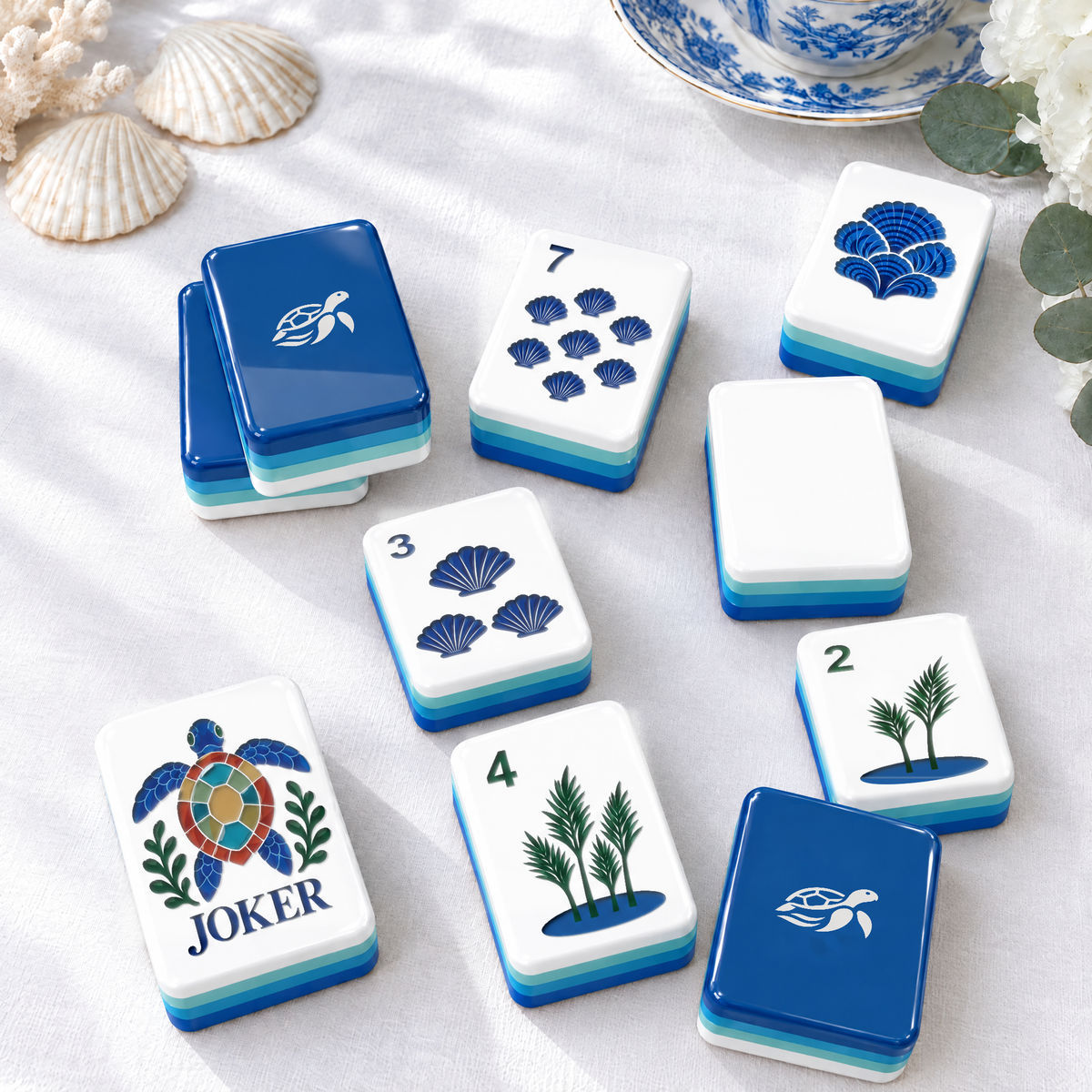
Chinese mahjong uses 144 tiles (not 152): four suits—Bams, Craks, Dots, and Honors (winds and dragons)—numbered 1–9 in the first three, with no jokers standard. Winning hands require four melds (sequences and pungs allowed, called chows and pungs) plus a pair; you announce winning as soon as you draw or claim a discard. Unlike American mahjong, which locks hands to an annual card, Chinese mahjong uses open hand-building—any sequence or matching set works if your opponent agrees it's valid before play. Scoring varies by region and house ruleset. Most home games run 8–12 rounds (two wind cycles). You can play 2, 3, or 4 players by adjusting the wall and pass rules. A session typically lasts 1–2 hours depending on players' speed and rule complexity.
What tile set does Chinese mahjong actually use?
Chinese mahjong's 144-tile deck contains four identical sets of 36 tiles each: Bams (1–9), Craks (1–9), Dots (1–9), and Honors (four winds + three dragons = seven rank types, four of each). There are no jokers, no flowers, and no blanks—the White dragon fills the "zero" role. Every tile appears exactly four times. This differs sharply from American mahjong, which adds flowers, jokers, and often extra blanks to reach 160 tiles and ties hands to a printed card issued yearly. Explore how American and Chinese tiles differ in structure.
If you're hosting house games that mix players from both traditions, clarity on which variant you're playing before the Charleston (or tile draw) prevents frustration. Many home groups adopt a hybrid: they use a 144-tile Chinese set for training, then play American rules with an American set on formal nights. Keep a separate set for each variant if your group rotates both.
🀄 Shop best-selling mahjong sets →

How do winning hands differ in Chinese mahjong rules?
In Chinese mahjong, a winning hand has four melds plus one pair—exactly fourteen tiles total. Melds are either chows (sequences: 1-2-3, 5-6-7, etc.) or pungs (three identical tiles), and crucially, you may use both chow and pung types in the same winning hand. American mahjong hands, by contrast, list only specific sequences or all-pung combinations from the yearly card; you cannot mix chow and pung freely. In Chinese play, winning is "concealed" (drawn from the wall) or "open" (claimed from an opponent's discard). Concealed wins often score higher. The moment you draw your winning tile, you announce immediately—no waiting for your turn to discard. This speed and immediacy shape house-game strategy: players watch discards closely because someone might claim them instantly, unlike American play where only specific combinations trigger calls.
What does "calling" and "claiming" mean in Chinese house rules?
Calling in Chinese mahjong means announcing that you're one tile away from winning. Once called, you may only draw tiles that complete your hand—you cannot discard any tile you originally held without risk, and opponents may call "kong" (a four-tile meld) or "pung" (three tiles) from your discard to expose it. Claiming means taking an opponent's discard directly to complete a pung, kong, or winning hand. In American mahjong, you cannot call mid-hand or claim opponents' tiles for chows; you expose only pungs, kongs, and quints when you declare a hand complete. Chinese house rules typically allow claiming from any player in turn order (left, center, right—depending on the house rule), and once a tile is claimed, play restarts from that player. This open-claiming system means tiles move faster and rounds feel more social. The downside: players must track three opponents' intentions constantly. First-timers often miss claims because they're not watching the discard pile intensely. A house rule many adopt: if you miss a claim window, you cannot retroactively claim that tile later.
What's the role of the Kong in Chinese mahjong house rules?
A kong is four identical tiles. In Chinese mahjong, you may kong an existing pung (steal a pung an opponent declared and add your fourth tile to make four), or kong from the wall during your turn if you hold four matching tiles. When you kong, you draw an extra tile from the end of the wall to replace it. Kongs can occur mid-hand or at winning—declaring a kong from your hand is legal and visible to all players. In American mahjong, kongs are fixed melds of four identical tiles you expose and keep on the table; you cannot steal an opponent's pung. The Chinese kong mechanism accelerates hand completion and creates dynamic moments: players watch for partially exposed sets because a kong could shift the entire round. House rules often specify: if you kong an opponent's pung without permission, that's a foul (some groups penalize heavily). Clarify before play whether kongs trigger extra draws and whether an opponent can block a kong mid-hand by calling their own winning tile.
How do typical Chinese house rules modify scoring and round structure?
Chinese mahjong scoring varies wildly by region—there is no universal standard like the American mahjong league card. Most home groups adopt one ruleset (e.g., Hong Kong, Taiwanese, or Cantonese) and stick to it for consistency. Common modifiers include: winning by concealed draw scores double; winning off a discard scores normal; kongs add bonus points; calling incorrectly (declaring you need one tile and then completing a different hand) forfeits the hand and pays each opponent. Rounds typically run two full wind cycles: eight rounds of East wind, then eight of South. Each player "sits" East once per cycle, and East wins go first, discard last. A session of 16 rounds takes 60–90 minutes for experienced players, 2+ hours for mixed skill. Many house groups cap total games at three rounds to keep an evening manageable. Before sitting down, confirm: How many points per win? Do kongs double the base score? Is there a limit to losers' payments (often called "no-blood" rules)? Do you play with an agreed house card (printed hand list), or open rules? These answers prevent disputes mid-game.

Can you use American mahjong sets to play Chinese mahjong house rules?
Technically, no—American sets have 152 tiles (with jokers and flowers), while Chinese mahjong requires exactly 144. However, some casual home groups strip out the jokers and flowers from an American set and play with 144 tiles. This works for a session, but the tile ratio is off (American tiles are slightly different in thickness or finish), and you lose the standard face designs of a Chinese set. A proper Chinese 144-tile set has uniform proportions and weighs consistently, which matters for fair shuffles and wall-building. If you're planning regular Chinese games, invest in a dedicated engraved set designed for your house rules—it improves game flow and signals respect to your opponents. Many hosts who play both American and Chinese keep two sets: one American (152 tiles, jokers, flowers), one Chinese (144 tiles, Honors suit). This separation also means you can host either variant without conversion confusion.
Comparison: American vs. Chinese Mahjong at a Glance
Aspect | American Mahjong | Chinese Mahjong |
Tile count | 152 (+ jokers) | 144 |
Melds allowed | Pungs, kongs, quints, sextets only | Chows and pungs mixed |
Jokers | Yes (8 in deck) | No |
Hand validity | Fixed to annual card | Open (any valid 4 melds + pair) |
Winning call | Announce "mahjong" when hand complete | Announce immediately on draw/claim |
Claiming discards | No—only expose after declaring | Yes—claim chows, pungs, kongs from any player |
Rounds per session | Often 16 (two wind cycles) | Often 16 or 8 (depends on house rule) |
Scoring system | National League standard | Varies by region/house—no universal card |
Setup time | 5–10 min (Charleston included) | 3–5 min (direct draw, no passing) |
🎁 See our most-loved mahjong sets & accessories →
What mistakes do American players make when trying Chinese house rules?
Forgetting there are no jokers. American players instinctively look for jokers to fill gaps. Chinese sets have none—all 144 tiles are fixed and limited. You cannot substitute or "wild" a tile; you must draw or claim the exact tile you need.
Assuming sequences (chows) work like American melds. In American mahjong, there are no chow sequences in winning hands—only pungs and their larger variants. Chinese players feel natural claiming 1-2-3 or 7-8-9 as melds mid-hand. If you switch from American to Chinese, be ready to see chows announced and claimed constantly.
Missing the "call" window. In Chinese house rules, if you discard a tile that completes an opponent's winning hand or a pung they're waiting for, they may claim it instantly. American players unused to this urgency often discard without checking three opponents' faces first. Pause before discarding; scan the table for any signs someone is calling.
Mixing up round structure. American mahjong has a fixed yearly card with specific hand patterns for each round. Chinese house rules have no card—winners can be any 4 melds + pair. First-timers often ask "Is this a valid winning hand?" when it shouldn't be a question. Agree on hand validity before play starts.
Undercounting tiles. Chinese sets must have exactly 144. American sets have 152. If you're mixing tiles or adapting a set, verify the count before the wall is built—a short wall ruins the entire round.
What should you check before hosting a mixed-variant game?
1. Confirm the tile set. Is it 144 (Chinese) or 152 (American)? If mixed, strip extras and recount. 2. Agree on winning hands. Will you use a card, or open rules? Are all 4-meld combinations valid, or only certain ones? 3. Decide on calling rules. Can players call mid-hand? Can they claim chows, or only pungs and kongs? Can they steal kongs? 4. Set scoring. Per-point value, base scores, bonuses for kongs or concealed wins. Write it down. 5. Choose round structure. How many winds (8 or 16 rounds)? Does East repeat or shift after each hand? 6. Clarify penalties. What happens if someone calls incorrectly, discards when called, or tries to claim out of turn? 7. Test one practice round. Play one hand slowly, pausing to let everyone see the flow. Adjust rules on the fly if needed.
✨ Find your Mahstead set — free US shipping →
Related reading
Hosting both variants is easier when you understand how American mahjong differs structurally. For beginners mixing both games, start with a single variant first, then add rules. And if your house adopts Chinese rules as your primary game, a dedicated mat and set make setup faster.

FAQ
Can I play Chinese mahjong with 152-tile American sets by removing jokers and flowers?
Yes, for casual play—you'll have 144 usable tiles. However, American tiles differ in weight and finish from Chinese sets, so shuffles and wall-building may feel unbalanced. For regular house games, buy a dedicated 144-tile Chinese set for consistency.
In Chinese mahjong house rules, can I claim a discard to complete a sequence (chow)?
Yes—that's a core difference from American mahjong. In Chinese variants, you may claim any opponent's discard to complete a chow (1-2-3 or similar), a pung (three identical), or a winning hand. The claiming window is immediate after the discard lands; once you pass, you cannot retroactively claim it.
What's the fastest way to learn Chinese house rules if I already play American mahjong?
Learn three differences first: no jokers, chows are legal melds, and claiming is instant. Then play one practice round slowly, pausing to let everyone ask questions. Most players pick up the flow within 2–3 hands.
Do all Chinese house rules use the same scoring system?
No. Chinese mahjong scoring varies by region—Hong Kong, Taiwan, and Cantonese variants each have different point values, bonuses, and penalties. Before sitting down, confirm which regional ruleset your group uses, or adopt one consistently for the season.
If I'm East wind and someone kongs an opponent's pung, do I get an extra draw too?
Only the player who kongs draws extra from the wall end. East (and other non-konging players) continue their turn normally. Some house rules cap consecutive kongs per hand; clarify before play.
What's the penalty for calling (declaring you need one tile) and then completing a different winning hand?
Most house rules forfeit the hand—you pay each opponent the base score and your hand is dead for that round. Some groups double the penalty. Agree on this before play starts, because it affects calling strategy.


View More
View More
View More
