
Why Couples Love Mahjong: A Game That Strengthens Togetherness
Last updated: Nov 23, 2026
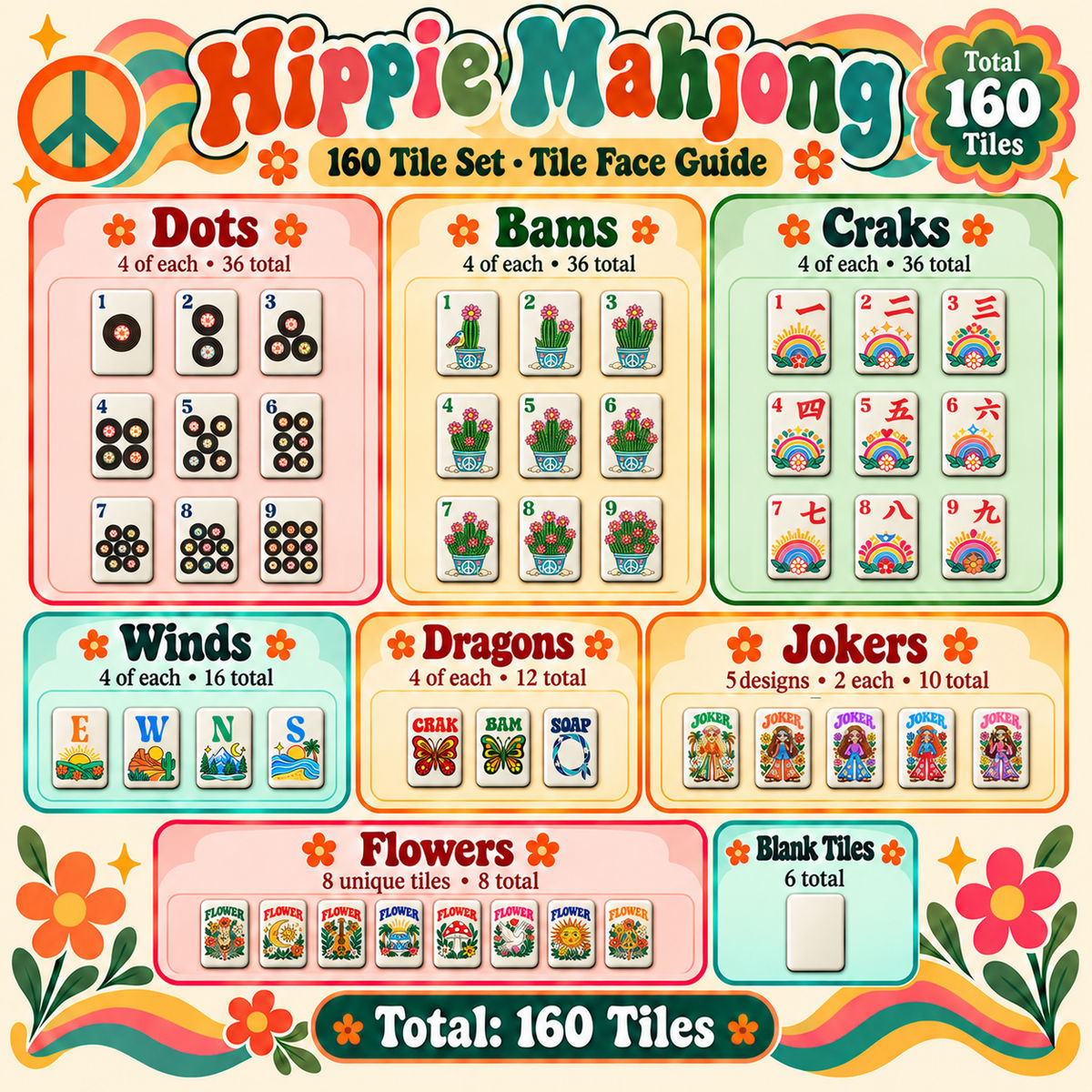
Couples love mahjong because it's a game that demands attention without requiring constant competition, creates natural conversation between turns, and builds shared memory through recurring patterns and inside jokes. Unlike chess or poker, mahjong has a learning curve that flatters beginners—you can hold a winning hand on your first night and still find depths to explore in year five. A round lasts 15–30 minutes; a full session (eight rounds) takes 2–3 hours. You'll need a 160-tile acrylic American mahjong set, a mat to protect your playing surface, and the current year's National Mah Jongg League card to reference hand patterns. Couples often prefer engraved sets that reflect their humor or shared history; our best-selling collection includes designs tailored to pairs and partners. No prior card games experience needed; the Charleston (tile-passing warm-up) levels the field for newcomers.
🀄 Shop best-selling mahjong sets →
What makes mahjong different from other couple games?
Mahjong removes the zero-sum pressure that isolates players in chess or poker. In American mahjong, all four players work toward the same goal (completing a valid hand from that year's card), and two players often benefit from each other's plays without resentment. You're also not hiding information—everyone sees the same tiles discarded—so there's no memory tax or bluffing exhaustion. The game has natural built-in pauses: after someone draws, they have 5–10 seconds to decide what to discard, giving couples time to check in, laugh, or grab a drink. We've watched hundreds of couples pick it up, and the rhythm itself becomes soothing. Mahjong also has zero winner-takes-all drama; scoring rewards both skill and luck equally, so a partner's win feels like a shared win.

How does a couple actually play if only two people are available?
Standard American mahjong is designed for four players, but two dedicated players can adapt. The easiest approach: invite another couple over monthly. If you want to play alone, the 2 and 3 player rules let you modify the wall and hand sizes to keep the game fair and fast. In two-player games, you'll hold fewer tiles (typically 12–13 instead of 13–14), and the wall shrinks accordingly. The rhythm changes slightly—there's more pressure to build your hand quickly—but the learning curve stays gentle, and the intimacy actually deepens because every tile choice directly affects your partner's odds. Many couples we know treat two-player as their weekly warm-up, then play four-player when friends visit. The Charleston (pre-game tile exchange) works the same way, so no new ritual to learn.
🎁 See our most-loved mahjong sets & accessories →
Why do couples prefer engraved or custom-design sets?
A set with both your names or a shared joke becomes an artifact of your relationship. We've sold hundreds of engraved American mahjong sets to couples marking anniversaries, engagement gifts, or just the simple joy of owning something that says "us" instead of a generic set. Acrylic tiles are loud and satisfying to shuffle—that click-click-click is part of the ritual—and custom engravings make every game feel intentional. One couple we know engraved their set with the date they met and the words "East Wind" (a nod to their favorite direction). Another chose a set with their wedding year and a play on their initials. The personalization doesn't change the rules or gameplay; it changes the feeling. When you're holding tiles with your own words on them, the game stops being a casual diversion and becomes something you both own together.

What's the real time commitment, and does it fit a typical couple's schedule?
One full game of American mahjong (eight rounds, called a session) runs 2–3 hours for experienced players. Beginners might stretch it to 4 hours, especially the first few times, because you're checking how to read the mahjong card and learning tile names. A single round lasts 15–30 minutes. Most couples we know start with a standing Tuesday or Thursday night: set up by 7 pm, play 2–4 rounds, and wrap by 9 or 10. The mental load is real but manageable—you're thinking ahead (building your hand) and tracking the discard pile, but you're not memorizing 52 cards or calculating odds mid-game. It's active enough to feel engaging, calm enough that you can talk. For couples with kids, a sitter for one evening a week is the only barrier. For travel or one-off weekends, you can knock out 2–3 rounds in an afternoon while visiting family or on a rainy Saturday.
How do couples who've never played learn without frustration?
The most important step: one person doesn't teach; you both learn together from the same source. Watch a beginner video or read how to play American mahjong side by side, then play with the reference card in front of you both. Don't judge your hands harshly for the first five games—you're building intuition, not competing. The Charleston (the pre-game tile-passing ritual) actually teaches you the flow naturally because everyone does the same steps at the same time. A common mistake couples make: one partner thinks they've "got it" and rushes the other. Instead, treat your first few sessions as co-discovery. You'll both hit moments of confusion—"Wait, why is that a pair?"—and laughing through it together is half the bonding. We recommend starting with our best-selling collection, which includes sets sized for new players (easy-to-read tiles) and durable enough to handle weekly play for years.
Does equipment quality actually change the couple experience?
Yes. Cheap plastic tiles stick together and muffle shuffles. Acrylic tiles feel weighty, sound crisp, and slide easily—the tactile satisfaction keeps couples coming back. A proper mahjong mat keeps tiles organized and protects your table, and racks with pushers let you sort your hand without it tumbling. When equipment feels cheap, the game feels cheap, even if the rules are identical. Couples often invest in their first set together as a symbolic purchase—a way of saying "we're doing this for real." Acrylic sets last decades; cheap resin sets crack or fade within a year. The comparison below shows why couples typically upgrade to acrylic after one or two seasons:
Feature | Plastic Budget Set | Acrylic Premium Set |
Tile sound | Dull, muted | Clear, satisfying click |
Shuffle durability | Tiles stick after 20 hours | Smooth after 100+ hours |
Readability | Small, blurry symbols | Large, crisp engravings |
Storage longevity | Cracks within 1–2 years | Remains smooth 10+ years |
Ritual feel | "Getting by" | "This is ours" |
What to check before you buy:
Confirm the set includes 152 playing tiles + 8 jokers (a 160-tile set includes spares).
Test: Can you comfortably hold 13–14 tiles in one hand without them slipping?
Choose a mat size that fits your table; a cramped mat spoils the rhythm.
Verify the current year's National Mah Jongg League card is available (issued every spring).
If ordering online, ensure free shipping and a return window in case tiles don't feel right in person.
✨ Find your Mahstead set — free US shipping →
If you're considering mahjong as a couple activity, start with our beginner's guide, which walks through tile names, hand-building, and the first game step-by-step. Many couples find that one session cures skepticism; the second session becomes a ritual. The game has survived 150+ years and crossed continents because it works—it holds attention, requires no performance, and rewards curiosity. For two people looking for something more thoughtful than streaming together but less isolating than separate hobbies, mahjong is the rare game that deepens both skill and closeness at the same time.

FAQ
Can we really play mahjong with just two people?
Yes. Use the 2 and 3 player rules, which adjust hand size and wall configuration. Gameplay stays fair and fast, though the rhythm differs slightly from four-player mahjong.
How long does it take to learn mahjong as a beginner couple?
One evening to grasp the basics, 4–5 sessions to feel comfortable without the reference card. Most couples report that frustration lifts by game three.
What's the minimum gear we need to start?
A 160-tile American mahjong set, the current year's National Mah Jongg League card, and a flat surface. A mat and racks are optional but recommended for comfort.
Is mahjong expensive to get into compared to other hobbies?
A quality acrylic set costs less than a dinner out and lasts 10+ years. See current price on the product page for specifics.
Why do couples choose personalized or engraved sets?
Engraved sets become a shared keepsake and make the ritual feel intentional. They're often chosen as anniversary or engagement gifts.
Can we play mahjong if one of us is a total beginner and the other isn't?
Yes, but avoid one person teaching. Instead, both review the rules together from a neutral source. This prevents frustration and keeps the experience collaborative.


View More
View More
View More
