
Mahjong as a Mind Sport: Skill, Strategy, and Competition
Last updated: Nov 23, 2026
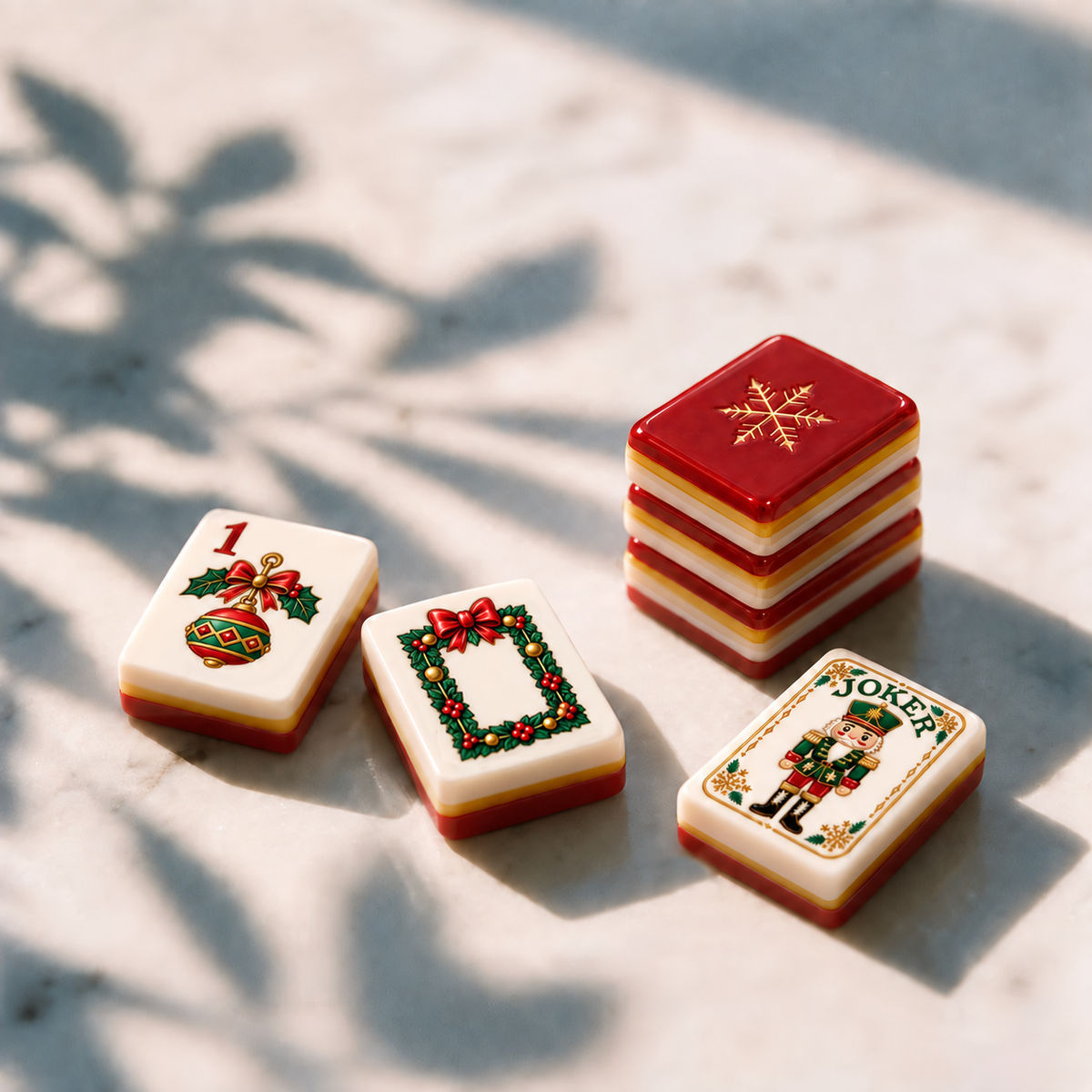
Mahjong qualifies as a mind sport because American mahjong (played with 152 tiles + 8 jokers per the standard) depends entirely on skill, memory, and real-time decision-making under pressure. Unlike games of chance, competitive mahjong requires studying the National Mah Jongg League card each year, tracking discards to infer opponents' strategies, calculating which tiles remain in the wall, and executing complex hand patterns. Players at tournaments hosted nationwide compete using identical rule sets and scoring systems. The cognitive load rivals chess: you must memorize tile distributions, recognize hand patterns instantly, manage probability, and adapt your strategy as the game unfolds. Our players at the table often say the hardest skill isn't knowing the card—it's staying sharp when fatigue or an opponent's unexpected play forces you to recalculate. Winning consistently requires discipline, study, and equipment that doesn't fail mid-session; best-selling mahjong sets include smooth acrylic tiles that resist wear and tiles with clear marking so pattern recognition never slows you down. 🀄 Shop best-selling mahjong sets →
What distinguishes mahjong from pure luck?
Mahjong is recognized as a mind sport because outcome depends on player skill, not randomness. The tile draw is random, but hand construction is entirely strategic. You see your own tiles; you track 75% of all discards on the table; you calculate which hands are still viable; you decide which tiles to keep or discard based on risk versus reward. Compare this to slots or lottery: those are games of chance where no amount of study changes your odds. In mahjong, two players with identical tiles and starting position will reach different outcomes based on their decision-making. Competitive mahjong organizations worldwide require standardized rules, written curricula, and adjudicated tournaments—hallmarks of a mind sport rather than entertainment gambling.

How does memory work in competitive mahjong?
Memory in mahjong operates on three levels: tile recognition (instant visual matching), hand-pattern recall (knowing 40+ winning patterns by shape), and discard memory (tracking which tiles left the wall and when). A skilled player builds a mental map of the game state—what each opponent likely holds based on their discards and plays. You remember that Player 2 threw a 4 Bam in turn three and never played a Bam again, so she's probably not building a Bam hand. You note Player 3 called a pung of 2 Dots in turn six, so at least three 2 Dots are no longer in the wall. This layered memory is why casual players often lose: they discard based only on their own hand. Competitive players discard based on the entire table state, including what they infer opponents don't need. Memory training in mahjong mirrors chess—deliberate practice on specific patterns, not just playing games.
What does studying the mahjong card really involve?
The National Mah Jongg League releases one official card each spring, containing roughly 75 winning hand patterns. Learning the card means memorizing not just what patterns exist, but where they appear on the card by section and symbol. Advanced players practice hand-reading drills: you see a partial hand and instantly recognize which card section it matches, then know which remaining tiles you need. This is why how to read the mahjong card training is essential for tournament play. Serious players spend 10–20 hours per year drilling card sections, working through dead-end hands (discardable three-tile combos that don't lead to winning patterns), and studying "dangerous" tiles—those that complete hands for opponents. The card changes yearly, so competitors reset their knowledge each season. This annual refresh is unique among mind sports and keeps the game dynamic.
How is competitive mahjong scored and ranked?
American mahjong scoring is based on hand complexity and exposure, not tile point values. Each winning hand on the card carries a score (typically 2 to 8 points depending on how many pungs or sextets it requires and how difficult the pattern is). When you win, you receive that score from all three opponents; if you expose melds during play, your score may be reduced. Tournament ranking uses a points-per-game average, eliminating noise from short sessions. American mahjong scoring is standardized so that a player's skill ranking is portable—your rating means the same whether you play in Dallas, New York, or online. Serious competitors track their win percentage, study which hands they convert most often, and adjust their strategy to maximize scoring hands (high-value patterns they build reliably) while minimizing risk.

What equipment do competitive players choose?
Competitive mahjong demands equipment that eliminates distraction and doesn't fail mid-session. Tiles must have durable acrylic or resin construction—never painted or lacquered surfaces that wear away during shuffles. Numbers and suit symbols must be laser-engraved or embedded so they remain visible even after hundreds of games. Racks must hold tiles at a stable angle without wobble so you can read your hand quickly. A quality mat with clear zones prevents tiles from sliding when players lean in or dice are thrown. Serious players invest in racks with pushers because pushers speed up tile play and reduce fumbles during fast rounds. A travel-ready bag or case that protects tiles during transport matters when you play in tournaments across multiple venues. Our sets are designed by players who've sat at thousands of games—we know what breaks first (edges of hand tiles) and build accordingly.
Skill Level | Mat Type | Rack Need | Why It Matters |
Casual weekly game | Standard felt or cloth | Optional, soft stands work | Comfort, basic organization |
Serious club player | Reinforced, marked zones | Yes, with pushers | Faster play, fewer errors under pressure |
Tournament competitor | Professional-grade, zone embossed | Yes, rigid frame, smooth pushers | Speed, consistency, reduced fatigue |
🎁 See our most-loved mahjong sets & accessories →
What role does probability play?
In competitive mahjong, probability calculation separates winners from the rest. After 12 turns, roughly 45 tiles have been played (discarded or exposed). You know which tiles are gone; you calculate which remain in the wall (152 total − discards − your hand − exposed melds). If you need a 7 Crak to complete a winning hand and only one 7 Crak has been played out of four, three remain—but two might be in opponents' hands. The probability that the next draw is your 7 Crak is roughly 3/107 (remaining wall size), not 4/152. Experienced players compute these odds in seconds. They also weigh risk: is a 2% probability of drawing your hand worth the cost of holding three defensive tiles that do nothing if you don't win? Tournament players study probability theory alongside mahjong to answer these questions faster and more accurately than intuition alone allows.
What to check before you buy:
Tile material: Acrylic sets resist chips and fading; verify before purchase that numbers are laser-engraved (not painted).
Rack stability: Test photos or videos online to confirm racks don't wobble under the weight of a full hand.
Mat durability: Look for reinforced seams and embossed zones that won't wear flat after 50+ games.
Bag closure: Zippers should have sturdy pulls; magnetic clasps on cases should hold even if jostled during transport.
Joker count: All standard American sets include 8 jokers (part of the 152-tile set); confirm the product page lists this.
✨ Find your Mahstead set — free US shipping →
How serious is the competitive mahjong scene?
The competitive mahjong scene is organized, structured, and year-round. The National Mah Jongg League (NMJL) sanctions regional tournaments, maintains official rules, and publishes the annual card. Players earn ratings, compete for titles, and join clubs tied to community centers, synagogues, and country clubs. Online platforms now offer ranked play against verified opponents. Serious competitors attend multiple tournaments per year, study with coaches, and maintain detailed records of every hand they play. The cognitive demands are recognized: the American Contract Bridge League (ACBL) has partnered with mahjong organizations to cross-promote competitive play. While mahjong doesn't have the million-dollar prize pools of poker or chess, it has a robust amateur structure where a dedicated player can rise from beginner to advanced to master level over 3–5 years of consistent study and play. This progression pathway is a hallmark of legitimacy in mind sports.

FAQ
Is mahjong considered a mind sport by official organizations?
Yes. Mahjong is recognized by the International Mind Sports Association and competitive gaming bodies in dozens of countries as a skill-based game requiring strategy, memory, and calculation—not luck.
How long does it take to become competitive?
Most players reach intermediate competitive level (able to win tournaments at club level) in 12–18 months of weekly play and card study. Master-level play requires 3–5 years of deliberate practice.
What's the difference between American and Hong Kong mahjong for competitive play?
American mahjong (152 tiles, one official card per year, no sequences) emphasizes card memorization and strategy. Hong Kong mahjong (136 tiles, open hand catalog, includes sequences/chows) emphasizes fast calculation. Both are organized mind sports with tournaments, but competitive players typically specialize in one.
Do I need special equipment to play competitively?
Yes. Competitive play requires durable acrylic tiles, a quality mat with clear zones, and racks with pushers to avoid delays and errors. Standard beginner sets wear out quickly under tournament use.
Where can I find competitive mahjong groups to join?
Community centers, libraries, synagogues, and country clubs often host mahjong clubs. Online platforms and social networks (search "mahjong tournament" plus your city) list local groups and upcoming events.
What's the annual cost of competitive play?
Membership in a club or organization typically costs $50–200 annually. Tournament entry fees range from $10–30 per event. A quality set costs more upfront but lasts years; mats and racks are one-time purchases.


View More
View More
View More
