
Hong Kong Mahjong FAQ: Rules, Tiles & How It Differs from American
Last updated: Nov 23, 2026
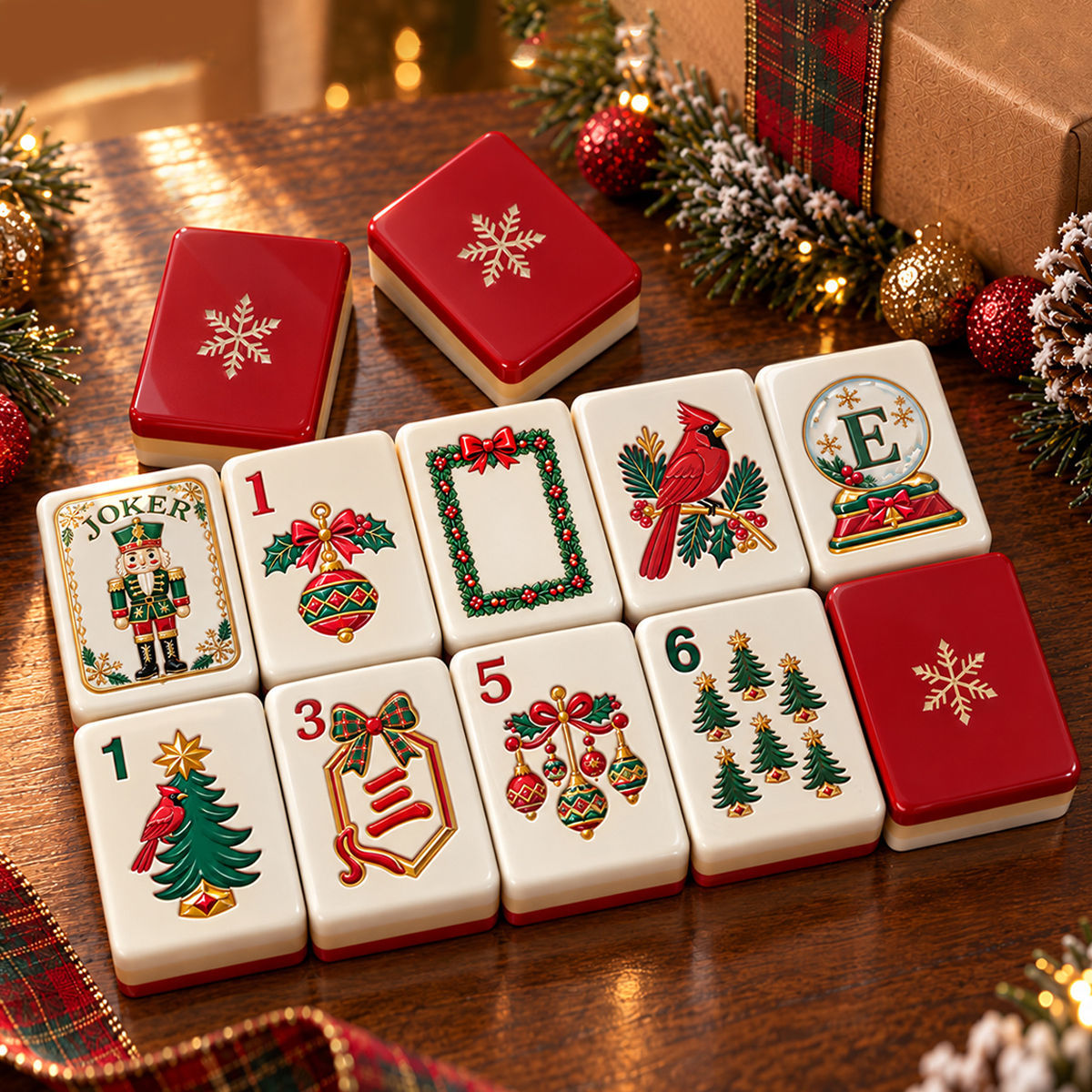
Hong Kong mahjong is a 4-player variant using 136 tiles (one suit of winds, three suits of numbers 1–9, dragons, flowers, and seasons) with no hand card. Players draw and discard to form a winning hand of melds (pung, kong, chow—sequences of three consecutive numbers) plus a pair. The game plays faster than American mahjong because any meld type can be claimed and exposed; jokers are used for flexibility but aren't mandatory. Scoring is table-based: different hands earn different point values, and payment flows from all players to the winner or split among winners. Hong Kong play emphasizes speed, defensive discarding, and reading opponents' intentions—there's no pre-game Charleston, no fixed hand list, and no joker restrictions. A best-selling mahjong set includes all tiles needed, though Hong Kong players sometimes use smaller sets (136 tiles exactly) rather than the 152-tile American standard.
What tiles are in a Hong Kong mahjong set?
Hong Kong mahjong uses 136 tiles: three suited sets (Bams 1–9, Craks 1–9, Dots 1–9) with four copies of each, plus 16 winds (4 each: North, East, South, West), 12 dragons (Red, Green, White), 8 flowers (Spring, Summer, Autumn, Winter), and 8 seasons (1–4 repeated). There are no jokers; any tile can substitute in an exposed meld only if the table agrees beforehand. Because the set is smaller than American mahjong (136 vs. 152 tiles), the wall is shorter and hands develop faster. Each player receives 13 tiles at the start; one player draws a 14th to begin play.

How do melds differ from American mahjong?
In Hong Kong mahjong, you may call and expose any meld type—pung (3 identical), kong (4 identical), or chow (3 consecutive numbers in the same suit). American mahjong restricts calls: pungs and kongs may be claimed when another player discards, but chows cannot be called, and exposed melds follow strict hand-card patterns. Hong Kong chows are powerful: if you're waiting for a tile to complete a sequence (e.g., you hold 4–5 Dots and need a 6 Dot), you can claim a discard immediately. This openness means Hong Kong games flow with many visible melds and fewer hidden hands—strategy revolves around reading what others are building and blocking their wins.
What's the winning hand structure in Hong Kong mahjong?
A winning hand in Hong Kong mahjong contains four melds plus one pair (14 tiles total). Melds can be any combination of pungs, kongs, and chows; the pair must be two identical tiles. Unlike American mahjong, there's no hand card—any combination that fits this structure wins, as long as it meets the table's agreed scoring rules. Some tables play "eyes" (specific pair requirements), while others allow any pair. The winning tile can come from a discard (called "out") or from the wall (called "self-draw," which often scores higher). Scoring varies by table: some use simple point counts, others use multipliers based on meld composition or special patterns.
How does scoring work in Hong Kong mahjong?
Scoring in Hong Kong mahjong is table-driven: players agree on a base unit (often called "points" or a small currency unit) before play begins. A simple win might pay 1 unit from each of three opponents; a self-drawn win pays differently (sometimes double or more). Special hands—all pungs, all chows, concealed melds, terminal melds—multiply the base score. Some tables use limit scores (a maximum payout per hand), while others allow unlimited crescendos. If East (the player position who wins) claims a discard, South and West pay; if East self-draws, all three pay. Importantly, there's no "throw" rule: if your discard wins for an opponent, you may owe more than the other two players. Always clarify scoring before you sit—it varies wildly by region and player preference.
How does Hong Kong mahjong differ from American mahjong?
Element | Hong Kong | American |
Tile count | 136 tiles | 152 tiles + 8 jokers |
Chows (sequences) | Allowed, can be called | Not allowed in exposed form |
Hand card | None; any legal combo wins | Required; must match yearly card |
Jokers | Optional, table rules | Mandatory; jokers never used in pairs/singles |
Pre-game ritual | None (straight deal) | Charleston (tile-passing ritual) |
Game pace | Fast; many exposed melds | Slower; more hidden tiles |
Scoring | Table-based, varies by region | Point-value system (unified per card) |
Winning conditions | 4 melds + 1 pair | Matches specific hand pattern on card |
The core difference: Hong Kong mahjong is freestyle and flexible; American mahjong is structured and pattern-locked.
🀄 Shop best-selling mahjong sets →

Can I play Hong Kong mahjong with an American mahjong set?
Yes, but with caveats. An American set (152 tiles) includes 8 extra jokers and extra flowers/dragons, so you'll have surplus tiles. Remove the extra jokers and spare tiles to create a 136-tile Hong Kong set, then play by Hong Kong rules. The tile artwork and sizing are identical—American sets work fine. However, American sets are optimized for American mahjong: tile designs often include English suit labels (Bam, Crak, Dot), which can confuse newcomers learning chow-calling by suit. If you're hosting Hong Kong mahjong regularly, consider a set designed for international play with clear, minimal marking. You'll also want a sturdy mat to define wall zones—Hong Kong play moves quickly, and a mat keeps the wall organized and discard pile readable.
What do I need to set up a Hong Kong mahjong table?
You need four players, 136 tiles (or an American set with extras removed), and agreement on basic rules: scoring unit, whether self-draws pay double, and any special hand bonuses. Many Hong Kong groups use racks with pushers to hold tiles during play—they keep your hand private and speed up tile movement. A mahjong mat with marked zones for the wall, discard area, and meld area helps beginners see the game flow clearly. Pencil and paper or a scoring app track payments. No hand card is needed. If players are traveling or storing a Hong Kong set, a protective bag prevents tile loss and keeps everything portable.
✨ Find your Mahstead set — free US shipping →
Where can I learn or join a Hong Kong mahjong group?
Hong Kong mahjong is popular in Asian cultural communities across North America. Start by asking at your local community center, library, synagogue (many Jewish mahjong groups play multiple variants), or country club—community boards often list game nights. Online forums and meetup apps let you search "[your city] mahjong" to find weekly tables. Many groups welcome newcomers and will teach during play or before. Bring snacks, be honest about your skill level, and learn the table's scoring preference within the first 10 minutes. YouTube channels and written guides (search "Cantonese mahjong rules") offer tutorials, but live play teaches fastest: you'll pick up the rhythm and defensive patterns after two or three games.
Common mistakes to avoid when switching from American to Hong Kong mahjong
Forgetting that chows can be called. In American mahjong, you never claim a discard for a sequence—it's one of the biggest mental shifts. In Hong Kong, if someone discards a 6 Dot and you hold 4–5 Dots, you must decide quickly whether to claim it. Miss the moment and play moves on.
Discarding too many suit tiles. Hong Kong requires reading the table: if East is building Bams and you've discarded two high Bams safely, don't throw a third—you might help them win. Defensive play is half the game.
Ignoring the pair early. Many beginners draw tiles and focus on melds, forgetting to reserve a pair. You'll collect 13 tiles before declaring a pair, and this costs precious draws. Always know your potential pair by turn 3.
Assuming jokers work like American sets. Some Hong Kong tables use wild tiles (per agreement), but many don't. Confirm the joker rule before you're holding a hand.
Playing too slowly. Hong Kong mahjong moves fast because melds are exposed and everyone reads the wall simultaneously. Hesitating on every draw slows the game and frustrates neighbors.
What to check before you buy
Tile size & feel: American sets (standard 1-inch tiles) work for Hong Kong play, but confirm tiles are comfortable to hold and flip during rapid discard.
Set completeness: Count 136 tiles if you have an American set, or remove extras. Missing even one tile halts the game.
Clarity of suit symbols: Look for sets with clear Bam/Crak/Dot marks (no language confusion) so chow-calling stays smooth.
Mat or racks: If your group plays weekly, invest in a mat and pushers—they're standard for Hong Kong play and reduce errors.
Storage: A padded bag prevents tiles from chipping during transport, especially if you rotate hosting.
🎁 See our most-loved mahjong sets & accessories →

FAQ
Can I use American mahjong tiles to play Hong Kong mahjong?
Yes. American sets contain all 136 Hong Kong tiles plus extras (8 jokers, spare tiles). Remove the jokers and spares, then play. The tiles are identical—American and Hong Kong sets use the same symbols and sizing.
What's the biggest rule difference between Hong Kong and American mahjong?
Hong Kong allows chows (sequences) to be called and exposed during play; American mahjong forbids this. In Hong Kong, if you hold 4–5 Dots and someone discards a 6 Dot, you claim it. In American, you cannot call sequences—ever.
Do I need a hand card to play Hong Kong mahjong?
No. Any combination of four melds plus one pair wins, as long as it meets your table's agreed scoring rules. American mahjong requires matching a specific yearly card; Hong Kong does not.
How long does a game of Hong Kong mahjong take?
Typically 30–45 minutes per game due to the smaller tile set (136 vs. 152) and fast-moving exposed melds. American mahjong often runs 45–60 minutes per game.
What's the scoring system in Hong Kong mahjong?
Scoring is table-driven: players agree on a base unit before play and adjust multipliers for special hands (all pungs, self-drawn wins, etc.). There's no unified national score like American mahjong—always clarify before sitting down.
Can jokers be used in Hong Kong mahjong?
Only if the table agrees beforehand. Traditional Hong Kong play doesn't use jokers; some modern groups add them as wild tiles for flexibility. Confirm the rule at the start.


View More
View More
View More
