
Why Canasta Players Love Mahjong: The Switch Guide
Last updated: Nov 23, 2026
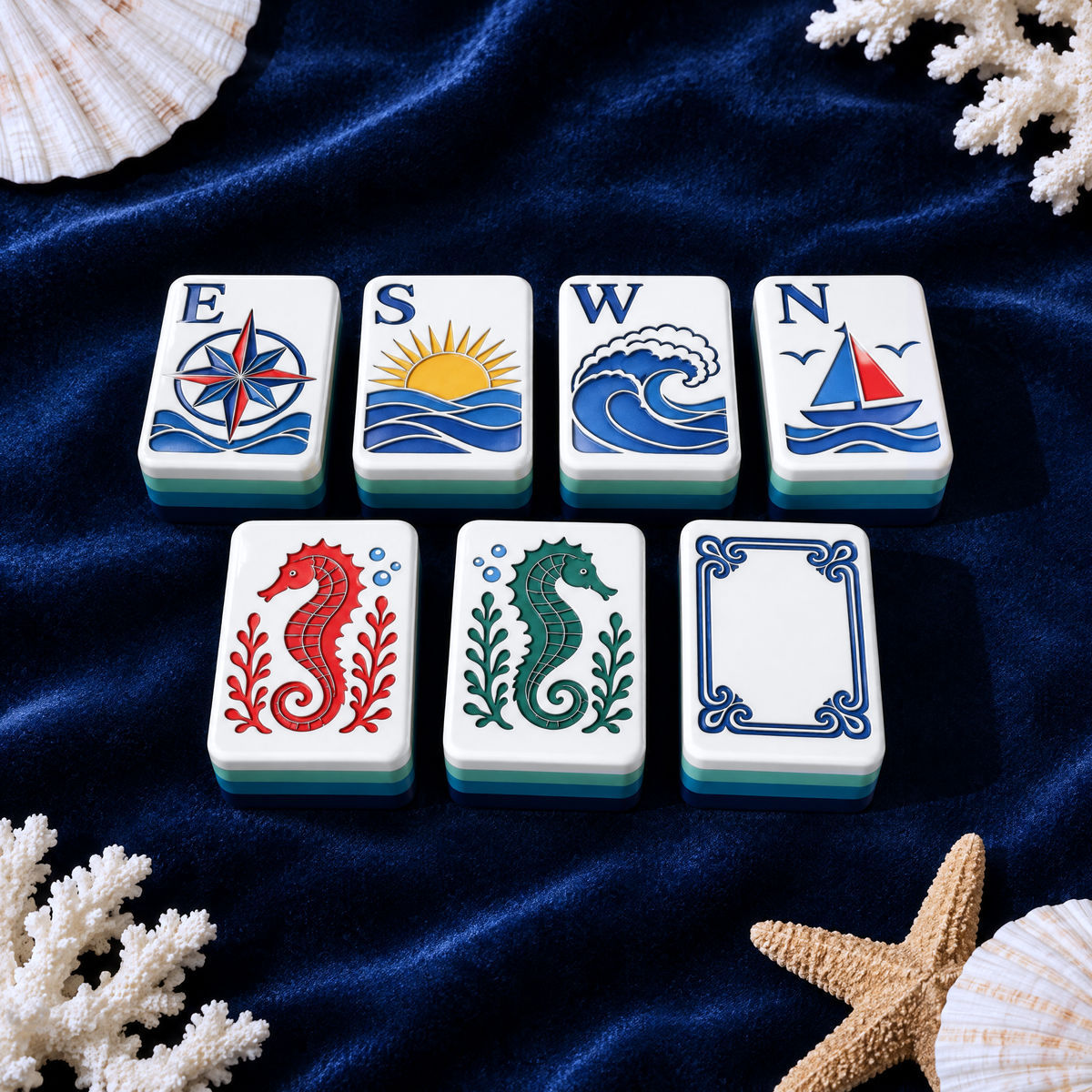
Canasta players gravitate to mahjong because both games build melds from random tiles, reward strategic discarding, and demand partnership awareness. The core similarity: you're drawing, melding (pungs of three identical tiles in mahjong versus sets of three or more in canasta), and reading opponents' discard patterns. Mahjong's learning curve is gentler than new canasta variants because the hand always comes from one official yearly card—no freestyle inventing. You use the same risk-reward math: hold dangerous tiles? Discard a safe one and give away information? The main shift: mahjong uses 152 tiles with jokers as wildcards (never in pairs or single tiles), sequences are forbidden in American mahjong, and all melds must match the yearly National Mah Jongg League card. Cost and entry point are identical to canasta—a best-selling mahjong set runs the same as a quality deck box. Most canasta players pick up American mahjong in three hours of live play.
Do canasta and mahjong use the same hand-building logic?
Yes, but mahjong is stricter. Both games require you to pull tiles, form melds, and throw discards into a public pool. In canasta you build sequences (like 5♥-6♥-7♥) and sets (three 8s of any suit); in American mahjong you form pungs (three identical tiles: 5 Dot-5 Dot-5 Dot) or higher-order melds (kongs of four, quints of five). Mahjong forbids sequences entirely. The real kinship: you're constantly balancing what you keep (safe discard fodder) versus what you need (the tiles on your rack that match the week's valid hands). Both punish greedy tile-holding. Canasta teaches you to read and block; mahjong refines that into a sharper skill because the hand list is public and fixed, so your opponents can predict your strategy faster.
🀄 Shop best-selling mahjong sets →

Why do partnerships matter in both games?
Canasta and mahjong are team sports at heart. In canasta you and a partner meld together and freeze the discard pile for opponents; in American mahjong, your three partners and you are locked into North, East, South, and West seats, and you must call tile draws from each other in strict rotation. The teamwork is more intimate in mahjong—every draw and discard you announce aloud teaches your partners what's live. One player's safe discard becomes another player's gift. Canasta teaches you silence and inference; mahjong teaches you explicit communication through tile positions and timing. If you've coached a canasta partner to read your play, the mahjong hand positions will feel like a natural evolution of that trust.
What's different about the scoring and winning hands?
This is the big break. Canasta has freestyle scoring based on card values and bonuses; American mahjong has exactly one source of truth: the current year's National Mah Jongg League card. That card lists every valid 14-tile hand (your 13 drawn tiles plus 1 final draw). You cannot invent a hand; you cannot negotiate what "counts." That rigidity sounds limiting but it's liberating: everyone plays by one rule book, year-round. Scoring is point-based but far simpler—most hands are worth the same unless you hit a rare "limit hand" (maximum points). Canasta favors long melds; mahjong favors accuracy. If you play canasta for the thrill of the meld, mahjong's hand card will feel like structure you didn't know you wanted. The psychological shift: you're not fighting house rules—you're solving a puzzle with 152 tiles and a public key.
Why do canasta players often learn mahjong faster than beginners?
Three reasons: (1) You already know how to track discards and predict opponent hands. (2) You understand pung/kong as "groups"—your canasta set-building muscle memory transfers directly. (3) You expect variance in draws and have patience for reshuffles. Canasta trains you to assume incomplete information; mahjong's Charleston tile-passing ritual before the game starts feels like controlled chaos you've practiced. Most canasta players read the hand card inside 90 minutes of live play and play a legal hand by game two. The only trap: forgetting that mahjong doesn't allow sequences and that jokers work differently (they substitute for any tile in an exposed meld but never in a pair or single draw). A quick primer on how American mahjong works and you're ready.

How do you decide which game to play on game night?
Canasta if your group loves long, talky games with shifting alliances and house-rule flexibility; mahjong if your group wants 45-minute rounds with one rule set and a public puzzle to solve. Canasta rewards chaos and negotiation; mahjong rewards focus and memory. Neither is "better"—they're cousins. Many groups rotate between them seasonally. Canasta plays best with 2–4 players in one partnership format; American mahjong is rigidly four-player (though two- and three-player variants exist). If you host both, your canasta regulars will transition to mahjong in one evening if they decide to try. The switching cost is zero—just swap the tile set for a deck of cards or vice versa.
Decision Matrix: Which Game Fits Your Table?
Factor | Canasta | Mahjong |
Setup time | 2–3 min (shuffles deck) | 5–8 min (Charleston tile pass) |
Round length | 60–120 min | 30–45 min |
Rule book | Fluid, variants exist | Fixed yearly (League card) |
Memory load | Moderate (card counting) | High (tile patterns + card) |
Bluffing | Central | Rare (tiles are public) |
Skill ceiling | High (meld strategy) | Very high (hand + discard logic) |
New player ramp | 2–3 games | 1–2 games |
Team commitment | Loose (can swap partners) | Locked (N-E-S-W seats) |
What should you check before you buy a mahjong set?
Tile quality & size: Canasta decks are credit-card sized; mahjong tiles are roughly 1–1.5 inches each. Handle them before ordering if possible—plastic acrylic tiles are durable and easy to shuffle; heavier tiles feel premium but demand a larger table and stronger hands for long play.
Joker count & clarity: A legal American mahjong set contains 8 jokers integrated into the 152-tile deck (plus spares). Understanding how jokers work is crucial—jokers replace missing tiles in exposed melds but never appear in pairs or as your winning single tile. Confirm your set labels jokers clearly so all four players see them at a glance.
Suit & number clarity: Print must be crisp on Bams, Craks, and Dots, especially for players over 40. Acrylic tiles with engraved markings hold up better than painted ones after years of play.
Mat & rack fit: A standard mahjong mat has four racks built in; if you buy separate racks with pushers, confirm they're 14-tile depth (standard for American play). Canasta doesn't require special racks, so this is a real new investment—worth it for comfort and speed.
Storage & travel: A mahjong set in a quality bag or case keeps tiles organized and shuffle-ready. Canasta decks live in a single box; mahjong needs compartments for each suit, winds, dragons, and flowers. Choose based on whether you're hosting weekly at home or rotating between friends' houses.
🎁 See our most-loved mahjong sets & accessories →
Why the jump feels natural, not jarring
Canasta teaches you the core pleasure of tile games: watching a stranger's discard pile and deciding whether today is your winning day. Mahjong takes that pleasure and locks it into a rule system so clean and consistent that you stop arguing about what's allowed and start arguing about strategy. The transition from canasta is not a learning curve—it's a side step. Your reads, your patience, your tile anxiety: all of it transfers. The only new skill is reading one hand card quickly, and that takes maybe 15 minutes of focused staring. Most canasta friends who try mahjong once play it weekly within a month. The game rewards exactly what canasta taught you: patience, observation, and the ability to lose gracefully when your draw is cold.
✨ Find your Mahstead set — free US shipping →
If you're ready to host your first mahjong game night, start with beginner-friendly rules and give your canasta crew one night to practice the hand card. You'll be shocked how quickly they adapt—and how fast the talk at the table shifts from "which hands count?" to "did you see that discard coming?" That's when you know the switch has stuck.

FAQ
Can I use canasta decks to play mahjong?
No. Canasta uses 52-card decks (about 108 cards total with two decks). Mahjong requires 152 specific tiles (Bams, Craks, Dots, Winds, Dragons, Flowers, Jokers) with fixed tile distributions. Trying to substitute cards creates confusing mismatches and violates the game's hand-matching logic.
How long before a canasta player can win their first mahjong hand?
Most canasta veterans win by game two or three, often in the first session if they focus on the hand card for 20 minutes beforehand. Your tile-reading skills transfer immediately; the only new piece is matching your tiles to one of the year's valid hands.
Do mahjong and canasta use the same partnerships?
No. Canasta pairs sit across from each other and can rotate partners between hands. American mahjong locks you into North, East, South, or West seats for the entire game; your partners are fixed. This makes mahjong's teamwork tighter and more strategic.
Is mahjong harder than canasta?
Different, not harder. Canasta has looser rules and more freestyle strategy; mahjong has one strict rule set but deeper hand complexity. Most players find mahjong's rigidity easier to learn but harder to master because every opponent plays by the same book, so competition sharpens faster.
What if my canasta group wants to learn mahjong together?
Schedule one game night as a primer. Spend 30 minutes reviewing the hand card and basic tile groupings (pungs, kongs, the fact that no sequences allowed). Then play three or four hands while someone coaches tile recognition. By hand five, your group will be bantering like they've played for years.
Do I need a mahjong mat if I play canasta on a regular table?
No, but it helps. Canasta lives in your hand; mahjong tiles sit on the table in racks, and a mat with built-in racks speeds setup and keeps tiles organized. It's not mandatory, but it transforms a casual game into a smooth 40-minute rhythm instead of fumbling with loose tiles.


View More
View More
View More
