
What Is Soap in American Mahjong
Last updated: Nov 23, 2026
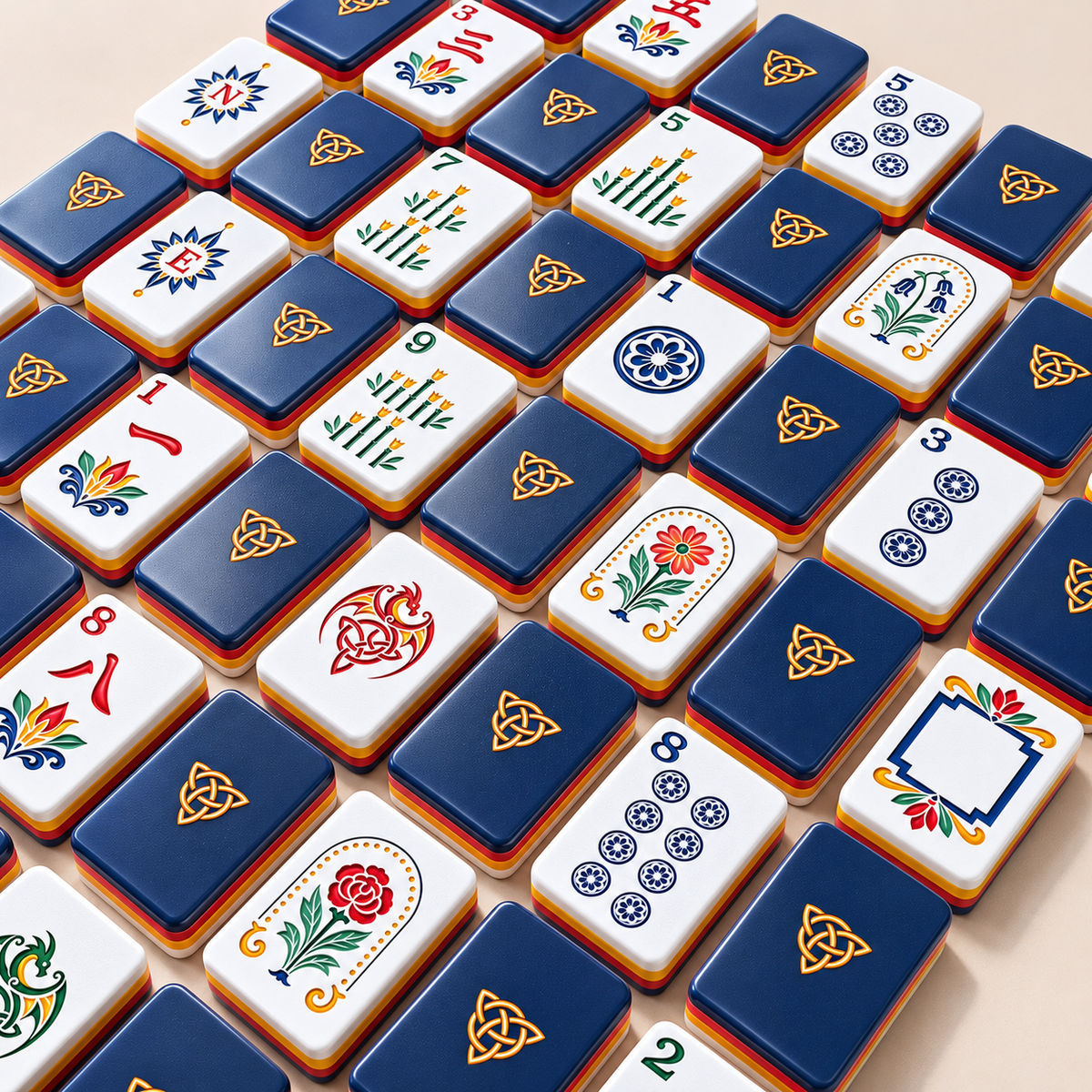
Soap is the White Dragon tile in American mahjong, named after its appearance as a blank or white face. Unlike the Red Dragon (paired with Craks) and Green Dragon (paired with Bams), Soap serves double duty: it acts as a White Dragon in dragon pungs and kongs, and as a zero when reading the NMJL card for sequences that begin "0" (which appears on the card as a blank space or labeled position). You cannot use Soap as a joker, and it cannot form a pair by itself. A standard 160-tile American set includes exactly four Soaps among its 152 playing tiles.
🀄 Shop best-selling mahjong sets →
Why is the White Dragon called Soap?
The name "Soap" comes from the tile's appearance—it's blank or white-faced, reminding players of a bar of soap sitting on the table. It's pure slang born from decades of American mahjong rooms, and it stuck. Some older players call it "Soap" or "White"; both names refer to the same tile. The nickname makes it easier to call out at a crowded table: saying "Soap" is faster than "White Dragon" when you're announcing what you need or what you're counting.

What's the difference between Soap as a Dragon and Soap as a zero?
Soap has two identities depending on the hand you're building. When the card shows a hand with three White Dragons, you use Soap as a Dragon—it's part of a pung or kong, paired with other White Dragons. When the card shows a hand starting with "0 1 2" (written as a blank space followed by 1 and 2), Soap functions as a zero. The card dictates which role applies. Reading this correctly is crucial: using Soap wrong doesn't just cost a point—it can mean declaring an invalid hand and losing your turn or facing a penalty. Always check the card before you pick up tiles.
Can you use Soap as a wildcard or joker?
No. Soap is never a wildcard or joker substitute, even though it's blank-faced. American mahjong draws a sharp line: jokers are marked tiles and can replace any single tile in an exposed pung, kong, quint, or sextet. Soap is a fixed tile—it has only two roles (Dragon or zero), and neither is "anything you want." Using Soap as a joker is a rule violation. Jokers are separate, and a 160-tile set gives you eight of them to work with. Many new players make this mistake, so watch for it at your first table and double-check your own hands.
When do you actually need Soap in your hand?
You need Soap when the card lists a hand that either contains a White Dragon exposure or uses a zero sequence. For example:
Hand with White Dragon pung: 3 Soaps (a pung) + other tiles.
Hand with zero sequence: A row reading "0 1 2" uses one Soap as the zero, then regular number tiles for 1 and 2.
Mixed hand: Some hands combine both—Soap as Dragon in one exposure and as zero in another. Read the card carefully to spot these.
If the hand doesn't mention White Dragons or zero, Soap is useless to you that round—discard it early and hunt for tiles the card actually needs.

How do you spot Soap in a real set and avoid confusion?
Here's what to look for: Soap is the White Dragon tile, completely blank or white-faced with no symbol or number. In a full American mahjong set, Soap sits among the eight Dragon tiles (four Red, four Green, four White/Soap). The simplest way to avoid confusion: separate your Dragons before the game starts, arrange them by color in your rack, and get comfortable with how Soap looks in your specific set. Engraved sets sometimes use small text or symbols to mark Soap; read the tile key that came with your set. During play, if you're unsure whether a tile is Soap or a joker, ask another player—misidentifying them mid-hand is a common mistake that can derail your whole round.
Tile | Role | In Hand | Card Example |
White Dragon (Soap) | Dragon exposure | Pung of three Soaps | WWW (three white tiles) |
White Dragon as zero | Sequence start | 0 1 2 sequence | Blank spot + 1 + 2 |
Joker | Wildcard | Replaces any single tile | Substitutes in exposed pung only |
This table shows the three most common confused roles. Soap is never both a joker and a Dragon in the same hand—the card tells you which one applies to that hand.
What's the best way to teach newcomers about Soap?
Start with the name and shape: "Soap is blank, it's the White Dragon, and it's either a Dragon or a zero—never a joker." Spend one practice hand walking through a card that uses a White Dragon pung, then another that uses a zero sequence. Let them physically handle Soaps and compare them to Red Dragons, Green Dragons, and jokers side by side. This tactile recognition prevents errors faster than any explanation. When you host weekly games, keep a glossary card at the table; most new players absorb the difference after two or three rounds of hands that require Soap.
🎁 See our most-loved mahjong sets & accessories →
What to check before you buy a mahjong set to ensure Soap is clear and distinguishable
Before committing, verify these points:
Visibility: The White Dragon (Soap) should be visibly blank or white against your playing surface and easy to spot in a rack.
Contrast: If your mat or playing surface is light-colored, a white Soap can disappear—test the set on a mat similar to yours if possible.
Tile size and engraving: Larger tiles make Soap easier to read; tiny engravings on blanks can confuse new players. Engraved sets usually mark Soap clearly with "W" or a label so you don't second-guess yourself mid-round.
Set completeness: A proper 160-tile American set includes four Soaps (one per player). Count them during unboxing.
✨ Find your Mahstead set — free US shipping →
FAQ
Is Soap a joker tile?
No. Soap is the White Dragon and can only be a Dragon or a zero on the card. Jokers are separate tiles and can replace any single tile in exposed plays. Never substitute Soap for a joker.
Can I use Soap to form a pair?
No. Soap cannot form a pair by itself; it must be part of a pung (three), kong (four), or a sequence role as zero. Pairs in American mahjong must be identical tiles from the card, and a Soap pair violates this rule.
How many Soaps are in a mahjong set?
Exactly four—one per player. A standard 160-tile American set contains 152 playing tiles, including four White Dragons (Soaps).
What if I can't tell Soap apart from a joker at the table?
Ask another player immediately. Misidentifying them before you declare is better than being caught mid-hand. At a new table, take 30 seconds to compare tiles before the first hand starts.
Does every hand on the card use Soap?
No. Many hands don't include White Dragons or zero sequences, so Soap is irrelevant to those hands. Always check the card first to see if Soap plays a role in the hand you're pursuing.
Can Soap be part of a chow or sequence with regular numbers?
In American mahjong, zero sequences appear on the card as "0 1 2," and Soap fills the zero spot. You cannot create arbitrary sequences like "Soap 2 3"; the card must explicitly show the zero sequence.


View More
View More
View More
