
Hong Kong Mahjong Payment and Betting Rules
Last updated: Nov 23, 2026
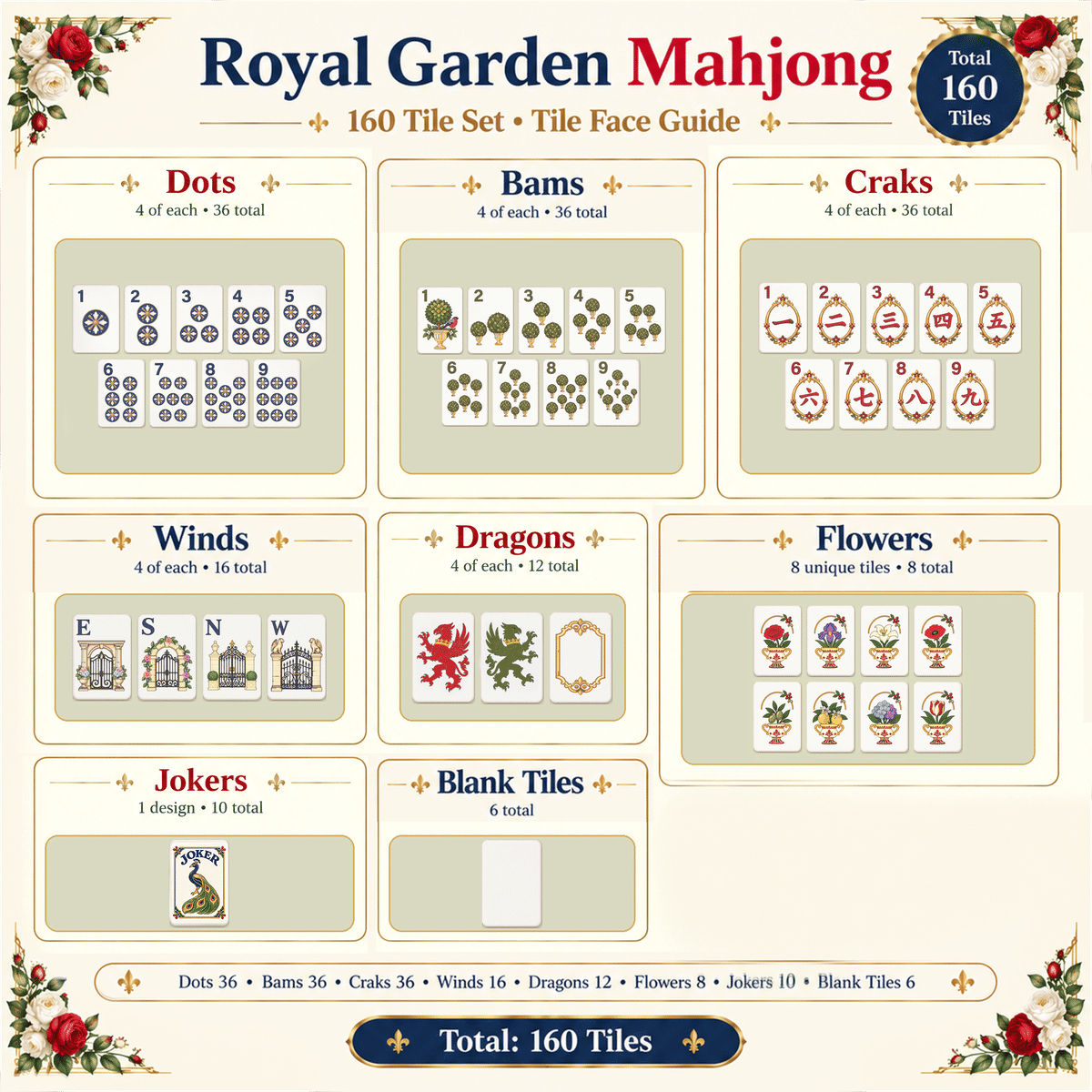
Hong Kong mahjong payment differs fundamentally from American play: winners collect cash directly from losers based on the hand's base value and winning method. A basic pung or kong earns lower payments; a self-drawn win (called "winning from the wall" or zimo) doubles the payout. Losing players pay the winner and sometimes pay penalty fees to other players. Most casual games run on agreed stakes—often a small per-point fee or per-hand ante—set before play begins. Unlike American mahjong's scorecards and season-long tallies, Hong Kong games settle after every round. Players must agree on multipliers (for concealed hands, special patterns, or all-terminal melds) before the first tile is drawn. Payments happen immediately; no house takes a cut. Mahstead's acrylic sets work equally well for Hong Kong play, though Hong Kong sets typically include fewer jokers than American variants.
Hong Kong mahjong (also called Cantonese mahjong) is fast, social, and cash-based. Every hand carries real stakes. Understanding the payment system is essential—not just to win, but to sit down confidently and play fairly with respect for the group's customs.
How do Hong Kong mahjong payment methods work?
Hong Kong mahjong uses immediate, direct player-to-player payment after each hand. The winner collects from each losing player separately; there is no pooling. A hand's payment value depends on the winning pattern (a simple pung versus a complex meld sequence), whether the win came from the discard pile or drawn from the wall, and whether concealment bonuses or special multipliers apply. Before the game starts, players agree on a base unit—often called the "point value" or stake. All payments scale from that unit. For example, if the agreed stake is 1 point per tile or per pattern, a four-pung hand might be worth 4 points; each of the three losing players pays the winner that amount. If the hand qualifies for a doubling (such as self-draw), payment doubles. Players settle after each hand immediately in cash or chips; no running tally is kept across hands the way American mahjong uses a scorecard.
🀄 Shop best-selling mahjong sets →

What is the difference between self-draw and discard-pile wins?
Self-draw (zimo) means you drew the winning tile from the wall yourself; discard-pile (ronhe) means you claimed the tile another player discarded. Hong Kong rules reward self-draw with a payment multiplier—typically double the base payout. This encourages defensive play and makes self-drawn hands significantly more valuable. When you win from a discard, the player who threw the losing tile pays you the agreed amount; the other two players pay nothing. When you self-draw, all three players pay you the agreed amount—or sometimes a doubled amount. This asymmetry is fundamental to Hong Kong scoring psychology: players guard their discards carefully, and the game's tension rises as the wall shrinks because self-draw becomes easier to achieve. The distinction has no parallel in American mahjong, which uses seasonal scoring cards and no cash stakes.
How do concealed hands and melds change payment?
A concealed hand (or "all concealed," men qing) means all your melds were drawn from the wall and not claimed from discard; you win on your own draw. This earns a multiplier—often doubling or even tripling the base payment—because it requires luck and skillful concealment. Any meld you claim from the discard breaks concealment and reduces or eliminates the bonus. Pungs (three identical tiles) and kongs (four identical) are the only exposed melds in Hong Kong mahjong; you cannot have sequences as exposed melds. Special hand types—such as all terminals (lao yao), all honors (zi yi se), or seven pairs—carry built-in multipliers set by house rules before play. These multipliers stack: a concealed win plus an all-terminals hand might be worth 4× or 8× the base payment. Players must agree on the multiplier chart before the first hand. Written agreements prevent disputes and keep the game social rather than bitter.
What is the ante, and who keeps it?
Many Hong Kong games use an ante—a small fee each player pays into a pool before each hand begins. The ante can be claimed by the winner of that hand (added to winnings), donated to the next game's starting pool, or split among players for tea or snacks. Antes are optional and vary by region and group custom. If no ante is used, payments come solely from losers to the winner based on the hand's value. Some groups use "lucky money" or a round-robin bonus system: if you win, you collect from the ante pool; if you win twice in a row, you may earn an extra multiplier. Antes keep the game moving and reduce sting from a losing streak, since the ante pool can equalize payouts over time. However, antes are never mandatory—they exist only if the group agrees beforehand.
What are common payment multipliers and when do they apply?
Winning Method | Base Multiplier | Notes |
Winning from discard | 1× | Standard payment from discarder only. |
Self-draw (zimo) | 2× | All three players pay; no discarder bonus. |
Concealed hand | 2×–3× | All melds drawn from wall; stacks with self-draw. |
All terminals or honors | 2×–4× | Agreed before play; varies by group. |
Seven pairs or special pattern | 3×–8× | Rare, valuable hands; highest multipliers. |
Kong bonus | +1× or +2× | Each kong in the hand adds to final payout. |
Multipliers stack multiplicatively or additively depending on house rules—confirm before play starts. A self-drawn, concealed, all-honors hand in a strict group might be worth 8× to 16× the base stake. In casual games, multipliers stay modest (2×–4×) to keep money moving and friendships intact. No single player should bankrupt another; if stakes are too high, renegotiate before the next hand.

How do players avoid payment disputes?
Disputes arise from misunderstanding hand values, multiplier stacking, or who pays whom. Prevent them by writing down the agreed multiplier list and stake amount on a visible note before play begins. Call out your winning hand clearly and point to each meld; the group verifies it matches the current year's legal hand patterns (Hong Kong uses its own canonical hand library, separate from American mahjong's card). Confirm the multiplier: "Self-drawn, all concealed, no special pattern—pays 4 points from each of you." Count payment aloud. In any disagreement, stop and consult the written rules before money changes hands. Never rush settlements. Many groups also appoint a "scorekeeper" to track payment amounts and multipliers, especially if alcohol or excitement is high. Phone pictures of the agreed rules before play starts prevent "I thought we said…" conflicts later.
🎁 See our most-loved mahjong sets & accessories →
What is a "dead hand" or forfeited win?
If you violate a rule during play—such as claiming a tile you are not entitled to, or placing a meld incorrectly—your hand may be declared dead or void. A dead hand does not win; you forfeit payment and sometimes pay a penalty to each other player (often half the base stake). Dead hands usually result from exposing too many tiles, discarding out of turn, or calling a win on an invalid hand. In casual play, the group often grants a warning; in organized games, the penalty is automatic. Verify your hand is legal before declaring the win. If you are unsure, ask another player to check. Once everyone agrees the hand is legal and confirms the multiplier, payment is binding.
✨ Find your Mahstead set — free US shipping →
What to check before you buy tiles for Hong Kong mahjong:
Tile clarity: Hong Kong play moves fast; tiles must be easy to read from across the table. Acrylic sets with clear engravings work best.
Joker count: Hong Kong games typically use fewer jokers than American mahjong. A standard best-selling mahjong set includes spares for flexibility.
Mat size: Hong Kong games can be intense and require quick tile movement. A sturdy mat with clear zones helps prevent accidental contact and disputes.
Set storage: If you host weekly games, a durable bag or case keeps tiles organized and ready. Worn or mixed sets invite disagreements over tile condition.
Group agreement: Before buying, confirm your group's house rules and stake levels so you know what you are signing up for.
How do payment methods differ across regions?
Guangzhou, Hong Kong proper, Macau, and overseas Cantonese communities each have slight variations. Guangzhou games often use higher multipliers and more complex hand patterns. Hong Kong games tend toward faster rounds and moderate stakes. Macau games, influenced by tourism and casino culture, sometimes use chips instead of cash. Overseas communities adapt rules to their group's comfort level; some play for points only (no cash), while others use real money. The core principle remains: payment is immediate, direct player-to-player, and based on agreed multipliers. Before sitting down in an unfamiliar game, ask "What are the stakes, multipliers, and house rules?" Honest answers protect everyone.
Is Hong Kong mahjong the same as Chinese or Taiwanese mahjong?
No. Hong Kong, Chinese (Mainland), Taiwanese, and Riichi (Japanese) mahjong each have different hand patterns, payment systems, and tile combinations. Hong Kong mahjong emphasizes fast rounds, concealment bonuses, and immediate cash settlement. Chinese mahjong (practiced in Mainland communities) uses different multiplier systems and sometimes adds bonus tiles. Taiwanese mahjong uses card-based hand selection like American mahjong but with cash stakes. Riichi uses a seasonal card and strict scoring hierarchy. If you are learning, confirm which variant your group plays before joining—rules are not interchangeable. Explore mahjong variants to find the version that matches your group's tradition.

FAQ
What happens if I cannot pay my losses?
Stop play immediately and renegotiate stakes or pay later in installments agreed to by all players. Never play beyond your means. If stakes are unsustainable, walk away and find a lower-stakes game. Honest groups will always renegotiate rather than create debt.
Can I use chips instead of cash?
Yes. Many groups use chips or tally points on paper, then settle in cash at the end of the session or season. Agree on the chip-to-cash conversion rate before the first hand.
Who decides the multiplier for special hands?
The group decides together before the game starts. Consult your region's canonical hand guide (Hong Kong has its own; American mahjong uses the National Mah Jongg League card), then write down the multipliers and post them visibly.
What if someone claims a win but the hand is illegal?
The hand is void; no payment changes hands. The player typically forfeits the round and may pay a small penalty (agreed beforehand). Play continues; the tiles are shuffled and a new hand begins.
Is there a time limit for paying after a hand ends?
Settle immediately after verification. Delaying payment invites dispute and erodes trust. Fast, clear payments keep the game moving and friendly.
Can payment multipliers exceed 10× the base stake?
Yes, if the group agrees—but most casual groups cap multipliers at 4×–8× to keep stakes manageable and friendships intact. High multipliers are rare and usually apply only to extremely difficult hands (all terminals, seven pairs, heavily concealed).


View More
View More
View More
