
What Is Passing Tiles in American Mahjong?
Last updated: Nov 23, 2026
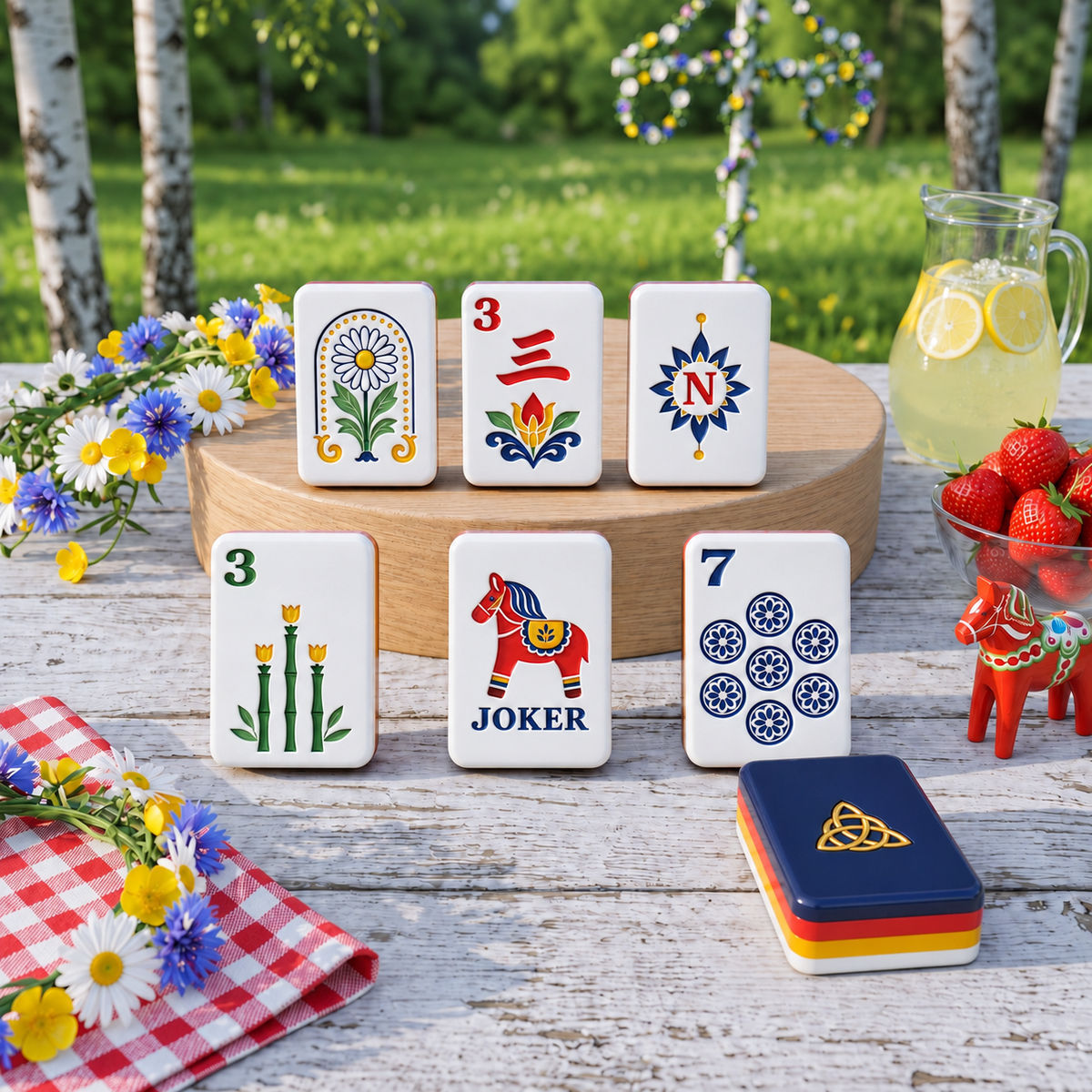
The Charleston is the mandatory tile-passing ceremony that opens every American mahjong game. All four players sit around the table and exchange exactly 3 tiles at a time in a fixed sequence: right (3 tiles), across (3 tiles), left (3 tiles), then one final optional pass right. Players pass face-down without seeing what they receive until all three mandatory passes finish. The purpose is to randomize the deal and let players shed unwanted tiles based on their initial 13. After the Charleston, play begins with the tile draw. The Charleston explained covers the full ritual step-by-step. Serious players host weekly games with best-selling mahjong sets because consistent, quality tiles matter when you're passing dozens of times per session.
The Charleston is the formal tile-passing ceremony that opens every American mahjong game. All four players sit around the table and exchange exactly 3 tiles at a time in a fixed sequence: right (3 tiles), across (3 tiles), left (3 tiles), then one final optional pass right. Players pass face-down without seeing what they receive until all three mandatory passes finish. The purpose is to randomize the deal and let players shed unwanted tiles based on their initial 13. After the Charleston, play begins with the tile draw.
Why does the Charleston matter in American mahjong?
The Charleston prevents the dealer from gaining an unfair advantage at the start. In other variants (Chinese, Hong Kong, Riichi), tiles are drawn randomly—no passing. American mahjong lets players influence their opening hand by discarding tiles they can't use, but they don't know what they'll get back. This creates a balance: you have agency, but not certainty. The three mandatory passes also reset psychology between games, so the outcome of one round doesn't carry momentum into the next. Without the Charleston, American mahjong would feel stale because the initial 13 would be whatever the wall dealt—no opportunity to course-correct toward the current year's card hands.

How exactly does the passing sequence work?
Each player begins with 13 tiles. The Charleston happens in four phases, all simultaneous—everyone passes at the same time, not one player per turn. Phase 1 (Pass Right): Everyone passes 3 tiles face-down to the player on their right. Phase 2 (Pass Across): Everyone passes 3 tiles face-down to the player across the table. Phase 3 (Pass Left): Everyone passes 3 tiles face-down to the player on their left. Phase 4 (Optional Pass Right): Before the first draw, any player may pass 1 tile right to the player beside them; the recipient then has the option to pass 1 back. This optional pass is called "courtesy pass" or "return pass." Once Phase 3 completes, you stop looking at your tiles and wait until the first wall draw. Many casual groups skip the optional pass to speed play; competitive or formal games always include it.
What tiles should you pass—and what's a costly mistake?
Your goal in passing is to shed tiles that don't fit the current year's card. If you have three Dragons and no pungs of Dots or Bams, pass a Dragon. If you have Winds but need only Red Dragons for your hand, pass a Wind. Pass duplicates you can't use—two 3 Craks when you need a pung of 3 Craks are only half useful. A costly mistake is passing tiles you might need back. Because you don't know what you'll receive, passing your only White Dragon (the zero tile, wild) or a joker early means you lose flexibility. Another trap: passing the same suit to every receiver. If you pass three Dots right, three more across, and three more left, you've shed nine tiles of one suit and received nine tiles of three different suits—a near-guaranteed mismatch. Better strategy: pass one Dragon, one high Wind, and one odd Dot or Bam, so you increase diversity in what returns.
How does the Charleston differ from other mahjong variants?
Chinese mahjong players don't do a Charleston at all—the wall is randomized, tiles are drawn, and play starts immediately. Hong Kong mahjong uses a similar no-pass approach. Riichi (Japanese) mahjong also skips passing; some players draw 14 tiles instead of 13. Taiwanese mahjong sometimes uses a shorter pass (1 tile each direction) or none. American mahjong's three-tile, three-direction Charleston is unique and intentional: it's designed to give experienced players room to read the table and shed strategically while keeping the opening hand unpredictable. This hybrid—some control, some luck—is why American players love the format. If you're learning American rules for the first time, expect the Charleston to feel slow the first few games; within three sessions, it becomes muscle memory.

What happens if someone passes out of turn or passes the wrong number of tiles?
If a player passes 4 tiles instead of 3, the pass is invalid—stop, pick them back up, and redo it. If someone passes before the signal or after everyone else has finished, that player's pass doesn't count; they keep those tiles. If a player looks at tiles they received before all three mandatory passes are done, there's no penalty—it's only rude and spoils strategy. House rule: most groups say "tiles are on the table" as the signal to start each pass phase, and "tiles received stay face-down" until the last pass finishes. If you're hosting weekly games, establish the signal once and repeat it every session so no one's confused. A common mishap: one player passes 3 tiles right, but the player across from them didn't move—that player forgot to pass left. Pause, confirm everyone's tiles are ready, restart that phase. Using a mahjong mat with clear tile zones helps because each player sees exactly where their tiles land, reducing confusion.
Scenario | Action | Why It Matters |
You pass 3 Winds and receive 3 Dots | Keep going; reassess after optional pass | Unlikely but possible to pivot toward a Dots hand |
Someone passes 4 tiles | Invalid pass; redo | Keeps the ritual fair and equal |
Optional pass is offered, you decline | Game continues normally | Refusing the optional pass is always allowed |
You peek at received tiles mid-Charleston | Continues, but you lose surprise | Breaks strategy but doesn't halt play |
All three mandatory passes finish | Stop, put tiles face-down, begin optional pass or first draw | Clear signal prevents confusion |
🀄 Shop best-selling mahjong sets →
What's the optional pass—and should you always take it?
The optional pass (or "courtesy pass") happens after all three mandatory exchanges. Any player may pass 1 tile right to their neighbor; that neighbor can pass 1 back or keep both. It's a final chance to adjust a tile you really dislike. Many casual groups skip it to speed play and get to the first draw. Competitive or formal games always do it. Should you take the optional pass? If you received a tile you absolutely can't use (like a 9 White when you're building a 1–7 hand), yes—pass it and hope for something useful. If you're happy with your 13 tiles, don't pass. If you pass and receive a terrible tile back, you can't redo it. The optional pass is optional—you can decline to pass and your neighbors respect that. It's also rare to pass back; most players keep the single tile they receive.
How do you know if you're doing the Charleston correctly at home?
Use this checklist before your first draw:
All four players started with 13 tiles.
Phase 1: Everyone passed 3 right, received 3 left. All players now have 13.
Phase 2: Everyone passed 3 across, received 3 from across. All players still have 13.
Phase 3: Everyone passed 3 left, received 3 from right. All players still have 13.
Optional Phase 4: One tile passed right, up to one returned. Player counts: still 13 each.
All tiles are now face-down in each player's rack or hand.
The player who received the Kong's indicator (called the "original East" player) draws first tile from the wall.
If any player has 12 or 14 tiles, stop and recount—you've made a passing error. If a player is looking at tiles and talking about what they'll draw next, let them; the Charleston is over once all three mandatory phases finish.
🎁 See our most-loved mahjong sets & accessories →
What to check before you buy
When you're ready to host weekly games at home, a few details make the Charleston smoother:
Tile quality: Clear markings on every tile mean you pass confidently and see faces during play. Acrylic tiles with crisp engraving stay readable after years of Charlestons.
Rack design: Solid racks with pushers let you organize tiles quickly after passing, so the table stays clear and play flows.
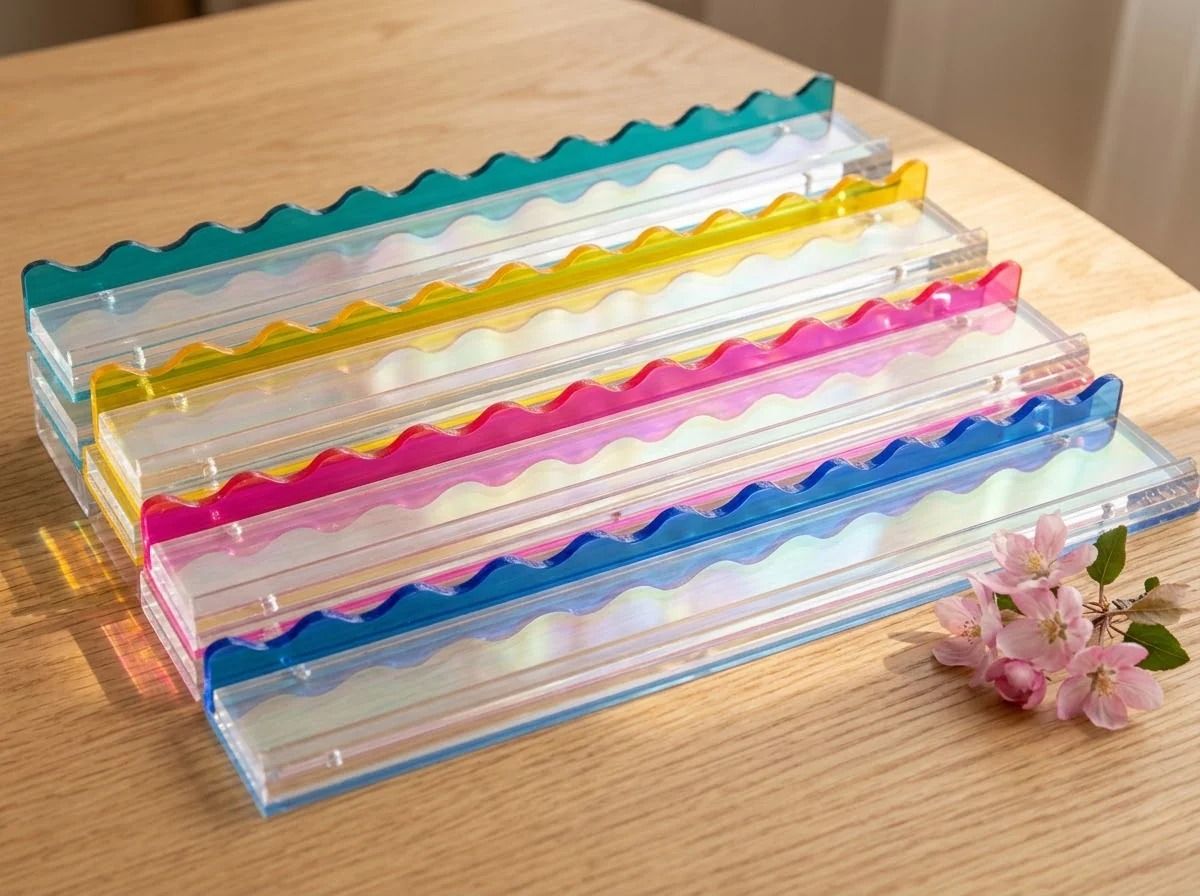
Table space: You need room for four racks plus a center discard area and wall. A dedicated mahjong mat marks zones so no one's confused about where passed tiles go.
Player familiarity: If anyone's new to American rules, practice the Charleston twice before starting real hands—muscle memory prevents errors.
Most players find the Charleston fun once they see how it changes the opening hand. It's one of the reasons American mahjong feels more social and less purely mechanical than other variants.
✨ Find your Mahstead set — free US shipping →
FAQ
Can you pass tiles face-up during the Charleston?
No. All tiles passed during the three mandatory phases must be face-down. You don't see what you're passing or receiving until the Charleston ends. Face-up passes break the rule and are not allowed.
What if you make a mistake during the optional pass and want to undo it?
Once the optional pass completes, it's final. You cannot undo or redo a tile swapped in the optional phase. That's why many players hesitate before passing in Phase 4.
Do all four players have to pass at the exact same time?
Yes. The Charleston happens simultaneously—everyone passes at once, not one player per turn. This is what makes it fair and unpredictable.
Is the Charleston different if you're playing 2-player or 3-player mahjong?
Yes, significantly. Two- and three-player games use modified passing rules (or skip the Charleston entirely) because you don't have four players passing in all directions. See 2 and 3 player mahjong rules for the exact format.
What happens if someone refuses to participate in the Charleston?
They must participate to play American mahjong. If a player won't pass tiles, the game can't start. In practice, this almost never happens—the Charleston is quick, and every player expects it.
Can you communicate with other players about which tiles to pass during the Charleston?
No. Passing is silent and simultaneous. Talking about your tiles during the Charleston is cheating and ruins the randomization. Beginners sometimes whisper strategy; stop them gently and explain it spoils the game.


View More
View More
View More
