
Is Mahjong Similar to Solitaire? Key Differences Explained
Last updated: Nov 23, 2026
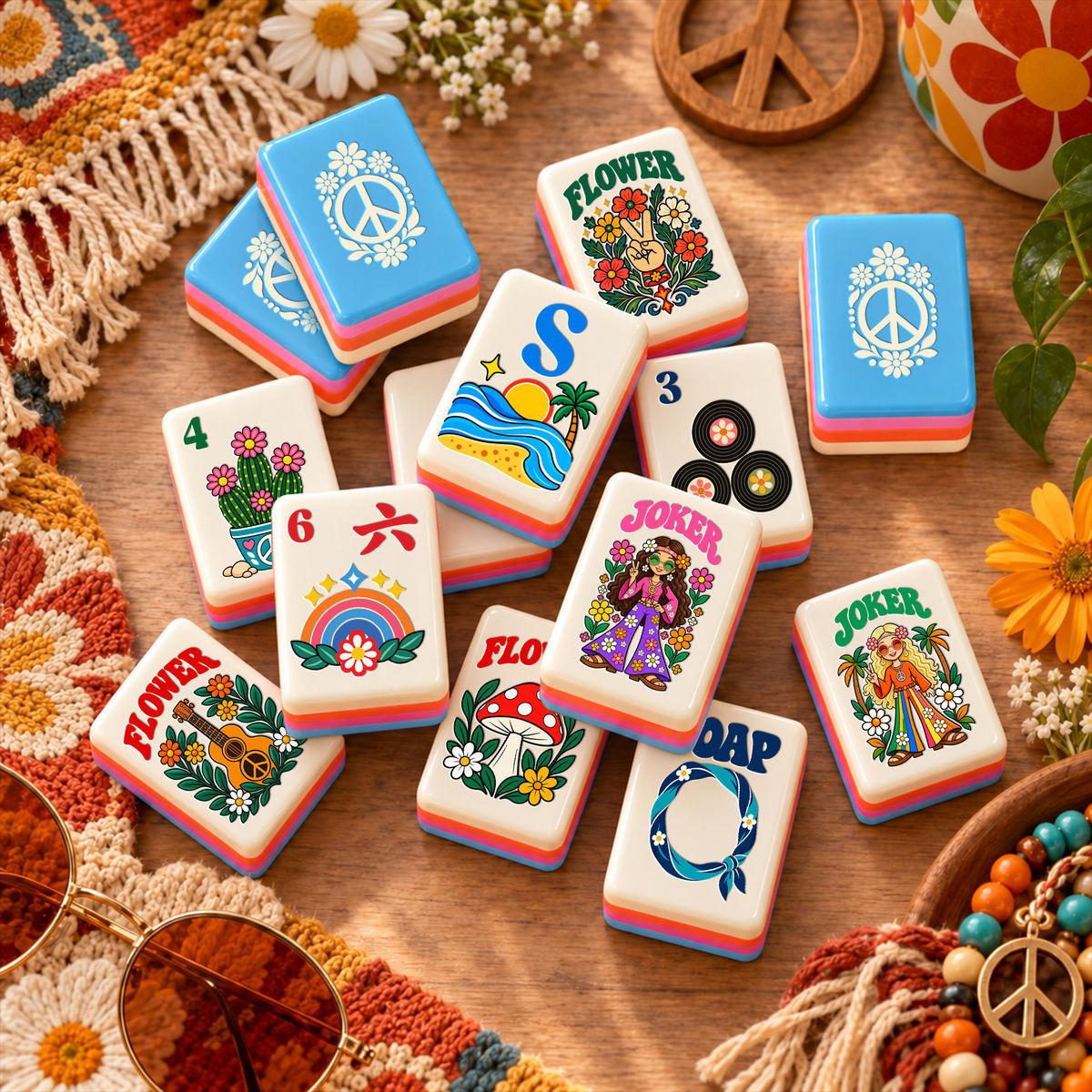
No—mahjong and solitaire are distinct games despite surface similarities. Solitaire is a solo card or tile game where you arrange cards by suit and rank to reach a win state; you play alone, with no opponents or table interaction. Mahjong is a four-player social game (American, Chinese, Hong Kong, Riichi, or Taiwanese variant) where players draw and discard tiles from a shared wall, match hands against a published card each season, and compete for points. American mahjong uses 160-tile acrylic or bone sets with 152 tiles in play, no skill-based sequences (only melds of identical tiles), and hands drawn entirely from the current year's National Mah Jongg League card. Solitaire requires no special set or rulebook; mahjong demands a group, a mat, racks, a card, and shared learning. If you enjoy quiet, solo puzzle-solving, solitaire fits. If you crave social play, strategic hand-reading, and weekly gatherings, mahjong for beginners is your game. Both reward patience; only mahjong rewards friendship.
🀄 Shop best-selling mahjong sets →
Why mahjong and solitaire feel alike—but aren't
Both games use tiles (or cards), rely on matching and memory, and demand focus. A player sitting alone with a solitaire deck feels similar to a player studying their rack before a discard. But the similarity stops there. Solitaire is deterministic: you know all the cards, shuffle once, and either solve the puzzle or restart. Mahjong is probabilistic: you never know the draw order, opponent hands, or what tiles are buried in the wall. Solitaire is a puzzle; mahjong is a game of incomplete information. This difference shapes everything—your strategy, your pace, your outcome. Solitaire teaches patience and logic. Mahjong teaches reading opponents, timing, and how to win under uncertainty.

How do the number of players change everything?
Solitaire is always one player; American mahjong is always four. This single fact rewrites the entire experience. In solitaire, you control the outcome: your skill, luck, and patience determine success. In mahjong, three other players have hands, intentions, and information you don't see. They watch your discards, remember what you passed, and block your melds. You must discard tiles that help you avoid helping them—a social negotiation disguised as arithmetic. A player sitting alone never learns to read a face or time a pass. A player at a mahjong table develops judgment about human behavior alongside tile memory. The four-player format transforms a puzzle into a conversation.
What rules are completely different?
Aspect | Solitaire | Mahjong | Winner |
Players | 1 (solo) | 4 (always) | Mahjong if you love people |
Rulebook | Varies by variant; no official league | Fixed by National Mah Jongg League card each year | Mahjong (clear, published rules) |
Tiles/cards | Known at start | Most hidden until drawn | Solitaire (simpler info) |
Goal | Arrange into suit/rank sequences | Match hand to current year's card in exact melds | Mahjong (more structure) |
Sequences allowed | Yes, any 1-2-3 in sequence | No sequences in American mahjong; only identical melds | Solitaire (more flexible) |
Winning | Deterministic (your skill decides) | Strategic (opponents matter) | Mahjong (more complex) |
Game length | 5–30 minutes | 30–90 minutes per game | Solitaire (quicker) |
What's needed | Deck or tile set only | Set, mat, racks, card, dice, four people | Solitaire (fewer requirements) |
Solitaire is a personal puzzle. Mahjong is a team sport where you compete individually. If you want to control your fate, solitaire wins. If you enjoy chaos and company, mahjong is the answer.
Can you play mahjong solo like solitaire?
Yes, but it defeats the purpose. Some players practice alone using a mahjong set to study the current year's card, simulate draws, and practice hand-reading. This trains your eye and memory—useful before joining a group. But solo mahjong lacks the element that makes mahjong mahjong: the other players. You can't practice reading a discard, timing a call, or managing the table economy when you're alone. Solo play is like practicing basketball by shooting free throws—valuable, but not the game. Real mahjong demands an audience.
🎁 See our most-loved mahjong sets & accessories →

What draws people to one game over the other?
Solitaire appeals to players who want control and closure. You finish a game in minutes, know immediately if you won, and don't depend on anyone else. No stakes, no social anxiety, no remembering what Janet discarded three turns ago. Solitaire is meditative—a way to calm your mind while your hands work. Mahjong appeals to players who crave connection and unpredictability. You win or lose based partly on your skill and partly on luck and opponents' choices. A bad draw can humble you; a great defense can save you. Mahjong is social—a reason to gather weekly, share snacks, laugh at near-misses, and build friendships around a mat. If you play solitaire, you're solving for yourself. If you play mahjong, you're solving with others. The best mahjong players we know kept a solitaire deck handy for travel and a mahjong mat and set at home for Thursday nights.
Which game teaches better strategy?
Both teach strategy, but of different kinds. Solitaire teaches optimization: how to plan ahead, spot hidden opportunities, and make moves in the right order. You learn to think three steps forward and undo mistakes in your head. These skills transfer to chess, programming, and project planning. Mahjong teaches adaptation: how to read incomplete information, adjust when plans fail, and respond to other people's moves. You learn to bluff, spot tells, manage risk, and know when to slow down. These skills transfer to poker, negotiation, business, and life. Solitaire makes you a better thinker. Mahjong makes you a better player—someone who adapts and reads the room. Neither is "better"; they're different kinds of smart. A player strong at solitaire can struggle with mahjong's social element; a mahjong master might bore quickly with solitaire's predictability. How to play American mahjong takes more learning than any solitaire variant because the strategy is deeper and the group dynamics matter.
✨ Find your Mahstead set — free US shipping →
What to check before you buy
If you're deciding between starting solitaire or mahjong:
Time: Solitaire is 5–30 minutes per session; mahjong is 45 minutes to two hours. Choose based on your schedule.
Solitude vs. company: Solitaire is always solo; mahjong requires four people and a regular group. Survey your social circle first.
Learning curve: Solitaire variants are easy to pick up; American mahjong's National Mah Jongg League card has a steep initial learning curve but rewards study.
Equipment: Solitaire needs only a deck; mahjong needs a set, mat, racks, a card, and dice—all of which Mahstead provides with free US shipping.
Rule updates: Solitaire rules are fixed; mahjong rules and hands change every year with a new league card, so you'll refresh your knowledge annually.
Start with what you have: if you own a deck, try solitaire. If you have three friends and a weekend afternoon, try mahjong. Many players eventually play both—solitaire on airplanes, mahjong at home.

FAQ
Can you play solitaire with a mahjong set?
Yes. A standard American mahjong set has 152 playing tiles, more than enough for most tile-based solitaire variants. The differences in symbol design (Bams, Craks, Dots, winds, dragons, flowers) won't hurt—only your familiarity with them. Many players use a mahjong set to practice solo.
Is mahjong harder to learn than solitaire?
Yes. Solitaire rules are simple (arrange by suit and rank); American mahjong requires memorizing the current year's National Mah Jongg League card, understanding the Charleston ritual, learning tile notation, and reading opponents. Expect 3–5 sessions before you play confidently. See the beginner's guide for a structured start.
How long does a game of mahjong take versus solitaire?
Solitaire: 5–30 minutes per game. American mahjong: 45 minutes to two hours for a four-player session, depending on skill and scoring. Mahjong is a social commitment; solitaire is a quick escape.
Do I need four people to play mahjong?
American mahjong requires exactly four players—it's designed for that number. Chinese and Hong Kong mahjong support three players with rule variations, but American mahjong does not. Start by learning how to play American mahjong, then recruit your group.
What's the best way to transition from solitaire to mahjong?
Get a mahjong set and mat, learn the tile names using a beginner's guide, practice hand-reading from the annual card, and then find a weekly group to join. Your solitaire patience will help; your willingness to work with others will matter more.
Can I play solitaire versions of mahjong?
Yes—many digital and physical solitaire mahjong variants exist, where you match and clear tiles from a wall without opponents. These are fun puzzles but not "real" American mahjong. Use them to build tile recognition, then move to group play for the full game.


View More
View More
View More
