
Play Riichi Mahjong Online: Rules, Platforms & Setup
Last updated: Nov 23, 2026
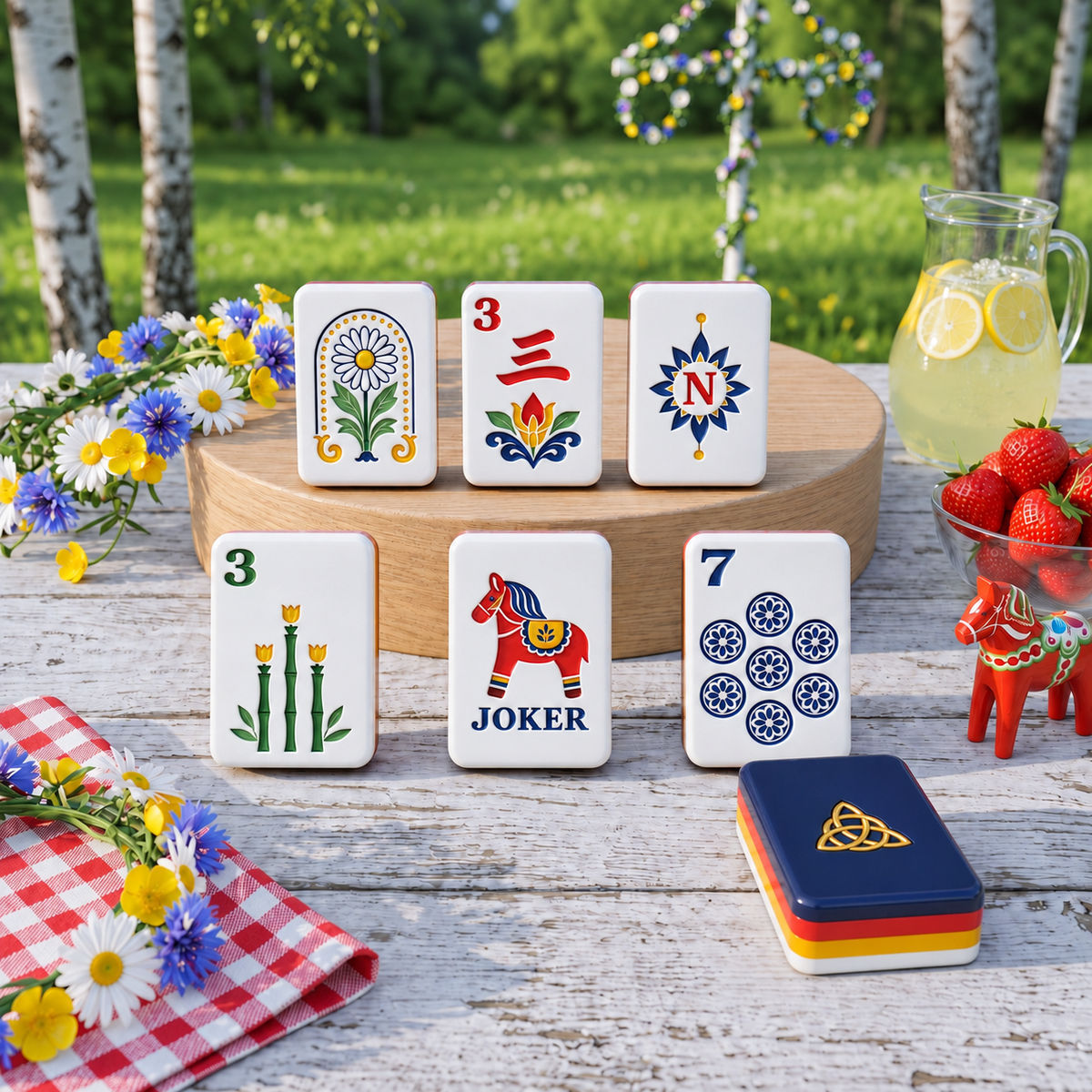
Riichi mahjong (also called "modern mahjong") is Japan's fast, skill-heavy variant played on four platforms: Mahjong Soul, Tenhou, MahjongTime, and Reach Mahjong. Games begin with a shuffled wall, no Charleston, and play proceeds with open melds (pung, kong, chow), closed hands, and a winner calling riichi (a bet of 1,000 points on a one-tile-away hand). Online play eliminates the shuffle and wall-building step—the app randomizes and deals instantly—making a full three-round session 20–40 minutes. The ruleset is standardized across platforms (tiles, scoring, wind order) but minor point calculations differ; beginners start at 0 dan and climb through ranked play. No equipment required beyond a computer or phone; Mahstead sets are for offline play with friends or local clubs seeking tactile, engraved tiles.
Riichi mahjong online eliminates table setup—there's no shuffling a 136-tile wall, no Charleston, no rack-building—but the rules, hand logic, and scoring are identical to tabletop play. If you're already familiar with American mahjong's sequences and triplets, Riichi will feel like learning a new language with the same alphabet: hands are built from identical triplets (pung), four-tile groups (kong), and runs of consecutive numbers (chow)—the core shapes American players know—but the hand-building and scoring flow is radically different. Online, the computer enforces all rules, tracks points instantly, and lets you play 10 games in the time one American game finishes. We've played dozens of online sessions, and the speed, fairness, and learning curve make it an ideal entry point for North Americans curious about the Japanese game.
What makes Riichi mahjong different from American play?
American and Riichi mahjong are separate games built from the same tiles. American relies on a published hand-card (new each spring from the National Mah Jongg League); you look up allowed combinations and work backwards—a dealer reads "2024 Card, Section III" and players build to match. Riichi is opposite: there is no card. You build any hand from four identical triplets, one pair, and one "winning" tile (melds can be open—called on the table—or hidden). Scoring is point-based, not hand-per-se based, and the winner pays every player directly based on tile count, hand type, and who dealt. One round (four hands, one per wind) takes 20–40 minutes online; an American game session is 1–2 hours. The learning curve for Riichi is steeper—no crutch card—but online play with built-in AI guidance makes it accessible.
🀄 Shop best-selling mahjong sets →

Which online platform should you choose?
Platform | Language | Skill Level | Session Length | Free Play |
Mahjong Soul | English, Japanese | All | 15–40 min | Yes, cosmetic shop |
Tenhou | Japanese, English UI | Intermediate+ | 20–50 min | Yes, full-featured |
MahjongTime | English | All | 30–60 min | Yes, limited tables |
Reach Mahjong | English | Beginners | 20–35 min | Yes, tutorial mode |
Mahjong Soul (web and app) is the most beginner-friendly: English rules, a 10-minute tutorial, free play with cosmetic rewards (no pay-to-win), and a global player base ranked by skill. It enforces standard Riichi rules and shows you every tile discarded—a huge learning tool. You start at 0 dan (division 1) and climb. Games fill instantly at any hour.
Tenhou (web, Japanese-first, English optional) is the competitive standard: stricter rule enforcement, higher skill floor, and a historic playerbase. Setup is less intuitive for English speakers; expect a 30-minute learning curve on the UI alone.
MahjongTime (browser and client) bridges casual and ranked play with stakes (if you choose); tournaments run daily. Rule sets can vary slightly (Hong Kong vs. Japanese), so read the table description before joining.
Reach Mahjong (newer, browser-based) is built explicitly for English-speaking beginners with an integrated glossary, live coaching, and a gentler ranking system. Fewer tables than Mahjong Soul, but faster wins for learning.
We recommend starting with Mahjong Soul or Reach Mahjong—both have real-time rule enforcement, no login friction, and free play that never pushes paid content.
How does hand-building work in Riichi?
In Riichi, you discard a tile each turn. Your goal: collect four melds (pung, kong, or chow) and one pair before anyone else completes their hand. The winning hand shape is always: four melds + one pair + one final tile. That final tile comes either from your draw or when another player discards—they're forced to give it to you ("ron").
Here's a step-by-step sequence:
Draw a tile from the wall (online: auto-drawn and displayed).
Decide: keep or discard? If you discard a tile no one can use, play continues. If someone needs it, they call a meld (pung, kong, or chow) or ron (hand complete).
Meld: expose three or four identical tiles (pung/kong) or a run like 3-4-5 Bam (chow) on the table. Online, click the tile set to expose; the UI prevents illegal moves.
Repeat until someone has four melds + pair + one draw/discard.
A crucial difference from American play: melds are optional. You can keep your hand closed (hidden) and win unseen—this is worth more points. You can also meld openly for control. The choice is tactical.
What is riichi and why does it matter?
Riichi is a call (and a 1,000-point bet) declaring: "I am one tile away from winning. I will not change my hand strategy." Once you call riichi, you must discard tiles in a fixed sequence—no strategy changes. Other players know you're close, and the tension rises. If you win after riichi, you earn bonus points; if someone else wins or the wall empties, you lose your 1,000-point stake.
Beginners often rush riichi. Experienced players use it selectively—when the wall is near empty, when melds are scarce, or when the odds favor your tile arriving before someone else wins. Online, the UI shows a riichi timer; respect it, or you risk a penalty. Think of riichi as American play's equivalent of "mahjong"—the declaration—but with a cost and tactical weight.
🎁 See our most-loved mahjong sets & accessories →

Can you play Riichi offline, and when would you?
Yes. If you're hosting a local game, you need tiles and a mat. Unlike American mahjong's rigid hand-card dependency, Riichi games offline require only rule knowledge, tile familiarity, and the ability to count points—no printed guide. Many online players transition to offline play with friends using a best-selling set and learning each other's style. The online platforms are faster for grinding skill and climbing ranked ladders, but offline play with a mat and racks builds community and tactile confidence.
Offline Riichi play requires:
136 Riichi-standard tiles (your existing American set works if you ignore Flowers; online players often buy dedicated Riichi sets sourced from Japan).
A mat or table cover to keep tiles organized and quiet.
Four racks with pushers (one per player) to hold your hand.
A scoring pad or app to track points across rounds.
Dice to randomize the starting wall (online: the app does this).
If you're in a city with a Riichi club (search "mahjong meetup" + your city on community boards, meetup sites, or library bulletin boards), players often provide communal tiles. Bring cash for stakes if offered; most casual games are social, not money-based. Online play, by contrast, takes 10 minutes to start and requires only a browser or app download.
How do scoring and payment work?
Riichi scoring is point-based, not hand-based. The winner collects points from each loser based on: the tile count in their hand, whether melds were open or closed, if they called riichi, and who dealt. A simple win might earn 1,500 points; a rare closed-hand, single-draw win (called menzen tsumo) can earn 8,000 or more per player.
Online platforms convert points to rank movement and cosmetic rewards. If playing offline for stakes, the convention is one dollar (or equivalent) = 1,000 points—easy to calculate and casual. A typical payout: winner gets 3,000 points total; each loser pays 1,000. After four rounds (one per wind), players settle: whoever has the highest score wins the session's pot.
The key: points are relative, not absolute. One player earning 2,000 points while another loses 3,000 is normal. This keeps games balanced and reduces runaway wins.
✨ Find your Mahstead set — free US shipping →
What to check before you commit to online Riichi
Before your first session, verify these:
Platform stability: Play a free tutorial game to confirm server response time and tile visibility on your device.
Ruleset clarity: Read the platform's rule page (usually in Settings or Help). Mahjong Soul and Reach Mahjong highlight rule variants; Tenhou assumes you know standard Riichi.
Language support: Mahjong Soul and Reach Mahjong have full English; Tenhou requires some Japanese navigation.
Time zone: Look for servers or time slots matching your schedule. Mahjong Soul has 24/7 players; others vary by region.
Account security: Use a strong password; most platforms do not require payment for free play, so phishing is rare but possible.
Disconnection policy: Check what happens if you drop mid-game. Most platforms auto-replay your hand or impose a small penalty.
Comparison: Online vs. offline Riichi play
Factor | Online | Offline |
Setup time | 2–3 min (log in, find table) | 15–20 min (shuffle, deal, arrange racks) |
Rule enforcement | AI-enforced; no disputes | Human-managed; slower disputes |
Session length | 20–40 min (one round) | 1–2 hours (typical house session) |
Skill progression | Ranked ladder; instant feedback | Social, slower learning curve |
Cost | Free (cosmetics optional) | Tiles + mat (~see Mahstead collections); optional stakes |
Best for | Learning, grinding, playing alone | Community, hands-on feel, teaching friends |

FAQ
Is Riichi mahjong hard to learn if I play American mahjong?
You know tile names and basic groupings (pung, chow), which is 40% of Riichi. The gap is hand logic and scoring—American relies on a card; Riichi is rule-based. A 10-game online session closes that gap. Expect one week of casual play to feel confident.
Do I need to pay money to play Riichi online?
No. All four major platforms (Mahjong Soul, Tenhou, MahjongTime, Reach Mahjong) offer free, ranked play forever. Optional cosmetics (avatars, tile designs) cost money but never affect gameplay. Offline stakes are social custom, not required.
What happens if I disconnect mid-game online?
Most platforms pause your hand for 5–10 minutes. If you reconnect, play resumes; if not, you're marked absent and lose points per the rules. Frequent disconnects trigger low-priority matchmaking. Use stable WiFi or cellular for best results.
Can I play Riichi offline with American mahjong tiles?
Yes, but it's awkward. American sets include Flowers (not used in Riichi) and lack Riichi-specific rule clarity. Offline Riichi players usually source dedicated Riichi tiles, but for a casual house game, American tiles work if all players agree on the hand layout.
How long does a Riichi game session typically last?
One round (four hands, one per wind): 20–40 minutes online, 45 minutes–1 hour offline. A typical house session runs 2–3 rounds (1.5–3 hours). Online ranked play is one round per session; players often chain 3–5 sessions in one sitting.
Is Riichi more or less luck-based than American mahjong?
Roughly the same luck factor (tile draw), but Riichi rewards strategy more visibly. Discard decisions, riichi timing, and meld choices compound over a session. A weak player will lose consistently online; offline, social rules soften skill gaps. Serious players treat Riichi as 70% skill, 30% luck.
What's the difference between calling a *pung* and a *chow* online?
A pung is three identical tiles (e.g., three 5 Bam); a chow is three consecutive tiles in one suit (e.g., 3-4-5 Bam). Online, when you draw or another player discards a tile, the UI highlights available melds—you click the shape you want. Both add to your exposed meld count; the type doesn't matter for winning, only for hand point value.
Can offline Riichi players use online rankings?
No. Online platforms (Mahjong Soul, Tenhou) maintain separate ranking systems. Offline play is social, unranked. Some offline clubs use spreadsheets to track seasonal skill, but it's not official. If you want ranked feedback, play online; if you want community and casual stakes, play offline.


View More
View More
View More
