
What Is Matching Dragons in American Mahjong
Last updated: Nov 23, 2026
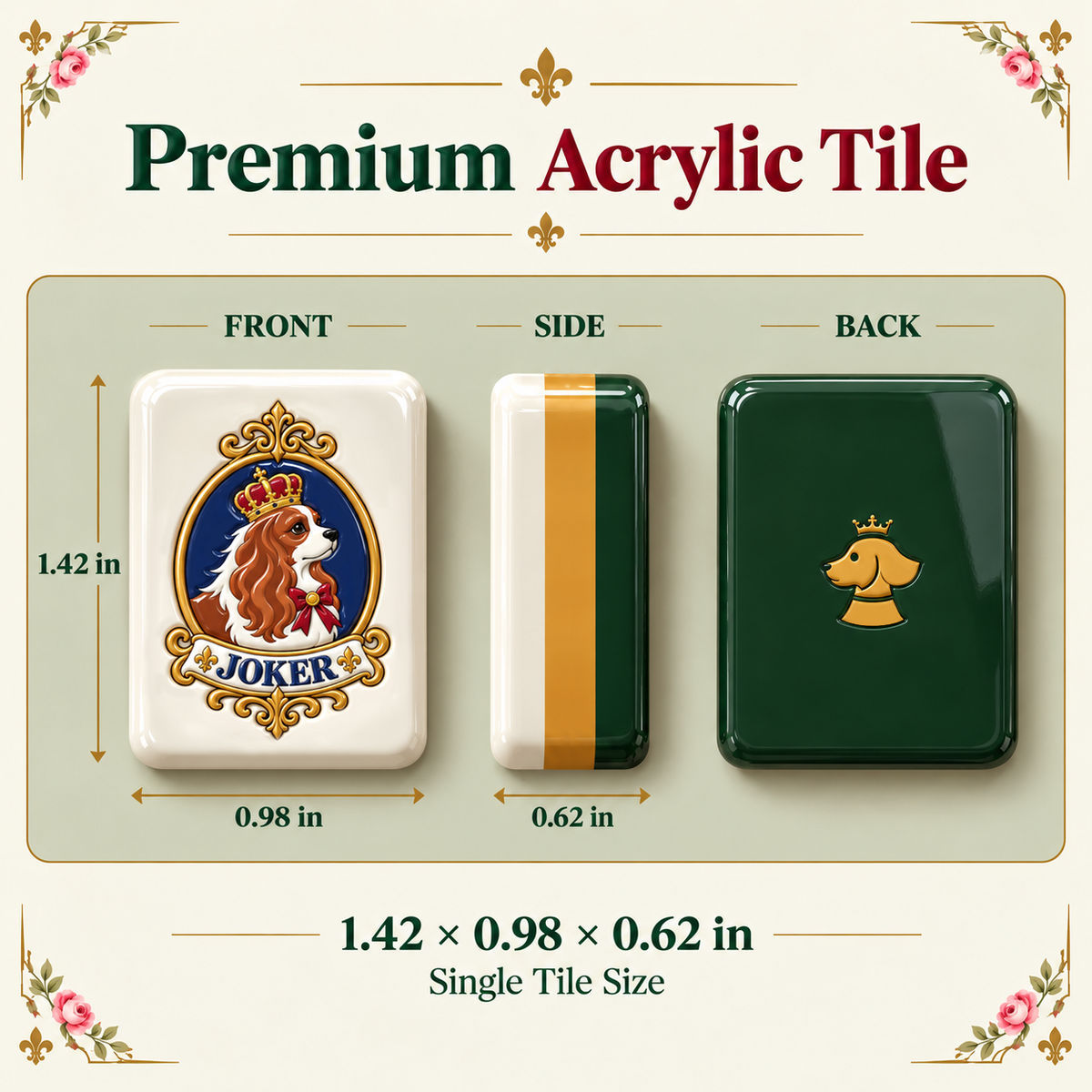
Matching dragons means collecting three or four identical dragon tiles (Red, Green, or White) to form a pung or kong. American mahjong uses twelve dragons total—four each of the three types—drawn from the 152 playing tiles in a standard set. Dragons appear on the current National Mah Jongg League hand card in patterns called "quints" and "sextets" (sets of five or six identical tiles). You cannot call or expose a dragon in a sequence or chow; only identical tiles count. Jokers can replace missing dragons in an exposed pung, kong, quint, or sextet. The hand card (issued each spring) specifies exactly where dragons fit into winning hands; matching them correctly against the card is how you win. Beginners often mistake dragon placements or forget that jokers cannot fill every gap—study the card sections carefully before discarding dragons.
Matching dragons in American mahjong means collecting three or four identical dragon tiles (Red, Green, or White) to form a pung or kong. American mahjong uses twelve dragons total—four each of the three types—drawn from the 152 playing tiles in a standard set. Dragons appear on the current National Mah Jongg League hand card in patterns called "quints" and "sextets" (sets of five or six identical tiles). You cannot call or expose a dragon in a sequence or chow; only identical tiles count. Jokers can replace missing dragons in an exposed pung, kong, quint, or sextet. The hand card (issued each spring) specifies exactly where dragons fit into winning hands; matching them correctly against the card is how you win. Beginners often mistake dragon placements or forget that jokers cannot fill every gap—study the card sections carefully before discarding dragons.
What are the three types of dragons and their tile pairs?
American mahjong has exactly three dragons: Red (paired with Craks), Green (paired with Bams), and White—called "Soap"—(paired with Dots). Each dragon appears four times in the tile set. Red dragons show the character for "center"; Green shows "prosperity"; White shows the character for "white" or appears blank. You'll see all three dragon types equally in play, and they behave identically in combinations. The pairing with numbered suits matters only for certain card patterns, not for basic pung or kong formation.

How do I identify a pung, kong, quint, or sextet with dragons?
A pung is three identical dragon tiles (three Red, three Green, or three White). A kong is four identical dragons. A quint is five identical tiles using two jokers or one joker plus four dragon tiles of the same type. A sextet is six identical tiles using jokers or all four dragons of that type plus two jokers. When you draw tiles, you're trying to match the exact patterns shown on the current year's hand card. You expose these sets face-up in front of you; opponents see them immediately. A mistake here means a dead hand—the combination doesn't match the card and you cannot win that round.
🀄 Shop best-selling mahjong sets →
Why can't I use dragons in a sequence or chow?
American mahjong has no sequences or chows in exposed sets. (This differs from how to play American mahjong, where sequences never exist at all.) You may only expose pungs, kongs, quints, and sextets—all identical tiles. Dragons cannot be ordered numerically; they're honor tiles with no number. This rule simplifies the game and makes the hand card the sole authority on what wins. Mixing dragons with numbered suits (e.g., Red dragon + 1 Crak + 2 Crak) is invalid. Keep dragon sets pure—all the same dragon type.
When can jokers replace dragons, and when can't they?
Jokers can fill gaps in any exposed pung, kong, quint, or sextet except they cannot be used alone or as a pair. If you're building a four-tile quint with three Red dragons, one joker fills the fourth tile. If your card shows a pattern requiring five Red dragons and you have three dragons plus two jokers, that works. But how jokers work forbids using a joker as your final single tile (concealed) or as your winning pair. This is where new players stumble—they hold a joker thinking it solves the last piece, then realize they've already broken the rule. Count your jokers early; plan for dragons before you discard them into the wall.
What's the most common mistake when matching dragons?
The most common mistake is discarding a dragon too early because you didn't study the card thoroughly. Many winning hands use specific dragons in patterns—maybe Red dragons in a quint section, Green dragons in one section and in a different quint elsewhere. Players see a single Red dragon and assume it's safe to throw; then they realize three turns later that hand needed two Red quints. A second mistake: confusing a dragon with a numbered tile under poor lighting (especially White with the 0 value). Before each hand, locate dragons on the card and mark which patterns use them. Don't discard a dragon unless you're certain no remaining hand patterns need it.
Decision framework: Should I keep or discard a dragon early in the hand?
Situation | Keep | Discard | Why |
Dragon appears in 2+ patterns on card | Keep | — | Flexibility; you can pivot toward multiple hands |
Dragon appears in only 1 pattern, you're far from it | Discard | — | Frees up hand space; others may need it |
You already have 2 of the same dragon | Keep | — | One more = pung; pung is useful in 60%+ of patterns |
You have 1 each of three different dragons | Discard | Keep one | Three different dragons rarely form one hand |
Mid-hand, card is restricted to 1–2 patterns | Study card first | — | Know exactly which dragons you need before deciding |
🎁 See our most-loved mahjong sets & accessories →
How do I read the hand card to find dragon patterns?
The current year's hand card (issued each spring by the National Mah Jongg League) shows all legal winning hands. Each hand displays tile symbols—dragons appear as their character or symbol. Look for sections labeled with quints, sextets, or mixed sets. A pattern showing four identical dragon symbols plus notation (like "Quint" or "5 like") means you need five tiles of that type total; use the four real dragons plus one joker, or fewer dragons with more jokers as allowed. How to read a mahjong card teaches the notation system in depth. Until you memorize the card sections, keep a copy at the table and trace your tiles against it hand by hand.
What if I'm learning and keep forgetting which dragons go with which suits?
Memorize the three pairings one time: Red = Craks (red/orange bamboo sticks), Green = Bams (green vegetation), White = Dots (or picture White as the blank/zero dot). These pairings matter for certain card patterns but not for basic dragon sets. Saying them aloud three times before your first game session will anchor them. Many players write them on a sticky note and tape it inside their rack. After two dozen hands, the pairing becomes automatic. Until then, check the card or ask your dealer if unsure. No shame in asking—everyone asked once.
✨ Find your Mahstead set — free US shipping →

What should I check before I buy a mahjong set for weekly games?
Before buying, verify the set includes 12 dragon tiles (four each of Red, Green, and White) among its 152 playing tiles. Open the set and count dragons during your first unboxing; if any are missing or damaged, contact the seller immediately. Confirm that engraved American mahjong sets or best-selling mahjong sets are visually clear—dragons should be unmistakable under typical table lighting. Test that dragon tiles don't feel slippery or stick to each other. Buy a set designed specifically for American mahjong (not Chinese or other variants), which use different tile counts and rules. If you host weekly games, get one quality set and keep a spare joker tile; many players appreciate having a mat and rack system to organize dragon sets and prevent accidental loss during play.
What's the role of dragons in American mahjong scoring?
Dragons appear in nearly every hand on the card in one form or another. A concealed pung or kong of dragons scores the same base points as any other identical set, but the hand card determines the final score value—not the dragons themselves. Some hands feature dragon patterns worth more points than others (per the card's point column). Scoring dragons independently is not how American mahjong works; you score the entire hand as shown on the card. Dragons are simply the tiles you use to build that hand. American mahjong scoring explains point tables in detail, so study that page if you're tracking points at the table.
Can matching dragons win a hand on their own?
No. A single pung, kong, quint, or sextet of dragons alone is never a winning hand. American mahjong requires the entire 14-tile hand to match a pattern on the current year's card exactly. That pattern includes dragons plus other tiles (numbered suits, winds, flowers, etc.) in specific combinations. You might build a gorgeous Red dragon quint, but if the card shows no hand containing that exact quint plus the tiles you're holding, you have no hand. This is why studying the card before play is essential; beginners often collect perfect sets only to realize no card pattern fits them.
Common mistakes and how to avoid them
Mistake 1: Holding too many dragons at once. If you have three Red dragons and three Green dragons mid-hand, you're blocking yourself from other patterns. Plan: Do your card patterns need both? If not, discard one color early.
Mistake 2: Forgetting White dragons are "zero" in some contexts. White (Soap) pairs with Dots, not with Red or Green. Don't mix them carelessly. Verify the card before you assume a White dragon fits a pattern.
Mistake 3: Calling a pung too early. You hold one Red dragon, pick a second, and think you're close to a pung. Don't expose anything yet. Wait until you have three identical dragons or can see the exact pattern on the card. Exposed sets lock you into that hand path.
Mistake 4: Assuming jokers fix every gap. Jokers cannot be single tiles or pairs. If you have two Red dragons and one joker, that's not a pung—jokers can't be used that way. You need three real dragons or two dragons plus one joker in a larger set (quint or sextet).
Which mahjong sets make dragon tiles easiest to spot?
Best-selling mahjong sets in the Mahstead collection feature clear dragon symbols and contrasting colors—Red dragons in bright red, Green in deep green, and White in crisp white or silver. Acrylic tiles with printed symbols (rather than shallow engravings) make dragon characters instantly readable under normal table lighting. Avoid sets with tiny symbols or faded colors; during fast play, you'll misidentify tiles and lose turns. If you host weekly games where multiple players read your tiles, invest in a set where dragons "pop" visually. Poor visibility leads to mistakes, slowed play, and frustration. Test a set under your actual table lighting before committing to it for a regular group.
How does dragon-matching differ in other mahjong variants?
Chinese, Hong Kong, and Taiwanese mahjong use different tile counts and rule sets. Chinese mahjong has six dragons (with Fa and Zhong added), while American mahjong has only three. None of these variants use the National Mah Jongg League card or require exact pattern matching; they use point-based combinations (melds). Riichi (Japanese) mahjong also differs radically. If you play American mahjong exclusively, dragon rules are simpler: collect three or four identical dragons, match them to the card, and expose them. No point calculations for dragons alone—the card decides everything. If you learn another variant later, those dragon rules won't transfer; treat each variant as a separate system.

FAQ
Can I win with just a pung of dragons and no other tiles?
No. American mahjong requires your full 14-tile hand to match a pattern on the current year's card. A single dragon set (pung, kong, quint, or sextet) must be part of a larger combination shown on the card.
What happens if I discard a dragon and another player calls it for a pung?
They can call it if they're one tile away from completing a pattern and exposing the pung. This is a standard legal call in American mahjong. They expose the three-tile pung face-up, and play continues. You've given away a tile; that's the risk.
If my card shows a hand with two different dragon types (Red and Green), can I mix them?
Yes—only if the card pattern explicitly shows both types together. Never mix dragon types on your own assumption. Check the card pattern tile by tile before exposing any set.
Are dragons the same in every mahjong set, or do designs vary?
Designs vary by manufacturer. American mahjong sets use standard dragon symbols (Red center, Green prosperity, White white or blank), but the tile size, color intensity, and material differ. Choose a set where dragons are visually clear for your table.
How many jokers do I need to complete a dragon quint?
If you have four identical dragons and need a quint (five tiles), you need one joker. If you have three dragons, you need two jokers (three real + two jokers = five). But jokers cannot be used as single tiles or pairs, only within larger sets.
Can I use a wind tile instead of a dragon in an exposed set?
No. Winds and dragons are separate tile types. An exposed set must use identical tiles only—all dragons, or all winds, or all numbers (same suit and number), never mixed. The card shows which tiles go into each hand.
What does "dead hand" mean when matching dragons?
A dead hand is one where no pattern on the current card can be completed with your remaining tiles. Often this happens because you've collected perfect dragon sets that don't match any card pattern. Once dead, you've lost that round and must wait for the next hand to begin.
Should I always discard the dragon I don't recognize if I'm new to the game?
No. Ask another player or check the card if you're unsure what a dragon is. Discarding blindly costs you information and wastes tiles. Asking builds community; experienced players expect beginners to ask.


View More
View More
View More
