
What Is a News Hand in American Mahjong?
Last updated: Nov 23, 2026
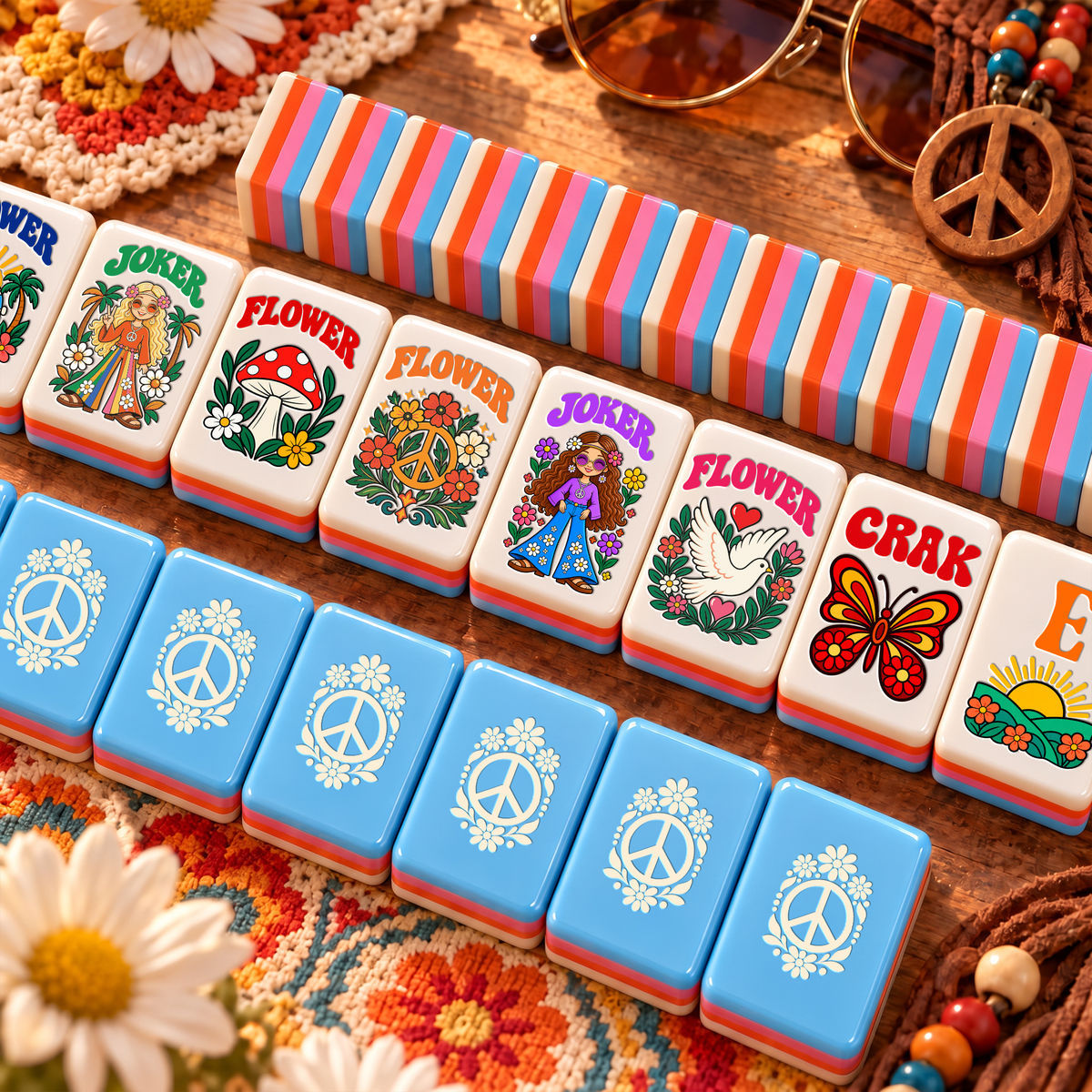
A news hand is any winning tile combination printed on the current year's National Mah Jongg League card—the official reference for all standard American games. You cannot win with any hand that isn't on that card, even if it looks like a logical pattern. The card updates every spring and contains hundreds of legal hands organized by category (Like Number, Consecutive Like Number, Quints, etc.). Each hand tells you exactly which tiles you need, how many jokers you can use, and how many points it's worth. A winning hand requires exactly 14 tiles: a pair (2 identical tiles) plus four melds (groups of 3, 4, 5, or 6 matching tiles). You locate your tiles on the card during play, call "Mahjong," expose your complete hand, and score according to that hand's point value. We recommend keeping a card holder or laminated mat nearby so you can reference quickly without confusion.
🀄 Shop best-selling mahjong sets →
Why the card controls every winning hand you can play
The National Mah Jongg League card is not a suggestion—it's the rulebook. Unlike Chinese or Riichi mahjong, which use fixed pattern families (winds, dragons, sequences), American mahjong enforces one legal hand list that changes every year. This means a hand that wins in March 2026 might not be valid in April 2027. The card prevents house-rule chaos and keeps games competitive across clubs, tournaments, and home tables. Each hand on the card shows the exact tile count and joker allowance, so two players holding identical-looking hands might have different point values depending on which card line they match.

How to read a hand listing on the news card
The card organizes hands in numbered rows. Each row shows a pattern abbreviation (like "1 Like #" for hands using one suit, same number repeated), the specific tiles required, the number of jokers allowed, and the point value. For example, a hand might read "Bam 1 1 1 / Crak 5 5 5 / Dot 8 8 8 / Dot 9 9 9 / Dot 9" (four pungs of identical numbers plus a pair). The "/" divides the melds visually. Some hands specify "no jokers," meaning you must use all natural tiles. Others allow up to four jokers, letting you substitute a joker where any single tile belongs. When you're building your hand during play, scan the card for a row that matches your discards and drawn tiles. If your hand doesn't match any row exactly, you cannot win yet—keep drawing.
The difference between a news hand and a dead hand
A dead hand is one that cannot possibly reach a news hand given the tiles left in the wall and the discard pile. You stay in the game but cannot win that round. A news hand is actively buildable—it's a real target you're pursuing. The distinction matters because strategic play requires judging whether your current tiles can reasonably complete a news hand before the game ends. If you're holding 10 tiles that don't align with any card pattern, or if all copies of the tiles you need have already been discarded or exposed, your hand is dead. Experienced players track discards and exposed melds to sense when their hand is still alive or when they should pivot to a new strategy.
Common mistakes beginners make when chasing news hands
Newcomers often assume a pattern they see is automatically on the card. It isn't. We've watched countless players insist they have a winning hand, only to discover no such hand exists on the current card. Another frequent error: not checking the joker limit. A hand might look perfect until you realize it requires only two jokers, but you've already melded three. When you meld (expose a pung or kong), you commit to a joker count—you cannot change it later. A third pitfall: confusing chows (sequences like 1-2-3 in one suit) with other patterns. American mahjong has no callable chows; all your sequences must be part of a named pattern on the card. Avoid these by studying the card before the Charleston and asking the dealer if you're unsure whether a pattern exists.
How jokers fit into your news hand strategy
Jokers are wild tiles that substitute for any single tile you need. Each hand on the card specifies how many jokers are legal—usually zero to three. If a hand allows two jokers, you must use exactly two; you cannot use one or three. When you meld an exposed pung or kong, place the joker visibly so everyone sees which tile it represents. One tactical edge: holding jokers early in the game gives you flexibility to chase multiple news hands simultaneously. Later, once discards pile up and patterns narrow, jokers let you pivot quickly to a completing hand. Never waste a joker early if you can build naturally. Also remember: a joker can never be used as part of a pair (the two non-meld tiles)—pairs must be real, identical natural tiles.
🎁 See our most-loved mahjong sets & accessories →

Comparing news hands across point values and difficulty
Hand Type | Example Tiles | Jokers Allowed | Typical Points | Why Players Chase It |
All Like Number | Dot 5, Dot 5, Dot 5 (×4 melds) | 0–2 | 30–50 | Easier to build; fewer tile types |
Consecutive Like Number | Crak 2, 3, 4, 5, 6 (in melds) | 1–3 | 40–60 | More flexible; uses full suit range |
Mixed Suit | Bam 1, Crak 2, Dot 3 (organized patterns) | 2–4 | 50–70 | Higher payout; absorbs jokers well |
Dragon Pung + other melds | Dragon Red, Red, Red + three other melds | 0–1 | 40–50 | Dragon tiles draw beginner luck; dramatic |
Quint or Sextet | Five or six identical tiles in one meld | 2–4 | 60–80 | Rare; high score; risky (ties up many tiles) |
The table shows that higher point hands usually require more jokers or rarer tile combinations, meaning they're harder to complete but reward you more. Lower-point hands are safer to chase because common tiles are easier to gather. Winning strategy balances chasing a high-score hand against the risk of never completing it—sometimes a 40-point news hand you'll actually finish beats a 70-pointer you're unlikely to draw in time.
What to check before you buy a set to play news hands
Before sitting down with a new American mahjong set, verify:
Tile clarity: Can you read every number and symbol clearly? Fuzzy printing makes scanning the news card slower and mistakes more likely.
Tile count: Confirm the set includes all 152 playing tiles plus the standard 8 jokers (160-tile sets include spares). Short sets will halt games.
Suit spelling: Ensure tiles spell "Bam," "Crak," and "Dot," not alternate names. The card uses these terms, and mismatches cause confusion mid-game.
Rack visibility: If you use racks with pushers, check that tiles don't slide or stick. You need smooth, fast access to count and plan your hand.
Mat or surface: A quality mahjong mat protects tiles and gives you a clear work zone to sort melds and study the card simultaneously.
Cheap sets wear fast, tiles blur, and the frustration of squinting at illegible numbers while trying to spot your hand on the card kills the joy of chasing news hands. We've designed our engraved sets with titles to be both beautiful and functional—clear tile faces, balanced weight, and precise suit symbols so you spend your mental energy on strategy, not deciphering tile faces.
✨ Find your Mahstead set — free US shipping →
Why news hands keep American mahjong fresh every year
The card refresh each spring means players must relearn patterns, discard strategies, and hand values annually. A hand worth 60 points one year might vanish from the new card or swap point values. This constant evolution prevents the game from becoming static and keeps even 20-year veterans alert. Clubs, tournaments, and home tables all use the official card, so switching between groups never requires learning different rule sets—just the new card. Competitive players often pre-study the spring card online or in print before the season starts, memorizing which new hands appeared and which old favorites disappeared. For casual home players, the card change feels like a refreshed challenge. For serious players, it's the heartbeat of American mahjong culture.
Building a routine to study the news hand card effectively
Print or laminate the current card: Keep it at arm's reach during every game. Digital versions on phones work but are slower to scan.
Highlight your favorite patterns: Use a highlighter to mark the hand types you naturally gravitate toward (if you love dragon hands, mark all of them).
Play hand-building exercises: Before a real game, lay out random tiles and race against the clock to find matching news hands on the card.
Track what other players win: During games, note which hands are actually coming down. You'll notice patterns in what's buildable given the tiles in play.
Study hand frequencies: Some hands appear in multiple rows on the card; they're statistically more likely to occur and should be your fallback targets.
Over a few weeks, you'll internalize the card and stop needing to look up every potential hand. Your mental speed at the table will improve, and you'll spot winning combinations faster than less-prepared opponents.

FAQ
Can I win with a hand that isn't on the news card?
No. American mahjong permits only hands listed on the current year's National Mah Jongg League card. A hand that looks logical but doesn't appear on the card cannot win, even if all four players agree. This is the core rule separating American from other mahjong variants.
Does the news card change every year?
Yes. The National Mah Jongg League publishes a new card each spring. Some hands carry over, others vanish, and new ones debut. Every player must use the current card, making the game fresh and challenging every season.
How many news hands are on a typical card?
A standard card contains several hundred hand patterns, organized into 40–50 numbered categories. The exact count varies year to year but usually totals 200–300+ individual hand lines. This abundance means multiple winning paths exist in most games.
What happens if I expose a meld but later realize it doesn't match any news hand I can complete?
Once you expose a meld (pung, kong, quint, or sextet), it's locked. You cannot take it back. Your hand becomes locked into that joker count and tile commitment. Plan exposed melds carefully; when unsure, keep your hand closed longer.
If I'm holding a news hand but haven't exposed any melds yet, can I change my mind about which hand I'm chasing?
Yes. While your hand is closed (unexposed), you can discard and draw tiles to pivot toward a different news hand on the card. Once you expose even one meld, your flexibility shrinks because joker count is set. This is why many players stay closed as long as possible.
How do jokers change which news hands I can build?
Jokers are wild tiles that substitute for any single tile. Each news hand specifies exactly how many jokers are legal—often zero to three. If you have two jokers and a hand allows two, you can fill two gaps. If a hand allows zero jokers, you must use all natural tiles. Jokers let you complete hands that would otherwise be impossible.
Is there a strategy for choosing between multiple news hands I could complete?
Yes. Compare point values, remaining discards, and which tiles are still in the wall. Chase the highest-point hand you can reasonably complete fastest. If two hands are equally buildable, pick the one with tiles that are still circulating (not heavily discarded). If you sense your hand is dying, don't chase a rare high-pointer; pivot to a simpler, safer hand instead.


View More
View More
View More
