
American Mahjong Tournament Rules: Official Play & Hand Requirements
Last updated: Nov 23, 2026
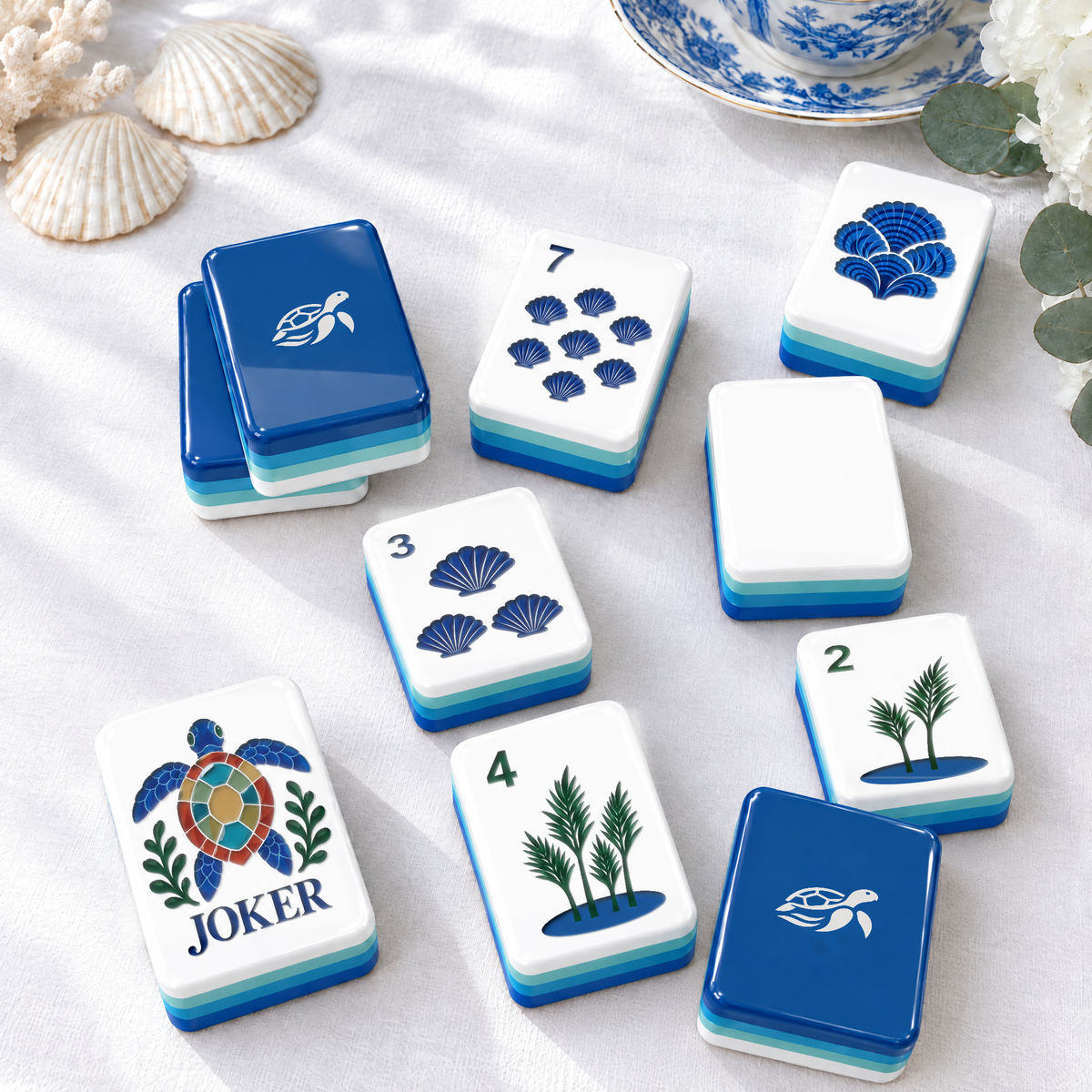
Tournament American mahjong is governed by the National Mah Jongg League (NMJL), which issues an official hand card every spring—the only source of legal winning combinations for that year. A game uses exactly 152 tiles (108 from three number suits, 16 winds, 12 dragons, 8 flowers, 8 jokers). Players must call hands only from the current year's card; hands not listed are illegal. Tournaments enforce strict rules: the Charleston (tile-passing ritual) follows fixed patterns, all exposed melds must match the card precisely, and jokers cannot be used as single tiles or pairs. Calling procedures require players to announce "mahjong" when winning and show their tile configuration against the card; penalty tiles are drawn for rule violations. Most clubs and regional tournaments charge modest entry fees and use scoresheets to track points across multiple rounds, with winners determined by cumulative scores. Whether you're joining a local club tournament or hosting a serious game, understanding these distinctions separates regulated play from friendly rounds.
What makes a hand legal in tournament play?
Only hands printed on that year's National Mah Jongg League card are legal. The card is divided into sections organized by pattern type: like-number sets, consecutive numbers, winds/dragons, flowers, and special combinations. Each hand shows the required tiles in specific groupings—pungs (three identical), kongs (four identical), quints (five), and sextets (six)—and indicates where jokers may substitute. If your winning tile configuration doesn't appear on the card, it doesn't count, even if it looks like a winning hand in other mahjong variants. Jokers can replace any tile within a meld but never as a single tile or as the pair. This rule prevents creative interpretations and keeps all players working from identical definitions of winning.

How does the Charleston work in tournaments?
The Charleston is a mandatory four-phase tile-passing sequence performed before the game begins. First, each player passes three tiles to the right; second, three tiles pass across the table; third, three tiles pass to the left; finally, each player may offer up to three tiles for a "courtesy pass," which the opponent may refuse. All passes happen simultaneously on count—no player sees incoming tiles before passing outgoing ones. Tournament rules often forbid passing jokers or flowers during the Charleston; some tournaments require the East player (first dealer) to pass first to set the rhythm. If a player passes fewer than three tiles in any phase, they must still pass exactly three total by adding from their hand; this prevents strategic withholding. The Charleston equalizes starting tile distribution and adds a social element before competitive play begins.
🀄 Shop best-selling mahjong sets →
What are the calling rules and how are violations penalized?
When your hand matches a card layout and you draw your winning tile, you must call "mahjong" before discarding. You then show your winning hand by laying tiles flat on the mat so all players can verify against the card. If you call "mahjong" but your hand doesn't match the card, you have fouled; in tournament play this typically costs you points (often doubling the hand's base value as a penalty) or forces you to draw a penalty tile and continue playing. If you discard your winning tile instead of calling immediately, you also foul. A player who picks a tile from another player's discard pile out of turn must draw a penalty tile from the wall. Declaring a meld (pung, kong, quint) incorrectly—say, three tiles that don't match exactly—results in taking back the meld and drawing a penalty tile. These penalties exist to maintain game integrity; casual home games often ignore them, but tournaments enforce them strictly.
How does scoring differ in tournament versus casual play?
Tournament scoring uses the NMJL's point system, which assigns a base value to each hand (ranging from 30 to 960+ points depending on the card layout's rarity and difficulty). When you win, you collect points from all three other players; each pays your base value plus adjustments for jokers used and whether they were liable for the discard. Bonus points may apply for all-tile-categories (like winning with only winds and dragons, or only flowers), which the card notes. If you win on a pick from the wall (self-drawn), payout may be higher than a discard win. Intermediate play tracks cumulative scores across multiple rounds, and first place goes to the player with the highest total. Casual games often simplify this to flat payments per win or use house rules. Tournaments post standings after each round and crown a champion at the end of the day or multi-day event. Understanding the NMJL card's point values is essential before entering a tournament so you know what you're playing for.
Where can you find tournament games and what equipment do you need?
Most American mahjong tournaments are hosted by local clubs, synagogues, senior centers, country clubs, community centers, and libraries—search your area's community boards or recreation departments for "mahjong club" or "mahjong tournament." Players bring their own sets and mats; some tournaments provide them. You must have the current year's NMJL card at the table (printed or digital). A regulation setup includes a 160-tile set from our best-selling collection—with enough tiles and jokers to play a full game—a mat marked with player positions and a central well, racks with pushers to hold and organize your hand, pencil and scoresheet (usually provided by the tournament), and dice to determine seating. Some players bring travel bags or cases to transport gear between venues. Request the tournament's rule sheet when you register; most venues use NMJL standard rules with minor local variations noted upfront.
Player Role | Key Responsibility | Tournament vs. Casual |
East (Dealer) | Rolls dice first, leads discard | Strict turn order enforced; same East for all four rounds in most tournaments |
Scorekeeper | Records wins, points, penalties | Tournament scorekeeper is official; casual play often uses honor system |
Card Keeper | Holds & verifies hands against card | Any player can challenge; tournament has official card on display |
Discarder | Places unwanted tile face-up | Must announce tile clearly; no quiet discards in tournament play |
🎁 See our most-loved mahjong sets & accessories →

What common mistakes do tournament players make and how do you avoid them?
Forgetting the current year's card: Buy or print the latest NMJL card before game day. Last year's card is invalid—hands that were legal no longer are. Misreading the card layout: Study the card's section headers and hand patterns before playing. If unsure, ask another player or the scorekeeper to verify before you declare a meld or call "mahjong." Passing jokers during the Charleston: Many tournaments forbid this; know the house rule when you arrive. Not calling "mahjong" immediately upon drawing the winning tile: Once you pick a tile, you have seconds to call or it's too late. If you hesitate or discard, you've fouled. Using jokers as a single tile or in a pair: Illegal in all American mahjong; jokers only replace tiles within exposed melds. Exposing a meld that doesn't match the card exactly: Three Bams that include one joker substituting for a Crak is a fouled meld; all identical tiles are required or the meld collapses. Confusing winds and dragons with number suits: Winds are N/E/W/S; dragons are Red (with Craks), Green (with Bams), and White (with Dots and serves as zero). Study how the tiles work before your first tournament.
How do you prepare your equipment for tournament standards?
Tournament play demands reliable, clearly visible tiles. Choose a 160-tile set with crisp engraving or printing so all numbers, suits, and wind/dragon symbols are instantly legible under standard lighting. Verify that your set includes all required tiles: count 108 tiles from the three number suits (Bams, Craks, Dots), 16 winds, 12 dragons, 8 flowers, and 8 jokers—if you're short, borrow or buy a complete set before tournament day. A sturdy mat with clearly marked walls and player positions prevents confusion; some tournaments require specific mat dimensions or styles. Use racks with pushers to organize your hand so tiles stay hidden from opponents and don't accidentally fall or reveal your strategy. Bring a pencil, paper (scoresheets are often supplied), and dice. If you travel to multiple tournaments, a durable bag or case protects your set during transport and ensures tiles arrive sorted and undamaged. Clean tiles before the game so no debris obscures symbols.
What to check before you buy or join a tournament
Verify the NMJL card year – Confirm your set of rules matches the tournament's official card; outdated cards invalidate hands.
Know the entry format – Ask if it's a single round, round-robin, or multi-round event; scoring and time commitment differ.
Confirm the payoff structure – Tournaments may use chips, cash, or scoresheet-only records; clarify what you're competing for.
Check equipment requirements – Some venues provide sets and mats; others require you to bring your own.
Ask about house rules – Even NMJL-sanctioned tournaments may have local variations (e.g., Charleston phase rules, penalty tile draws).
Arrive early to register and ask questions – New players are welcome; most clubs help first-timers learn the flow.
✨ Find your Mahstead set — free US shipping →
How does tournament play differ from casual home mahjong?
Casual home games often bend rules for fun: players might invent hands not on the card, use jokers more liberally, or skip the formal Charleston. Tournaments enforce every rule with penalties. In casual play, if someone calls "mahjong" and the hand is wrong, players laugh and move on; in a tournament, that's a foul and costs points. Casual games may use an old or multiple versions of the card; tournaments mandate that year's official NMJL card for every hand. Scoring at home is often flat (same payout per win); tournaments use the card's point values, which reward rare difficult hands and punish common ones. Casual play can last as long as players want; tournaments have strict time limits or round counts. Casual players often know each other and play for social reasons; tournament players compete for placement and bragging rights. Neither is "better"—they reflect different goals. But if you move from home games to a tournament, read the house rules carefully and plan a practice round before you compete for points.

FAQ
Can I use a hand from last year's mahjong card in a tournament this year?
No. Tournaments recognize only the current year's National Mah Jongg League card, issued every spring. A winning hand from 2025 may not appear on the 2026 card and is automatically illegal. Always verify the card year before you play or buy a set for tournament use.
What happens if I call "mahjong" but my tiles don't match the card?
You have fouled. In tournament play, you typically pay a penalty (often double the hand's base value) to each opponent or draw a penalty tile and continue playing. The exact penalty varies by tournament rules, so ask at registration.
Do I have to play all four phases of the Charleston in a tournament?
Yes. The Charleston's four phases (right pass, across pass, left pass, courtesy pass) are mandatory before every game in tournament play. Some tournaments forbid passing jokers or flowers; verify the local rule before game begins.
Can I use a joker as a single tile or as the pair in a hand?
No, never. Jokers can only replace tiles within an exposed meld (pung, kong, quint, sextet). Using a joker as a single tile or as the pair is illegal in all American mahjong, including tournaments, and results in a fouled hand.
How many points do I win if I call mahjong on a hand worth 60 points?
You collect 60 points from each of the three other players (180 total), minus adjustments for jokers used and the player who discarded. Some hands pay more if you drew from the wall instead of taking a discard. Check the NMJL card's point scale and your tournament's payout rules.
Where can I find a mahjong tournament near me?
Search your local community centers, libraries, synagogues, senior centers, and country clubs for "mahjong club" or "mahjong tournament" in their activity listings. Online community boards and meetup sites often advertise regular games. Call ahead to confirm you're welcome as a beginner.
Can I bring my own mahjong set to a tournament, or must I use the venue's set?
Most tournaments allow you to bring your own set as long as it meets minimum standards: a complete 160-tile set with clear tile markings, a regulation mat, and working racks. Some venues provide sets; ask when you register.


View More
View More
View More
