
What Are Tile Numbers in American Mahjong and How to Use Them
Last updated: Nov 23, 2026
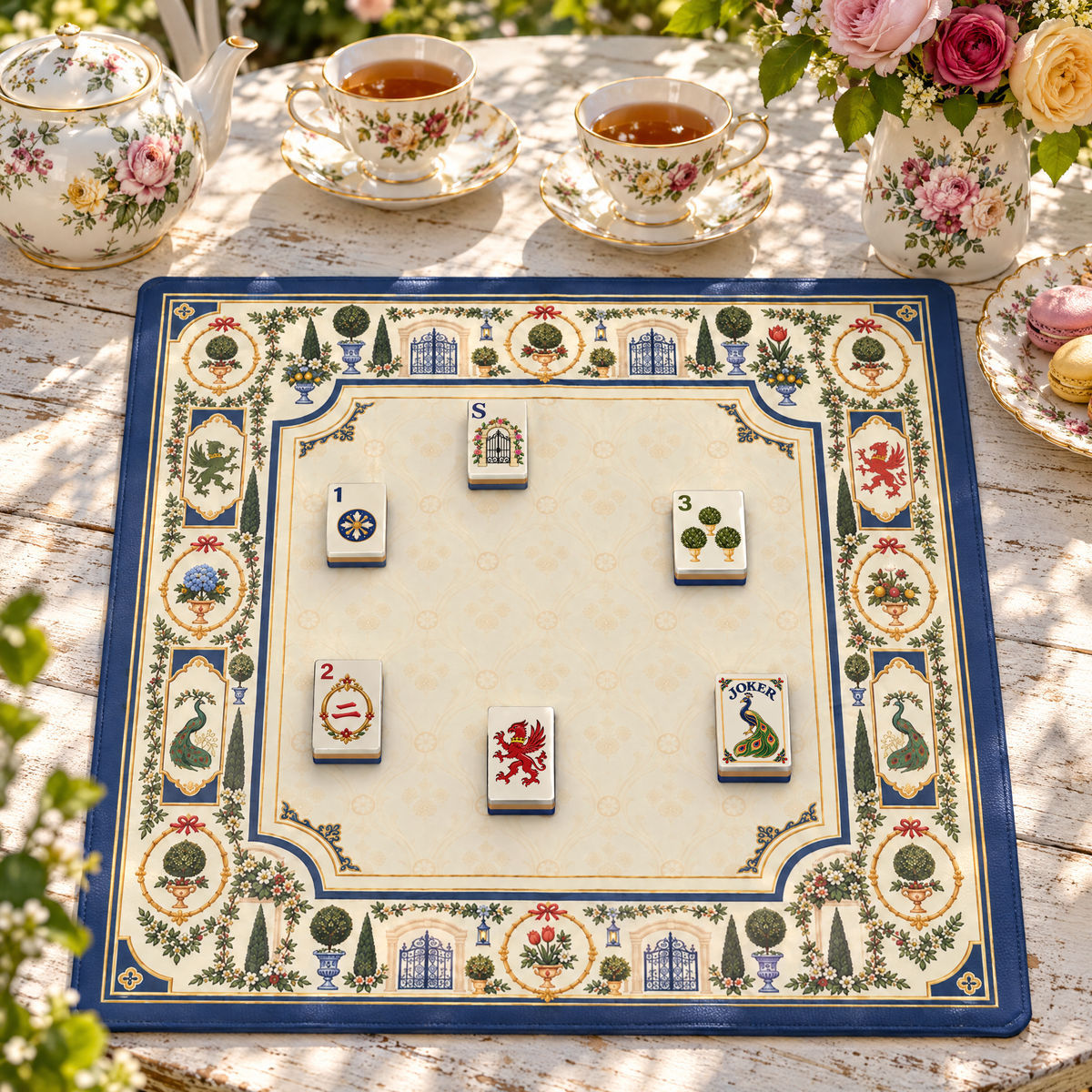
American mahjong has three numbered suits—Bams, Craks, and Dots—each containing tiles numbered 1 through 9, with four identical copies of each (36 tiles per suit, 108 total). The 1 Bam shows a bird; each suit also has an honor tile function (the White Dragon represents zero and pairs with Dots). Every hand on the current-year National Mah Jongg League card uses combinations of these numbered tiles in pungs (3 identical), kongs (4), quints (5), and sextets (6), never sequences. Jokers—eight total in standard play—substitute for any single tile a player needs. The numbering system lets you decode the card quickly: for example, "1-1-1 2-2-2 3-3-3" means three pungs of consecutive numbers in one suit, all showing their numeric value on the tile face. You'll find this number system explained fully in how to play American mahjong, and understanding it unlocks faster reads and confident tile calls. 🀄 Shop best-selling mahjong sets →
Why Does American Mahjong Number Tiles 1–9?
The numbering system mirrors the historical Chinese suits and lets you build hands from simple patterns. On every card, numbers anchor the visual language: a pung of 5s looks identical whether it's Bams, Craks, or Dots—same count, same tile shape. This consistency means you can scan a hand card and instantly spot which number combinations you're hunting for, whether you're a beginner or a player in your 20th year of weekly games.

What Do the Three Suits Represent in Their Number Ranges?
Each suit—Bam (representing bamboo), Crak (cracked tiles), and Dot—runs 1 to 9 and serves as its own family in the hand. A hand might call for "1 Bam, 1 Crak, 1 Dot" as three separate tiles (not a pung—they're different suits), or it might ask for a pung of "1-1-1 all Dots" (three identical 1 Dots). The key: numbers alone don't make a legal meld; suit matters too. When you're reading the mahjong card, the number tells you what to collect, and the suit tells you where to find it.
How Do Honors (Winds, Dragons) Fit Into the Number System?
Honors—the four Winds and three Dragons—don't have numbers; they rank by type, not count. However, the White Dragon often stands in for zero on the card in scoring rows. This is the one place where "0" appears: a row might show "0-2-4 Dots" meaning "White Dragon, 2 Dot, 4 Dot" as a pung sequence pattern. The other Dragons (Red with Craks, Green with Bams) and all Winds are fixed single-tile requirements, never substitutes. So when you're building a hand, you're either collecting a numbered tile (1–9 in a specific suit) or a specific honor.
What Role Do Jokers Play in Number Tiles?
Jokers—eight in a complete 152-tile game—can replace any single numbered or honor tile you need, but they follow strict rules: a joker can never fill a pair, and it cannot represent itself (you can't play a joker claiming it's a joker; it must stand for an actual tile). If your hand card calls for "1-1-1 5-5-5 9-9-9 Bams," and you only have two 1 Bams, a joker slides in as your third. How jokers work explains the mechanics in full, but the practical takeaway: numbers on your card represent real tiles, and jokers bend the rules only when you can't match the exact count. Never use a joker to cheat or skip a number call; that's a discard and you've busted the hand.

How Do You Match Numbers on the Card to Tiles in Your Rack?
Read the card hand by hand from left to right, looking for the section that lists your current tile count and suit. Each row shows groups of numbers (like "2-3-4-5-6-7-8 Bams") or honor combinations. Match every number on your card to the tiles sitting on your rack using our mahjong racks with pushers to keep them visible and organized. If the card shows "5-5-5 Dots" and you have three 5 Dot tiles, you're good; expose them. If you have only two 5 Dots and a joker, use the joker. The error that costs new players: confusing the number on the card with the number of tiles—"1-1-1" means three tiles all showing the number 1, not a single tile showing 1 three times.
Hand Pattern | What It Means | Example Tiles | How to Build It |
1-1-1 | Three identical numbered tiles (pung) | Three 1 Bams | Collect or expose; no joker in pairs |
2-2-2-2 | Four identical numbered tiles (kong) | Four 2 Craks | Expose, draw one tile |
1-2-3-4-5 | Five tiles in order, same suit (pung sequence) | 1, 2, 3, 4, 5 Dots | Rare; specific card pattern |
1-1-1-2-2-2-3-3-3 | Three successive pungs (common pattern) | Three pungs of consecutive numbers | Very common in hand card rows |
0-2-4 | White Dragon + two even numbers | White Dragon, 2 Dot, 4 Dot | Often shows zero in scoring rows |
🎁 See our most-loved mahjong sets & accessories →
When Does "Zero" Show Up, and Which Tile Represents It?
The White Dragon—the blank-looking honor tile—serves as zero in certain hand card rows, particularly in scoring sections or patterns with even numbers (0-2-4-6, for example). It's never a wildcard substitute and always means the literal White Dragon tile. If a card row shows "0-2-4 Bams," you're building a pung of White Dragon, a pung of 2 Bams, and a pung of 4 Bams—not a single tile doing triple duty. This is one reason beginners misread the card early on; the "0" looks optional or confusing, but it's a real tile you must hold and expose.
What Happens If You Miscount or Use the Wrong Number?
If you call a meld that doesn't match the card—say you expose three 3 Dots when the card says three 4 Dots—that's a dead hand: you've busted, play ends, and you're out for that round. If you claim "mahjong" (going out) with tiles that don't match your card hand, you lose points (typically 30 or more). This is why reading the card aloud with your group before you start, and keeping tiles visible on a mat with clear zones, prevents chaos. One tip we use at every table: call the number and the suit when you expose—"three 5 Bams" or "White Dragon" instead of just "pung"—so everyone double-checks you on the spot.
What If You Have Extra Numbers You Don't Need?
Tiles you're not using for your current card hand stay in your hand or on your rack, ready to discard. You can't add extra numbered tiles to your card (you play only the hand from this year's card, not freestyle), but you might hold a 7 Crak that isn't part of your card row—that's your discard option when someone else calls or when it's your turn to play. Strategic discarding (throwing tiles away in number order, or deliberately holding certain numbers to block an opponent) is part of the game. How to play American mahjong covers discard strategy and hand flow in depth.
What to Check Before You Buy Your First Set
Tile clarity: Can you see the suit symbol (bamboo stick, crack line, or circle dot) clearly from a foot away? Do the numbers 1–9 print sharp and centered on each tile?
Joker count: Confirm you have eight jokers in the game. Count them during setup.
Suit balance: Verify you have four copies of each number (1–9) in each of the three suits—36 tiles per suit, 108 numbered tiles total, plus 16 Winds, 12 Dragons, 8 Flowers = 152 tiles.
Condition: Check that all numbers and suits are printed clearly and no tiles are blank or illegible; this matters most if you're splitting a set or loaning it out.
✨ Find your Mahstead set — free US shipping →

FAQ
Can a tile show a number higher than 9?
No. American mahjong uses only numbers 1–9 in the three suits. Honors (Winds and Dragons) have no numbers; the White Dragon substitutes for zero only in certain card patterns, not as a playable numbered tile.
If the card says "1-1-1 Bams," do I need three different 1s, or three copies of the same 1 Bam tile?
Three identical 1 Bam tiles—same number, same suit. A pung is always three or four of the exact same tile, never three different numbered tiles.
What does it mean when a hand row shows numbers like "1-2-3 Bams"?
That's a pung sequence: three consecutive numbered tiles in the same suit. You'd need one 1 Bam, one 2 Bam, and one 3 Bam exposed together. This is rarer than a pung of identical numbers but appears on every year's card.
Why do some rows on the card show "0-2-4" or "0-0-0"?
The "0" represents the White Dragon, an honor tile. Rows with "0-2-4" mean White Dragon, 2 Dot, 4 Dot (three separate pungs or a pattern combining an honor with numbered tiles). It's a literal tile, not a placeholder.
If I'm holding numbered tiles that aren't on my card row, can I use them to make an extra hand?
No. American mahjong uses only hands from the current-year National Mah Jongg League card. Extra tiles stay in your rack as discard options; you can't create freestyle hands or add tiles to the card row you're playing.


View More
View More
View More
