
Two Player Mahjong Special Hands: Rules & Strategy
Last updated: Nov 23, 2026
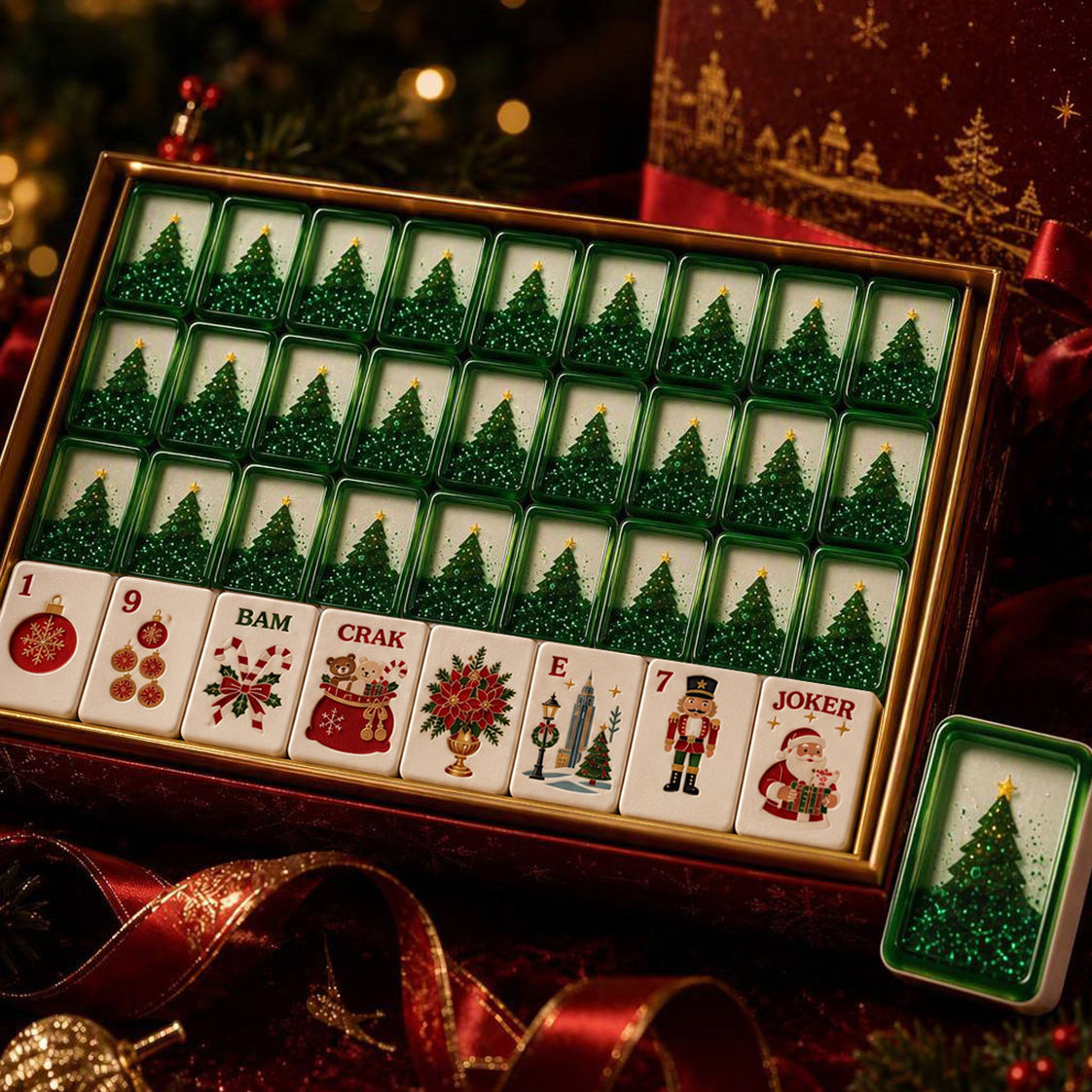
Two-player American mahjong uses the same 152-tile standard deck but modifies hand requirements and tile distribution to balance the reduced player count. The National Mah Jongg League does not officially recognize two-player format, so experienced groups follow house rules: players typically use a simplified hand card or adapt current-year sequences by removing kong-heavy combinations. Each player draws 13 tiles initially; one draws 14 to begin play. Special hands emphasize shorter sequences, pungs (identical three-tile sets), and strategic joker placement since fewer tiles rotate through the wall. Players should track discards carefully—dead wall management becomes critical. For depth and printable variants, consult 2 and 3 player mahjong rules. Many groups use our best-selling mahjong sets with backup jokers to test house variants without standard-set confusion. 🀄 Shop best-selling mahjong sets →
Why Two-Player Mahjong Demands Different Hand Patterns?
Standard American mahjong hands assume four players drawing from a shared wall in sequence. With two players, the wall depletes faster and hands complete earlier; this means long multi-tile sequences become statistically unlikely. Two-player groups usually strip out extreme kong sections or create dedicated two-player cards with shorter combos: three to five tiles per group instead of six or seven. The dead wall shrinks proportionally, so fewer joker reserves exist to repair loose hands. Result: simpler hand patterns win more often. Most veteran two-player groups adopt a hybrid approach—use the current official card but skip lines requiring two or more kongs, or agree beforehand that quints and sextets are rare and optional.

Which Special Hands Actually Work in Two-Player Games?
Pungs, kongs, and simple chow-free sequences suit two-player play best. Since American mahjong never permits chows (runs like 1-2-3), special hands rely entirely on sets of identical tiles or joker-filled groups. Two-player variants favor hands with:
Three to four pungs (three matching tiles each) plus one pair
Mixed pung/kong hands (three identical, four identical, pair)
Quints and sextets (five or six identical tiles) as bold plays, not everyday wins
Joker-heavy hands (five or more jokers across three to four groups)
Skip hands requiring six kongs or combinations that demand all four copies of three separate tiles—too rigid for two players. The modified hand card some groups print emphasizes repeatable patterns: one double pung, one mixed pung-kong, one all-joker. Test a simplified hand card for five sessions before adopting it permanently; players often discover edge cases mid-game.
🎁 See our most-loved mahjong sets & accessories →
How Does Two-Player Tile Distribution Change Special Hands?
In four-player American mahjong, each player takes 13 tiles, then one player draws a 14th. Two-player distribution compresses: typically each takes 13, one draws 14, and 30 tiles remain undealt in the wall (versus ~103 in a four-player game). This scarcity reshapes hand strategy: tied hands appear more often because fewer unique tiles circulate. Special hands relying on rare tiles (like four specific Bams and two specific Dragons) become harder to complete organically; jokers assume outsized importance.
Comparison: Four-Player vs. Two-Player Tile Availability
Factor | Four-Player | Two-Player |
Tiles per player initially | 13 | 13 |
Wall depth (undealt tiles) | ~103 | ~30 |
Jokers available to draw | 8 total | 8 total (same) |
Average groups to form | 3–4 | 3 (often tighter) |
Repeat tile frequency | Lower | Higher |
Joker substitution rate | Moderate | High (more needed) |
Two-player groups compensate by loosening parity rules: if a hand card shows "three Dragon pairs," two-player play might accept two Dragon pairs plus one joker standing in. Document house rules before starting the session to avoid disputes.

What Role Do Jokers Play in Two-Player Special Hands?
Jokers—the wild tiles that replace any tile in any group—become lifelines in two-player mahjong. With a smaller wall and fewer draw cycles, hands stall more often without joker support. A typical two-player special hand uses two to four jokers across its groups; some hands are designed around five jokers. American mahjong rules forbid using a joker as a single tile or pair, so jokers fill slots within pungs, kongs, and quints only.
Example: A hand calls for "three Red Dragons, three 1 Craks, two 4 Bams." In two-player play, if you hold only two Red Dragons and one 1 Crak by midgame, you can use one joker as the missing Red Dragon and another as the missing 1 Crak. Study how jokers work for precise placement rules. Two-player groups often adopt a house rule: "Jokers may stand in for missing suit tiles freely, but kongs (four identical tiles) need at least two genuine tiles to form a valid kong." This prevents absurd joker overload.
How Do You Read the Hand Card in Two-Player Format?
The standard National Mah Jongg League card is printed for four-player American mahjong and is not official for two-player games. Many groups print a modified card or use verbal agreements instead. If you do use the official card, identify sections by pattern category (all pungs, all kongs, mixed) and select hands from simpler sections: skip lines with five or six kongs, lines with four different suits intertwined, or lines needing six consecutive identical tiles.
To read the card effectively for two-player play:
Scan the left margin for hand number and season identifier
Note the tile symbols (each square = one tile or joker position)
Count groups: a valid two-player hand has exactly three groups plus one pair
Identify joker placements (shown as blank squares or joker icons)
Check tile rarity: if a line needs four 7 Dots, four 8 Dots, and four 9 Dots, deprioritize it—unlikely to draw those in two-player format
Verify pairing options: the pair (two identical tiles) must be drawn or held separately, not part of any group
Learn more in how to read the mahjong card. When in doubt, write your group's house rules on a slip of paper and place it near the best-selling acrylic mahjong sets so new players see them first.
What Setup Mistakes Derail Two-Player Special Hands?
Common pitfalls waste time and frustrate players:
Forgetting dead wall rules: Many two-player groups forget to set aside a dead wall (tiles not drawn during normal play), leading to confusion when someone claims a loose tile illegally
Mixing joker counts: If your set has mismatched jokers or lost spares, tile draws become lopsided; always verify joker count before dealing
Not discarding face-up: Two-player games benefit from clear, visible discard rows; cramped, face-down stacks slow recall and block strategic play
Skipping the Charleston: Even two-player groups should conduct a brief Charleston (tile passing ritual) to randomize initial holdings and add fairness
Ignoring hand card changes: If you switch from official card to house-modified card mid-session, announce it loudly and offer players one free redraw
Before You Buy or Play:
Confirm your two-player hand card is printed or agreed upon by all players
Count tiles and jokers in your set; if spares are missing, note it in a log
Set a timer: two-player games move faster and should complete in 1–2 hours, not four
Designate one player as scorekeeper to prevent arithmetic disputes
Use a mahjong mat with clear tile zones so discard piles remain visible
✨ Find your Mahstead set — free US shipping →

FAQ
Can I use the official National Mah Jongg League card for two-player games?
No, the official card is designed for four players. Most two-player groups use a simplified house-created card or verbal hand agreement. Some skip complex hands from the official card, but this is informal and not endorsed by the League.
How many tiles should each player draw in two-player mahjong?
Each player draws 13 tiles; one player then draws a 14th to begin play. This leaves approximately 30 tiles in the wall (undrawn).
Do special hands change if one player is a beginner?
Not in rule, but in practice, groups often agree to focus on simpler hand patterns when teaching. Beginners benefit from hands with four or fewer jokers and repeating tile groups.
What happens if a player cannot form a hand by the end of the wall?
The hand ends in a draw (no winner). Players typically rotate dealer position and begin a new round. Some groups allow one redraw or one "buy" (drawing an extra tile for a point penalty).
Are kongs or quints easier to form in two-player than four-player mahjong?
No. Kongs and quints are harder in two-player because fewer tiles circulate through the smaller wall. Most two-player hands use two to three kongs maximum, versus three to four in four-player games.
Can I substitute a joker as a tile in the winning pair?
No. American mahjong rules forbid jokers in pairs or as single tiles. Jokers only fill slots within groups (pungs, kongs, quints, sextets) that contain at least two genuine tiles.


View More
View More
View More
