
Same Tile Mahjong Rule Explained: American Game Rules
Last updated: Nov 23, 2026
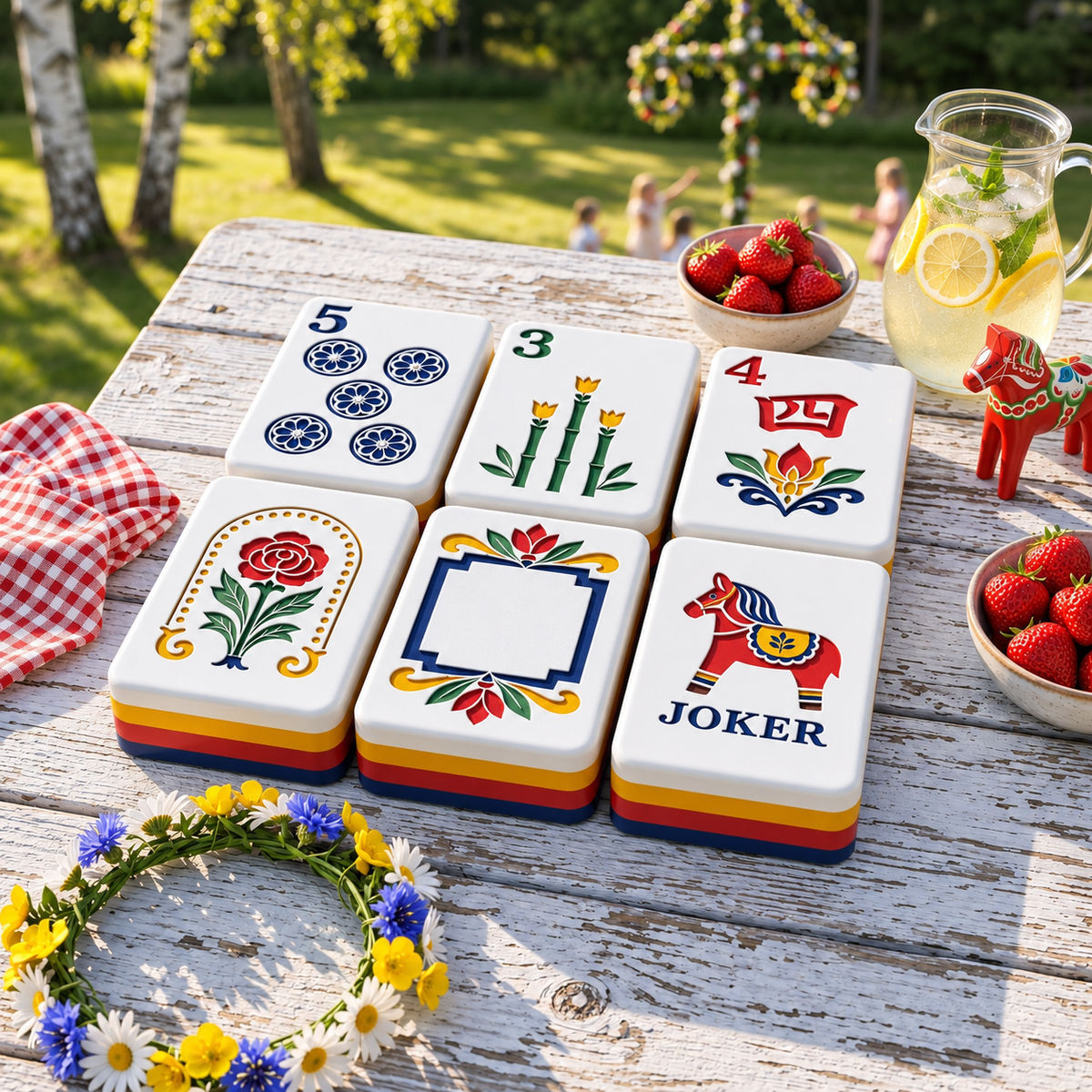
A "same tile" in American mahjong means three or four tiles that are exactly identical—same suit, same number. Three identical tiles form a pung (pronounced "pong"); four form a kong. These are the only exposed melds allowed in American mahjong; sequences or "chows" (like 1-2-3) cannot be exposed or called. Jokers can substitute for missing tiles in pungs and kongs but never form a pair or stand alone. Same-tile melds must appear on your rack or be called from another player's discard—you cannot build a hand from different numbers. This rule underpins every legal hand on the current year's National Mah Jongg League card, and violating it disqualifies your win. Whether you play with a best-selling acrylic set or a collector's edition, the tile rule remains absolute across all American games.
What tiles count as "the same" in American mahjong?
Three or four tiles are the same only when suit and number match exactly. A pung requires three 5 Dots, not "any Dot" or "three red tiles." A kong requires four 5 Dots. If you have 5 Dot, 5 Dot, 5 Dot, and 5 Crak, only the three Dots form a valid pung—the Crak is separate. Winds and dragons follow the same rule: three North winds (identical tiles) form a pung; mixing North, East, and West does not. Flowers and blanks are wildcards and do not form same-tile melds. This precision is why scanning your rack carefully before calling or exposing a meld prevents table disputes and reshuffles.

How does a pung differ from a kong?
A pung uses exactly three identical tiles; a kong uses exactly four. Both are valid exposed melds. When you pung (expose three tiles), the remaining tile of that kind stays in the wall or other players' racks. When you kong (expose four), no more of that tile can be drawn. Kongs are rarer and often signal strength—you control all four copies. Jokers can replace missing tiles in both: you might hold 5 Dot, 5 Dot, 5 Dot and a Joker standing in for the fourth tile; that's still a valid kong (three real + one joker). On a mahjong mat, pungs and kongs sit in the same "melds" area, but counting the joker placement correctly prevents scoring errors at hand end.
Can you use the same tile in multiple melds?
No. Each tile can appear in only one meld. If your hand contains three 5 Dots (a pung) and two 5 Dots (a pair), you have five 5 Dots total—a valid configuration. But you cannot use the same physical tile twice. Your completed hand on the current year's card will show each tile used exactly once: melds (exposed or concealed) plus a pair. Beginners sometimes confuse this when reading the card; scanning the entire hand pattern before claiming a win saves embarrassment and keeps the game flowing. Many players use racks with pushers to visually separate melds, making this rule automatic.
What happens if you expose a wrong same-tile meld?
Exposing an invalid meld (such as three tiles that are not identical, or a sequence) can trigger a reshuffle or penalty depending on house rules. In strict play, you must take the exposed tiles back into your rack, forfeit your turn, and draw penalty tiles. In casual play, players often correct it immediately without penalty. Once a meld is exposed and accepted by the table, it stands—you cannot reclaim it. To avoid mistakes, hold the tiles up before placing them on the mat, say the meld aloud ("Three 5 Dots"), and wait for nods. If a player challenges, check the tiles against the mat light and settle it before play resumes. This 10-second pause prevents angry reshuffles and keeps friendships intact.
How do jokers fit into same-tile rules?
Jokers are wildcards: they can substitute for any missing tile in a pung or kong. If you need a 5 Dot to complete a pung of 5 Dot, 5 Dot, Joker—that's legal. Jokers cannot stand alone, form a pair by themselves, or fill a spot where no tile is missing (e.g., you cannot play 5 Dot, 5 Dot, 5 Dot with an extra Joker; the joker must replace a fourth tile if you're making a kong). In American play, you typically have eight jokers in a 160-tile set. Once you place a joker in a meld, you must declare what tile it represents (the table sees it visually on the mat). Unlike some Asian variants, American jokers have no special "wild" powers beyond substitution—they do not trigger bonus scores or special rules. Learn more in our full guide to how jokers work in American play.
🀄 Shop best-selling mahjong sets →

Common mistakes when identifying same tiles
Mistake | What players think | Reality | How to avoid it |
Mixing numbers | Three Dots = any Dot (1, 2, 3) | Must be three of the same number (three 5 Dots) | Read the tile face; never assume color means "same" |
Mixing suits | "All red" = same tile | Craks and Dots are different suits; each must match suit and number | Lay tiles in a line and compare face-to-face |
Joker as pair | A Joker + a real tile = a pair | Jokers cannot form pairs; pairs are always two identical real tiles | Pairs must be clearly two real tiles; jokers go in melds only |
Exposed before confirm | Pulling three tiles = pung | You must hold them until the table agrees you can expose | Ask permission; say the meld aloud first |
Forgetting joker is a tile | "I have three Craks + joker" | The joker counts as a fourth Crak (kong), not a bonus | Understand that jokers fill gaps, not extend melds |
Most errors happen in the first few hands or when fatigue sets in late evening. Keep a mahjong rack aligned and well-lit so every player can see the tiles clearly. A quality mat with high contrast between playing surface and tile prevents shadow confusion too.
Why the same-tile rule matters for scoring
Scoring in American mahjong is not based on the tiles themselves but on the pattern on the card. A valid hand must contain only legal melds—all same-tile groups and one pair. If your hand contains an invalid meld (e.g., 1-2-3 or a pair of different tiles), the entire hand is dead, and you cannot win that round. This is why same-tile discipline is enforced so strictly: one error voids your whole hand, even if you matched the card pattern. Players are responsible for confirming their own hands before announcing a win; the table does not validate hands after the fact in most clubs. Learn more about how to read the card and how hands are verified at American mahjong scoring.
🎁 See our most-loved mahjong sets & accessories →
How to check your completed hand before winning
Follow this checklist every time you think you have won:
Lay out all 14 tiles (or 13 tiles + the winning draw) on the mat.
Count: five melds + one pair. Melds are three or four identical tiles; the pair is two identical tiles.
Verify each meld by suit and number—say them aloud ("Three 5 Dots, pung; two East winds, pair").
Check the card to confirm the pattern matches the current year's card.
Confirm no joker is used as a pair or standing alone.
Call for validation from one other player before announcing the win.
If you cannot clearly identify five same-tile melds + one pair, do not claim. Pause, recount, and ask a veteran at the table. A wrong claim (a "false mah") often forfeits points or ends your turn—rules vary by group. Beginners who slow down on this step rarely make costly errors.
✨ Find your Mahstead set — free US shipping →
What to check before you buy a mahjong set
Before purchasing your first set, confirm it is a 160-tile American set (152 playing tiles + spares) with clear, legible faces. Acrylic tiles should be evenly weighted and sized so three or four tiles stack neatly—this makes spotting identical tiles much faster. Tiles printed with symbols (Bam, Crak, Dot, winds, dragons, flowers) in contrasting colors prevent the misidentification that leads to same-tile errors. A set with engraved titles or personalized designs can add personality to your game without sacrificing clarity. Pair your set with a quality mat that provides a stable, well-lit surface—this is where you will expose melds and verify same tiles before calling. All Mahstead sets include free US shipping.

FAQ
Can a 1-2-3 sequence be called as a valid meld?
No. American mahjong does not allow exposed sequences (chows). Only same-tile melds—pungs and kongs—can be called or exposed. Sequences exist only in concealed hands and are not revealed during play.
If I have four 5 Dots, can I expose a pung and hide the fourth tile?
Yes. You can expose three 5 Dots as a pung, then keep the fourth 5 Dot concealed in your rack. The exposed pung sits on the mat; the hidden tile counts toward your final hand pattern.
Can a joker replace a tile in a pair?
No. A pair must always be two identical real tiles—never a real tile + a joker. Jokers substitute only within pungs and kongs (melds of three or four).
What happens if I call a pung but only have two identical tiles?
You have exposed an invalid meld. Depending on house rules, you may face a penalty (forfeit a turn, draw extra tiles) or a reshuffle. Most clubs penalize quickly to keep play fair.
How do I know if two tiles are truly identical on a crowded table?
Hold them side-by-side under good light and compare suit, number, and font. Use a mahjong mat with contrast and a rack to organize tiles visually so no doubt arises.


View More
View More
View More
