
Chi Mahjong Meaning and Points in American Play
Last updated: Nov 23, 2026
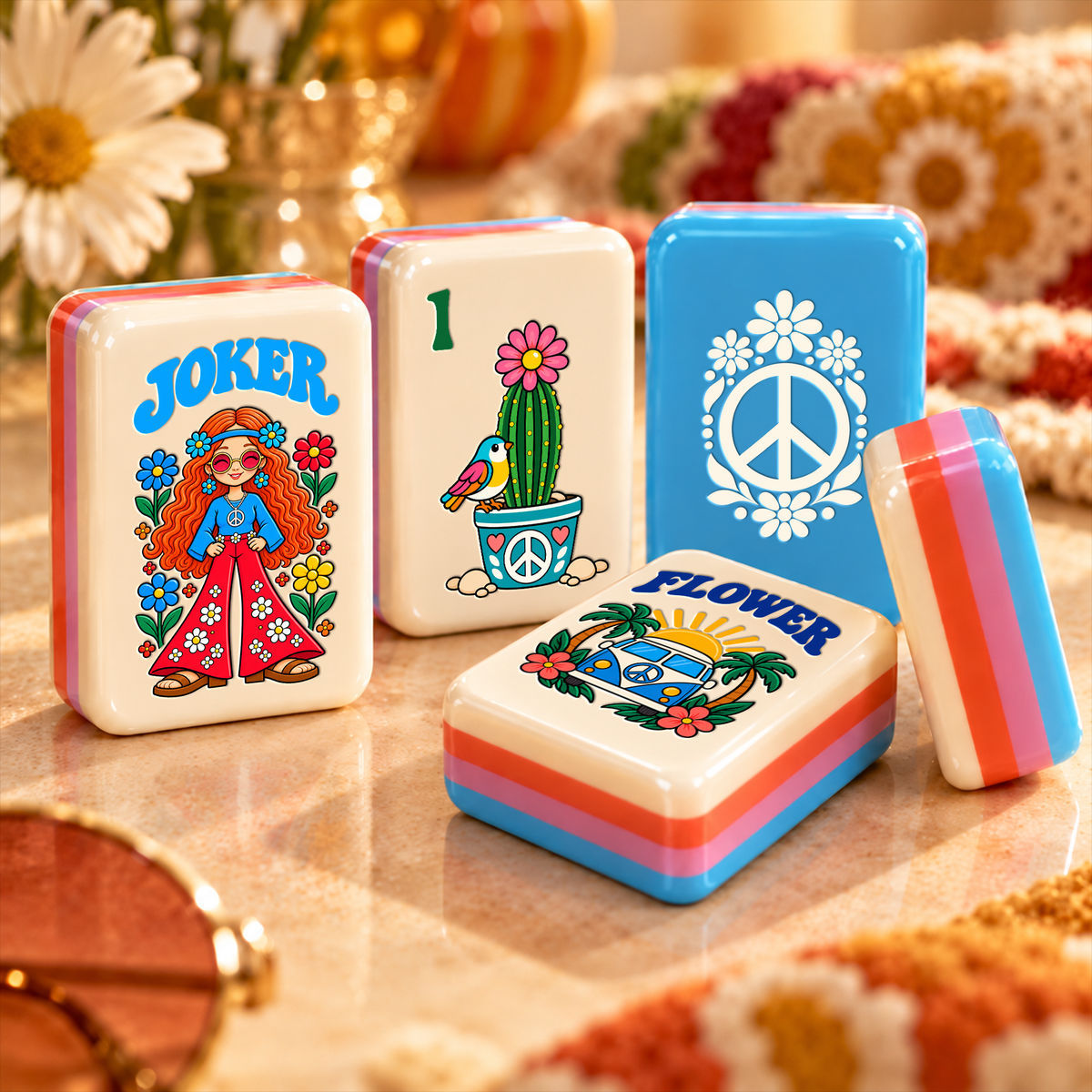
In Chinese, Hong Kong, and Riichi mahjong, chi (吃) is a sequence call: claiming a discard to complete a run of three consecutive numbers in the same suit (e.g., 4–5–6 Craks). Only the player to the left of the discarder can call chi. American mahjong, however, has no chi rule—sequences are never exposed or called during play. American hands consist only of pungs (three identical tiles), kongs (four identical), quints (five), sextets (six), and pairs; jokers can stand in for any tile in these combinations. If you play American mahjong, forget chi entirely. If you're exploring other variants like Chinese or Riichi, chi is one of three ways (along with pung and kong) to claim a discard. Understanding this distinction matters when switching between games.
🀄 Shop best-selling mahjong sets →
What does chi mean in mahjong variants?
Chi (吃 in Mandarin) is a fundamental call in Chinese, Hong Kong, and Riichi mahjong—one of three ways to claim another player's discard. When a discard completes a sequence of three consecutive numbers in the same suit (like 5–6–7 Dots), the player to the left of the discarder can declare chi. That player immediately melds the three tiles face-up. Chi is scored the same as any other meld: the hand value depends on the final winning combination, not the individual melds. Understanding chi is essential if you play Asian variants, but it plays no role in American games.

Why doesn't American mahjong include chi?
American mahjong was designed as a simpler, more rigid game than Chinese mahjong. The National Mah Jongg League standardized the rules in 1937, deliberately removing sequences and restricting melds to sets of identical tiles only. This made the game faster to learn and play—no one has to calculate which tiles "go together" by number. Instead, every valid hand is printed on the official card issued each spring. A legal hand is either on the card, or it is not; no judgment calls. Jokers are wild and can replace any tile within a pung, kong, or pair. This structure also prevents the complex hand-calculation and discard-reading that makes chi play strategic in Asian variants. For how to play American mahjong, memorizing the card and understanding pungs, kongs, and pairs is all you need.
How does chi scoring work in Asian mahjong?
In Chinese and Riichi mahjong, chi melds are scored based on the final winning hand and the pattern of melds that form it. A hand might score points for a simple chi (low value) or a hand made entirely of chi melds (higher value). In Riichi mahjong especially, certain patterns of chi melds combine to create valuable "yaku" (hand patterns) that multiply the base score. Hong Kong mahjong uses a different scoring system altogether, often counting combinations and applying limits. Scoring varies significantly by variant and region—some play fast eight-tile rounds, others play long games with complex multipliers. If you're learning chi in a specific variant, check with a local player or instructor who knows that regional ruleset, because chi scoring is inseparable from the variant's overall point system.
What do American players use instead of chi?
American players use engraved American mahjong sets to form pungs (three of one tile), kongs (four of one tile), quints (five), and sextets (six). Each exposed meld must be identical; there are no sequences or runs. Jokers are wild and fill in for any single tile within a meld or pair. All 152 tiles plus 8 jokers come into play during a four-player game. The dealer, called the East Wind, makes the first move. Play rotates counterclockwise. If you're used to calling chi in Asian mahjong, switching to American feels restrictive at first—no sequences, no flexibility, everything on the card. But that limitation is the point: it keeps the game fast, fair, and accessible to beginners. Hands are not calculated; they are looked up. This makes mahjong for beginners much easier because new players don't worry about hand construction—they memorize the card instead.

Which mahjong variant should I learn if I want to use chi?
If chi interests you, learn Chinese, Hong Kong, or Riichi mahjong. Chinese mahjong (Cantonese) is most common in North America outside competitive circles; it has pungs, kongs, and chi, plus more complex scoring. Hong Kong mahjong is faster and played with 13 tiles per hand; chi is involved but scoring is unique to the region. Riichi mahjong (Japanese) is highly standardized and competitive; it features chi, pung, kong, and a detailed yaku (hand pattern) system that awards points based on rarity. Each variant has different rules for who can call chi, how melds are exposed, and what tiles remain hidden. American mahjong, by contrast, is played by thousands in the United States and is easier to learn because the card removes all guesswork. Our collection of best-selling mahjong sets is built for American rules only; if you want to play a variant that uses chi, confirm your set includes the right tiles and that your group plays by a consistent regional ruleset.
Variant | Uses Chi? | Melds Exposed? | Key Difference | Best For |
American | No | Only pungs, kongs, quints, sextets | Card-based hands only | Fast, rule-simple play |
Chinese (Cantonese) | Yes | Pungs, kongs, chi, pairs | Hand-calculated; regional scoring | Flexible, social play |
Hong Kong | Yes | Pungs, kongs, chi, pairs | 13-tile hand; unique scoring system | Speed and compact rounds |
Riichi (Japanese) | Yes | Pungs, kongs, chi, pairs | Standardized yaku; competitive | Skill-based, tournament play |
🎁 See our most-loved mahjong sets & accessories →
Common mistakes when switching between variants
Mistake 1: Assuming chi works in American mahjong. It doesn't. Discard a tile in American play—no one calls it as a chi. You lose the opportunity to use it.
Mistake 2: Trying to build sequences instead of pungs. If you're learning American after years of chi play, resist the urge to collect runs of 3–4–5. American hands have no runs; every meld is identical tiles only.
Mistake 3: Forgetting that jokers are always wild in American play. In Chinese mahjong, jokers are often restricted or absent. In American sets, they are essential and can replace any tile within a meld.
Mistake 4: Not checking your ruleset before playing. If you sit down at a new group's table, ask: "Do we play American, Chinese, or Riichi rules?" The answer determines everything—chi, hand calculation, scoring, and even the number of tiles in play.
Mistake 5: Mixing tile sets or blanks during play. If your American mahjong set is incomplete or you add spare tiles mid-game, hands become invalid. Play only with the standard 152 tiles plus 8 jokers. Mahjong bags and cases help keep sets intact during storage and travel.
What to check before you buy
Confirm your variant. American, Chinese, Hong Kong, or Riichi? Each uses different tiles and rules. If you play American, look for sets labeled for American mahjong.
Count the tiles. Standard American sets contain 152 playing tiles plus 8 jokers (160 total when spares are included). Chinese sets often use 144 tiles; Riichi sets use 136 tiles. Confirm the count matches your game.
Test the joker system. In American play, jokers are wild and can fill any tile within a meld. Some sets mark jokers clearly; others use blanks. Clarity matters during fast play.
Check the wind and dragon markings. Winds are N, E, W, S (North, East, West, South). Dragons are typically Red (Craks), Green (Bams), and White (Dots, also called "Soap"). Verify they're labeled clearly.
Ensure the case fits. A loose set bounces during travel; a tight case strains tiles. If you travel with your set, measure before buying and check case reviews.
✨ Find your Mahstead set — free US shipping →

FAQ
Can I use chi in American mahjong?
No. American mahjong has no chi rule. All hands must come from the current National Mah Jongg League card and consist only of pungs, kongs, quints, sextets, and pairs—never sequences. If you discard, no one calls it as a chi.
If I know chi, will American mahjong feel too simple?
Yes, initially. American play is more rigid because hands are card-based, not hand-calculated. But the speed and clarity appeal to many players who enjoy straightforward rules and fast rounds.
What's the difference between chi and a pung in terms of scoring?
In Asian variants, chi (a sequence) and pung (three of one tile) are both melds, but they score differently based on the final hand pattern. In American mahjong, there is no chi—only pungs and kongs, and scoring comes entirely from the card's point values.
Can a set be used for both American and Asian mahjong?
Not reliably. American sets are optimized for American rules (152 tiles, 8 jokers, specific winds and dragons). Asian sets often have different tile counts and marking conventions. Use the set designed for your variant.
Where can I find players who use chi?
Check community centers, libraries, synagogues, and country clubs in your area—many host or know of Asian mahjong groups. Online forums and Meetup-style boards also list regional games. Ask which variant they play before joining.
How long does it take to learn chi?
Understanding the mechanic (calling a discard to complete a sequence) takes minutes. Mastering hand-building, position strategy, and regional scoring rules takes weeks or months of regular play, depending on the variant.


View More
View More
View More
