
Is an Expensive Mahjong Tote Worth It? A Player's Guide
Last updated: Nov 23, 2026
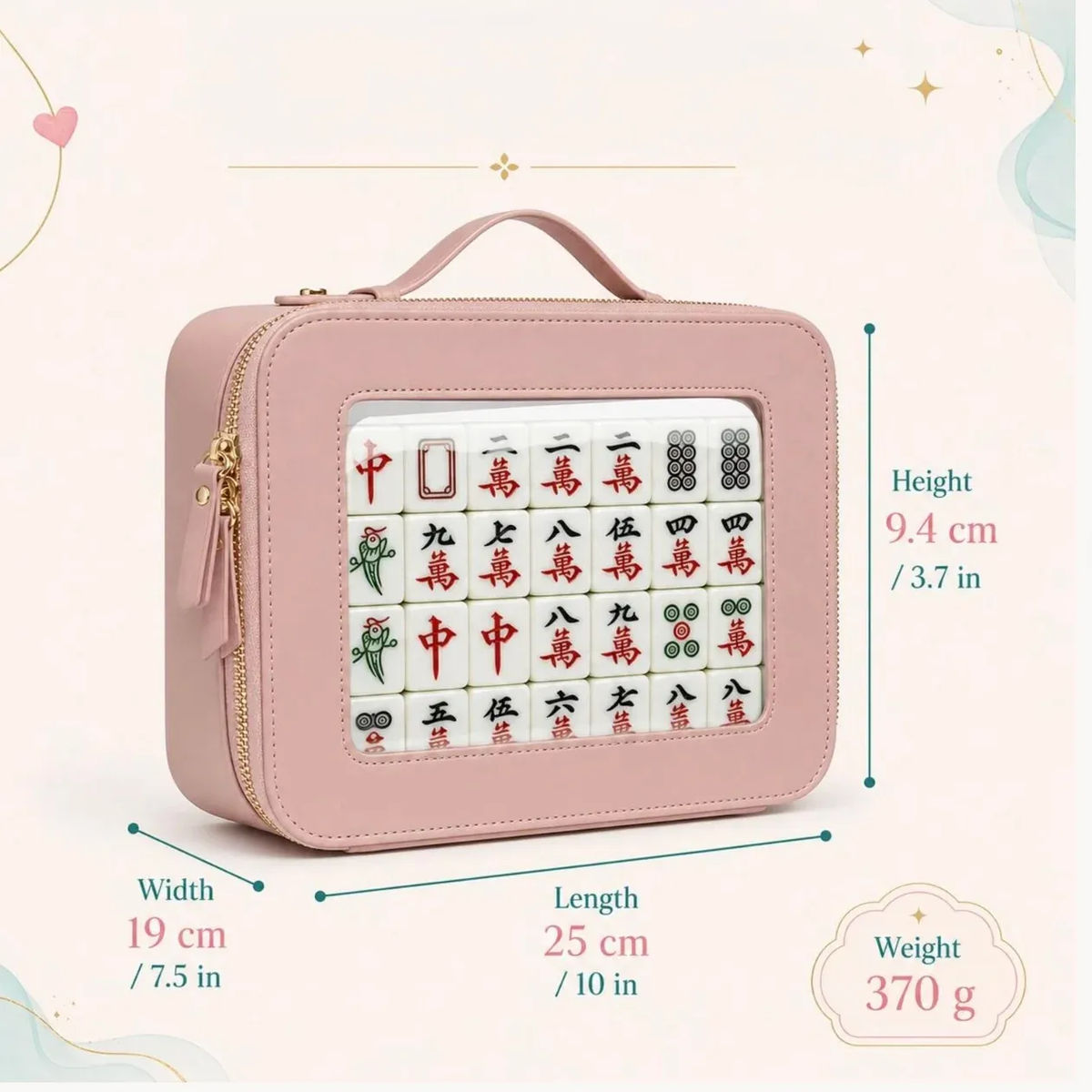
A premium mahjong tote costs more upfront because it must hold a full 160-tile set, a mat, racks with pushers, dice, and score pad without crushing tiles or straining seams. The trade-off is real: a budget bag might work for casual home games, but weekly players who transport sets to different homes, travel to tournaments, or host rotation games benefit from reinforced compartments, quality zippers, and organized pockets that keep everything accessible and damage-free. We've found that investing in a structured mahjong bag or case from Mahstead saves money long-term by preventing tile damage, protecting jokers from getting lost, and lasting through hundreds of games. The choice depends on how often you move your set and whether you value fast setup.
What exactly fits inside a good mahjong tote?
A proper mahjong tote must accommodate your full carrying load: 160-tile set in its own divided compartment, a folded mat or table cover, racks with pushers (typically four), dice, a current year's card, and a score pad. Premium totes include elastic straps to stabilize tile racks, zippered mesh pockets for small items like dice and jokers, and a base that doesn't compress under weight. Budget bags often lack these divisions, forcing you to nest everything loosely; tiles shift during transport, jokers scatter, and zippers strain. Most mahjong players underestimate how much space a full set needs—the mat alone is bulky when folded. A well-designed tote has a structured frame so the bag doesn't collapse when set down, keeping your setup time at the host's home under five minutes instead of fifteen.
🀄 Shop best-selling mahjong sets →

How often do you actually move your set?
This is the deciding question. If you play at the same table every week, a simple cloth bag or even the original box may suffice—your set stays put. If you rotate hosts, attend different venues, or travel to tournaments, you're moving your set multiple times per month. We play weekly across four different homes, and a tote has cut our setup time by half. The wear on zippers, handles, and compartment seams adds up fast with frequent transport; a budget bag typically fails within one or two seasons of regular use, forcing a replacement purchase that often costs more than investing in a durable option upfront. Check the year you started hosting or playing away from home—if that's less than two years ago, an upgrade to a structured travel bag designed for mahjong will pay for itself in convenience and tile longevity.
Budget vs. premium: what's the real difference?
Feature | Budget Bag | Premium Tote |
Compartments | 1–2, loose | 4+, elastic-divided |
Tile protection | Minimal | Padded or rigid |
Joker/dice storage | Mixed pockets | Dedicated zippers |
Mat capacity | Often doesn't fit folded | Flat slot or roll pocket |
Rack fit | Tight, risk of bending | Snug elastic holders |
Zipper durability | Fails after 50–100 trips | Reinforced, lasts 500+ uses |
Handle reinforcement | Single stitching | Double or webbing-reinforced |
Price baseline | Lower initial cost | Higher initial cost, lower lifetime cost |
The math shifts when you count years of play. A budget bag at lower cost upfront needs replacing every 18–24 months with heavy use; a premium tote lasts five or more years. Over a decade of weekly hosting, you're replacing budget bags 4–5 times versus 1–2 premium purchases. Beyond durability, a premium tote's organization means you spend less time hunting for that missing joker or score pad, and your tiles arrive in the same condition they left home—no cracks or paint chips from rough handling.
🎁 See our most-loved mahjong sets & accessories →
Who actually needs the premium option?
Tournament players, weekly hosts, and anyone with an engraved or custom mahjong set you've invested in should prioritize a structured tote. If your set is a gift or has personal engravings, the bag is insurance—protecting a hundred-dollar set with a thirty-dollar bag is false economy. Casual players who play monthly or less at one venue can get by with a simple drawstring or soft case. Travel players (those taking mahjong to cabins, vacations, or tournaments outside their home) need reinforced protection: airplane overhead bins and car trunks are unforgiving. Beginners often start with a basic bag and upgrade once they commit to the game; we've noticed most players who stick with mahjong for two years or more eventually buy a better tote because frustration with a cramped, disorganized setup finally outweighs the upfront cost.
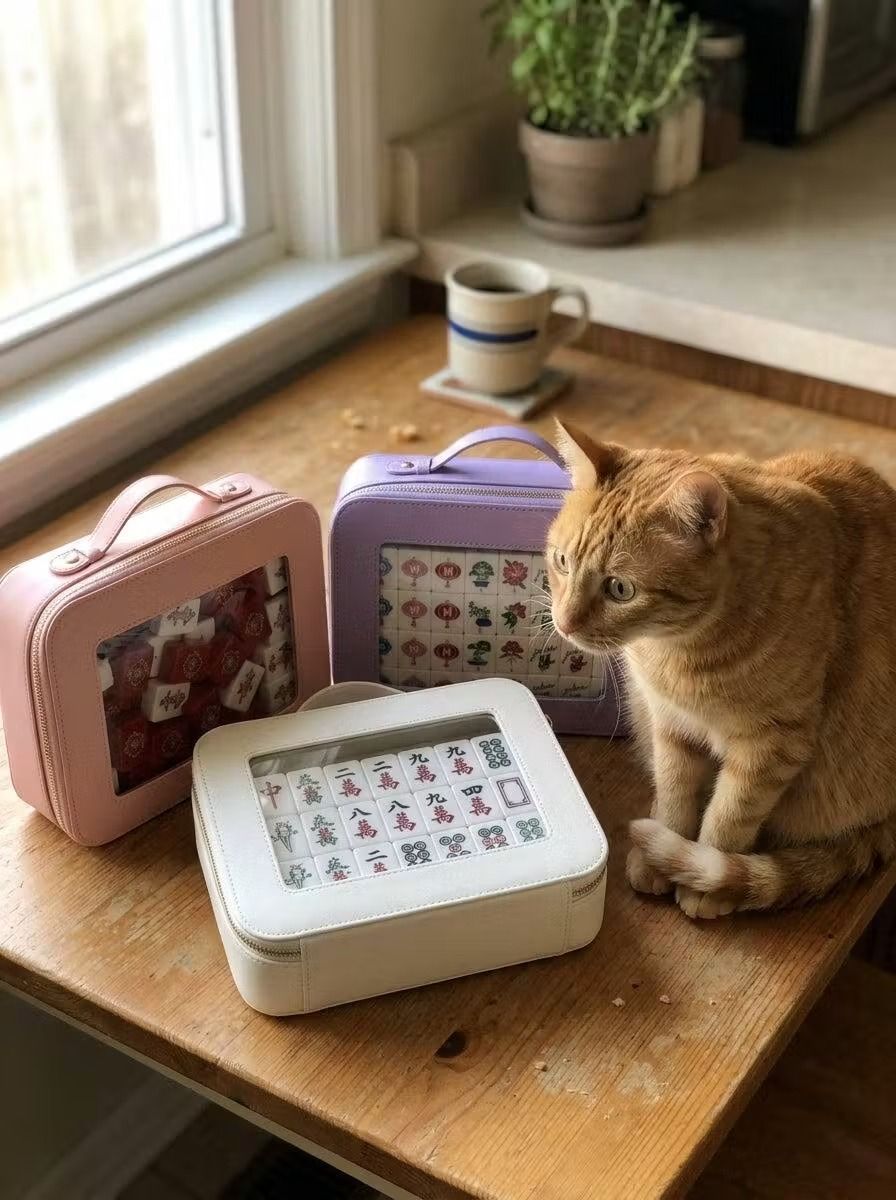
What to check before you buy
Compartment layout: Open the bag (if ordering online, check detailed photos) and verify your tile rack will fit snugly without tilting. A mat must fold flat—if the bag forces it into a tight roll, seams will stress and corners will curl. Measure your mat folded; most are 12–14 inches square when closed.
Zipper quality: Run a zipper slowly; it should glide smoothly without catching. Check for metal or reinforced-plastic teeth (not flimsy nylon sliders). Zippers are the first thing to fail under repeated travel, so this single detail often determines tote lifespan.
Handle attachment: Lift the empty bag by its handles with one hand. If it sags or feels like handles might tear, the stitching is weak. Handles should support at least 15 pounds with no flex.
Interior padding or structure: Press the sides and bottom. Is there reinforcement, or is it just cloth? Rigid or padded bases protect tiles from impact and keep the bag's shape when set down on a car seat or venue floor.
Overflow space: After packing your mat, racks, and tile box, is there room for a score pad, pencil, and a light snack? Cramped bags cause frustration and make borrowing a pencil mid-game a hassle.
A premium tote should feel solid, not flimsy—pick it up and you should feel confident it will protect your set on a bumpy car ride or crowded game night. If you're ordering online and can't feel the quality, read descriptions carefully for mentions of reinforced seams, zippered pockets, or structured bases.
✨ Find your Mahstead set — free US shipping →
The hidden cost of a cheap bag: tile damage
Tiles are acrylic and cost money to replace—lose two jokers or crack a few Bams and you're buying a whole new set because individual tile replacement isn't available through most retailers. A budget bag lets tiles shift and press against hard zippers during transport; we've seen paint chips and stress cracks from repeated jolts in cars and luggage. A premium tote with dedicated tile compartments and cushioning prevents this. Over several years, even modest tile damage (5–10 broken or worn tiles) costs more than the bag itself. If you've already invested in a best-selling mahjong set or one with custom engraving, the tote is part of your set's maintenance cost, not optional.
Final takeaway: is premium worth it?
If you move your set more than twice per month, or if you own a set you'd be sad to replace, a premium mahjong tote saves money and frustration over five years. If you play at the same table weekly and barely touch your set between games, a budget option is sensible. The real question isn't price—it's frequency and attachment. We've learned that the moment a bag fails mid-game (broken zipper trapping your score pad, a strap ripping as you lift it), you regret not spending a little more upfront. A durable mahjong bag from our collection with free US shipping is an investment in years of uninterrupted play, not a luxury.

FAQ
Can I fit a full 160-tile set, a mat, and four racks in one tote?
Yes—a properly designed mahjong tote has dedicated compartments for the tile box, a flat slot or roll pocket for the mat, and elastic holders for racks. Budget bags often force you to choose between comfort and capacity, but premium totes accommodate everything without crushing seams or tiles.
How do I know if a bag will fit my specific mat size?
Measure your mat when folded (typically 12–14 inches square). Check the bag's product description for interior dimensions or flat-pocket size. Most mahjong mats fold to similar dimensions, so a tote rated for standard American mats should work; verify before ordering if you have an oversized mat.
Will a premium bag prevent my tiles from getting lost during travel?
A structured tote with zippered pockets and compartments dramatically reduces the risk of jokers and dice escaping, but won't prevent loss if you set the bag down open. Always zip compartments before moving the bag, and do a quick count of jokers when you arrive—eight total should be in a 160-tile set.
Is it worth upgrading if I only play monthly?
For monthly play, a simple drawstring or soft case is usually enough. Upgrade if your set has sentimental value, is engraved, or if you attend different venues. Casual players often find the basic bag lasts long enough before they need a replacement.
Can I use a regular tote or travel bag instead of a mahjong-specific one?
A regular tote works only if it's large (at least 15 inches × 12 inches × 6 inches) and you're comfortable nesting your mat and racks without protection. Mahjong-specific totes have interior dividers and pockets that keep everything organized and prevent tiles from shifting—regular bags leave tiles vulnerable to damage and make setup chaotic.
What's included with a Mahstead bag?
Mahstead travel bags come ready to use—just place your set, mat, and racks inside. No assembly required. Bags ship with free US shipping and are designed to hold a complete 160-tile American mahjong set with mat and racks; confirm capacity before ordering if you have extra accessories.


View More
View More
View More
