
Quints in Mahjong: Rule Explained & When to Use
Last updated: Nov 23, 2026
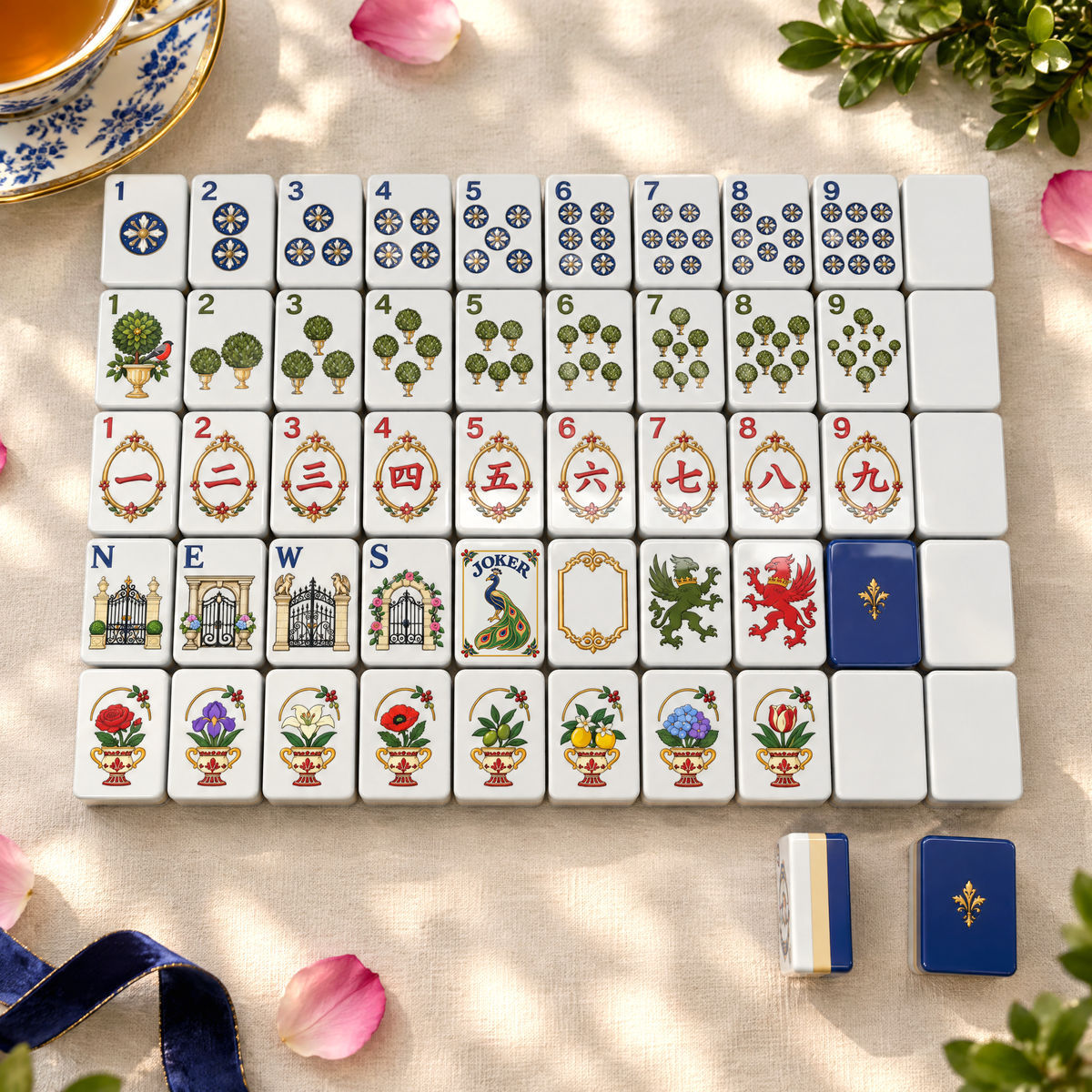
A quint in American mahjong is an exposed meld of exactly five identical tiles (like five 3 Craks), worth bonus points on the National Mah Jongg League card. Quints appear only in specific hand patterns listed on the current year's card—you cannot create one arbitrarily. A quint counts as a single meld unit within a winning hand; unlike a pung (3 tiles) or kong (4 tiles), it must be exposed when claimed and cannot be kept hidden. Jokers can fill gaps in a quint to complete the count of five. Quints are less common than pungs or kongs because fewer hands on the card require them; when they do appear, they often signal a hand worth more points due to its rarity and tile commitment. Mahstead's best-selling mahjong sets include the full tile inventory—three Bams through Dots, winds, dragons, flowers, and jokers—you need to complete any hand shape, including quints.
What exactly is a quint in American mahjong?
A quint is a meld of five identical tiles arranged on the table in front of your seat. All five tiles must be the same—all 7 Bams, all Red Dragons, or all North Winds, for example. In American mahjong, you can expose pungs (3 identical), kongs (4 identical), and quints (5 identical), but not chows or sequences; a quint is the longest single-tile-type meld allowed. Jokers substitute for missing tiles to reach five, so four 2 Dots plus one joker = a valid quint.

When does a quint appear on the card?
Quints are listed on the National Mah Jongg League card in specific hand patterns, usually in dedicated rows or sections labeled for hands containing five-tile melds. Not every year's card features quints equally; you must read the current card to identify which hands call for them. Hands with quints tend to be higher-scoring or special category plays because they lock up five tiles of the same kind, reducing your flexibility to complete other parts of the hand. Check your 2026 card's index or section headers; quints might appear in categories like "Like Numbers," "Consecutive Sets," or a dedicated quint section.
How do quints differ from pungs and kongs?
Meld | Tiles Required | Jokers Allowed | Exposed or Hidden | Points Impact |
Pung | 3 identical | Yes | Either | Common, low bonus |
Kong | 4 identical | Yes | Either (exposed in American) | Moderate, triggers draw |
Quint | 5 identical | Yes | Exposed only | Rare, hand-dependent bonus |
A pung is the smallest exposed meld (3 tiles); a kong extends it (4 tiles); a quint maxes out at five. In American mahjong, kongs are typically claimed and exposed when drawn from the wall—you draw a replacement tile from the end to keep 14 tiles in hand. A quint, once exposed, functions as a complete meld with no further claims; you do not draw a replacement. Pungs and kongs appear on nearly every hand on the card; quints are selective and high-value only if the hand design includes them.
🀄 Shop best-selling mahjong sets →
How do jokers work in a quint?
Jokers can substitute for any tile in a quint, as long as the resulting meld is five tiles total. For example: if you need a quint of 5 Bams but hold only three 5 Bams and two jokers, you can expose all five—three original tiles plus two jokers—as a valid quint. However, a joker can never be used alone to form a quint (jokers cannot fill all five spots in a single meld), and a pair cannot contain a joker. This means you must always hold at least one actual tile of the target rank to claim a quint; pure joker melds are not allowed. Understanding how jokers work across all meld types is essential before attempting quint-heavy hands.
Step-by-step: claiming a quint during play
1. Match the hand pattern – Check the current card and confirm the hand you're playing requires a quint in its design.
2. Gather five identical tiles – Collect the tiles from your rack (or your wall draw) that match the suit, number, or honor required. Fill gaps with jokers as needed.
3. Call the meld – When you claim the quint (e.g., on your turn from the wall, or by calling a discard), announce it clearly: "Quint, 3 Craks" or "Quint, East Wind."
4. Expose on the table – Arrange all five tiles face-up in front of you, to the left of your rack. Do not hide the jokers; all five tiles must be visible.
5. Verify against the card – The dealer or players may confirm the meld matches the card's pattern. If it does not, the claim is invalid and play reverts.
6. Continue to winning hand – A quint is one unit of a complete hand; you still need to meld the remaining tiles and a pair (13 tiles total for a standard hand) to win.

Common mistakes and how to avoid them
Mistake: Assuming jokers can form an entire quint alone. Jokers are wildcards, but they cannot comprise all five spots in any single meld. You must hold at least one natural tile of that rank. Fix: Before calling a quint, count real tiles; if you see fewer than one, you cannot claim it.
Mistake: Hiding a quint in your rack instead of exposing it. A quint must be displayed on the table immediately when claimed or it is invalid for that hand. Fix: Arrange it visibly to the left of your rack as soon as it is complete.
Mistake: Confusing quints with sextets on the card. Some hands list sextets (6 tiles), which are even rarer. A quint is always exactly five. Fix: Read the card notation carefully; a sextet is a separate meld type.
Mistake: Drawing a replacement tile after exposing a quint. Unlike a kong, a quint does not trigger a wall draw in American mahjong. Fix: Expose your quint and continue your turn without an extra draw.
🎁 See our most-loved mahjong sets & accessories →
What you'll need to practice quint hands at home
A full 160-tile American mahjong set with all suits, winds, dragons, flowers, and jokers is essential—you cannot practice quints without the complete tile inventory. A mahjong mat provides a clean, organized surface to arrange quints and other melds clearly so all players see them. Racks with pushers help you hold and organize tiles neatly, making it easier to spot which tiles form a valid quint and reducing fumbling at the table. A dedicated set—not shared or borrowed—ensures you always have the correct tile count and no missing jokers when testing hands from the current card.
Quint hands are rare—here's why that matters
Because quints lock up five tiles of one rank, hands requiring them are designed to be trickier to complete and typically reward higher scores. This rarity makes quint hands a smaller portion of any annual card, so you may go several rounds without playing one. When a quint hand appears in your hand options, it usually means other parts of the hand are simpler or the point value justifies the commitment. Understanding this trade-off helps you decide whether to pursue a quint hand or pivot to a pung- or kong-based option during play.
✨ Find your Mahstead set — free US shipping →
Building a complete hand with a quint
A standard winning hand in American mahjong is 14 tiles: three melds (each 3, 4, 5, or 6 tiles) plus a pair. If one of your melds is a quint (5 tiles), your other two melds must total 8 tiles plus the pair (2 tiles) = 14 total. For example: Quint (5 tiles) + Pung (3 tiles) + Kong (4 tiles) + Pair (2 tiles) = 14. This constraint is why quint hands often list specific meld combinations on the card; you cannot freely choose other melds once a quint is part of your design. Refer to how to play American mahjong for full hand structure rules.

FAQ
Can a quint have a joker in every position?
No. A quint must contain at least one natural tile of that rank; jokers are substitutes only. A joker-only quint is invalid.
Do I draw an extra tile after exposing a quint, like with a kong?
No. In American mahjong, a quint is final once exposed; you do not draw a replacement. Kongs trigger a wall draw, but quints do not.
Are quints worth more points than pungs or kongs?
Points depend on the specific hand on the card, not the meld type alone. A quint hand's value reflects the rarity and design of the overall hand, not just the quint itself.
How often do I see quint hands on the yearly card?
Frequency varies year to year based on the card design. Quints are less common than pungs and kongs; expect quint hands to appear in a small percentage of the total hand options.
What if my quint includes a joker and another player disputes it?
Ensure all five tiles are exposed and visible on the table, and verify the meld against the current year's card pattern. If the card shows a quint in that suit and number, and you hold five tiles (natural or joker substitutes), the claim is valid.


View More
View More
View More
