
Second Charleston in Mahjong: Examples and Rules
Last updated: Nov 23, 2026
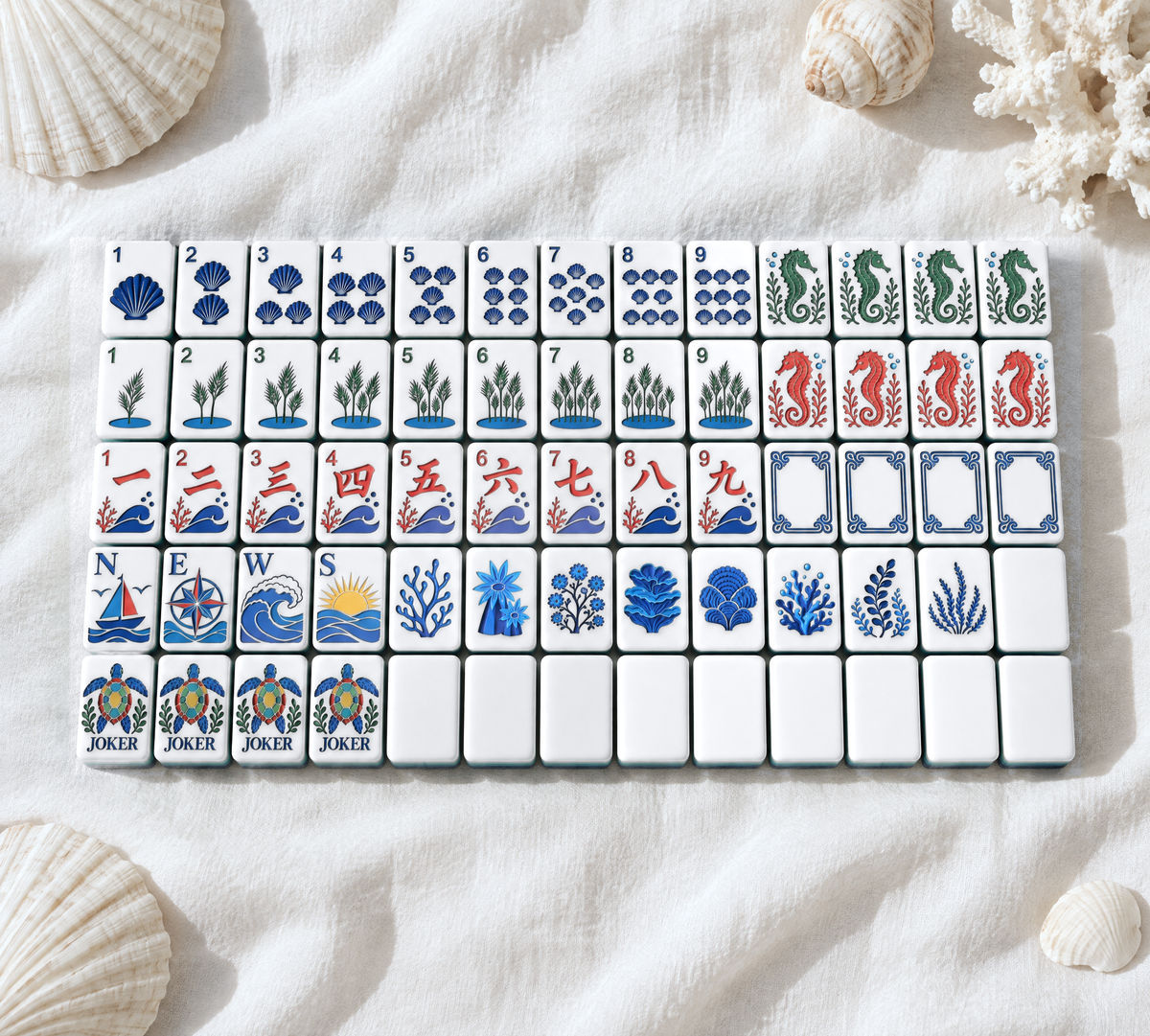
A second Charleston is an optional tile-passing round that happens after the first Charleston ends. After the first Charleston concludes—when the player discarding to their right receives their final pass—any player may call "second Charleston" before tiles are picked. If all four players agree, players pass one full cycle again: left, opposite, right, using whatever tiles they hold at that moment. No player can call a third Charleston. Once tiles are set down after a second Charleston's final pass, the round begins immediately; no player may call second Charleston mid-pick.
When do players typically call a second Charleston?
A second Charleston is most commonly requested when a player has a weak or unbalanced hand after the first round of passing. If your tiles include few pairs, no matching sequences, or an odd distribution of suits, you might hope the second Charleston brings better complementary tiles. However, calling second Charleston is a gamble: you might improve your hand, or you might receive tiles that are even less useful. The National Mah Jongg League rules do not mandate a second Charleston—it is a house rule negotiated before play begins. Some weekly games always allow it; others forbid it outright. Ask your group's usual practice before joining a new table.

What tiles do you pass during a second Charleston, and in which direction?
During a second Charleston, you pass the exact tiles you hold in your rack at the moment the second Charleston is called. You do not "reset" to your original hand; you work with what you have. The passing directions follow the same pattern as the first Charleston: one complete cycle of left, opposite, and right. Each player removes their required number of tiles (typically three per direction, fourteen total in the three-way pass), places them face-down on the table aligned with the receiving player's side, and waits until all players have completed each leg before moving to the next direction. Once the rightward pass (the third and final leg) is complete, each player draws the tiles they've received, and the round begins immediately. No further passing is allowed.
Can a second Charleston be called anytime, or are there specific moments when it's not allowed?
A second Charleston cannot be called once any player has picked a single tile from the wall. The moment the first player (typically the player who discard the tile that went out during the first Charleston's rightward pass) begins drawing, the window for calling second Charleston closes. If a player says "second Charleston" after picking has begun, the call is invalid, and play continues. This timing rule prevents chaos and ensures all players have equal opportunity to agree before the round locks in. Once tiles are set down after the second Charleston's final pass, picking begins and cannot be interrupted. The rule is clear: second Charleston or not, but decide before picking starts.
How does a second Charleston affect the pace and strategy of your game?
Adding a second Charleston typically extends pre-game passing by two to three minutes, which can slow a weekly game noticeably if multiple rounds include second Charlestons. Strategically, a second Charleston rewards adaptability: if your first-pass hand suggests a flexible strategy (say, you have two pairs and scattered tiles), the second pass might complete a hand you hadn't envisioned. Conversely, if you already hold a clear, high-probability hand after the first Charleston, calling second Charleston is risky—you risk breaking a winning shape for tiles that don't fit. Experienced players weigh the strength of their hand: weak hands often drive the call, strong hands often reject it. Table culture matters: groups that permit second Charleston tend to embrace longer, more exploratory games, while groups that forbid it value speed and decisiveness.

What are the house rule variations around second Charleston?
Some tables allow second Charleston only if a majority (three of four) players agree, while others require unanimity (all four must say yes). A few groups permit second Charleston only on the first round of the night, never on subsequent rounds. Others enforce a "gentleman's rule": a player may call second Charleston only if they requested it on fewer than two prior rounds that evening. The strictest rule forbids second Charleston altogether, treating the first Charleston as final. Before your first game at a new table, ask directly: "Do you play second Charleston? If yes, does everyone have to agree, or just a majority?" This single question prevents tension and keeps the table smooth.
House Rule | Majority Needed | When Allowed | Impact on Pace |
Always allowed | All four must say yes | Any time after first Charleston | Slower |
Majority decides | Three of four agree | Any round | Moderate |
First round only | All four must say yes | Opening round only | Minimal |
Never allowed | N/A | Never | Fastest |
Limited per night | All four must say yes | Up to two rounds per night | Moderate |
🀄 Shop best-selling mahjong sets →
What mistakes do newcomers make around second Charleston calls?
New players often call second Charleston without checking first whether the table allows it—a quick verbal agreement before play begins avoids this. Others pick tiles before mentioning second Charleston, making the call invalid and creating awkwardness. Some players call second Charleston expecting the dealer or a specific player to have authority over the decision; in American mahjong, any player may call it, but all four must agree. Another common error: assuming second Charleston resets the hand or changes who passes where. It doesn't. You pass the tiles in your rack now, in the same directions (left, opposite, right), and the order of players remains unchanged. Finally, some players call second Charleston after tiles are set down following the rightward pass, hoping to squeeze in one more cycle. Once tiles are placed, picking begins and second Charleston cannot be called. Know the timing window: it closes the moment anyone picks.
How to play American mahjong covers all passing phases, including the Charleston. Understanding the full sequence helps you recognize exactly when a second Charleston call is valid. For a deeper look at the first Charleston's structure and common variations, the Charleston explained walks through each leg step-by-step.
What to check before you buy tiles for your weekly game
If your group permits second Charleston, you'll be handling and counting tiles twice per round. Ensure your mahjong set has large, crisp markings and consistent size—small, worn, or poorly engraved tiles become frustrating during the extra pass. A set with distinct colors per suit (Bams bright, Craks bold, Dots clear) speeds identification when you're counting faces quickly. If you host the game and have a heavy weekly turnover, an engraved set with titles adds personality and helps players spot their tiles at a glance. Acrylic sets hold up better through repeated handling than bamboo or bone, especially if your table plays multiple rounds per session. A quality mat with clear lines also helps: during the second Charleston's three-way pass, a defined pass zone (marked by mat lines) keeps tiles organized and reduces confusion about which tiles belong to whom.
🎁 See our most-loved mahjong sets & accessories →
A second Charleston is a house-rule layer on top of American mahjong's core passing ritual. It is optional, requires unanimous agreement, and must be called before any player picks a tile. Knowing when, how, and whether your table allows it ensures smooth play and prevents awkward pauses. Check your group's preference before your first night, understand the timing window, and appreciate the strategic trade-off: a weak hand might improve, or it might not—but the choice belongs to everyone at the table equally. Most importantly, communicate. A single question before the first Charleston starts avoids every second Charleston mistake.
✨ Find your Mahstead set — free US shipping →

FAQ
Can a second Charleston be called if only three players agree?
No. All four players must agree to a second Charleston. If one player objects, the round proceeds with picking. House rules vary—some tables require unanimous consent, others allow majority vote. Clarify your table's rule before playing.
What if someone picks a tile during the second Charleston's rightward pass?
If any player picks before all rightward-pass tiles are set down, the second Charleston is technically voided and play should continue from the point where picking began. Most tables treat this as a mistake and briefly pause to reset—but to avoid this, wait until all tiles from all three directions are collected before anyone picks.
Can I call a second Charleston after the first pass (left direction) completes but before the opposite pass begins?
No. Second Charleston must be called after the entire first Charleston is complete, meaning all three directions (left, opposite, right) have finished and tiles have been collected. Once the first rightward pass ends, the window opens briefly—call it then, before anyone picks.
If we play a second Charleston, do the passing directions change?
No. The directions remain left, opposite, right, in the same sequence as the first Charleston. You simply repeat the cycle using the tiles in your hand at that moment.
Do house rules require me to tell other players I'm calling a second Charleston, or can I remain silent and let them discover it?
You must call it aloud so all four players hear and can agree or object. Calling it silently or attempting to sneak it through is poor etiquette and will be caught when someone asks to pick. Always speak clearly: "Second Charleston?" Wait for consensus before proceeding.
If we play a second Charleston, does the dealer change?
No. The dealer remains the same player throughout the game, regardless of how many Charlestons occur. The dealer rotates between rounds, not within a round.


View More
View More
View More
