
Opposite Dragon Mahjong Rule Explained
Last updated: Nov 23, 2026
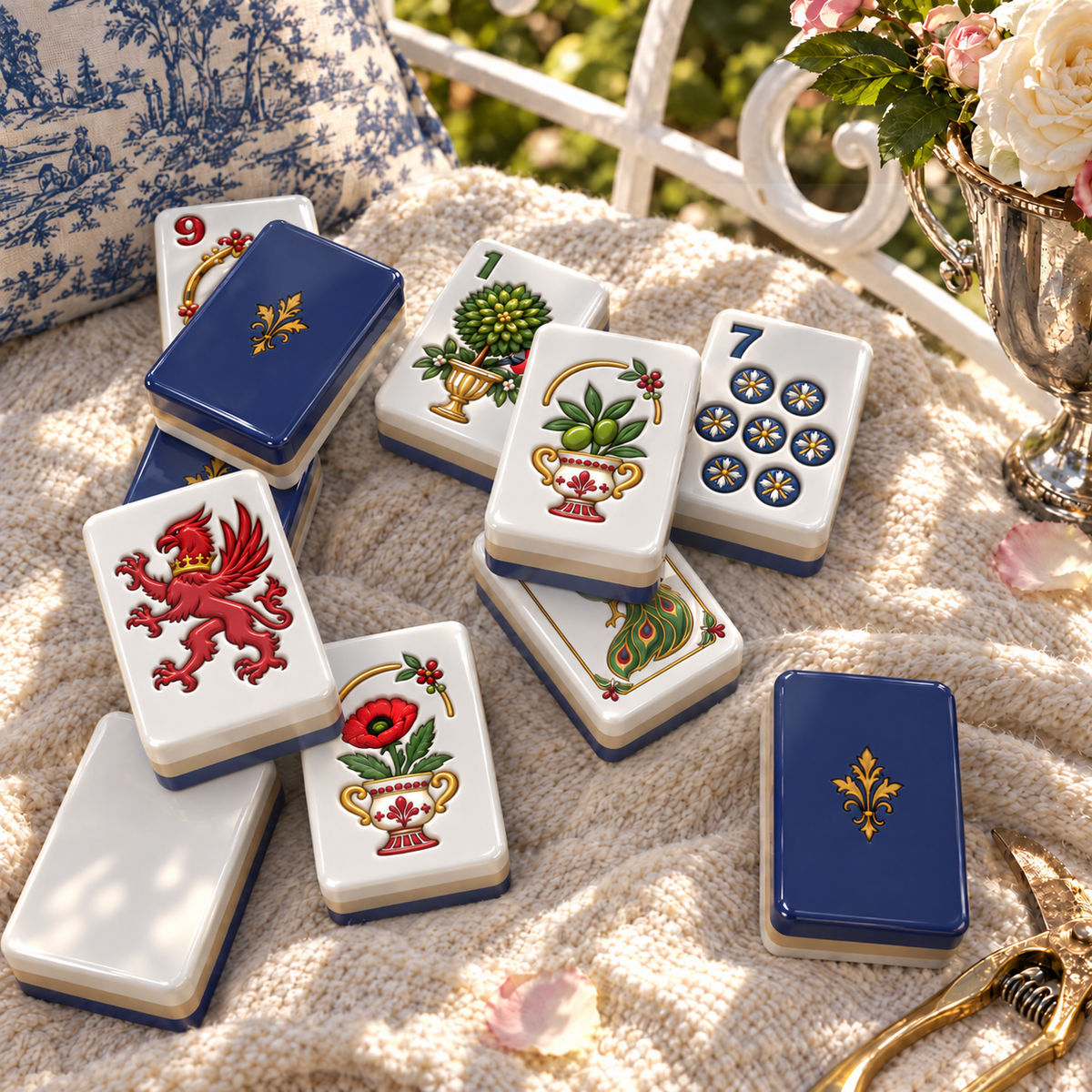
In American mahjong, the Opposite Dragon rule allows you to use one Dragon tile to represent another Dragon tile or a specific number tile in certain hands on the current year's National Mah Jongg League card. The rule varies by hand type: some hands explicitly call for an "Opposite Dragon" (often shown as OD on the card), meaning you may substitute a Dragon you hold for the Dragon the hand requires, provided you match the hand's structure. Not all hands feature this rule—only those marked on the card do. You cannot use Opposite Dragon in hands that don't call for it. The rule exists to add flexibility when building specific patterns and is always tied to the official card printed each spring. Check your card carefully: if you don't see "OD" or similar notation in a hand's definition, the rule doesn't apply to that hand. When hosting weekly games, always clarify with your table whether a hand you're claiming uses the Opposite Dragon rule and confirm it on the card before the hand counts.
In American mahjong, confusion around the Opposite Dragon rule often stops players mid-game. We've fielded this question countless times at the table, and the answer is simpler than many believe—but it requires you to know where to look and why it matters.
What does "Opposite Dragon" actually mean?
The Opposite Dragon rule is a conditional substitution rule printed on specific hands in the National Mah Jongg League card each season. It means: if a hand definition includes "OD" or states "Opposite Dragon," you are permitted to use a Dragon tile you hold to fill a position in that hand where the standard hand would call for a different Dragon tile. For example, if a hand requires Red Dragon–Green Dragon–White Dragon, you might be allowed (depending on the exact notation) to substitute one of these with its "opposite." The term "opposite" typically refers to Dragons paired by their numeric or symbolic relationship on the card. You do not get to invent this substitution—it must be explicitly printed in the hand definition for that season's card. Using Opposite Dragon in a hand that doesn't call for it invalidates your win.

Where on the mahjong card do you find the Opposite Dragon notation?
Open your current year's National Mah Jongg League card and scan the hand definitions for abbreviations. Opposite Dragon appears as a footnote, bracket notation, or inline marker next to specific hands—usually those featuring Dragon-heavy patterns or hands that would otherwise be difficult to complete. The exact placement and abbreviation vary slightly year to year; some cards show "OD" in parentheses or as a superscript next to the hand name or structure. The safest habit: read the full hand definition and any footnotes attached to it. Many players skim the hand structure and miss the small-print conditions that unlock or restrict certain tiles. If you're unsure, ask the dealer or a veteran player at your table before claiming the hand. Reading how to read the mahjong card in detail helps you spot these markers quickly.
How does Opposite Dragon differ from jokers in substitution?
This is where many players slip up. Jokers can substitute for any tile in a pung, kong, quint, or sextet that you've already exposed or declared—they are universal wildcards with strict rules about where they sit and how many you can use in one meld. Opposite Dragon is far narrower: it applies only to hands where the card explicitly permits it, and it only lets you swap one Dragon for another specific Dragon (or sometimes a number tile paired with that Dragon, depending on hand notation). Jokers work across all hands and all tiles; Opposite Dragon works in designated hands only. You cannot use a joker to trigger Opposite Dragon, nor can you use Opposite Dragon to bypass joker rules. Each rule has its own lane. Learn how jokers work separately so you don't confuse substitution mechanics at the table.
Common mistakes to avoid when using Opposite Dragon
Mistake 1: Assuming Opposite Dragon applies to your hand without checking the card. We've seen players claim hands with three Dragons, assume OD is allowed, and lose the hand after the rest of the table challenges them. Always check the card first. If you're not holding the physical card, ask someone to verify the hand notation before you go down.
Mistake 2: Mixing Opposite Dragon with joker substitution. Once a hand is played, the rules for that hand are fixed. You cannot add a joker to an Opposite Dragon hand and claim both rules protect your meld. Choose one substitution method per meld or use the rule the hand explicitly permits.
Mistake 3: Misreading hand abbreviations. "OD" is not always Opposite Dragon. Some cards use "OD" for other notations. Read the key or legend on your card every season, because notation changes from year to year.
Mistake 4: Claiming Opposite Dragon in a hand another player is also pursuing. If two players are building the same hand and both think they have the right Dragon tiles, the player who goes down first wins—the second player's claim is void. Be clear about your tiles and the hand definition before claiming a win, especially with Dragon-heavy hands.

Step-by-step: How to verify an Opposite Dragon hand at the table
State your hand clearly. Say the hand number or describe it: "Hand 42, Pung Pung Pung with a pair and Opposite Dragon."
Check the card together. Locate the hand on your group's card and read it aloud so everyone hears the exact definition.
Confirm the notation. Point to or mention the "OD" or Opposite Dragon marker if it appears. If it doesn't appear, the hand is standard—no substitution.
Show your tiles. Lay out your exposures and your claimed pair. All tiles must match the hand structure after the Opposite Dragon swap is applied.
Wait for a challenge. Give the table 5–10 seconds to call "misdeal" or "not on the card" before you score. Once everyone agrees, you win.
This step-by-step approach prevents costly disputes and keeps the game fair.
Scenario | Card says "OD"? | Can you use Opposite Dragon? | Example |
Hand 42: 3 Pungs + Pair, 2 Dragons | Yes | Yes | You hold Red–Green–White Dragons and claim Red is opposite to Green |
Hand 15: 3 Pungs + Pair, no Dragon notation | No | No | You hold 3 Dragons but cannot swap them; hand requires specific tile counts |
Hand 88: Quint + Kong + Pair, "OD allowed" | Yes | Yes | A Dragon in the quint can represent its opposite |
Hand 105: 2 Kongs + Chow + Pair, no Dragon rule | No | No | The hand doesn't call for Dragons; Opposite Dragon rule doesn't exist for this hand |
🀄 Shop best-selling mahjong sets →
When should you use Opposite Dragon vs. waiting for a different hand?
Early in a round, if you're drawing tiles toward a hand that requires Opposite Dragon but you haven't seen one yet, keep your options open. Many players over-commit to a single hand and get stuck discarding critical tiles. A seasoned approach: build toward hands that don't require Opposite Dragon until you're confident in your draw. Late in the round, if Opposite Dragon would complete your hand and you have no other option, use it—the benefit of the win outweighs the delay.
However, if you're playing with mahjong racks with pushers and can organize your tiles clearly, spotting which hands you can complete becomes faster. Racks help you see your full tile picture and the substitutions available without fumbling.
Opposite Dragon is a tool, not a shortcut. Use it only when the card permits and when it's your best path to a win.
What to check before you buy a new mahjong set to ensure you have quality tiles for hands like Opposite Dragon
When ordering a mahjong set online or in person, make sure the Dragon tiles are printed clearly so you can spot them fast during play. Faded or poorly engraved Dragons slow down hand-checking and create table friction.
Acrylic sets are easier to read than bamboo under table lamps, and engraved tile designs—especially those with custom titles or themes—often highlight Dragons with bright or contrasting colors so you never misread them during hand verification. The tiles in a 160-tile American mahjong set should feel consistent in weight and size, making it easy to organize your rack and spot Opposite Dragon scenarios without second-guessing which Dragon is which.
Before play begins, lay out all four copies of each Dragon and confirm they look identical. Any tile that looks different or faded is a red flag—ask the set owner to replace it or use a backup set to avoid disputes when Opposite Dragon hands come up.
🎁 See our most-loved mahjong sets & accessories →
Opposite Dragon in other mahjong variants—does the rule apply?
Opposite Dragon is an American mahjong rule only. Chinese, Hong Kong, Riichi, and Taiwanese mahjong use entirely different tile systems, hand structures, and substitution rules. If you're learning those variants, do not assume Opposite Dragon transfers. Each variant has its own rule book, and confusing them at the table causes real confusion and losses.
Many Western players who learned American mahjong first try to apply Opposite Dragon to other games and get corrected quickly—it's a common rookie mistake when switching variants. Stick to the pillar guide on how to play American mahjong if you're hosting American games, and reference variant-specific rules if you're running Chinese or other games on alternate weeks.
✨ Find your Mahstead set — free US shipping →

FAQ
Can I use Opposite Dragon if the card doesn't explicitly say "OD" or "Opposite Dragon"?
No. Opposite Dragon only applies to hands where the National Mah Jongg League card includes the notation. If you don't see "OD" or similar marking in the hand definition, the rule does not apply, and using it invalidates your win.
Is Opposite Dragon the same as a joker substitution?
No. Jokers substitute for any tile in pungs, kongs, and higher melds across all hands. Opposite Dragon is a specific rule that applies only to designated hands and only swaps one Dragon for another Dragon (or its paired tile). They are separate rules.
What if I claim a hand with Opposite Dragon and another player challenges it?
Stop, check the card together with everyone at the table, and verify the hand notation includes the OD marker. If it does and your tiles match the structure, your hand stands. If it doesn't, the hand is misdeal and you don't score.
Can I use Opposite Dragon in a hand if I've already exposed jokers in that hand?
Check the card for the exact hand rule. Some hands allow both joker and Opposite Dragon substitutions; others don't. Never assume—always read the full hand definition and any footnotes.
How do I teach a new player about Opposite Dragon without confusing them?
Tell them: "Opposite Dragon is a special rule that only works in certain hands—look at the card to see which ones. Regular hands don't use it." Show them one example hand with OD marked, then one without, so they see the difference visually.
Does Opposite Dragon apply in 2- or 3-player American mahjong?
Yes, the rule applies in all American mahjong formats if the card includes it. The hand structure and Opposite Dragon notation remain the same whether you're playing four-player, two-player, or three-player. Check 2 and 3 player mahjong rules for variant-specific details.


View More
View More
View More
