
Mahjong Tournaments in Pittsburgh: Where to Play & Compete
Last updated: Nov 23, 2026
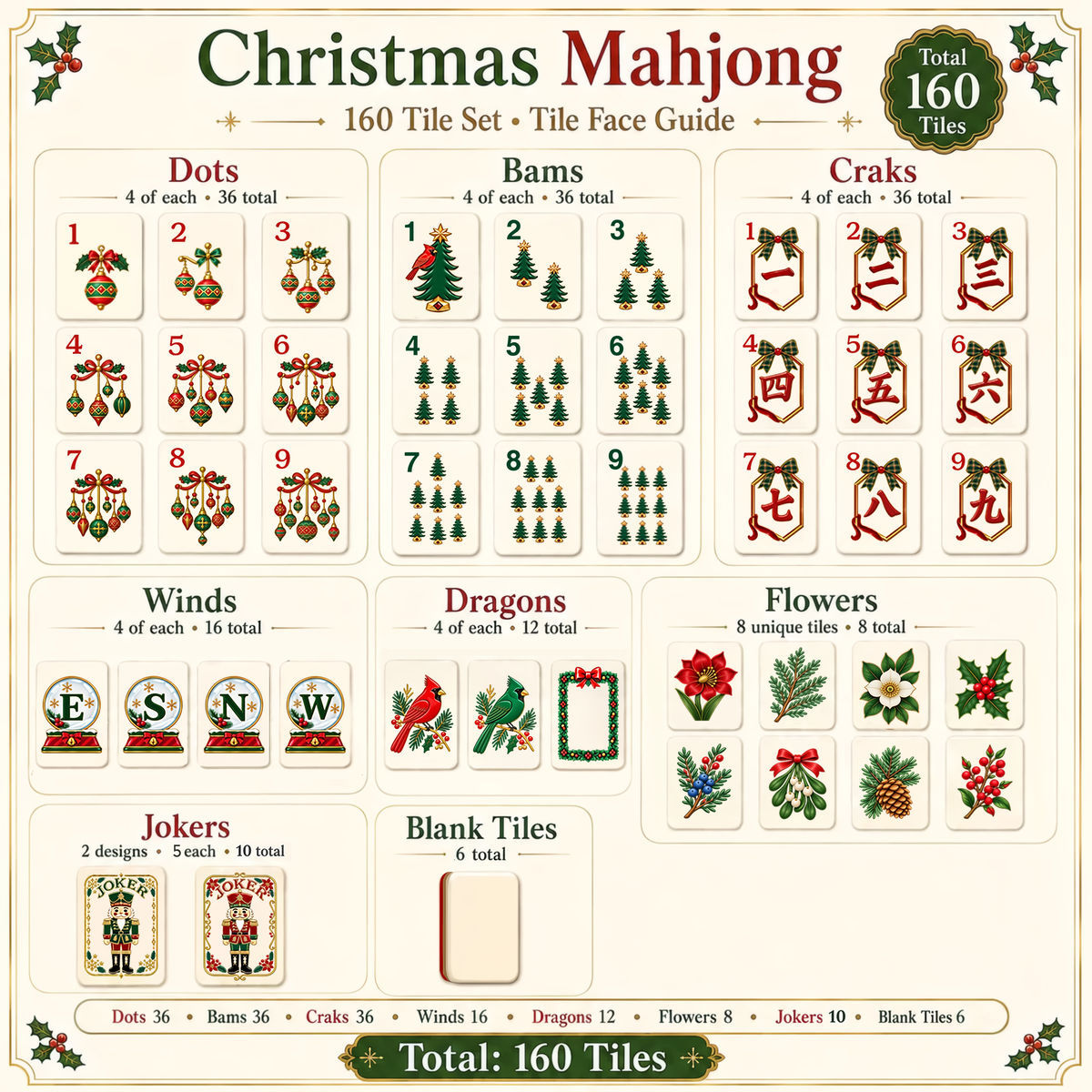
Pittsburgh's mahjong scene thrives in public spaces: search community centers, public libraries (especially branch libraries in neighborhoods with larger Jewish populations), synagogues, and country clubs for weekly or monthly games and occasional tournaments. The National Mah Jongg League publishes an official club directory; contact them directly to find sanctioned Pittsburgh-area groups. Tournaments typically run on Saturdays or Sundays, last 4–6 hours for a full session (12–16 rounds), and use the current year's NMJL card. Entry fees exist but vary; ask organizers upfront. Bring your own set if requested, or borrow from hosts. First-timers should review how to play American mahjong and the current NMJL card beforehand to avoid losing turns.
How do I find mahjong tournaments near Pittsburgh?
Start with the National Mah Jongg League website—they list affiliated clubs and sanctioned events by region. Call local public libraries and community centers directly; many host weekly games or bulletin boards with flyers. Synagogues in Pittsburgh's Squirrel Hill and Shadyside neighborhoods often run mahjong groups. Ask at country clubs in or around the city; several host members-only or open tournaments. Online community boards and meetup groups sometimes post informal games. Visit in person, watch a round, and ask players for the tournament calendar.

What do Pittsburgh tournaments expect from players?
Tournament play follows strict American mahjong rules: one current-year NMJL card per table, no house rules, and exact scoring as printed. Organizers assign players to tables; you'll rotate each round. Bring a pen and scorepad (hosts usually supply them). Arrive early to check in and meet your first-table group. Don't bring food or drinks to the playing surface. Silence phones. If you're unsure of a hand or scoring dispute, raise your hand for an arbiter—don't guess. Most tournaments require you to have played at least a few casual games beforehand; pure beginners are usually directed to learn-to-play sessions first.
What's the difference between club play and tournament play?
Factor | Club Play | Tournament Play |
Rules | May include house variations | Strict NMJL card only |
Table assignment | Often choose your seat or sit with friends | Assigned by organizers; tables rotate |
Scoring | Casual, sometimes averaged | Exact NMJL scoring, results recorded |
Atmosphere | Social, forgiving of mistakes | Formal, faster pace, arbiter present |
Frequency | Weekly or monthly standing games | Seasonal, advertised in advance |
Cost | Minimal or none | Entry fee; ask organizers for amount |
Club play is relaxed and social—perfect for learning and building friendships. Tournament play is competitive: every hand is scored, disputed calls go to an arbiter, and your results count toward a season record. Beginners often start in clubs and graduate to tournaments after a few months of regular play.
Should I bring my own mahjong set to Pittsburgh tournaments?
Check the tournament organizer's rules before registering. Most larger tournaments provide sets for all tables to ensure consistency and fairness—no home-made or mixed sets allowed. However, some casual clubs or smaller events let players bring their own. If you own a set, bring it only if explicitly invited; if you don't, assume the host provides one. If you do travel with your set, use a sturdy mahjong bag or case to protect tiles during the car ride; acrylic sets can crack if jostled roughly. Never assume tile condition at a tournament; if you spot a bent or missing tile during play, call the arbiter immediately.
🀄 Shop best-selling mahjong sets →

What should I learn before my first Pittsburgh tournament?
Spend time on the current NMJL card: memorize hand patterns, especially common ones in the early year sections. Play at least 6–8 casual games with a club or friends so your fingers know the Charleston rhythm and you recognize live hands quickly. Review the Charleston explained—the pre-game tile-passing ritual—so you don't fumble it at the table. Understand how jokers work: jokers cannot be used in a single tile or a pair, only in exposed sets. Study American mahjong scoring so you recognize what hands are worth and when to declare. Watch experienced players at a club to see how fast hands move and how disputes are resolved. Arrive at your first tournament 15 minutes early—don't start cold.
What ties should I know about Pittsburgh mahjong culture?
Pittsburgh has a rich history of mahjong in its Jewish community, passed down through families and sustained by regular club players. Unlike younger cities with newer games, Pittsburgh tournaments tend to attract long-time players; respect the tradition and watch quietly your first session. Players often have preferred seats and partnerships—ask before you sit. Conversation at the table is kept to a minimum during active play; chat happens between rounds. Several Pittsburgh groups have run continuously for decades; joining one connects you to that legacy. Bring patience and good humor—tiles fall, mistakes happen, and the best tournaments end in laughter over snacks.
🎁 See our most-loved mahjong sets & accessories →
What to check before you buy a set for tournament play
If you're investing in your own set for regular Pittsburgh tournament or club attendance, choose one built for durability and clear tile reading. Check that your set includes all 152 playing tiles plus 8 jokers (acrylic sets should feel substantial, not flimsy). Verify tiles are engraved or printed with clear, contrasting numbers and suit symbols—faded tiles slow down play and frustrate table-mates. Look for engraved American mahjong sets if you want personalization; many tournament players add their names or a motto. Buy a matching rack with pushers—it steadies your hand and keeps tiles organized during play, cutting down on accidental exposures. If you travel to tournaments often, pair your set with a protective case to survive the car and tournament venue safely.
✨ Find your Mahstead set — free US shipping →

FAQ
Do I need to join the National Mah Jongg League to play in Pittsburgh tournaments?
No. The NMJL is a non-profit that publishes the annual card and sanctions tournaments, but individual players don't join or pay membership. Many Pittsburgh tournaments are NMJL-sanctioned, meaning they use the official card and follow official rules. Ask the organizer when you register.
Can I learn mahjong at a Pittsburgh club before trying a tournament?
Yes, and that's the path most beginners take. Start with a casual weekly club game to learn the Charleston, hand recognition, and scoring without pressure. After 4–8 weeks, you'll feel ready for tournament pace.
What if I make a rules mistake during a Pittsburgh tournament?
Raise your hand and call an arbiter immediately. Explain the situation clearly. Arbiters are there to settle disputes fairly and keep the game moving. Don't argue with other players—that's why arbiters exist. Mistakes are normal and usually corrected without penalty on the first occurrence.
Should I bring money to a Pittsburgh tournament for entry or lunch?
Yes. Tournament entry fees vary by event; ask the organizer what the fee is when you register. Many tournaments include snacks or a break for lunch at a nearby location. Bring cash and card in case the venue doesn't accept one or the other.
How competitive are Pittsburgh mahjong tournaments compared to other cities?
Pittsburgh tournaments range from relaxed club-style play to highly competitive regional events. Most are social—players enjoy winning but value the friendships and tradition. Ask the organizer about the skill level and atmosphere before registering if you're nervous about pace or intensity.
Can a complete beginner sign up for a Pittsburgh tournament?
Most organizers ask that you've played at least a few casual games first so you don't slow down a full 16-round session. Take 4–6 weeks of club play, then ask an organizer if you're ready. Some cities run beginner-only tournaments in off-season; check with local groups.


View More
View More
View More
