
Mahjong for Poker Players: What Skills Transfer
Last updated: Nov 23, 2026
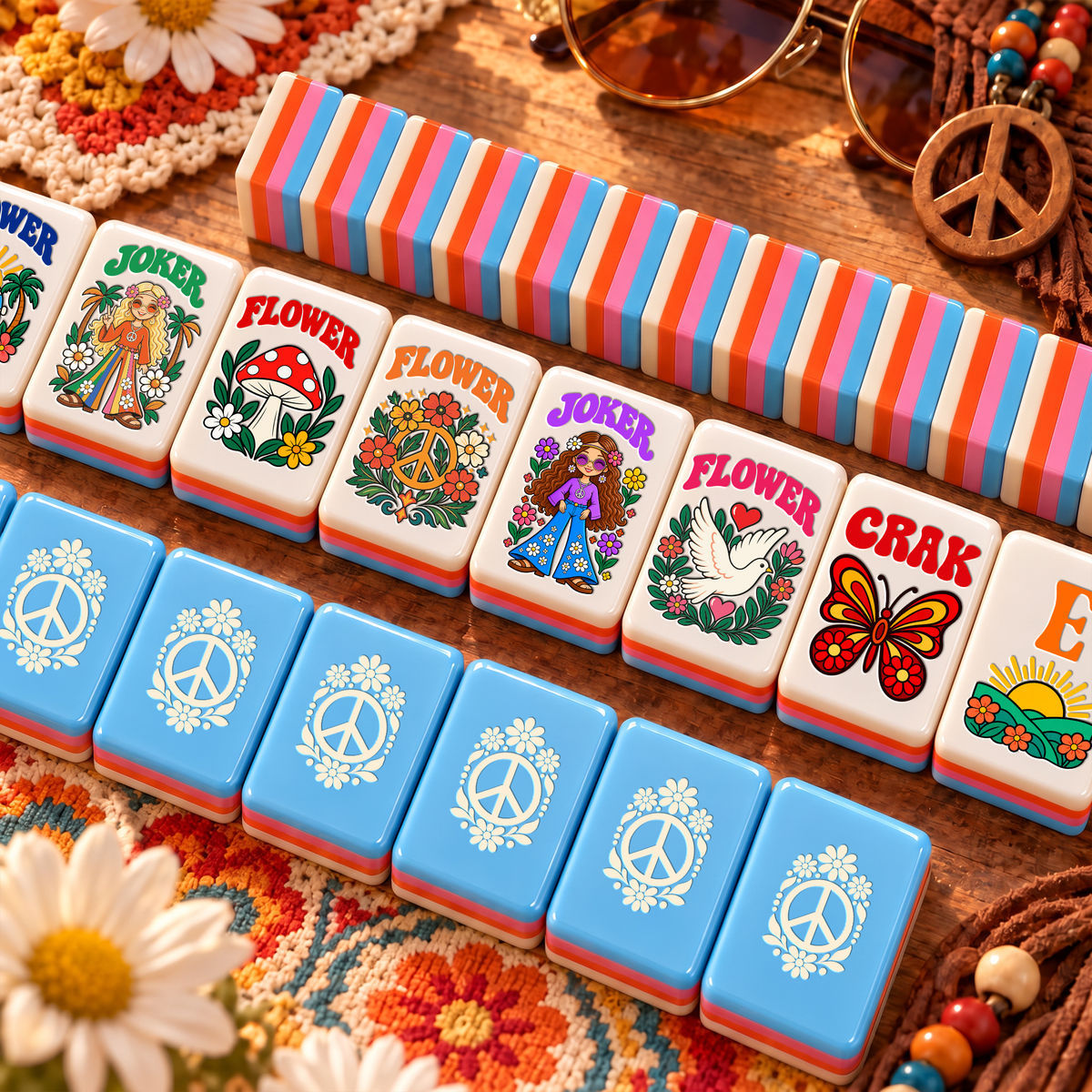
Poker teaches you probability, hand reading, and position—all useful in mahjong—but American mahjong plays by a fundamentally different logic. In poker, you build sequences (straights) and sets (pairs, three-of-a-kind) over multiple streets; in American mahjong, you must complete a single legal hand in one game session, choosing only from the current year's National Mah Jongg League card. There are no sequences (chows) you can expose; you can only lay down triplets, quads, and longer identical-tile melds, plus one pair. Jokers act like wildcards in melds but can never fill a single tile or pair slot. Position matters less—everyone draws in turn—but memory, tile observation, and speed matter far more. A typical game lasts 15–30 minutes. If you want to move from poker to mahjong, expect a 2–4 week learning curve for the card, tile recognition, and the discard rhythm. Start with a best-selling American mahjong set and the rule book; the tactical reward is immediate.
Poker sharpens your edge in certain ways, but mahjong is not poker with tiles. The two games overlap in psychology and memory, yet diverge sharply in structure. Here's what sticks, what flips, and how to bridge the gap.
Do poker tells and position awareness matter in mahjong?
Position in poker determines when you act and what information you hold; in American mahjong, all four players draw and discard in fixed rotation (East, South, West, North), and the turn order never changes mid-game. You cannot fold, check, or re-raise. You do gain subtle position advantage by playing East (who draws first in each round and is declared winner first if two hands are equally complete), but this vanishes if you don't draw the hand you need. Reading tells—hesitation, discard patterns, the speed of a pickup—matters intensely. Watch who hesitates before discarding; that player is deciding between two tiles, meaning they're close to a hand or want to block you. Observe what discards appear early (usually safe, unrelated to anyone's hand) versus late (dangerous; drawn as potential melds). Bluffing doesn't exist, but signaling does: if you pick up immediately after someone discards, you're telegraphing that tile's value to everyone else. Your poker eye for behavior transfers perfectly; apply it to the discard pile, not the faces.

Which poker probability skills actually help?
Poker trains you to estimate outs (cards that improve your hand) and opponent equity. Mahjong demands similar math on a smaller, faster scale. In a 152-tile deck, each tile (except jokers) exists in exactly four copies. If you see two 7 Craks already discarded, you know only two remain in the live deck—useful when you need a 7 Crak and someone discards near the end. Probability shrinks as tiles leave play; the deck empties visibly, unlike a shuffled poker deck. Your advantage: you practice rapid mental accounting (pot odds, hand equity) and aren't intimidated by calculating odds under pressure. Your weakness: poker trains you to expect variance and equity exchanges over long sessions. Mahjong punishes variance harder because one game lasts 15–30 minutes and a single bad draw costs you the whole round. Bankroll thinking doesn't apply; luck compresses. Adapt by focusing on the exact tiles in play this hand, not long-term averages.
What doesn't transfer from poker to mahjong?
Poker Skill | Mahjong Use | Why It Breaks | Adjustment |
Build sequences (straights) over time | Illegal in American mahjong | No chows (sequences) allowed; only identical melds | Memorize the card instead |
Bet/fold decisions | No betting or folding | Fixed turn order; you always play | Manage your psychology: accept losses faster |
Bluffing | No bluffing in mahjong | All hands public once drawn; no hidden cards | Read actual tile discards; play tight |
Multi-table edge (variance scaling) | Single game only | Each round stands alone; no long-term equity run | Treat each game like a tournament final |
Hand rankings (flush beats straight) | Card-based hand rankings only | Every legal hand scores the same (no "hand strength") | Study the National Mah Jongg League card |
The biggest mental shift: in poker, you're managing uncertainty (hidden cards); in mahjong, you're managing volume (a living, visible tile pool and a rigid hand card). Adaptation takes about two weeks of weekly games.
How does the National Mah Jongg League card replace the poker hand chart?
The National Mah Jongg League issues a new card every spring. It shows every legal hand for the year: roughly 70–100 hands organized by pattern type (pairs, quints, sextets, Honors, Specials, Etc.). In poker, a Royal Flush beats a Full House—always. In mahjong, the card is the law. A hand that's illegal this year may be legal next year. You cannot invent hands; you cannot deviate by one tile. This is both restrictive and liberating: fewer decisions (you either can claim a tile or you cannot) but higher accuracy demands. Poker players often struggle here because they expect hand strength to matter (e.g., "my three 5s are stronger than your two 5s")—it doesn't. All hands score equally. The card also teaches you tile patterns faster than poker teaches you combos because there are fewer legal patterns and you study them before every game. Spend 10 minutes reading how to read the mahjong card before your first session; you'll save 20 minutes of confusion during play.
🀄 Shop best-selling mahjong sets →

What does transfer is memory and table tempo.
Poker trains you to remember which cards have been played, which opponents tend toward loose or tight lines, and how to adjust bet sizes in real time. Mahjong's memory demand is higher but narrower: you track only live tiles (not folded cards) and player discards. A typical hand sees 30–50 tiles revealed; you need to recall which three players have seen discard X and whether it's safe to draw discard Y. Tempo—the rhythm of quick decisions, discard timing, hand signaling—lives in both games. Poker teaches you that hesitation signals strength; mahjong uses hesitation to read who's close to winning. Your poker-honed speed at decision-making (fold, call, raise in under three seconds) maps directly onto mahjong's faster pace. You'll feel at home in the rhythm but not the rules. This comfort often tricks poker players into thinking mahjong is easier than it is; the actual barrier is tile recognition and card memorization, not thinking.
How do you transition from poker to your first mahjong game?
Start by playing, not studying. Order a best-selling mahjong set (152 tiles + spare jokers in a durable acrylic design), print the current National Mah Jongg League card, and host one casual game with three friends who don't play either. Everyone learns together; the peer learning curve is gentler. Use the first game to understand tile recognition (Bams, Craks, Dots—the three suits), the Charleston (the tile-passing ritual), and how to build a hand from the rack. Most poker players master the mechanics in one or two games. Days 3–5: play with the card visible and refer to it constantly. Days 6–14: begin recognizing hand patterns without looking at the card for every draw; this is where your memory advantage kicks in. By week three, you'll be competitive at a casual table. One critical difference from poker: mahjong has a sharper on-ramp because the rules are simpler and the card is fixed. Poker takes months; mahjong takes weeks. However, reaching the skill ceiling (reading discards with surgical precision, predicting hand completion with 10 tiles left in the deck) takes just as long in both games.
🎁 See our most-loved mahjong sets & accessories →
What equipment do poker players typically get wrong?
Many poker players inherit a set or buy the cheapest option, thinking all mahjong sets are identical. They're not. Acrylic tiles (laser-engraved) survive weekly play without chips or fading; bamboo or plastic tiles wear faster and become slippery. A good mahjong mat with a felt surface prevents tiles from sliding when you flip them—essential if you're used to card speed but not tile handling. Racks with pushers let you organize your hand cleanly and draw quickly, reducing table dead time. Poker players, accustomed to fast-moving games, appreciate this immediately. If you play weekly, invest in a sturdy mat and racks; if you play occasionally (once a month or less), a basic set suffices. A travel bag or case protects tiles from damage and keeps your setup portable between homes—familiar discipline from traveling to poker games.
✨ Find your Mahstead set — free US shipping →
What to check before you buy:
Tile material: Acrylic holds engravings and color without fading; choose this for weekly play.
Set completeness: A 160-tile set includes 152 playing tiles plus spare jokers; confirm the vendor includes the spare tiles before purchase.
Mat surface: Felt (not plastic) reduces sliding and feels professional; most serious players prefer it.
Card reference: Every game uses that year's National Mah Jongg League card; confirm you have the current one before your first game.
Learning resources: A video walkthrough of the Charleston and a beginners' guide (like Mahstead's mahjong for beginners post) save hours of confusion.
Test one hand: Before committing money, play one casual game with a borrowed set; if you dislike the tile feel or table tempo, you'll know quickly.

FAQ
Can I use poker bankroll management in mahjong?
Not directly. Mahjong rounds are quick (15–30 min) and luck compresses, so variance hits harder per game. Treat each round as a unit, not a session; play casually until the skill feels solid, then move to house stakes if you wish.
Do poker tells (facial expressions, hesitation) work in mahjong?
Yes, but applied differently. In poker, a tell reveals hand strength; in mahjong, hesitation before discarding signals a player is deciding between two tiles (usually because one helps them). Watch discard timing and pile-scanning behavior, not faces.
How long until I'm competitive at mahjong if I'm a strong poker player?
2–4 weeks of weekly games. Your probability intuition and memory accelerate the process. The real bottleneck is memorizing the tile rankings and patterns on the National Mah Jongg League card; that takes 5–10 days of active study.
Is American mahjong the only variant?
No. Chinese, Hong Kong, Riichi, and Taiwanese mahjong exist and play differently (with sequences, different tile counts, and varied rules). American mahjong is simpler and card-based, making it the easiest entry point from poker.
What's the biggest mistake poker players make in their first mahjong game?
Expecting hand strength to matter. In poker, a pair of Aces beats a pair of Deuces. In American mahjong, all hands score equally; the card dictates legality, not tile rank. Shift your thinking from "which hand is strongest?" to "which tiles complete a legal hand this year?"
Should I start with American mahjong or another variant?
Start with American mahjong. The card is printed, the rules are standardized, and the learning curve is flattest. Other variants involve sequences (chows) and more complex scoring, adding 3–6 weeks to your ramp-up time.


View More
View More
View More
