
Mahjong Tournaments in Greenville: Where to Play & How to Join
Last updated: Nov 23, 2026
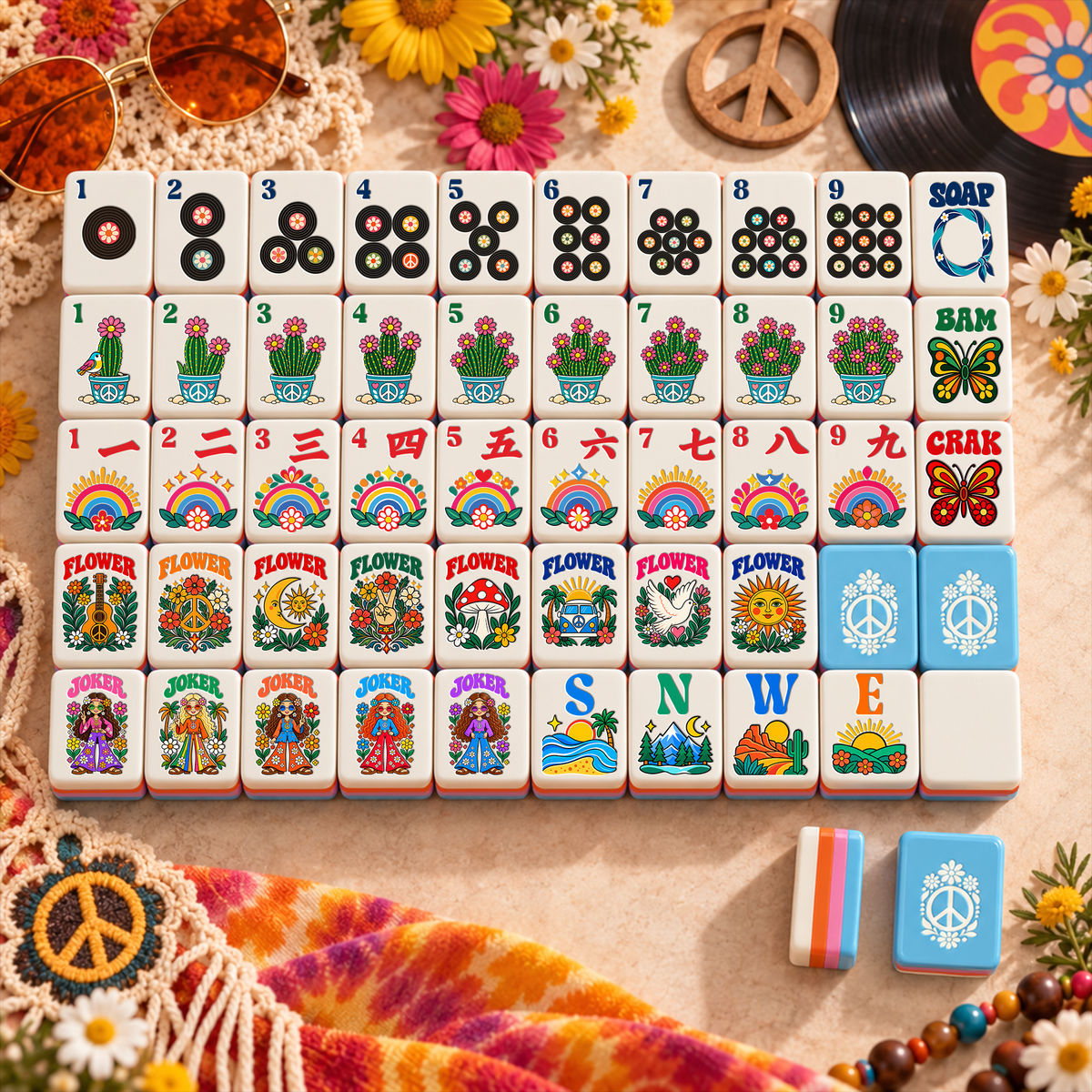
Mahjong tournaments in Greenville are hosted by community centers, libraries, synagogues, country clubs, and recreational leagues throughout the area. Most follow American mahjong rules with hands drawn from the current year's National Mah Jongg League card. To find them, search community center websites, check library bulletin boards, ask at synagogues (mahjong has strong roots in Jewish communities), and browse Meetup for local game groups—many organize tournaments seasonally or monthly. Tournaments typically run 3–6 hours with entry open to all skill levels; some charge a small fee that covers prizes or refreshments. You'll need a standard 152-tile set, the current League card, and familiarity with how to play American mahjong. Before entering, confirm the ruleset (American rules vary slightly), whether jokers are in play, and what tiles are used—Mahstead's best-selling mahjong sets meet all tournament standards.
🀄 Shop best-selling mahjong sets →
Where Do Greenville Mahjong Tournaments Happen?
Greenville tournaments are hosted in community spaces you can find by making a few calls and visits. Start with your city or county parks-and-recreation department—they list classes, clubs, and events. Public libraries often host game nights or maintain bulletin boards for club announcements. Synagogues and Jewish community centers frequently organize mahjong leagues; call ahead to ask about open tournaments or league play. Country clubs and senior centers sometimes host games too, especially if they have active members. Online, search Meetup (filter by "mahjong" and your zip code), Facebook groups for Greenville game communities, and Nextdoor neighborhood networks—players often post about upcoming tournaments weeks in advance. The advantage of these varied venues is that you'll find games at every skill level and schedule, from weekend daytime tournaments to weeknight casual play that sometimes includes competitions.

What Ruleset Will a Greenville Tournament Use?
Nearly all Greenville tournaments follow American mahjong rules, which differ sharply from Chinese, Hong Kong, and Riichi variants. American mahjong uses exactly 152 tiles (108 in three number suits, 16 winds, 12 dragons, 8 flowers, and 8 jokers), and hands are drawn exclusively from the National Mah Jongg League card issued each spring. Unlike Chinese mahjong, American mahjong does not allow chows (sequences like 1-2-3)—only pungs (three identical tiles), kongs (four identical), quints (five), and sextets (six)—and jokers cannot appear in a single tile, a pair, or in certain restricted positions. Before entering a tournament, confirm with the organizer which year's League card is in play (they update annually) and verify that American rules apply. If a tournament advertises "open rules" or mentions Hong Kong or Chinese mahjong, that's a different game entirely; confirm you're comfortable with the variant. Most organizers post this information online or answer by phone within a day.
How Do Tournament Formats and Rounds Work?
Greenville tournaments typically run one of three formats: round-robin (everyone plays multiple games against rotating opponents over 3–6 hours), ladder (winners advance, losers drop), or Swiss-system (players are paired by skill/record each round). Round-robin is most common in casual tournaments and usually includes 4–6 rounds, with your final score the sum of wins and points across all games. Each round typically lasts 20–40 minutes depending on player speed and table penalties. Tournaments may pause between rounds for scores to be posted and next pairings announced. Entry fees (if charged) usually cover space rental, refreshments, and small prizes—money rarely enriches organizers. Ask the host in advance how scoring works (some use only wins, others calculate points per hand), whether there's a registration deadline, and what happens if you arrive late. Arrive 15 minutes early so the organizer can verify you have a valid current League card and understand the house rules unique to that venue.
What Gear Do You Need to Bring—or Leave Behind?
You must bring a complete, tournament-legal 152-tile American mahjong set and the current year's National Mah Jongg League card. Your set should include wind tiles (all four N, E, W, S), all three suits (Bams, Craks, Dots) numbered 1–9 in four copies each, 12 dragons (four each: Red, Green, White), 8 flowers, and 8 jokers—no blanks or missing tiles. Most tournaments use a shared table, so you may not need your own mat or racks, but many players bring them anyway for comfort and to speed up setup; confirm with the organizer first. Do not bring a personal table, decorative set with non-standard tile sizes, or a rulebook—tournaments have one official card and house rules posted on-site. Many players find mahjong racks with pushers invaluable for organized hand play and faster calling, even in casual tournaments. If your set is worn, tiles are chipped, or jokers are missing, replace it before you arrive—organizers may refuse incomplete or damaged sets to keep play fair.

How Should You Prepare Your Skills Before Your First Tournament?
Start by mastering the National Mah Jongg League card—not by memorizing it, but by learning how to read it quickly. The card is organized by suit patterns, pairs, and special combinations; how to read the mahjong card walks you through it in detail. Practice the Charleston (the tile-passing ritual that opens every game), which takes only 30 seconds once you've done it five times. Understand how jokers work—they are wild tiles that substitute for any other tile but cannot fill a pair or single position, and knowing their limits will save you from illegal calls. Play several casual games with friends or a local club before entering a tournament; this builds confidence and exposes you to house rule variations. Review American mahjong scoring so you understand how points are awarded—scoring disagreements cause delays, and you want to be able to verify your wins. Most importantly, play slowly at first: speed comes naturally after 20–30 games. Organizers respect thoughtful play over rushed mistakes.
Comparison: Tournament Preparation Checklist
Skill | How to Practice | Time | Why It Matters |
Card reading | Play 10 casual games with card nearby | 10 hours | Calls take 5 seconds instead of 30 |
Charleston ritual | Do 20 practice rounds before a game | 30 minutes | First hand sets the tone; you'll move smoothly |
Joker placement rules | Study how jokers work + play 5 games | 2 hours | Illegal calls forfeit your hand; prevents penalty |
Scoring disputes | Read American mahjong scoring + verify each win in casual play | 3 hours | Confident scoring prevents table friction |
Table etiquette | Observe a tournament or club game | 2 hours | Know when to talk, how fast to play, tile handling |
🎁 See our most-loved mahjong sets & accessories →
What Are Common Tournament Mistakes—and How to Avoid Them?
The most frequent error is bringing an incomplete or non-standard set. Tournament organizers may not catch a missing tile until you call an illegal hand three rounds in; verify your set has all 152 tiles before you leave home and count the jokers (eight are required). A second mistake is not knowing the current year's League card. The card changes every spring; a 2025 card is invalid in a 2026 tournament. Check the host's website or ask by email one week before to confirm which card they use, then bring that card—not a digital photo on your phone (most tournaments do not allow that). A third error is slow play: if you take 3–4 minutes per turn, you'll frustrate your table and may face a time warning. Practice your hand-reading speed in casual games so you can call or discard within 10–15 seconds. Finally, do not argue with the organizer over rulings; tournament hosts make final calls to keep play moving. If you believe a rule was misapplied, note it, play on, and raise it afterward or bring it up at a club meeting—arguing at the table marks you as difficult and will reduce invitations to future events.
What Should You Check Before You Buy a Tournament Set?
If you own a mahjong set but it's old, missing pieces, or has loose tiles, it's time to invest in a fresh one designed for play. Look for sets with acrylic tiles (they're durable, clean easily, and won't crack from repeated use), clearly printed suit symbols and numbers (worn or faded tiles slow down reading), and all 152 tiles plus spare jokers. Acrylic sets are standard in tournaments because they withstand heavy play and are easy to authenticate—bamboo or bone tiles are beautiful but slow to read and mark easily. Verify the set includes eight jokers (not fewer), the full wind and dragon suite, and all numbers 1–9 in each suit. If you're unsure whether a set is tournament-legal, measure the tile size (standard American mahjong tiles are roughly 1 × ¾ inch); tiles smaller than that are hard to grip and read quickly. Our best-selling mahjong sets meet all tournament standards and ship with everything you need to compete. If you're looking for a set that reflects your personality or club identity, engraved American mahjong sets let you add initials or a club name without affecting play.
✨ Find your Mahstead set — free US shipping →

FAQ
Can I play mahjong tournaments online or only in person in Greenville?
Most organized Greenville tournaments are in-person to verify tiles, enforce the card rule, and manage live scoring. Online play exists but is casual and not sanctioned by the National Mah Jongg League; if you're new to tournaments, start with a local in-person game to learn the flow.
Do I need to be a member of a club to enter a Greenville tournament?
No. Nearly all community and library tournaments are open to the public—no membership required. Some private club tournaments may require you to be a member or have a member vouch for you; ask the organizer when you contact them.
What happens if I don't know someone's hand is legal during a tournament game?
Call the organizer or scorekeeper immediately. Do not argue at the table. The organizer will verify the hand against the current League card and make a ruling; their decision stands for that game. After the tournament, you can ask them to explain the ruling so you learn.
Are there skill levels in Greenville tournaments, or do beginners play against experts?
It depends on the tournament. Some are single-level (everyone together), while others divide players by skill (beginner, intermediate, advanced). Ask the organizer when you contact them; if they don't offer a beginner bracket, ask if a beginner-friendly club game exists where you can get 10–15 games under your belt first.
If I lose every game in my first tournament, will I be invited back?
Yes. Tournament organizers value participation and sportsmanship, not just wins. Losing games while learning is expected and respected. Show up on time, play politely, and you'll be welcome at the next tournament—many regular players attend even if they don't win.
Do I need to bring my own mahjong mat and racks to a tournament?
No. Most tournaments provide shared tables with a worn mat or tablecloth. Bringing personal racks or a mat is optional but helpful if you want to organize your hand faster—check with the organizer first, as some tournament tables are crowded and may not have space.


View More
View More
View More
