
Mahjong Tournaments in Baltimore: Where to Play & How to Enter
Last updated: Nov 23, 2026
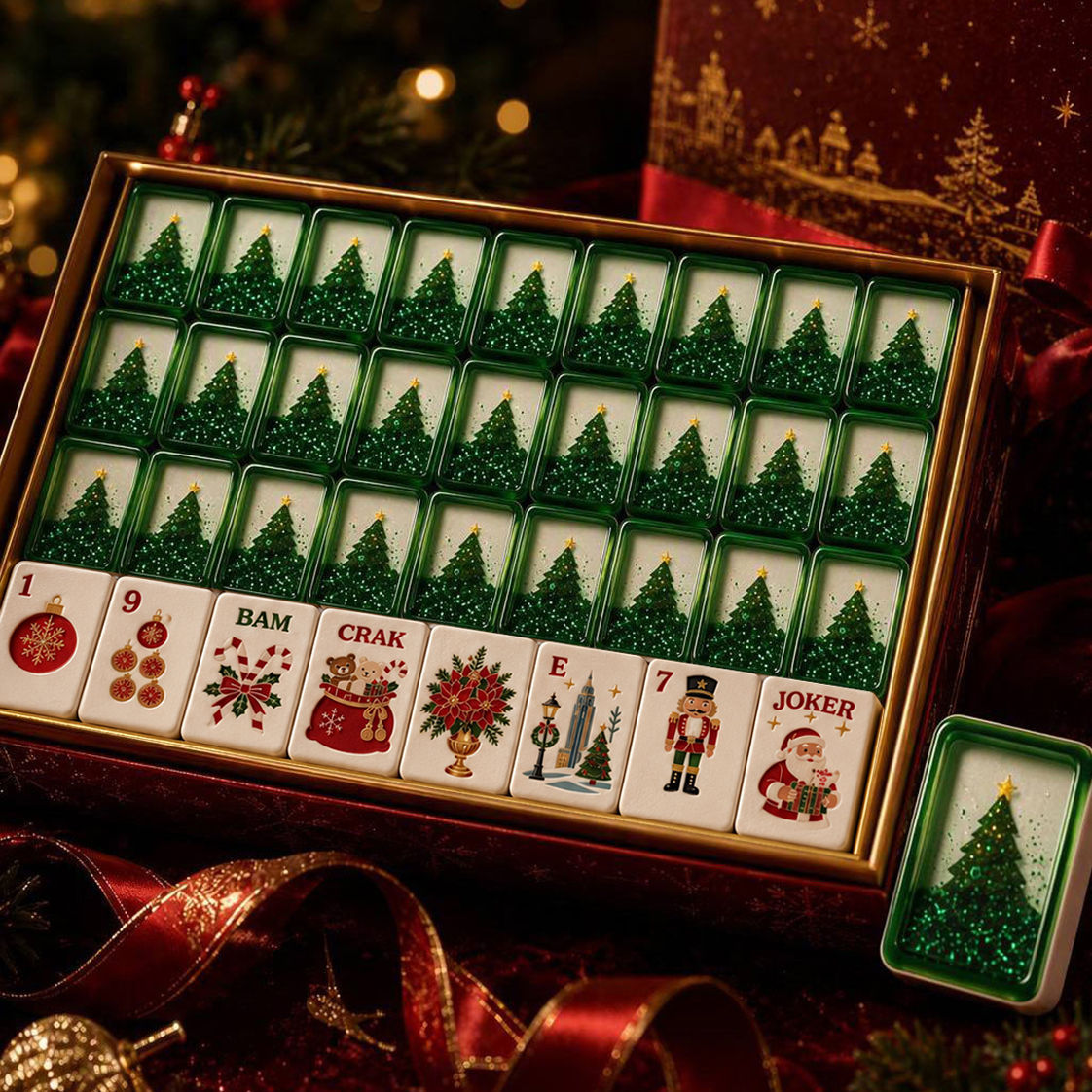
Baltimore's mahjong tournament scene centers on American mahjong played under National Mah Jongg League rules. Most formal tournaments occur through regional leagues (check community centers, libraries, synagogues, country clubs, and senior centers for meeting schedules and contact info). The typical American mahjong tournament uses 152 tiles with 8 jokers and follows the current year's League card; play happens in rounds over several hours, with players rotating seats. Entry is usually casual—call ahead to confirm dates, format, and whether you can spectate or join as a substitute. You'll need a 160-tile American mahjong set and the current League card; most venues provide mats. Costs vary widely depending on the host; ask directly. Avoid showing up without calling first—tournament schedules change seasonally, and some groups are closed circles.
🀄 Shop best-selling mahjong sets →
Where do Baltimore mahjong tournaments actually happen?
Tournament and league play in Baltimore cluster in a few predictable venues. Community centers often host leagues on weekday afternoons or Thursday evenings; call the main line and ask for the "mahjong coordinator" or check the activity calendar online. Senior centers are another hub—many run weekly games with seasonal tournaments in spring and fall. Some synagogues and Jewish community centers sponsor leagues as well; phone the office and ask if they host American mahjong. Country clubs and recreation facilities occasionally run organized play but usually require membership. Private clubs exist too, though they're harder to find—ask your local library or a player you meet if they know of closed groups. The best approach is to contact your nearest Baltimore branch of parks and recreation or check bulletin boards at community gathering spots for flyers with meeting times.

What's the difference between casual league play and formal tournaments?
Casual league games happen weekly, year-round, with consistent players who pay a small per-game fee. Players rotate East position, keep running scores across sessions, and follow the National Mah Jongg League card rules but often play in relaxed, social settings with light refreshments. Formal tournaments, by contrast, cluster into "tournament seasons" (usually spring and fall) and involve structured rounds, printed brackets, and sometimes small entry fees; each tournament is self-contained, so scores reset and winners take or split any prize pool. Casual leagues welcome newcomers drop-in style; formal tournaments often require pre-registration and may fill up. Both use identical tile rules and the same League card, but tournament play feels more focused—faster rounds, less chatting between hands, score-keeping on paper rather than informal tallying. If you're new, start with casual league play to learn the card and rhythm; move to tournaments once you're comfortable hitting hands in real time under a bit of pressure.
How do you prepare for your first Baltimore tournament?
Preparation starts weeks before, not the morning of. First, get the current year's mahjong card and rules guide—this is non-negotiable. Study it daily for 10 minutes; the goal is to recognize hand patterns by sight, not memorize every entry. Next, practice with a regular group (weekly casual league games are perfect) so you know how fast hands are actually called and how the Charleston works. Bring a 160-tile set with clear acrylic tiles; avoid worn or mismatched sets because tile recognition matters when you're under time pressure. A few days before, confirm the venue's exact address, start time, where to park, and whether you need to bring anything—some venues supply mats; others ask you to bring your own. Arrive 15 minutes early to get oriented and meet the organizer. Mentally rehearse: shuffle, Charleston pass, pull tiles, look at your card, discard strategically. Most important—sleep well the night before and eat a real breakfast. You'll play three to five two-hour rounds; your brain needs fuel.
🎁 See our most-loved mahjong sets & accessories →
What equipment should you bring and what will the venue provide?
Most Baltimore venues provide the wooden mahjong mat and wall (the structure that holds drawn tiles). Always bring your own 160-tile set—never assume a venue will lend one, and set quality varies wildly. Bring pencil and paper for scorekeeping (though hosts often supply these). A small notebook to jot down hand patterns you see helps with learning but isn't required during play. Many players bring a racks with pushers if they use one at home—some venues have spare racks, but don't count on it. Water bottle or a thermos of tea is smart; tournament rounds are mentally exhausting and hydration helps. If you wear glasses, bring a cleaning cloth—tile dust happens. Don't bring your phone to the table; leave it in your bag. The venue always provides the current year's card or displays it on a stand so all four players can see it. Ask when you call whether they have a spare set for substitutes—if yes, you don't need a backup. If you're driving from another Baltimore neighborhood, check parking; some venues have limited spots.
What should you know about American mahjong rules for tournament play?
Tournament play follows standard American mahjong rules: all hands come from the current National Mah Jongg League card (issued every spring), which covers about one year of play. You must make your entire hand from the card—there are no wild or extra hands. The Charleston, a tile-passing ritual, happens before each round; it's fixed and the same every game, so learn it early. You can only expose (show and lay down) complete pungs (three identical tiles), kongs (four identical), quints (five), or sextets (six)—no sequences or chows like you might see in other mahjong variants. Jokers have strict rules: they cannot substitute for a pair, and you can never use a single joker or pair of jokers as a single unit. If you go "mah jongg" (complete your hand legally), you call it aloud, show your tiles, and the hand ends. If no one has completed after the wall empties, the hand is a draw. Tournament scoring follows the League card's point values for each hand. Breaking these rules even once is grounds for being asked to leave; officials take rule integrity seriously.

What are common rookie mistakes in Baltimore mahjong tournaments?
The top mistake: not studying the card before arrival. You'll fall behind instantly if you're reading entries slowly while three other players rattle off their hands. Second mistake: misunderstanding how jokers work—many new players try to use a joker as a single tile or pair, which is illegal. Third: forgetting that sequences (1-2-3, 4-5-6, etc.) do not exist in American mahjong; your entire hand must be exposeable pungs/kongs or concealed melds. Fourth: slow tile placement or unclear discards. In tournament play, you need to play at a steady pace; fumbling tiles or unclear what you discarded causes friction. Fifth: not tracking your score properly. Keep a running total each hand so you know where you stand; don't rely on memory or asking others. Sixth: wearing complex or distracting jewelry on your hands—bracelets clank against tiles and slow you down. Seventh: arriving late or unprepared. Even five minutes late can mean you miss the Charleston or the organizer pairs you with a substitute, throwing off table balance. The easiest fix is to attend a casual league game (or three) before your first tournament. You'll make all these mistakes in a low-stakes setting and learn fast.
Situation | What Happens | How to Prepare |
First time at a venue | You may feel lost; organizer explains setup | Call ahead, arrive early, watch one hand before joining |
Playing with strangers | Pace is faster, less socializing | Practice at casual league, know your card cold |
Slow at reading the card | You discard late, hold up play | Study card 10 min/day for two weeks prior |
Forgot to bring a set | You can't play or must use a substandard one | Pack your set the night before, in your car |
Don't know Charleston order | You pass tiles wrong, feel confused | Ask the organizer to demo it once before play starts |
Unsure about calling hands | You miss "mah jongg" or call wrong | Review scoring and hand completion rules beforehand |
✨ Find your Mahstead set — free US shipping →
How do you find specific tournament dates and entry information?
Start by calling Baltimore's Parks and Recreation department and ask which recreation centers or community centers host mahjong leagues. Many publish schedules online or in seasonal activity guides—check their websites for "mahjong" or "games." Next, contact senior centers directly; many run year-round weekly leagues and host tournaments. Jewish community organizations in the Baltimore area (contact their main office) often sponsor leagues and can tell you if they're open to new players. Ask at your local library for bulletin board listings or ask the librarian if they know of groups. If you have any friend or coworker who plays, ask them directly—many find tournaments through word-of-mouth from other players. Some players organize casual meetups on community platforms; search those for "Baltimore mahjong." Once you find a venue, call and ask: "Do you host mahjong games? What day and time? Can I drop in as a new player, or do I need to register? Is there a fee?" Write down the answers. Venues appreciate direct calls; it also gives them a chance to tell you what to bring and answer questions specific to their setup.
What's realistic to spend on tournament entry and play costs?
Tournament and league entry costs in Baltimore vary widely by venue and organizer, so there's no single answer. Some casual leagues charge a small per-game fee (you can ask the host or other players what's typical). Formal tournaments may have a one-time entry cost per tournament. Hosts typically do not pocket the money; it covers space rental and refreshments or is pooled as a small prize for the winner or placed players. The best approach is to call each venue directly and ask what their entry structure is—they'll give you honest numbers. Never assume it's free; always confirm. Your personal equipment costs—a 160-tile set, the card, and basic supplies—are separate and one-time or annual. Once you own those, you're ready to play anywhere in Baltimore without further gear investment.
What to check before you buy tournament-ready equipment
Before investing in a set for tournament play, answer these:
Do I know American mahjong rules well enough? If not, take a beginner course or play casual games first. A beautiful set won't help you if you don't understand hand patterns.
Have I touched real tiles yet? Borrow a friend's set or play at a venue for a session to make sure you like the weight and feel. Acrylic tiles sound and feel different from bamboo; you need to know which you prefer under pressure.
Will I play weekly or just a few times a year? If weekly, a durable 160-tile acrylic set from a maker known for clarity and finish is worth the investment. If a few times yearly, you can start simpler.
Do I need a bag for transport? If your venue is a 30-minute drive, a padded mahjong case protects your tiles and makes setup easier.
Is my card current? The National Mah Jongg League card changes every year. Check the cover date; if it's this year, you're set. If it's last year's card, you cannot use it in any official league or tournament.

FAQ
Do I need to be a member of a club to play in a Baltimore tournament?
Most casual league play is open drop-in; you show up and pay to play that session. Formal tournaments may require pre-registration, but membership is rarely mandatory. Always call and ask the organizer directly.
Can I bring a beginner friend to watch a tournament without playing?
Most venues welcome spectators as long as they stay quiet and don't distract players. Ask the host before you arrive. Watching a hand or two is one of the best ways to learn the pace and strategy.
What if I don't know how to do the Charleston?
The Charleston is always the same, so it's learnable. Ask the organizer to walk through it once with you before play starts, or watch a video beforehand. Once you do it twice, it's automatic.
If I make a mistake during a hand, can I take it back?
This depends on the house rules of that venue. In formal tournament play, mistakes (especially calling "mah jongg" incorrectly) usually cannot be taken back. In casual leagues, organizers are more lenient. Ask the rules at the start of your session.
Should I bring my own mahjong mat, or does the venue provide one?
Almost all Baltimore venues provide a mat and wall. Call ahead and confirm; if they don't, ask if they have a spare you can use or recommend one to buy. A basic mat is inexpensive and travels well if you end up needing your own.
How fast do hands actually play in a tournament compared to casual games?
Casual league hands (including Charleston) typically run 20–30 minutes per hand. Tournament play can be 15–25 minutes per hand because players work at a faster pace and there's less chatting. The pressure of a tournament usually speeds things up slightly.


View More
View More
View More
