
Cocktail Mahjong Party Ideas: Games, Setup & Hosting Tips
Last updated: Nov 23, 2026
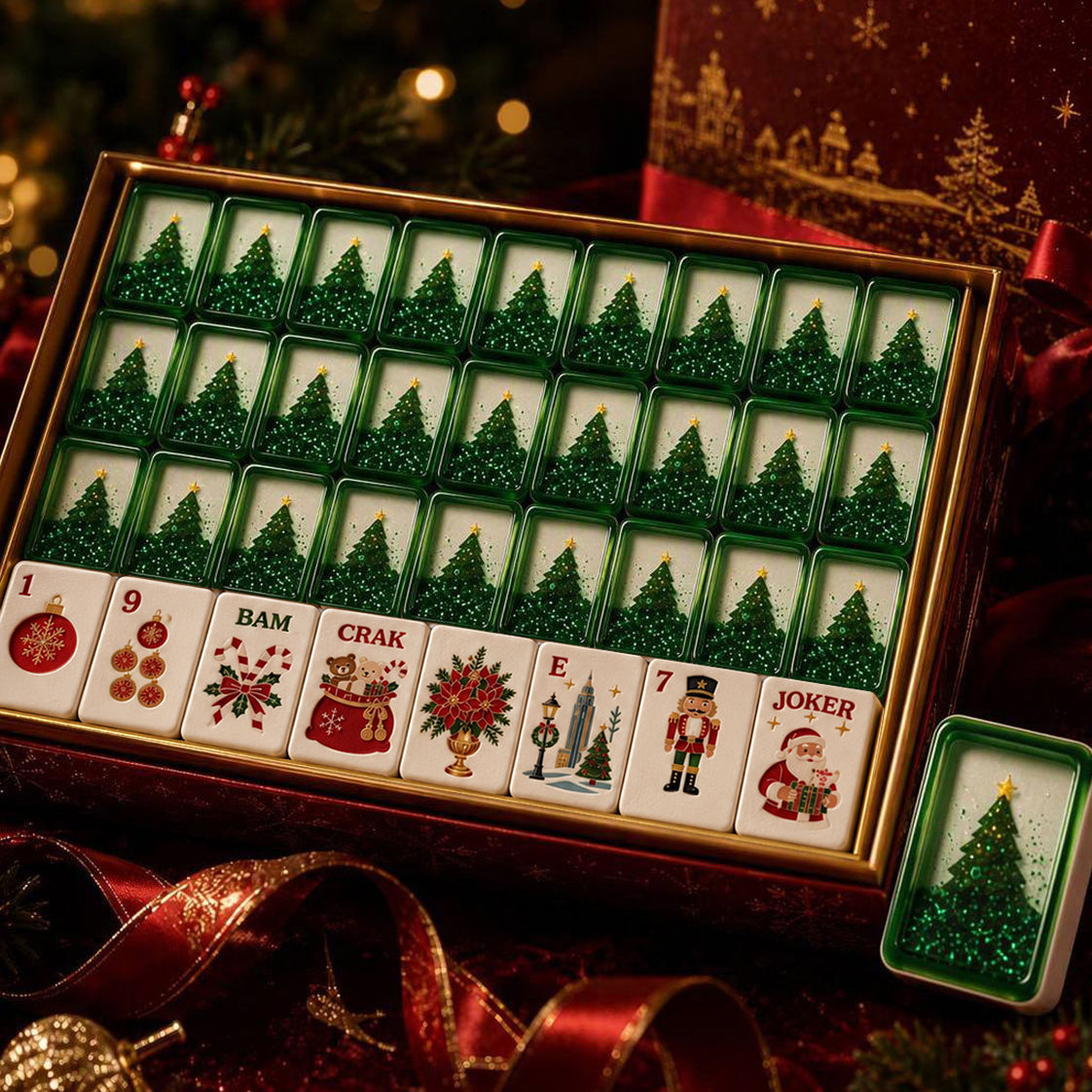
A cocktail mahjong party is a casual, themed gathering where players compete in American mahjong while enjoying drinks and snacks. Mix skill levels by running shorter hands or teaching-friendly rounds; plan 3–4 hours for a full session with breaks. Set up one card table per four players, provide a mahjong mat and a 160-tile acrylic set (our standard play size), and keep score loosely or skip it entirely. Serve light cocktails, charcuterie, and finger foods to avoid tile grease. The key to a relaxed party is managing hand complexity—use only popular National Mah Jongg League card patterns if newcomers are playing—and having spare tiles and jokers on hand. We host weekly games and find that themed décor, engraved sets, and clear house rules set the tone.
How do you balance mahjong skill levels at a mixed-ability party?
New players freeze when they see the full card. Run "beginner mode" rounds: pick 3–4 simple patterns (straight numbers, simple pairs) for the first 1–2 hours, then open the full card. Pair a strong player with a learner at each table so coaching happens naturally, not painfully. Tell everyone upfront that the goal is fun, not scorekeeping—this drops the pressure by half. After an hour, players relax; let them try harder patterns if they want.

What mahjong set style works best for a party atmosphere?
Acrylic tiles with clean engraved designs are the sweet spot: they're durable, easy to see, and feel upscale without being precious. Our best-selling mahjong sets come in bold colors and lightweight acrylic that travel to tables easily and won't stain from cocktails or condensation. Avoid ivory-look tiles for a casual party—they show fingerprints and spills. Clear or frosted acrylic with gold or silver engraving reads fast in mixed lighting and pairs well with any drink table. For a themed night, consider sets with coordinated mats and racks that match your color scheme.
🀄 Shop best-selling mahjong sets →
Should you play 4-player mahjong or run multiple tables?
Four players is the standard and easiest to teach. If you have 5–8 guests, run two tables in the same room—this keeps energy high and lets people rotate after each game. For 9–12 guests, set up two or three tables and run silent games (no crosstalk) or use a timer so all hands finish at once. If you must play 3-player or 2-player, learn the rule variants first—they're different enough that mixing them mid-party confuses everyone. Stick to one format per night.
What table setup and gear keeps the game flowing?
Each table needs: one 160-tile acrylic mahjong set, a mat (preferably padded, to dampen tile noise and protect the table), racks with pushers (one per player, so tiles don't slide during drinks), a current National Mah Jongg League card in a sleeve or laminated, a wind indicator, and a score sheet or phone notepad. Place a dice set near the dealer. Keep a travel bag or case nearby with spare jokers, tile sleeves, and cleaning cloths. Test all gear before guests arrive—nothing kills a party like missing tiles or a mat that bunches. We keep one backup set in the hall closet, not in the car, so setup is fast and tiles are at room temperature (cold tiles feel wrong and are harder to shuffle).
Item | Purpose | Why it matters for a party |
Acrylic 160-tile set | Play tiles, durability | Withstands humidity, spills, repeated shuffles |
Padded mat | Table protection + noise | Muffles clicks; lets drinks live on a shelf nearby |
Racks with pushers | Tile security | Guests don't knock tiles off when gesturing with drinks |
Laminated card | Hand reference | Survives spills; no squinting at paper |
Spare jokers & tiles | Flow | Lost tiles or damaged jokers don't end the night |
Dice set | Randomness | Keeps the game fair and fast |
How do you handle slower rounds and keep momentum?
Set a 12–15 minute limit per hand, not per turn. Use a phone timer; call "pick" and "discard" aloud so the whole table moves at once. Avoid letting one player deliberate for 3 minutes—politely set an expectation that a 10-second decision is the norm. If a new player is stuck, offer "Pick a tile, any tile" rather than narrating options. Between hands, clear tiles quickly: have one person push them to center, another restacks. A smooth reset takes 90 seconds. Keep cocktails and snacks OFF the playing mat—a small side table 2 feet away is perfect. We find that music at low volume and a set start time (not "come anytime") help groups settle and focus faster.

What food and drink pairings work without damaging tiles?
Serve drinks in sealed cups with lids or glass holders—avoid open cocktails. Skip sticky foods: no hummus, peanut butter, chocolate, or glazed nuts near the tiles. Offer: cured meats, cheese, olives, crackers, nuts in bowls, roasted chickpeas, pickles, fruit, and veggie crudités. Place one napkin dispenser per table, not on the mat. Guests who snack and play simultaneously will get grease on tiles—it's normal, not a disaster. Keep microfiber cloths on hand and offer a quick wipe between rounds if needed. We've found that telling guests "snack between hands, not during" reduces mess by 70% and keeps play sharp.
🎁 See our most-loved mahjong sets & accessories →
How do you set the party tone with décor and accessories?
Engraved tiles or custom table markers set a professional, intentional vibe. A padded mahjong mat in a jewel tone (emerald, sapphire, burgundy) frames the table beautifully and signals "this is a real game, not a gimmick." Candles, a small centerpiece, and soft overhead lighting create a lounge feel. Name your tables (East, South, West, North—the wind directions from mahjong—or local neighborhood names) and display them on cards. A phone speaker playing jazz or lo-fi beats in the background fills silence without competing for attention. We've seen themed parties (Lunar New Year, Art Deco, 1970s) where table linens and tile set colors matched the décor; guests loved the consistency. Avoid strobe lights or loud music—it's still a strategy game, and players need to focus.
What's the right balance between teaching and letting players enjoy themselves?
Do a 10-minute rules walk-through before the first game starts—cover hand-winning patterns, joker use, the Charleston, and turn order. Then play; stop mid-game only for rule clarifications that affect legality (e.g., "Can I use a joker there?"), not strategy. After round one, if a player is lost, pair them with a mentor for round two. Avoid micromanaging their tile choices—they'll learn faster by making mistakes in a low-stakes setting. Most learners become comfortable by game three. If someone says "I don't want to play," offer non-playing roles: scorekeeper, photographer, or snack manager. We find that normalizing questions ("Anyone forget how the Charleston works?") makes the room feel collaborative, not judgmental.
What to check before you buy gear for a party
Tile count: Confirm your set is 160 tiles (152 playing tiles plus spares). Never add extra jokers or blanks to the 152 in play.
Acrylic weight & finish: Heavier acrylic (not hollow) reads faster and feels more substantial; matte or satin engraving is easier to read than gloss under mixed lighting.
Mat dimensions: Ensure your mat fits your table (measure first). A mat that's too small bunches during play.
Rack fit: Test racks with your tiles before the party—some tile thicknesses vary, and a loose fit lets tiles topple during shuffles.
Spare tile storage: Keep spares in a small pouch inside your bag or case, not loose in the box.
Lighting: Play under bright overhead or lamplight, not candles alone—tiles must be legible.
✨ Find your Mahstead set — free US shipping →

FAQ
Can beginners play at the same table as experienced players?
Yes. Pair a beginner with a strong player and focus on simple patterns the first 1–2 hours. Experience players often enjoy teaching and adapt their play naturally. Avoid running advanced patterns (pairs, flowers, triples) until all players have completed at least two full rounds.
How many guests can one mahjong party host comfortably?
Four to eight guests (one or two tables) is ideal. Each table seats exactly four players; a second table runs independently. Beyond eight, you need three tables, which splits your social energy. Rotate players between tables after each game if desired, or keep teams fixed for continuity.
What's the best way to explain the National Mah Jongg League card to newcomers?
Show them one simple pattern example (e.g., a straight line of numbers 1–9 in one suit). Explain that the card lists hundreds of winning combinations, and each hand you play must match one exactly. Point out that the card changes every year, so experienced players study it. Hand out laminated cards and let them keep one in front during play—no one expects them to memorize it.
Should I keep score at a casual cocktail party?
Scoring adds complexity and can slow play. For a first-time party, skip it. For a second or third gathering where players know the rules, keep score loosely (tally wins per player, no point math). Save formal scoring for a dedicated mahjong night, not a cocktail event where the goal is socializing.
What happens if I'm missing a tile mid-game?
Call "dead hand" and declare that hand void. Move to the next round. This is why keeping spare tiles and jokers on hand matters. All 160-tile sets include extras; store them separately so you can replace a damaged tile without stopping play.
Can I play mahjong on a regular dining table or do I need a special mat?
A regular table works, but a padded mahjong mat is worth it: it protects the table, dampens tile noise (crucial in a social setting), and defines the play zone visually. A mat also keeps tiles from sliding if the table tilts slightly. For a one-off party, you can skip it; for recurring gatherings, a mat transforms the vibe.


View More
View More
View More
