
Wuhan Mahjong Rules: How Pusher Sets & Scoring Differ
Last updated: Nov 23, 2026
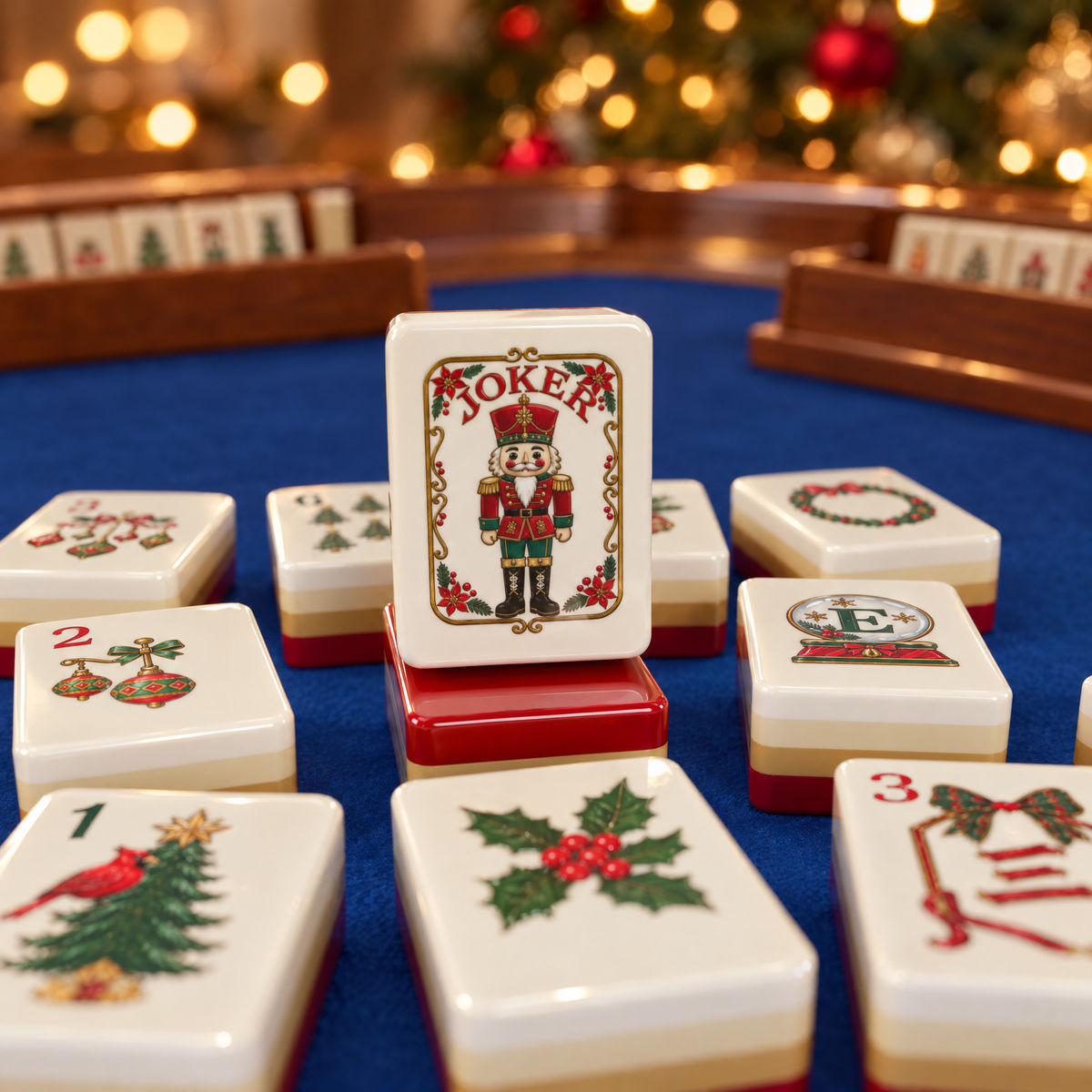
Wuhan mahjong is a Chinese regional variant played with 144 tiles (108 in three numbered suits, 28 honor tiles including dragons and winds, and 8 flowers). Players sit at a square table with tiles arranged in walls; pushers (small rakes or sticks) advance tiles toward the center rather than drawing by hand. The game emphasizes hand-reading and pattern recognition over a score card. Rounds complete faster than American play—typically 15–20 minutes per hand. Unlike American mahjong, Wuhan has no jokers, no annual card, and no Charleston. Scoring is fixed by pattern type: a simple pung of any suit beats a mixed honor hand. We recommend starting with engraved acrylic sets if you're teaching Wuhan to American players, since transparent tiles clarify the Chinese suit symbols for newcomers.
Wuhan mahjong sits at the intersection of formal Chinese rules and casual regional custom. It's played widely across central China and increasingly among diaspora communities and rule-variant enthusiasts worldwide. If you already play American mahjong, switching to Wuhan means unlearning the card system and relearning hand values—but the core rhythm (draw, discard, wait, win) stays familiar. Here's what you need to know to play correctly and avoid common beginner fumbles.
How do Wuhan wall and pusher mechanics work?
In Wuhan, the player who wins the draw privilege (determined by a dice roll) doesn't pick up tiles manually. Instead, the wall keeper uses a pusher—a flat wooden or bamboo stick—to advance two tiles at a time toward each player's position. This speeds play and reduces handling fatigue during long sessions. The wall is built in a specific order: after shuffling, each player builds a wall of 36 tiles (18 stacks, two tiles high) in front of them. The "east" player (first dealer) begins wall construction; the player opposite breaks the wall by pointing to a spot. Tiles then flow in a strict counterclockwise pattern. Each player draws two tiles per turn via pusher advance, not hand selection. Players keep their drawn tiles in a neat line on a raised rack (typically bamboo or acrylic), and discarded tiles sit face-up in a central pool or in front of the player. Pusher play removes the human element of tile preference during the draw phase—a key fairness feature in gambling contexts where Wuhan originated.

What's the core hand pattern system in Wuhan?
Wuhan recognizes a fixed repertory of winning hands, much simpler than American mahjong's annual card. A winning hand always contains 14 tiles arranged in one of these core patterns: (1) four melds (pung, chow, or kong) plus one pair; (2) seven pairs; (3) thirteen unique tiles (including terminals and honors) plus one matching tile; or (4) a "blessing" hand (all tiles from one suit plus one honor). Each pattern has a base point value. Melds are identical to American rules—a pung is three matching tiles, a chow is three consecutive numbered tiles in one suit (1-2-3, for example), and a kong is four matching tiles. Unlike American play, chows can be exposed and called during play; a player hearing a discard may immediately claim it to complete a chow, just as in Hong Kong mahjong. This speeds hand development and creates a more interactive table dynamic. There are no jokers, so melds must be formed only from tiles in the wall or discards. Once you recognize the five or six core hand patterns—which take two or three games to memorize—reading Wuhan becomes instinctive. The hand list never changes, so pattern mastery is portable across all Wuhan tables.
How does Wuhan scoring differ from American mahjong?
American mahjong scores hands by checking the current year's National Mah Jongg League card; points range from 0 (concealed) to 12+ (exceptional). Wuhan scoring is fixed by hand type and does not fluctuate seasonally. A simple pung hand (four identical melds plus a pair, concealed) earns 2 base points, while a seven-pair hand earns 4. Bonus points apply for concealment (tiles never exposed to other players), for being won by self-draw (rather than claiming a discard), and for certain tile combinations (all terminals, all honors, all one suit). Once you've calculated the base and bonus points, you multiply by the wager agreed before the hand—often 1 yuan, 5 cents USD, or nothing in practice games. The calculation happens in seconds; there's no scorekeeper writing down running totals. This simplicity lets tables play back-to-back hands without interruption. American sets with racks and mats designed for the card system won't help you here—you need a best-selling mahjong set with high-visibility tiles and ideally a mat designed for four-player flow to track the central pool clearly.
🀄 Shop best-selling mahjong sets →
What are the most common beginner errors in Wuhan play?
New players stumble most often in three areas. First, misunderstanding chow exposure: because chows can be called from the discard pool in Wuhan (unlike American mahjong), players forget that calling a chow exposes it to the table. Once exposed, other players know your partial hand, reducing your concealment bonus. Never claim a chow unless the point gain outweighs the loss of a hidden hand—calculate before you discard. Second, misreading the wall break: Wuhan uses the dice roll to determine where the wall opens, but many beginners confuse the counting direction (counterclockwise in most regions, clockwise in others; check local house rules). Practice one round with an experienced player calling out the break position until it's automatic. Third, forgetting no-joker play: American players muscle-memory expect a joker pile nearby. Wuhan has none. If you draw a tile you don't need, you must discard it; there's no flexibility. This forces faster, sharper decision-making and is why Wuhan games feel tighter than American ones.

Which Wuhan house rules vary by region?
Wuhan proper (the capital city) follows one ruleset, while nearby cities like Chongqing and Nanjing apply local tweaks. Common variations include whether a player may win only on a draw (not a discard), whether a dead hand (declared unwinnable) loses points or is neutral, and the exact bonus multiplier for a concealed all-one-suit hand. Before sitting down at any table, ask: (1) Can I win only on self-draw, or can I claim a discard? (2) Do kongs (four-tile melds) trigger a bonus, or do they merely preserve hand concealment? (3) What happens if someone discards when they've already won (a "false win")? (4) Is the table playing for money, and if so, who sets stakes? Five minutes of clear Q&A prevents disputes mid-game. Most casual Western tables adopt a relaxed "self-draw wins only" rule and allow discard claims for melds; check with your group's house leader before play. Printed or laminated house-rules cards kept near the mat help new players stay oriented.
Variant | Hands per session | Wall style | Jokers? | Card used? | Best for |
Wuhan (Chinese) | 30–40 (fast) | Pusher-advanced | No | Fixed patterns | Speed, memorization, tradition |
American | 8–12 (slow) | Hand-drawn | 8 jokers | Annual NMJL | Diversity, narrative scoring |
Hong Kong | 15–25 (medium) | Hand-drawn | No | Loose patterns | Balance, flexibility |
🎁 See our most-loved mahjong sets & accessories →
What equipment do you need to play Wuhan mahjong?
A full Wuhan game requires 144 tiles, a table or mat with clear zones for walls and discards, four racks (typically bamboo or acrylic), pushers (flat sticks for advancing tiles), and dice. Tiles are traditionally carved bone or wood; modern sets use acrylic for durability. We sell best-selling 160-tile acrylic sets designed for American play, which include eight extra jokers (unused in Wuhan). For Wuhan, ignore the jokers and use only 144 of the 152 standard tiles—set the spare tiles aside before the game. Acrylic tiles are durable and loud (satisfying click when played), and transparent tiles make the Chinese character suits visible even from across a small table. If your group will play Wuhan weekly, invest in a dedicated acrylic mat marked with four wall zones and a central pool area; this prevents confusion over where discards sit and keeps the game flowing. Pushers can be improvised from flat wooden spoons or craft sticks, but hand-carved bamboo pushers (often sold with traditional Wuhan sets) are worth the cost if you plan regular play. Store everything in a travel-grade bag if you move between venues.
How should beginners practice transitioning from American to Wuhan?
Start by learning the five core hand patterns off the table—write them on flashcards, one pattern per card. Spend 15 minutes each day for a week matching random tile combinations to patterns. Then, attend a "teaching" game (not for stakes) where an experienced player narrates every draw, discard, and claim. Ask the teacher to announce each hand's pattern name and base points as it completes; this conditions your pattern-recognition speed. Play three teaching games before sitting with strangers or a monetary table. During these games, make one intentional mistake per game and ask the table to correct you; this speeds learning and builds confidence. Use a best-selling set with clear tile markings—engraved or high-contrast acrylic—so you never misread a suit. Avoid practicing on a tiny mat or with worn tiles; legibility prevents frustration. Once you've won three consecutive hands by pattern recognition alone (not luck), you're ready for normal play.
✨ Find your Mahstead set — free US shipping →
What to check before you buy a set for Wuhan play
Tile legibility: Chinese characters and numerals must be crisp and readable from arm's length. Acrylic sets with engraved symbols outperform painted ones after six months of use.
Set count: You need exactly 144 playing tiles. A 160-tile set gives you extras; don't add them to the game.
Rack height and width: Four racks must fit comfortably around a square table without overlapping. Standard racks suit most setups; confirm before purchase.
Mat size and zones: A mat designed for four players will show wall boundaries and a discard pool. This reduces mid-game disputes.
Storage durability: If you play weekly, tiles and racks see heavy wear. Acrylic withstands moisture, heat, and handling better than bamboo.

FAQ
Can I play Wuhan with an American mahjong set?
Yes, use 144 of the 152 tiles (ignore the 8 jokers). But you'll lose the American card and joker mechanics entirely, so the set's design doesn't matter for Wuhan play. American sets aren't optimized for Wuhan's fixed hand patterns or the visual clarity needed when reading Chinese numerals quickly.
What's the fastest way to learn Wuhan patterns?
Memorize the five core patterns (four-meld-plus-pair, seven-pair, thirteen-unique, all-one-suit, blessing) as shapes, not names. Drill 10 minutes daily with flashcards for one week. Then play three teaching games with an experienced player calling out each pattern as it wins. Most learners internalize patterns by their fifth game.
Is Wuhan mahjong harder than American mahjong?
Different, not harder. American mahjong demands annual card literacy and Charleston strategy; Wuhan demands fast pattern memorization and discard-pool reading. Most players find Wuhan faster to learn and play because the hand list never changes and there are no jokers to track.
Do I need pushers to play Wuhan correctly?
Traditionally yes—pushers prevent tile-handling bias. But casual Western tables often draw by hand. If playing for stakes or at a formal table, use pushers. Otherwise, hand-draw and agree on the practice beforehand.
Can multiple players claim the same discard in Wuhan?
No. The first player to announce a claim (for a winning hand, pung, kong, or chow) takes the tile. Slower claims forfeit. Once someone takes a tile, the turn passes immediately; other players don't get a second chance.
How do house rules affect scoring?
Significantly. One table may award double points for a concealed all-one-suit hand; another may not. Always ask for the house rules before play begins. Write them down if you're new to the group, and confirm the wager (money per point or flat amount per hand) with the leader.


View More
View More
View More
