
Origin of Mahjong in China: History and Evolution
Last updated: Nov 23, 2026
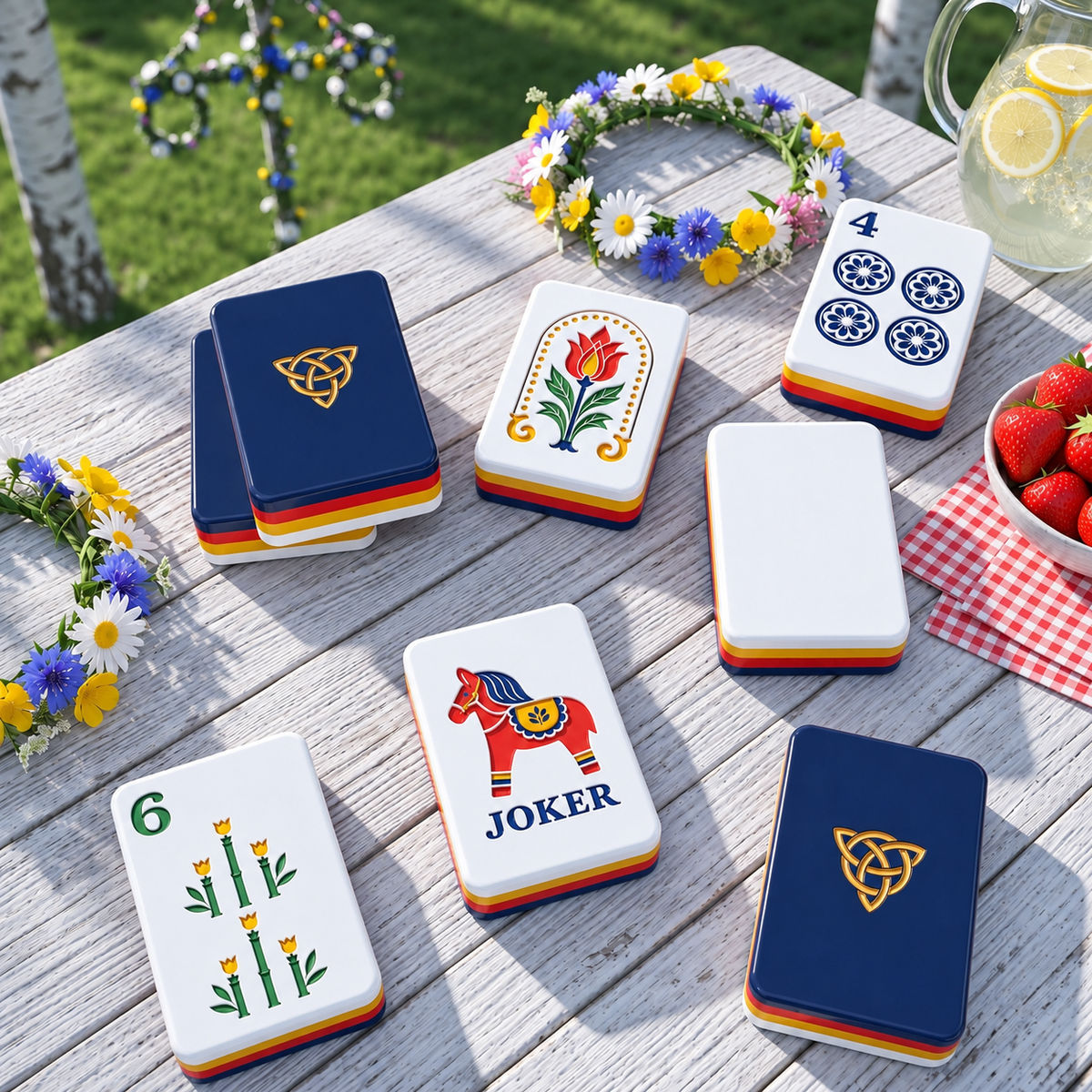
Mahjong emerged in China during the mid-to-late Qing Dynasty (roughly 1870s–1920s), evolving from dominoes and card games played among merchant and leisure classes. The game combined elements of the 9th-century game Kezi pai (leaf cards) and dominoes, with tiles standardized to represent the four winds, honor symbols, and numeric suits reflecting Chinese philosophy. By the early 1900s, mahjong had reached Shanghai and other treaty ports; Chinese immigrants brought it to America and beyond by the 1920s, where regional rule sets—including American mahjong—developed independently. The game's structure reflects Chinese cosmology: suits represent natural elements, winds embody direction, and dragons carry symbolic weight. Today's variants (Chinese, Hong Kong, Riichi, American, Taiwanese) each preserve core mechanics while adapting strategy and scoring to local play styles.
Mahjong isn't ancient—it's surprisingly modern. The game we host weekly emerged in China less than 200 years ago, shaped by 19th-century urban life, merchant culture, and cultural exchange.
When exactly did mahjong begin in China?
Most historians date mahjong's emergence to the 1870s–1920s, with strongest evidence pointing to Shanghai and the Yangtze River region during China's late Qing Dynasty. Earlier games—dominoes (dating back centuries) and Kezi pai card games—provided the foundation, but mahjong as a distinct tile game crystallized in the mid-19th century among merchant classes, government officials, and leisure players seeking complexity beyond dice or cards. By the 1920s, Shanghai mahjong was so established that rule standardization efforts had begun.

What games did mahjong evolve from?
Mahjong borrowed directly from two older Chinese games. Dominoes (bone and bamboo tiles marked with pips, used in games since the 8th century) taught players to recognize pip patterns and create sets. Kezi pai (leaf cards, from the 9th–10th centuries) introduced the draw-discard mechanic and the idea of winning through hand completion. Mahjong designers merged these: the tile shape, pip design, and suit structure from dominoes; the hand-building, melding, and turn sequence from card games. The result was a game that required memory, probability intuition, and strategic discarding—much harder than either parent game.
How did Chinese regional rules develop?
Early Chinese mahjong had no unified rulebook. Shanghai merchants played one way; Fujian players another; Canton developed its own standards. This regional variation remains today: Canton mahjong (Guangdong/Hong Kong style) emphasizes quick melds and honors; Shanghai mahjong rewards complex hand patterns and lengthy rounds. When Chinese mahjong was codified in competitions during the 1990s (leading to the International Tournament Standard), earlier local games didn't disappear—they coexisted. This fragmentation meant that when mahjong reached the West in the 1920s, American players inherited not one fixed ruleset but multiple Chinese variants, prompting them to create American mahjong with its own reference card and structure around 1923–1935. Understanding this history is crucial: American mahjong didn't simplify Chinese mahjong—it branched from it, reflecting how the game evolved across cultures.
Why does mahjong carry Chinese philosophy in its design?
The tile suits and honors embed classical Chinese thought. The four suits originally represented commerce: Bams (sticks/bamboo = common trade goods), Craks (ten thousand = prosperity and numbers), Dots (cash coins). The four winds (North, East, South, West) and three dragons (Red/prosperity, Green/nature, White/purity) reflect Taoist cosmology. Flowers and seasons connect to the lunar calendar. When you play, you're moving pieces saturated with cultural meaning—not by accident. Early game designers understood that symbols and numbers had to resonate with players' lived experience: a 5 Dot wasn't arbitrary; it was readable and memorable. This symbolic density is why mahjong variants across cultures preserve the same tile faces: a Red Dragon means the same thing in Shanghai, Hong Kong, Los Angeles, or Texas.

How did mahjong travel from China to America and the West?
Chinese immigration to North America and Chinese merchant networks facilitated the journey. By the 1910s, wealthy Americans and European traders encountering mahjong in Shanghai and Hong Kong were intrigued. Around 1920–1925, the game entered US social circles—often marketed as "The Game of a Thousand Intelligences" in magazines and society pages. A mahjong craze swept America, with sets exported in bulk and American versions quickly produced. The National Mah Jongg League (formed 1937) formalized American rules, creating the standardized game that persists today. Meanwhile, Chinese immigrants in North America, Hawaii, and Southeast Asia continued playing their own regional variants in homes and clubs. Today, when we host a weekly game in Dallas or anywhere in the US, we're participating in a 100-year-old American tradition that branched from Chinese roots—distinct enough to be its own game, yet fundamentally connected.
What key differences exist between original Chinese mahjong and American mahjong?
Aspect | Chinese/Regional | American | Why It Matters |
Tile count | 144 (standard) | 152 (standard American set) | American adds extra winds; Chinese game ends faster |
Hand reference | Varied rulebooks or memory | National Mah Jongg League card (annual) | American players standardize hands each year; Chinese rely on books |
Chows/sequences | Allowed, can be called | Prohibited (no sequences) | American play is pung/kong based; Chinese allows runs |
Winning patterns | Open (many possible hands) | Closed yearly (only hands on card win) | American forces strategic planning; Chinese rewards adaptation |
Joker rules | None in classic play | 8 jokers in set; can substitute in melds | American adds wild-card flexibility; Chinese plays tiles as drawn |
Charleston passing | Not standard | Required before each game | American ritual; Chinese begins with standard draw |
Scoring | Points per hand | Points-per-tile table | American: varied payouts; Chinese: smaller increments |
American mahjong isn't "easier" or "harder"—it's a deliberate redesign for competitive, card-based play that became popular among American Jewish and Midwest communities in the 1930s–1950s. Chinese variants remain closer to the original merchant-house game.
🀄 Shop best-selling mahjong sets →
What should you understand about mahjong's cultural legacy today?
Mahjong carries 150+ years of history—from Shanghai tea houses to American living rooms—yet feels timeless because its core mechanics are sound. Recognizing its origins helps players appreciate why the game has rules: the tile order, suit meanings, and wind placement aren't random. They reflect a game that matured through play, not one handed down from ancient texts. When you explore mahjong variants, you're not learning separate games—you're seeing how a single innovation adapted to different cultures and eras. Whether you play American, Chinese, Hong Kong, or Riichi mahjong, you're holding tiles designed by 19th-century Shanghai merchants and refined over a century of competitive and social play. That continuity is worth knowing.
What to check before you buy a set
If you're drawn to mahjong's history and want to play at home:
Rule clarity: Know which variant your group plays (American, Chinese, Hong Kong, Taiwanese, Riichi). Each has its own hand reference or rulebook. American mahjong requires the current-year National Mah Jongg League card.
Tile legibility: Ensure tiles are large enough to read quickly—especially if your group plays fast rounds. Worn or faint tiles slow the game.
Set completeness: An American game requires exactly 152 tiles plus 8 jokers in play. Check that your set is a 160-tile set (which includes spares).
Storage and transport: If you host games weekly, you'll need a mat to play on and a bag or case that protects tiles and keeps them organized between sessions.
🎁 See our most-loved mahjong sets & accessories →

FAQ
Did mahjong exist before the 1800s in China?
Not in the form we play today. Dominoes and card games like Kezi pai date back centuries, but mahjong as a distinct tile game—with suits, winds, dragons, and draw-discard rules—crystallized in the 19th century, likely between the 1870s and 1920s among merchant and leisure classes.
Why does American mahjong play so differently from Chinese mahjong?
American mahjong developed independently after the game reached the US around 1920. The National Mah Jongg League (founded 1937) standardized rules for competitive play, removing chows (sequences), adding jokers, and issuing an annual hand card. Chinese variants continued evolving separately, keeping sequences and different scoring.
Can I play Chinese mahjong with an American mahjong set?
Partially. Tile faces are identical, but American sets come with 152 tiles (extra winds for American rules) and jokers. A Chinese game typically uses 144 tiles without jokers and permits sequences, which American rules forbid. You'd need a reference guide for Chinese rules, not the American card.
What does a Red Dragon or Green Dragon actually represent?
Red Dragon symbolizes prosperity and good fortune (associated with fire and luck). Green Dragon represents nature and growth. White Dragon (often called "Soap") represents purity and absence. These symbols embed Taoist and Buddhist philosophy into the game—intentional choices by early designers.
How did mahjong become so popular in America if it started in China?
Chinese immigrants brought the game starting in the 1910s. By the 1920s, Western traders and wealthy Americans had encountered it in Shanghai and brought it home. A "mahjong craze" swept the US through magazines and society parties; mass-produced American sets became affordable. The National Mah Jongg League formalized rules in 1937, making it a legitimate social and competitive game, especially among Jewish and Midwestern communities.
Are there any "original" Chinese mahjong sets I can buy today?
Modern reproductions and traditional sellers (in China, Hong Kong, Singapore) produce sets following 19th–20th-century Shanghai or Cantonese styles. However, "original" sets from the 1870s–1920s are collector's items. For play today, you'll want a modern set with clear tiles and a rulebook for your variant—our best-selling collections include sets designed for both American and international play.
Does learning mahjong history make you better at the game?
Indirectly. Understanding why tiles are grouped as they are, why certain hand patterns appear on the card, and how regional variants prioritize different skills helps you recognize strategy faster. It won't teach you to read the card or count jokers, but it builds intuition. ✨ Find your Mahstead set — free US shipping →


View More
View More
View More
