
Mahjong Competition Rules & Strategy: American Play
Last updated: Nov 23, 2026
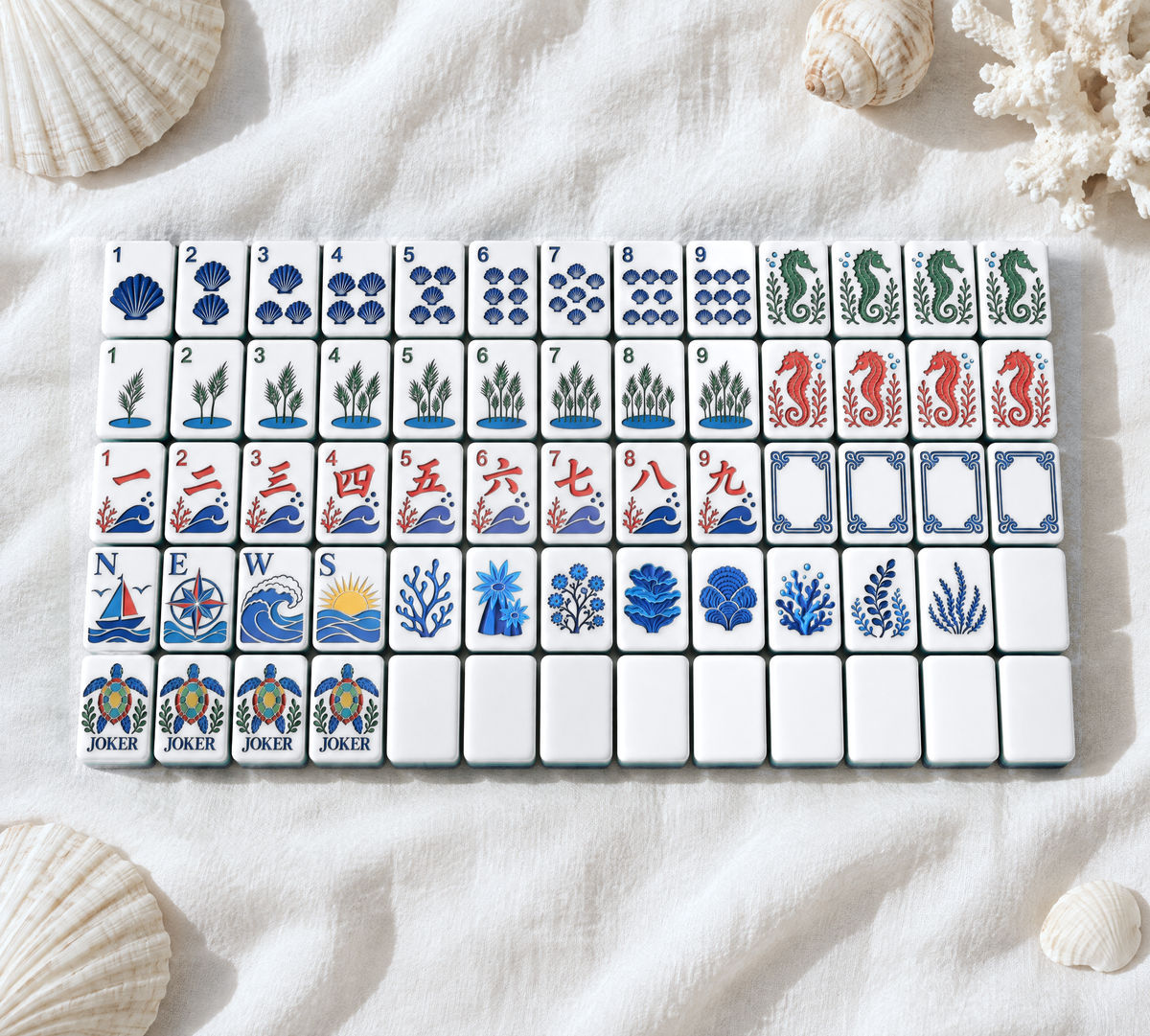
American mahjong competition operates under the National Mah Jongg League ruleset, played with exactly 152 tiles plus 8 jokers across four players over hand-based rounds. The core rule: hands come only from the current year's League card—no other combinations are valid. You may expose pungs (3 identical tiles), kongs (4), quints (5), and sextets (6) when called; you may never expose chows (sequences like 1-2-3). Jokers cannot fill a single tile or a pair. The Charleston (tile-passing ritual) precedes each game. Winning requires naming your hand before claiming it, and calling "mahjong" audibly—silent wins are invalid. Competition games emphasize memorizing the card, reading opponents' discards, and calculating winning odds before the wall shrinks. We recommend practicing with best-selling acrylic sets matched to a current-year card under timed conditions.
What tiles can you legally expose in competition?
In American mahjong, exposing means laying tiles face-up on the table after calling them. You may expose only three tile types: pungs (three identical tiles), kongs (four identical), and quints or sextets (five or six identical). You cannot expose chows (sequences like 1 Bam–2 Bam–3 Bam)—that rule alone separates American from Chinese and Hong Kong mahjong. Jokers have strict limits: they can fill a blank spot in a pung, kong, or longer group, but never fill a single tile by themselves and never form a pair. When you expose a group, all three or four tiles must be identical. If the card reads "1 Dot / 1 Dot / 1 Dot" and you're holding two 1 Dots and a joker, that joker can replace the third 1 Dot legally. Breaking this rule is grounds for a dead hand or penalty, so check your card section before calling.
🀄 Shop best-selling mahjong sets →

How do you know which hands win in tournament play?
Tournament hands come only from the current year's National Mah Jongg League card, issued each spring. That card lists hundreds of valid patterns, organized by section (Like Numbers, Consecutive, Pairs, etc.). You must match your 14 tiles (or 13 on your first turn) to exactly one pattern on the card—no variants, no personal rules. If your hand doesn't match the card verbatim, you cannot win. Strategy involves studying the card before the game, identifying which sections suit your tile draw, and remembering how many hands in each section remain viable as the wall shrinks. Experienced players scan the card mentally while discarding, calculating probability. Many competitions allow players to consult a printed card during play; confirm this at your venue. The card itself is the rulebook—no hand can trump it.
Why does the Charleston matter in competition?
The Charleston is the three-round tile-passing ritual before play begins, and it's mandatory in tournament American mahjong. Each player passes 14 tiles right, then left, then across (or optional passes if available). This randomizes the initial hand and prevents collusion. During competitive play, the Charleston must be completed before any tiles are drawn. Some tournaments require players to announce "right," "left," and "across" aloud to prevent disputes. A common mistake: fumbling the pass or miscounting tiles. Prevent this by counting your outgoing tiles quietly into your hand first, then passing them in a single smooth motion. The Charleston sets the tone—a sloppy pass can derail the entire hand's timing and creates suspicion. We recommend practicing with a mat that marks passing zones clearly, so everyone's actions stay transparent and quick.
What's the difference between casual and competition calling etiquette?
Casual games tolerate loose calling: someone might say "I got it" or point vaguely. Competition demands explicit verbal declaration. You must call "pung" or "kong" when claiming a discard, and you must say "mahjong" aloud before laying down your tiles. Silent claims are invalid, even if you've already started exposing. The discard itself must be placed in the center, face-up, and left untouched until the next player's turn. In some tournaments, discards form a rack the active player controls—ask at sign-in. The player who discarded wrongly (a tile that shouldn't have been played) may face a hand penalty if competition rules apply. Timing matters too: you have a few seconds to claim a discard before the wall moves forward. Practice calling clearly and decisively; hesitation creates doubt and invites challenges.

How do you strategically manage your hand before calling?
Competitive players track three metrics simultaneously: (1) which hands on the card remain possible with remaining wall tiles, (2) opponent discard patterns (what they're avoiding tells you their hand type), and (3) your winning odds relative to the wall count. Early in the hand, hold pungs or kongs you draw; these don't rely on lucky discards. Mid-hand, start filtering toward one or two card patterns that fit your tile count and the wall position. Near the wall's end, commit to a single hand or pass. A common mistake: holding too many options and failing to narrow down until the wall is nearly empty. Successful players mentally sort the card by section at game start, then cross off sections as discard patterns emerge. If nobody's discarding Winds, that Pair-Heavy section is unlikely. If many players are discarding high Craks, the Craks-focused sections are crowded. This inference takes practice but separates competitive players from casual ones.
Strategy Checkpoint | Timing | Your Focus | What to Avoid |
After Charleston | Turns 1–3 | Identify 3–4 possible hands from your tiles; begin building pungs/kongs | Holding 14 unrelated tiles; ignoring discard patterns |
Mid-hand | Turns 4–8 | Watch opponents; narrow to 2 hands; expose kongs strategically | Exposing too early; telegraphing your hand by discarding predictably |
Late game | Turns 9+ | Commit to ONE hand; calculate winning odds against wall count | Hesitating; holding pairs too long; hoping for unlikely discards |
Last wall | Turns 12+ | Be ready to win or dead-hand gracefully; no "almost" hands | Calling on a tile that doesn't match your named hand exactly |
🎁 See our most-loved mahjong sets & accessories →
What are the most common competition rule violations?
Silent wins: Laying tiles without saying "mahjong" aloud voids the hand. Some venues enforce a re-draw; others penalize the player. Always call audibly.
Joker misuse: Using a joker as a single tile (e.g., a lone 5 Dot) or in a pair is illegal. A joker replaces one spot in a group of 3+.
Wrong hand on card: You named "Pair Hand" but your tiles match "Consecutive" instead. You must have tiles that match exactly one hand listed. Mixing sections is an automatic dead hand.
Illegal exposure: Laying down a chow (sequence) is forbidden in American mahjong—sequences don't exist here, only identical-tile groups.
Premature discard: Discarding before the previous player's claim/pass window closes causes re-draws or play stalling. Wait for the signal.
Miscount in Charleston: Passing 13 or 15 tiles instead of 14 invalidates the pass. Count aloud or use a dedicated passing rack.
At competition level, violations result in dead hands, penalties, or ejection. Prevention is simpler: review the League rules before entering, practice the Charleston with a playgroup, and consult the card before calling.
✨ Find your Mahstead set — free US shipping →
What to check before you enter a competition
Confirm the League card year – your venue must specify which year's card is in play.
Verify exposure rules – some regional variants allow quints/sextets; others cap at kongs. Ask the tournament director.
Test your set at home first – practice with mahjong racks with pushers so exposing feels smooth and audible claims are natural.
Know the scoring method – American tournaments use hand values from the card; confirm payment method (points, cash, or honor system).
Arrive early to play a practice hand – this acclimates you to the table, lighting, and group's pace.

FAQ
Can I invent a hand not on the League card if it matches the general theme?
No. American mahjong is card-dependent; any hand must appear on the current year's official card. Invented hands lose automatically. This is the core rule that defines American mahjong as a game of precision, not creativity.
What happens if I call "mahjong" but one tile doesn't match my named hand?
Your hand is dead. You forfeit that round and may face a penalty depending on tournament rules. Always verify your tiles against the card before speaking.
Can I expose a chow (1–2–3 sequence) if the card shows it as a pattern?
No. American mahjong never allows exposed chows. Sequences don't exist as tile groupings here—only identical-tile pungs, kongs, and longer groups. If your card pattern includes a sequence, you must keep it hidden until you win.
How many seconds do I have to claim a discard before the wall moves forward?
Tournament rules vary, but typically 5–10 seconds. Once the next player draws, your window closes. Play alert and call immediately if you want a discard. Casual groups are forgiving; competitions are not.
If I see an opponent playing incorrectly, do I call them out during the hand?
Yes. Point out rule violations (wrong exposure, illegal joker use, or tile miscount) immediately. Let the table or tournament director decide the remedy. Staying silent condones cheating and undermines competition integrity.
Can jokers ever be used to fill a single tile in a winning hand?
No. A joker must replace one position in a pung, kong, quint, or sextet (3+ tiles). Jokers cannot form a pair and cannot be a standalone tile. This is non-negotiable.


View More
View More
View More
