
Mahjong Party Ideas in San Diego: Host Like a Pro
Last updated: Nov 23, 2026
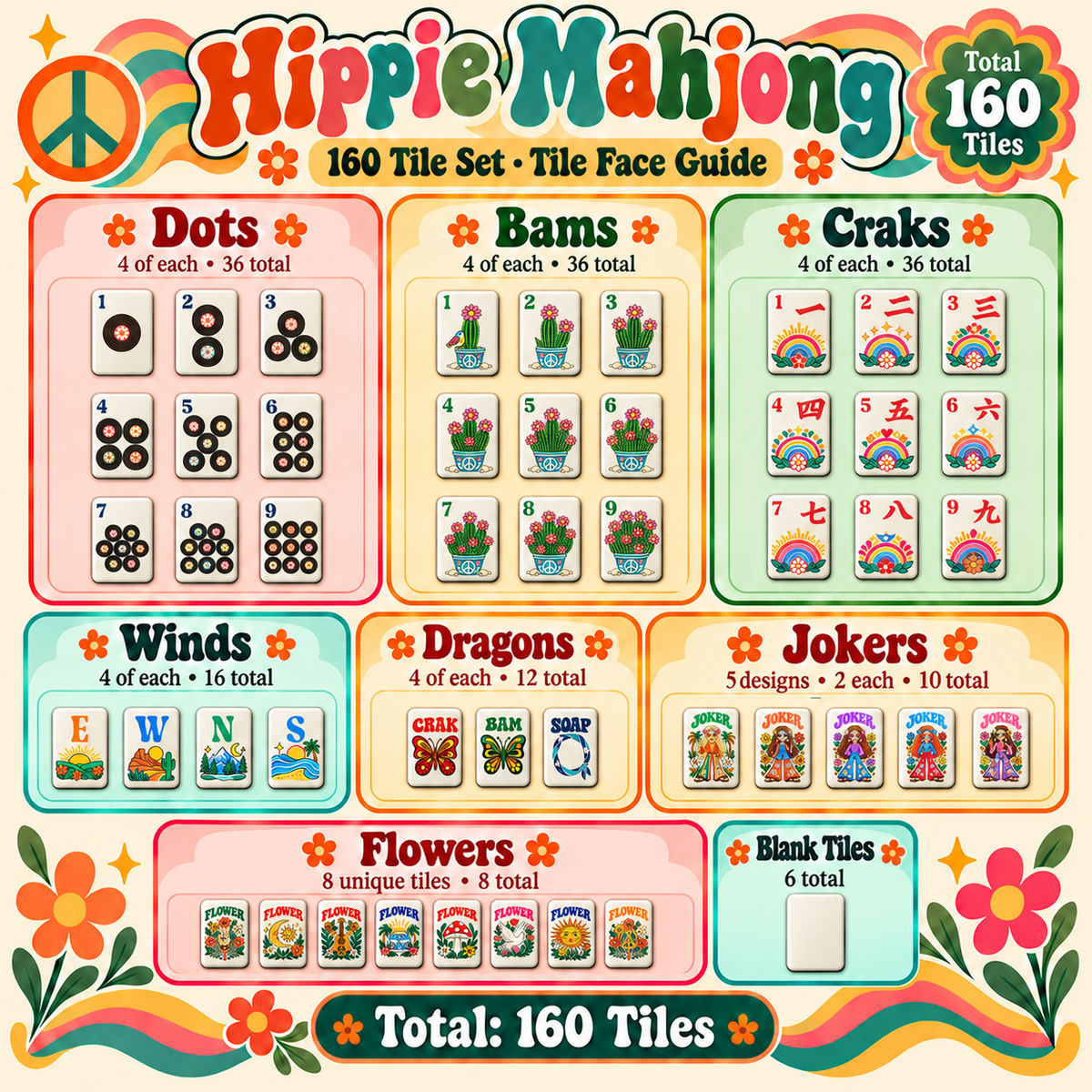
San Diego hosts year-round mahjong parties—indoors, outdoors on patios, and at community centers near Mission Bay, La Jolla, and Balboa Park. A typical four-player American mahjong game takes 45 minutes to 2 hours, including setup. You'll need a flat playing surface, a 160-tile acrylic set with dice and racks, a current-year National Mah Jongg League card, and comfortable seating. San Diego's warm weather means outdoor entertaining is realistic nearly every month; bring a padded mat to protect tiles from sun-faded surfaces and wind. Start with mahjong-for-beginners if your guests are new; experienced players appreciate best-selling mahjong sets that feel substantial and travel well between homes.
San Diego's laid-back culture is perfect for mahjong nights—indoors, outdoors on patios, and at community centers near Mission Bay, La Jolla, and Balboa Park. A typical four-player American mahjong game takes 45 minutes to 2 hours, including setup. You'll need a flat playing surface, a 160-tile acrylic set with dice and racks, a current-year National Mah Jongg League card, and comfortable seating. San Diego's warm weather means outdoor entertaining is realistic nearly every month; bring a padded mat to protect tiles from sun-faded surfaces and wind. Start with experienced players or beginners—our guides cover both.
How many guests should you invite for your first mahjong party?
American mahjong plays best with exactly four players. Three- and two-player variants exist but feel cramped and require rule tweaks. Invite four core players plus one or two backups who rotate in; this keeps energy high and lets newer players observe before joining. San Diego's social scene often draws clusters of friends—you might end up with six or eight eager to play. Have a plan: either rotate players between two tables, or designate one table as "teaching" where rules move slowly, letting others play full speed. Four dedicated players beats eight distracted ones.
🀄 Shop best-selling mahjong sets →

What's the easiest mahjong variant to teach newcomers?
American mahjong is the standard across San Diego, especially in communities with ties to California's large Chinese diaspora. The rules are fixed: no house variants, no haggling over scoring. Hands come from a printed card (updated yearly by the National Mah Jongg League), so new players follow a checklist rather than memorize combinations. Teach the Charleston (tile exchange before play), the concept of pungs and kongs (matching sets), and how to spot a winning hand on the card. Allow 20–30 minutes of explanation before play; many newer players grasp it by the second hand. Avoid Chinese classical mahjong on a first night—it has fewer rules safeguards and more hidden scoring, which frustrates newcomers.
What surface and setup work best for San Diego's indoor and outdoor venues?
Indoors, use a flat dining table or card table (36–48 inches square is ideal). Outdoors, bring a mahjong-specific mat—wind won't scatter tiles, and sun won't bleach your playing surface. Acrylic tiles are more durable than bamboo in bright UV; they also won't warp on a hot patio. Set up in shade when possible; reflected glare off tile faces makes reading numbers harder. Position racks so each player's hand sits at a comfortable angle; racks with pushers keep tiles from tumbling during the Charleston and tile draw. Bring a small side table for the wall (the tile reserve each round), dice, and the current National Mah Jongg League card. In San Diego's casual spaces—patios, poolside areas, community-center rooms—a mat transforms any uneven surface into a legitimate game zone.
How do you keep track of who won and manage scoring across multiple rounds?
Use a scorepad or your phone; American mahjong scores vary by hand type and require the card. Keep running totals across six-hand sets (one session). San Diego hosts often play "best of three" or "best of two" sessions—whoever tops the scoresheet after that wins the evening's "title." This removes pressure from single-hand outcomes and encourages return visits. Rotate who keeps score; the scorer usually sits out one hand per round. If a player "throws" (plays the tile that someone else wins on), dock points only once per throw—new players make this mistake. Agree beforehand on house rules: Do you play all doubles? Do jokers cost penalty points if not used? Writing these down on the scorepad prevents arguments mid-game.

What gear do you actually need before inviting guests?
Gear | Essential? | Why | Notes |
160-tile acrylic set | Yes | Durable, consistent tiles, includes dice | Upgrade over plastic sets |
Current-year card | Yes | Hands must match the League card in play | Check the card's year—old cards invalidate hands |
Mat | Highly recommended | Wind, sun, table texture won't scatter or fade tiles | Indoors on uneven surfaces; outdoors always |
Recommended | Keeps 13–14 tiles organized, pushers speed the discard | Beginners benefit most—pros play without | |
Recommended | Transport set between homes without losing tiles | San Diego's sprawl means car rides to venues | |
Scorepad or app | Optional | Track game outcomes and seasonal rankings | None required for casual play |
Extra dice | Optional | Backup if dice get lost mid-game | Buy spares from your set vendor |
Each time you host, the checklist gets shorter because gear stays in one place. Many San Diego players keep a set at their primary venue—home or country club—and a portable set at a second location.
🎁 See our most-loved mahjong sets & accessories →
Where in San Diego do players actually host and find partners?
Community centers in each San Diego neighborhood host drop-in mahjong; check program calendars at locations near you. Libraries (Mission Valley, La Jolla, Ocean Beach branches) often post flyers or game-group contact info. Senior centers welcome all ages despite the name. Country clubs, Jewish Community Centers, and social clubs in Kearny Mesa, Clairemont, and El Cajon run regular tables. Meetup boards list casual "mahjong night" gatherings. Start with one venue that fits your schedule; regulars soon invite you to private games. San Diego's year-round weather makes hosting outdoors feasible—a backyard game on a Friday evening with a mat and a set feels casual but plays like a tournament when rules and scoring stay tight.
What mistakes do new hosts make, and how do you avoid them?
Forgetting to explain the Charleston. New players assume tiles come from a central draw pile, like Scrabble. The Charleston—the pre-game tile-passing ritual—is fundamental. Set aside 10 minutes to show it once before playing; players grasp it by doing it, not by hearing it. Read the Charleston explained for a step-by-step breakdown.
Using an outdated card. The National Mah Jongg League issues a new card each spring. If you're playing in March 2026, use the 2026 card. Hands from a 2025 card won't match the 2026 layout; games stall and frustration peaks. Print the current card or have a digital copy on a tablet at the table.
Mixing joker rules. American mahjong has strict joker rules—no joker can be a single tile or a pair; it substitutes only in pungs, kongs, quints, or sextets. Clarify this upfront. Learn how jokers work if you're unsure.
Uneven seating or cramped tile space. Each player needs at least two feet of elbow room. If the table is tight, play stops for adjustments mid-hand. Move to a larger surface or add a folding side table for racks and discard piles.
Hosting outdoors without a mat. Wind blows loose tiles; sun bleaches acrylic over months; uneven patios tilt tile stacks. A quality mat costs less than reprinting the rules after a mishap.
What to check before you buy:
Count your players. Four core players? Rotate in backups at a second table.
Confirm the card year. Bring 2026 cards if hosting in 2026; old cards cause confusion.
Measure your table or mat space. 36–48 inches is standard; cramped feels worse than no racks.
Check the tile count. American mahjong uses 152 tiles + 8 jokers; a 160-tile set is standard and includes spares.
Test the set at one game before a big gathering. Tiles should feel smooth, dice should roll fairly, racks should sit stable.
✨ Find your Mahstead set — free US shipping →

FAQ
Can you play mahjong outdoors in San Diego year-round?
Yes. San Diego's average winter low is 57°F; acrylic tiles play fine in cool weather. Bring a mat to protect against sun fading and wind. Avoid peak midday sun glare, which makes tile faces hard to read. Fall and spring are most comfortable for outdoor games.
Do I need to know Chinese to teach American mahjong?
No. American mahjong uses English suit names (Bams, Craks, Dots) and wind/dragon labels. The National Mah Jongg League card is entirely in English. Tile artwork is pictorial. Newcomers learn by playing, not by memorizing language.
What's the difference between a mahjong mat and a table cover?
A mat is padded, portable, and protects tiles from bumps and UV damage. A table cover is flat fabric that protects furniture but doesn't cushion tiles. For hosting, a mat is better. Read the mat vs. table cover guide for full details.
How do I score American mahjong hands?
Hand values depend on the National Mah Jongg League card. Each hand lists a point value (usually 30–90 points). Winners earn that value; losers pay it. After six hands, swap seats (to keep wind/position fair). American mahjong scoring explains the full system with examples.
Should I buy a set with racks, or are they optional?
Racks are highly recommended for beginners and casual players. They keep 13–14 tiles organized and prevent tiles from tumbling during the Charleston. Experienced players sometimes skip them. For a first-time host, buy racks—they make the game feel more official and less chaotic.
Can I host mahjong at a restaurant or café in San Diego?
Many casual venues allow games if you bring your own set and don't monopolize a table during busy hours. Call ahead. Coffee shops and quieter venues are more flexible than busy restaurants. Check noise levels—tile clacking is distinctive and carries.


View More
View More
View More
