
Mahjong Beginner Strategy Tips: Win Your First Games
Last updated: Nov 23, 2026
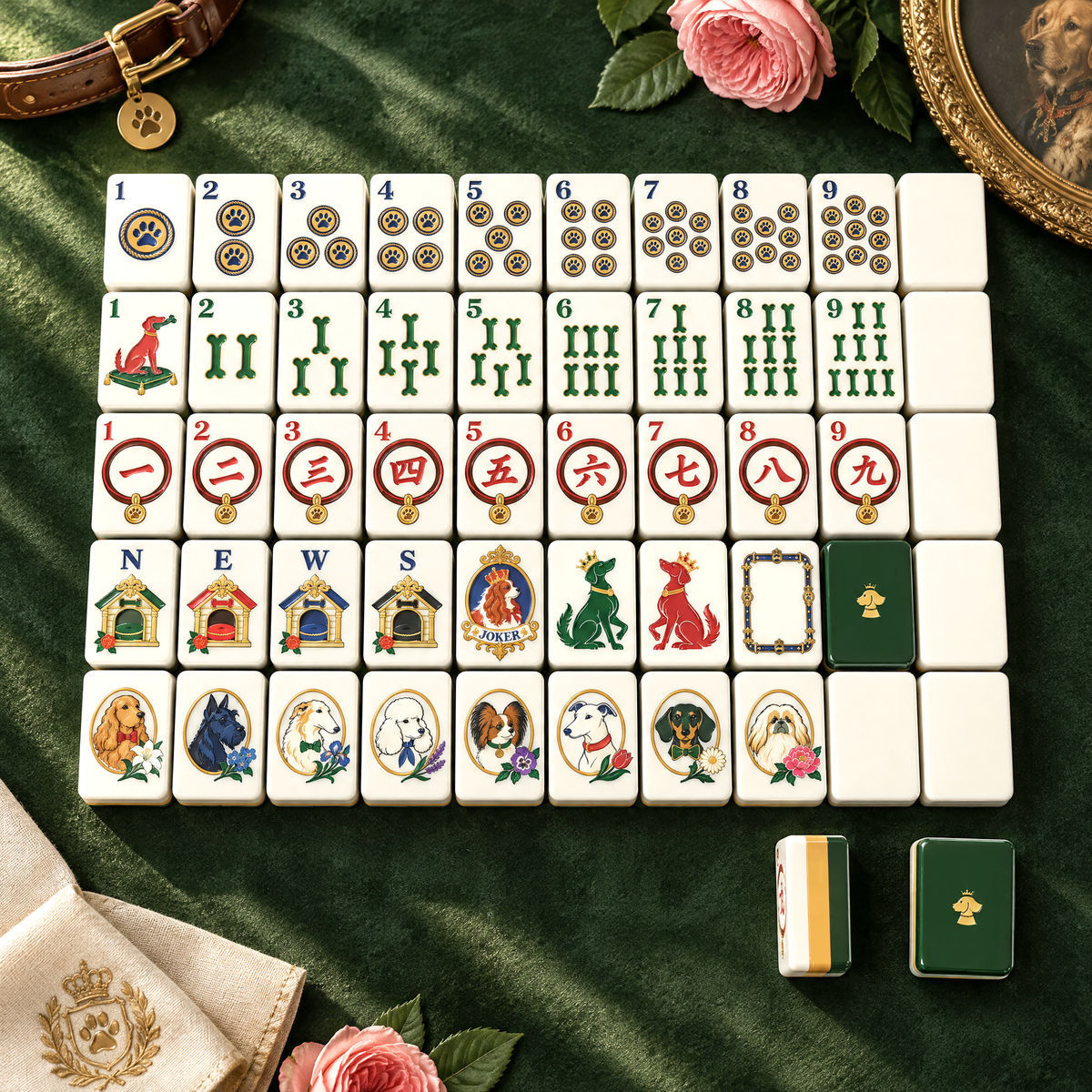
Beginner mahjong strategy rests on three pillars: (1) hand selection—choose hands from the current National Mah Jongg League card that use your discards and fit your called sets early; (2) tile tracking—watch what others discard to learn which tiles are safe; (3) pung discipline—expose only when you're genuinely closer to mah jongg than calling blind. Most new players expose too early, telegraph their hand to opponents, or chase unlikely hands when a backup exists. The winning move is almost always the one that keeps your options open longest.
How do you pick a hand that doesn't leave you stranded?
The moment you look at your 14 tiles after the Charleston, you're tempted to play the first hand you recognize from the card. Stop. Instead, count how many of your called sets can be built with tiles already in your hand or likely in the wall. If you need both the 2 Bam and the 3 Bam to start, and you have neither, that hand will bleed tiles forever. Look for hands where you already hold 2–3 of your four called sets complete or nearly complete. This single habit cuts your discard mistakes by half.
🀄 Shop best-selling mahjong sets →

What's the rule for when to expose a pung or kong?
Beginners expose the moment they collect three of a tile. Pros wait. Exposing locks you into one path—everyone knows you need that suit, and they stop discarding it. You also lose the chance to claim a kong later (four identical tiles) if a fifth joker surfaces. The real rule: expose only when you are mathematically one or two draws away from mah jongg. If you have two complete sets, one almost complete, and one pung exposed, you can afford to go hunting. If you have zero complete sets and one pung, keep your hand closed. Your hand becomes a secret. Opponents discard carelessly. You win.
How do you remember which tiles are actually safe to throw?
Every discard is data. When North throws a 7 Crak, you now know she does not need it—either she never wanted it, or she's moved past that set. Write it down on a small notepad if your table allows; if not, glance at the discard pile and scan for patterns. If three players have thrown wind tiles, the fourth player almost certainly has a wind set. If no one has thrown a 1 Dot in ten turns, assume someone is building a hand around them and stay quiet. This isn't luck; it's reading the table like a book.
Should you always chase the hand with the highest points?
The National Mah Jongg League card lists hands from lowest to highest points—they're ordered that way on purpose. A 40-point hand is tempting, but a 30-point hand you'll finish in three draws beats a 50-point hand you'll never complete. Beginners sacrifice winning hands for bigger paydays and lose. The rule: play the hand you're most likely to finish, not the one worth the most. Track which hands you've already called (you can't win the same hand twice in one game). If two hands are equally close, take the one with the earlier deadline—the one expiring soonest from the card.
Strategy | Why It Works | Common Mistake |
Pick hands where 2–3 sets exist in your rack | Fewer tiles to hunt saves moves | Playing the first hand you see |
Expose pugs only when ≤2 draws from mah jongg | Keeps your hand secret longer | Exposing after calling one set |
Track discards; never throw what no one else threw | Safe discard = live to next round | Throwing random tiles early |
Play completable hands over high-point hands | Winning 30 beats losing 50 | Chasing the biggest payout |
Hold jokers until you're sure where they go | Jokers are your lifeline | Burning jokers on uncertain sets |

What do beginners waste most—tiles or time reading the card?
Both. But tile waste is the killer. New players read the card slowly, announce their hand, expose sets, then realize they picked the wrong path halfway through. You can't rewind. Before you look at the card, organize your tiles by suit and number in your rack—this takes 20 seconds but saves five minutes of chaos. Use mahjong racks with pushers to keep tiles sorted and visible; a clear rack cuts decision time and mistakes.
What to check before you buy your first set
Before joining a weekly game, verify three things:
Tile count: American mahjong uses exactly 152 playing tiles plus 8 jokers (160 total). Spare tiles beyond that are extras, never added to play. A full set gives you everything you need.
Card clarity: You'll stare at the National Mah Jongg League card for hours. Make sure you can read it in your home's light. Some players photograph the card on their phone; others print a large copy.
Rack visibility: If you're choosing between hands, a rack that holds all 14 tiles upright and lets you scan them at a glance saves mental energy for strategy.
🎁 See our most-loved mahjong sets & accessories →
Five common beginner blunders, ranked by how much they cost you
Calling a hand, then throwing tiles that contradict it. You announce you're chasing a hand with three Bams, then throw a Bam. Opponents know you lied or misread—they stop discarding Bams. Fix: Pick your hand before announcing it, and never deviate.
Ignoring the card after calling. You wrote down your hand, then forgot which section of the card it came from. Now you don't know if you need a pair or a pung. Fix: Point at the hand on the card while you play, every time.
Exposing jokers in your called sets. Jokers can only appear in exposed pungs, kongs, quints, or sextets—never as a single tile or a pair. Using a joker for a pair will dead-stop your hand mid-game. Fix:Read how jokers work before your first game.
Throwing tiles too fast. Speed looks smart; it costs games. Take 3 seconds per tile. Ask yourself: "Did anyone want this? Did I see it thrown already?" Fix: Slow down. Losing slower is winning faster.
Holding unrelated tiles hoping for a miracle. You have one 5 Crak and zero other Craks, and you're holding it for a hand that needs three Craks. Fix: If you can't see a path to a tile in three draws, let it go.
The one mindset shift that separates beginners from intermediate players
Experienced players think in backup hands, not single hands. Before you call your first hand, already know your second choice. If your primary hand dries up (all four tiles of a critical number are visible or thrown), you pivot to your backup and keep hunting. Beginners call a hand, watch it die, and sit frozen waiting for the wall to rebuild. You won't win every game, but you'll never be helpless.
✨ Find your Mahstead set — free US shipping →

FAQ
What's the most important tile to track as a beginner?
Dragons and honors (winds). They're used in fewer hands, so when three players throw them fast, the fourth player is likely building an all-honors hand. Watch who's not throwing them, and assume they need them. This single observation stops you from discard-bluffing into someone's mah jongg.
Should I always expose my first set as soon as I can?
No. Delaying exposure keeps opponents guessing and lets you pivot if your hand dies. Expose only when you're genuinely close to winning—typically two draws away. Early exposure signals weakness and telegraphs your path, which costs you safe discards later.
How many hands should I study before my first game?
Study the National Mah Jongg League card for 20–30 minutes, focusing on hands that use many tiles of one suit or hands using mostly numbers (1–6 or 4–9). Don't memorize; learn the structure. Once you play, you'll internalize patterns faster than any study session.
What's the biggest tell that a beginner is trying to hide their real hand?
Hesitation before discarding. Experienced players discard quickly because they've already decided. Beginners pause, change their mind, and throw something else—revealing they had multiple options and switched strategy. If you pause, opponents know your hand isn't locked yet.
Is it ever okay to discard a tile that everyone else has already thrown?
Rarely, but yes—if you're one draw away from mah jongg and that tile is your only exit. Before that, throwing a tile that's already in the discard pile means you're not reading the table. Every discard pile tells a story; read it.
Can I win a game without ever exposing a set?
Yes. You can call a hand, draw and discard, and reach mah jongg with your hand entirely closed (no exposures). This happens less often, but it's possible. Hands using many jokers or hands with high-point bonuses sometimes reward this strategy. Learn about the card structure to spot these rare hands.


View More
View More
View More
