
Mahjong Party Ideas in New Orleans: Host & Game Guide
Last updated: Nov 23, 2026
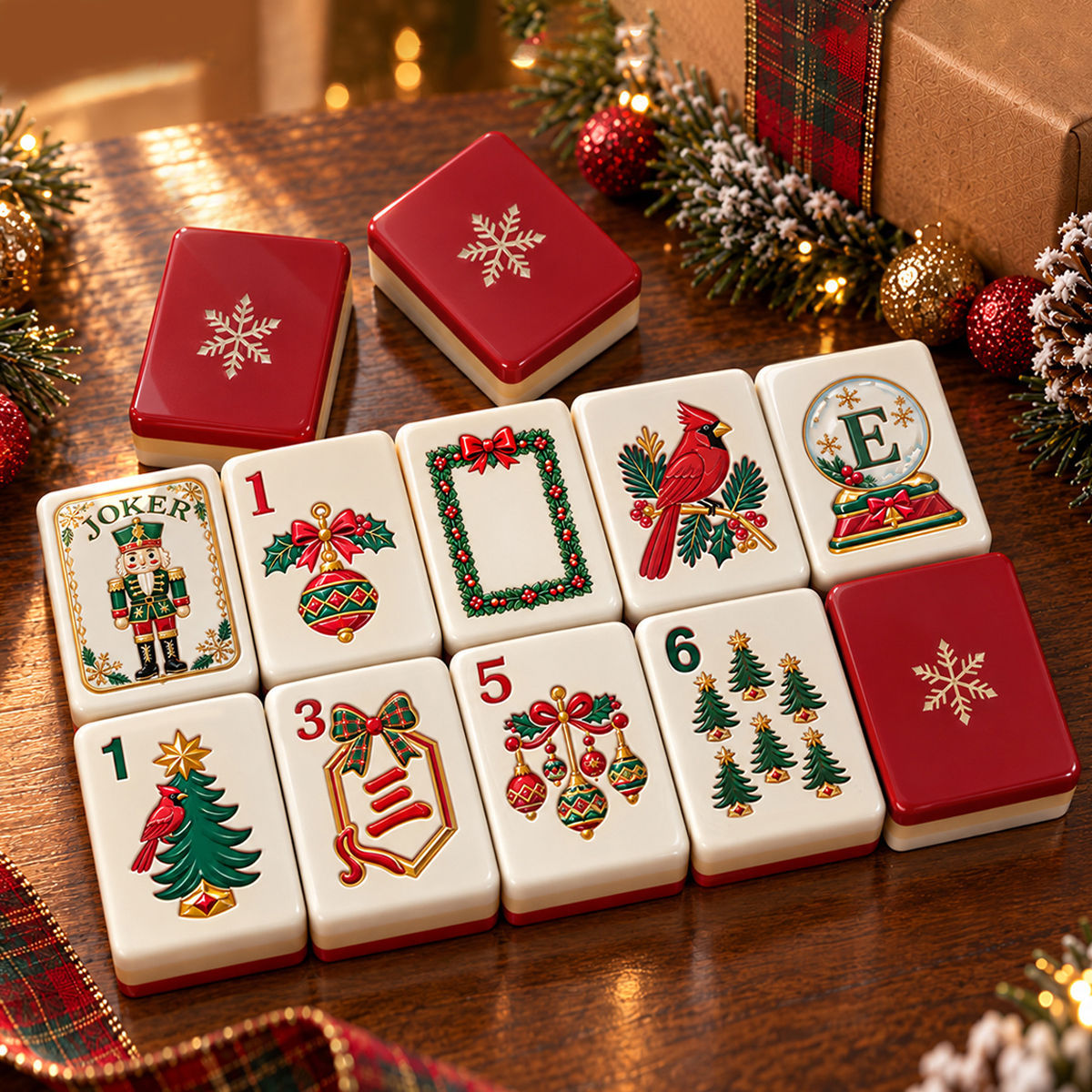
New Orleans players host mahjong parties year-round in living rooms, patios, and community spaces—the game thrives in a city that loves tradition and gathering. A typical four-player American mahjong game takes 1–2 hours, needs one 152-tile set (plus 8 jokers), a mat to organize tiles, and racks to hold hands. Players need the current National Mah Jongg League card (issued each spring), which shows all legal hands for that year. Start by recruiting three friends via neighborhood groups, libraries, community centers, or word-of-mouth; teach them how to play American mahjong the week before. Avoid common hosting mistakes: don't assume everyone knows the Charleston (the tile-passing ritual), don't skimp on a playable mat or racks—they prevent misdeals—and don't try to host on a surface too small. A quality set and mat from Mahstead keep the game rolling without fumbles.
What's the best way to find mahjong players in New Orleans?
New Orleans has strong mahjong communities, especially in neighborhoods with established Jewish cultural centers and senior centers. Check your local public library for game clubs, ask at community centers (many offer daytime games), scan Meetup boards for "mahjong" or "tile games," and ask at country clubs if you're a member. Don't overlook religious organizations—many host weekly or monthly games open to newcomers. Once you've found a core group, word-of-mouth spreads fast in New Orleans; one hosted game leads to invites to others' homes. Start with one reliable friend and ask them to bring someone, then grow from there. The warmth of New Orleans culture means inviting newcomers is normal—always welcome them and have a spare copy of the rules on hand.

How do you set up a mahjong table for a smooth, friendly game?
A proper setup takes 10 minutes and prevents most hosting headaches. Place your mat (ideally 36–48 inches) in the center of a sturdy table, with enough space for four players on each side; the mat organizes the wall and your racks. Position one mahjong rack with pushers in front of each player so they can hold and organize their 13 tiles without fumbling. Set the tile set in the center before the game begins, along with the current year's National Mah Jongg League card (laminated if possible—it gets handled a lot). Place a pen and scoring pad nearby. Have the dealer card handy (marks who starts). Ensure good lighting and comfortable seating—players sit for 1–2 hours. Keep the room temperature neutral; a warm New Orleans evening can make long games uncomfortable. Never place drinks directly on the mat; use a side table or coasters well away from tiles.
What's the difference between American mahjong and the Chinese or Hong Kong game?
American mahjong is simpler and safer for new players because it uses the printed National Mah Jongg League card—everyone looks up legal hands together, so no one argues about what wins. Chinese, Hong Kong, and other variants require players to memorize all hand combinations, which takes months of study. American mahjong also forbids chows (sequences like 1-2-3), so you can only expose pungs (three matching tiles), kongs (four), quints (five), or sextets (six). This slows the game and gives beginners time to learn. The Charleston—the tile-passing ritual before play—is unique to American mahjong and adds a fun social element. If you're hosting mixed experience levels, American mahjong is the right choice; everyone learns from the card. When teaching, emphasize that American mahjong is not about memory—it's about strategy, luck, and the ritual. This keeps beginners confident and engaged.
What gear and supplies do you need to host a successful party?
Gear | Why You Need It | Hosting Impact |
152-tile set with 8 jokers | Legal play; American mahjong requires exactly these tiles | Without it, hands won't form and game stops |
Mahjong mat (36–48") | Organizes the wall; defines the play space cleanly | Speeds play; prevents tiles scattering or mixing |
Four racks with pushers | Players hold 13 tiles without showing opponents | Makes hands secure; prevents accidental reveals or slow play |
Current National Mah Jongg League card (laminated) | Only source of legal hands for American mahjong | Without it, disputes arise; card is required every year |
Dice (at least one pair) | Determines starting player and wall position | Speeds setup; adds fairness |
Scoring pad and pen | Tracks points across all rounds | Prevents money confusion if playing for stakes |
Optional: mahjong bag or case | Protects tiles during storage and transport to games | Keeps set safe between parties; easy to toss in a car |
The best-selling mahjong sets include tiles, often a mat, and sometimes racks—bundling saves money and ensures compatibility. If you're hosting regularly, invest in a padded mahjong bag or case so your set lasts years.
🀄 Shop best-selling mahjong sets →

How do you teach new players without slowing down the party?
Host a 30-minute teaching session before the official game night—don't try to teach live while others wait. Walk the group through the Charleston step by step, then deal a practice hand and show how to use the card to find a legal hand. Explain that jokers work as wild tiles and can substitute for any tile except in pairs or single-tile wins. Show them how to read the card—it's organized by patterns and numbers, not by memorization. Play one throwaway round where nobody keeps score; let mistakes happen so they learn. On game night, seat a confident player next to each beginner. Keep the card visible to everyone at all times—no secrets. If someone is still confused, they can ask: "Is this legal?" and everyone checks the card together. This slows nothing down and keeps the game fair. New Orleans players are patient and social; a beginner-friendly table is a fun table.
What's a hosting checklist to avoid common party mistakes?
One week before:
Confirm all four players and confirm they have the current year's mahjong card (or you'll provide printed copies).
Test your set to ensure no tiles are missing or chipped; count all 152 tiles and 8 jokers.
Check your mat for stains or tears; spot-clean if needed.
Confirm racks and pushers move smoothly—sticky pushers ruin the rhythm.
Day of the party:
Set up the table 30 minutes early so it's ready when players arrive.
Have pen, scoring pad, dice, and the card within arm's reach.
Brew coffee or set out water; keep drinks away from the play surface.
If teaching, plan the 30-minute lesson before the first hand is dealt.
During play:
Don't interrupt a hand mid-play; wait for the hand to end before explaining a rule.
Keep the card visible and encourage players to ask "Is this legal?" without shame.
Rotate the dealer position each hand so everyone gets a fair turn.
Stop play if someone seems frustrated; check the card together and reset if needed.
After the party:
Let tiles dry if they've been handled heavily (humidity in New Orleans can make acrylic slightly tacky).
Count tiles back into the set so nothing gets lost between games.
Store the set in a cool, dry place or in a protective bag.
🎁 See our most-loved mahjong sets & accessories →
What should you check before buying a mahjong set for New Orleans hosting?
When you're ready to buy or upgrade your set, answer these questions:
Tile size and weight: Do your players have good eyesight and steady hands? Acrylic tiles are lighter and easier for older players than bone-and-bamboo sets.
Mat fit: Does your table have 4–5 feet of clear space? A 36-inch mat fits most home tables; 48 inches is for larger or public spaces.
Rack comfort: Can your players hold racks for 1–2 hours without hand fatigue? Lighter, ergonomic racks matter more in New Orleans's heat.
Storage: Will the set live in a humid climate (New Orleans humidity is high)? Padded bags protect acrylic from dust and temperature swings.
Playing surface: Is your table smooth wood or glass, or rough? A felt-backed mat grips wood surfaces; check before you buy.
Aesthetic: Do you want a classic look, or do your friends enjoy personalized or custom designs? Engraved mahjong sets with titles make great centerpieces and conversation starters.
For first-time hosting, a quality mahjong mat and a full set with racks together cost less than a night out and last for years of games.
✨ Find your Mahstead set — free US shipping →
For detailed rules and setup, start with mahjong for beginners. New Orleans's warm hospitality and love of ritual make mahjong a perfect fit—once you host one game, you'll host many.

FAQ
Can I host mahjong with fewer than four players?
Yes, but the game changes. American mahjong is designed for four, but two- and three-player variants exist with modified hands and rules. Three-player is most common. Start with four if you can; it's the full experience.
What if I don't have a mahjong mat—can I just play on a table?
Technically yes, but tiles scatter and mix easily. A mat organizes the wall, protects tiles from scratches, and speeds play. For New Orleans humidity, a mat also keeps tiles grounded. Invest in one before your first party.
How much does a complete mahjong set cost?
Prices vary by quality and features; see current pricing on the product page. Budget-friendly sets with mats and racks exist, as do higher-end engraved or decorative sets. All Mahstead sets include free US shipping.
Do I need to memorize the mahjong card?
No. The card is your reference tool. Just learn how to read its sections and patterns. After a few games, you'll recognize common hands, but you always have the card. That's the beauty of American mahjong.
What's the best way to explain the Charleston to total beginners?
Show, don't tell. Do it once slowly with a practice hand, then let them do it with real tiles. The Charleston is pass-and-receive in three rounds; it feels awkward until players do it once. Laughter helps.
Should I buy racks and pushers separately or as part of a set bundle?
Bundled sets are simpler and cheaper. If you already own racks, buying loose tiles or a mat alone works. For first-time hosting, a complete bundle saves money and ensures everything fits together.


View More
View More
View More
