
Sichuan Mahjong Lessons Online: Rules, Strategy & Where to Learn
Last updated: Nov 23, 2026
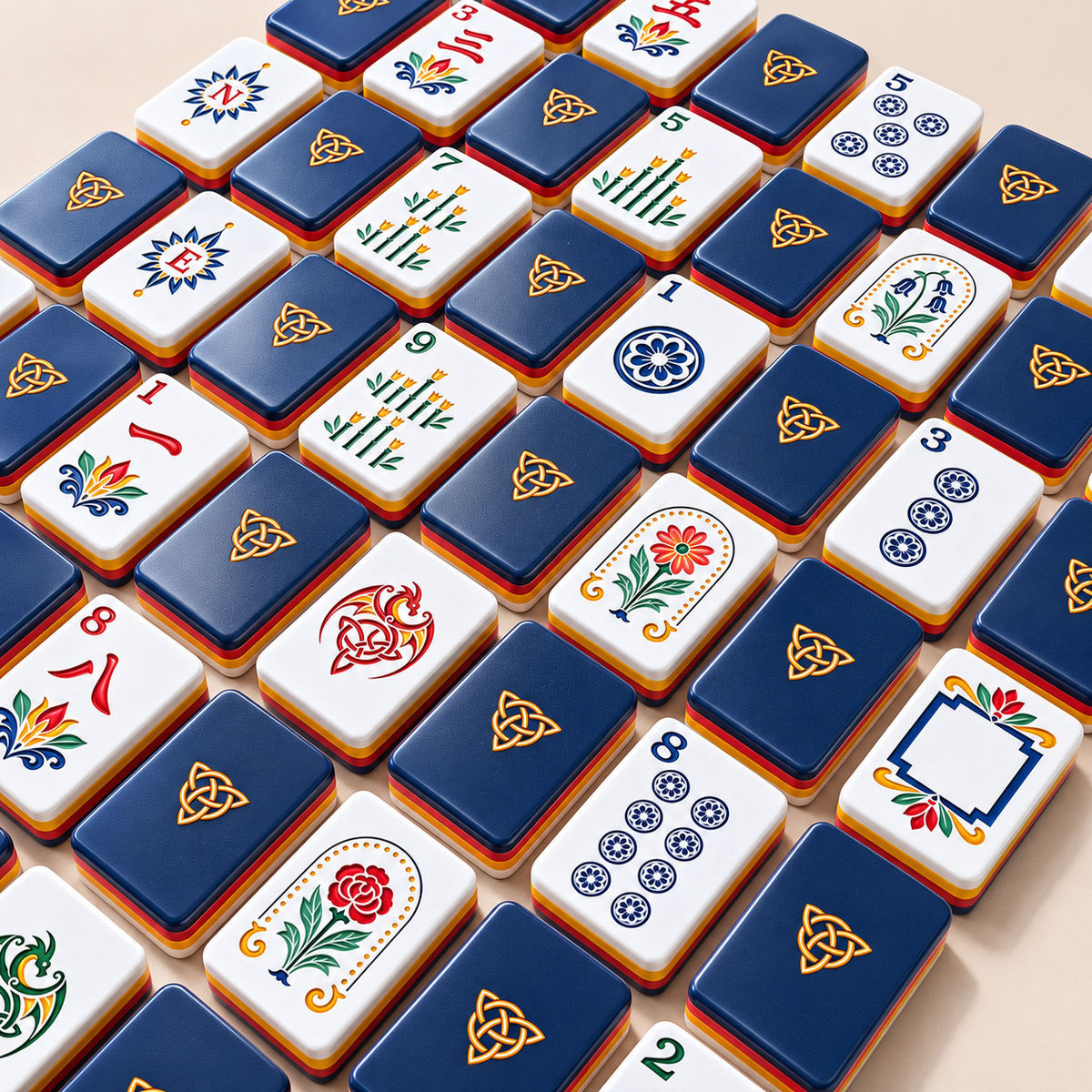
Sichuan mahjong is a Chinese regional variant played with 108 tiles (four each of Bams 1–9, Craks 1–9, and Dots 1–9) — no honors or flowers. Players form chows (sequences like 1–2–3), pungs (three identical), and kongs (four identical), with melds scored by point value and hand pattern. Unlike American mahjong, which uses an annual card and 152 tiles, Sichuan mahjong relies on player memory and rapid calculation. Online lessons range from free YouTube tutorials to paid live classes via Zoom or regional platforms; most run 30–90 minutes and assume beginner knowledge. Cost varies by instructor (many offer free introductions). Start by learning hand rankings, chow-formation rules, and the discard discipline that governs the game. Avoid confusing it with American mahjong: there are no jokers, no card-based hands, and chows are fundamental. Mahstead sets include American mahjong tiles, so if you learn Sichuan first, you'll recognize the suit symbols when you transition.
Sichuan mahjong is one of China's fastest and most popular regional variants—often called "fast mahjong" because rounds complete in minutes and players must think at high speed. It strips the honors (winds and dragons) entirely and uses only the three suited ranks, making it harder and more pattern-driven than many Western-taught versions. If you're curious about where and how to find online instruction, here's what you actually need to know.
What exactly is Sichuan mahjong, and how does it differ from American?
Sichuan mahjong uses 108 tiles: ranks 1 through 9 in Bams, Craks, and Dots, four copies each. No winds, dragons, flowers, or jokers—just pure suited play. The goal is to form a complete hand of four melds (three-tile groups) plus a pair, using chows (sequences), pungs (three matching), and kongs (four matching) in any combination. American mahjong, by contrast, uses 152 tiles with honors and flowers, follows a published annual card, and does not allow chows in exposed melds—only pungs, kongs, and longer runs in concealed hands. Sichuan has no annual card; instead, players memorize hand rankings by pattern. Rounds are much shorter (10–15 minutes vs. 30–60 for American), and the pace is punishing if you hesitate.

Where do you find Sichuan mahjong instructors online?
Online Sichuan mahjong lessons are found on several platforms and instructor networks. YouTube channels hosted by Chinese mahjong enthusiasts offer free rule breakdowns and hand-ranking tutorials; search "四川麻将" (Sichuan mahjong) or "fast mahjong" in English. Live Zoom instructors advertise through regional social media groups (WeChat, Facebook groups tied to Chinese diaspora communities, or Reddit's r/Mahjong) and typically charge per session or offer a package rate. Dedicated mahjong learning apps like Tencent's mahjong platforms (available in some regions) include tutorials; check app stores in the US or use a VPN to access Chinese versions. Local Chinese community centers, libraries, and cultural organizations sometimes host free group lessons in major cities—ask your library or nearest Confucius Institute. One-on-one private tutors (often experienced local players) connect via word-of-mouth in mahjong clubs or online forums and may charge based on experience and session length. The most reliable path is to join a regional mahjong community or Discord server where players share instructor contacts and reviews.
What should a beginner expect in an online lesson?
A typical online Sichuan mahjong lesson covers these topics in this order: (1) tile recognition (suit symbols, rank naming), (2) hand structure (four melds + one pair = win), (3) chow rules (sequences like 1–2–3, 5–6–7), (4) pung and kong formation, (5) basic hand rankings (simple hands first, rare patterns later), (6) discard strategy and "dangerous tiles" (high-risk discards late in the game), (7) drawing, declaring, and claiming (the turn sequence), (8) scoring basics if applicable to the variant taught, and (9) practice problems (instructor shows discarded tiles; students guess safe discards). Most beginners need 2–4 sessions (3–6 hours total) before playing a real game without constant reference. Expect to learn slowly if you're also learning suit symbols (1 Bam is often a bird; study these first). A good instructor will use a video call so you can see live tile play, ask questions, and get corrections in real time. Budget 45–90 minutes per session; anything shorter risks surface-level teaching.
How do Sichuan hand rankings differ, and why is memorization hard?
Sichuan mahjong does not score by combination type alone (like American mahjong's 1-double, 2-double system); instead, it assigns points per hand based on rarity and pattern. A "simple" or "common" hand (all chows, no honors) is worth the base, often called 8 points or 1 fan; a hand with special composition (like all Bams, or all pairs) is worth more—sometimes 2, 3, or 8 fan depending on the hand. The regional variant matters: Sichuan Chengdu-style has different hand values than Sichuan Chongqing-style, so instructors should specify which version they teach. Memorization is hard because (1) hand patterns number in the dozens, not a fixed card, (2) rules vary by region, (3) point values are context-dependent (e.g., a pung of 1s is worth more than a pung of 5s in some scoring systems), and (4) players must recall rankings under time pressure. Most lessons use a hand-ranking chart (printed or shared as a PDF) so students can reference it while playing until memory develops. Avoid picking a lesson that skips the hand chart or claims you can "just memorize everything"—that's a sign of poor teaching.

What are common beginner mistakes, and how do online lessons help?
Mistake 1: Confusing 1–2–3 sequences with pung-like formation. A chow is three consecutive ranks (e.g., 1 Crak, 2 Crak, 3 Crak); a pung is three of the same tile. Many beginners try to form a pung from 1–2–3 by misunderstanding suit. Online instructors catch this by seeing your discards and correcting in real time.
Mistake 2: Discarding unsafe tiles too late. In Sichuan mahjong, a tile already played by two other players is often safe; one played by one player is medium risk; an unplayed tile is dangerous near the end. Beginners often discard unplayed tiles when only one more draw remains, losing immediately. Lessons teach the "wait count" heuristic: track which tiles have left the wall and adjust risk accordingly.
Mistake 3: Misreading suit symbols. The 1 Bam (bird), 9 Bam (wide spear), 1 Crak (vermilion scroll), and 9 Crak (decorative knot) have artistic designs that confuse beginners. A good online instructor will drill suit symbols in the first 15 minutes so you don't misread a live game.
Mistake 4: Holding tiles too long, delaying discard. Sichuan rounds move fast; hesitation costs. Lessons train decisiveness by using timer exercises: you have 3–5 seconds to decide. Practice online first, not in a room where hesitation is rude.
Mistake 5: Not adapting to the scoring variant taught. If your instructor teaches Chengdu scoring but you later play Chongqing rules, your hand rankings are wrong. Always confirm the variant before signing up.
Online lessons prevent these mistakes by giving you a safe, slow-motion environment to ask "why" and replay scenarios. A video recording of the lesson (if the instructor offers it) lets you rewatch and catch mistakes you missed the first time.
Lesson Type | Time Commitment | Cost Basis | Best For | Main Drawback |
YouTube free tutorial | 30–60 min, self-paced | Free | Learning basic rules | No feedback; outdated or regional variant unclear |
Live group Zoom class | 60–90 min, scheduled weekly | Low (shared instructor cost) | Meeting other learners; group energy | Instructor may not slow for you; harder to ask questions |
Private 1-on-1 Zoom tutor | 45–90 min, flexible schedule | Medium–high (full instructor focus) | Rapid progress; personalized correction | Higher cost; harder to find good instructors in English |
Dedicated app (Chinese platform) | 20–40 min lessons, on-demand | Low–medium (subscription or one-time) | Anytime learning; visual examples | Language barrier; limited live interaction |
Local community center group | 60–120 min, weekly or monthly | Low or free (nonprofit subsidy) | Direct in-person play; full social integration | Beginner sessions rare; may skip fundamentals |
How to choose the right online instructor for your goals.
Ask these five questions before enrolling:
What Sichuan variant do you teach? (Chengdu, Chongqing, Leshan, or other?) Variants have different hand rankings and scoring; confirm it matches your local players or desired region.
Is the lesson live or recorded? Live allows questions and real-time correction; recorded means you can rewatch but can't interrupt. Ideally, choose live with a recording option.
Do you provide a hand-ranking chart or reference sheet? Essential for retention. Ask for it before paying.
What's the class size and your method for beginners? One-on-one is fastest; small groups (3–5) are social and affordable; large groups (10+) risk being ignored if you struggle. Ask if the instructor has teaching experience, not just playing experience.
Can I try a sample or free intro session? Any good instructor offers a 15–30 minute free call so you can assess teaching style, language clarity, and pacing. If they refuse, that's a red flag.
Our pick: Because Sichuan mahjong uses the same three suits as American mahjong (Bams, Craks, Dots), once you learn online, you'll recognize the tile faces instantly when you move to American mahjong or other variants. A high-quality set with clear engraved suit symbols helps reinforce learning during your first month of lessons—tile recognition is the biggest hurdle for beginners.
What to check before you buy a Sichuan mahjong set or transition to another variant.
Sichuan mahjong sets sold online are usually Chinese exports with simplified designs; tiles are smaller and lighter than American mahjong tiles. If you plan to learn Sichuan but also play American mahjong (or another variant) later, consider starting with an acrylic American set because the suit symbols are identical and more clearly marked. This way, you're not buying two sets. Check that any Sichuan set you buy has clear suit symbols (Bams, Craks, Dots) and good tile weight; cheap bamboo tiles crack and stick. After your first online lessons, play in a club or community center before buying—tile feel matters, and you'll know what weight and size you prefer. If you end up loving Sichuan mahjong and want to host games at home, a durable set with a quality mat and storage case is worth the investment later.
🀄 Shop best-selling mahjong sets →
Five checklist steps before your first online lesson.
[ ] Identify your Sichuan variant. Ask the instructor or your local club which regional version is played in your area (Chengdu, Chongqing, etc.).
[ ] Prepare a quiet space with good lighting. You need to see tile symbols clearly on video and avoid background noise distracting the instructor.
[ ] Gather a pencil and paper. Write down suit names, basic hand patterns, and dangerous-tile rules as the instructor explains them.
[ ] Test your video and audio before the session. Zoom call delays and poor audio quality make learning harder; do a practice call with a friend first.
[ ] Ask for a hand-ranking reference sheet at the end. Request it in PDF or printed form so you can study between sessions.

FAQ
Can I learn Sichuan mahjong online if I don't speak Mandarin?
Yes, if you find an English-speaking instructor or one with translation support. Many instructors in North America teach in English; search regional Facebook groups or Reddit's r/Mahjong. YouTube has English-narrated Sichuan tutorials as well. However, most resources (hand charts, regional variations) originate in Chinese, so basic character recognition helps. Consider learning suit symbol names in Mandarin as a foundation.
How long does it take to go from beginner to playing a real game?
With 3–6 hours of lessons spread over 2–4 weeks, plus 5–10 hours of solo practice or low-stakes play, most learners can join a club game. You won't be fast or strategic, but you'll understand hand structure, discard safety, and win conditions. Rapid players take 2–3 months to develop competitive speed.
Is Sichuan mahjong harder than American mahjong?
They're hard in different ways. Sichuan demands memory (hand rankings), speed, and rapid risk calculation. American mahjong requires reading an annual card, managing jokers, and understanding multi-tile runs. If you already know one, learning the other is faster than learning from scratch. Sichuan is usually considered faster-paced and more stressful.
What do I need to play Sichuan mahjong after lessons?
A 108-tile Sichuan mahjong set (Bams, Craks, Dots only), a flat playing surface or mat, four players, and a hand-ranking chart (printed or on your phone). Optional but helpful: a score sheet and a timer app for practice drills. You do not need jokers, honors, or flowers.
Can I practice Sichuan mahjong online before playing in person?
Yes. Several Chinese apps (Tencent Mahjong, Mahjong Soul) include Sichuan variants and let you play against bots or humans. Note: these require Chinese language navigation, but gameplay is intuitive once you know the rules. You can also ask instructors for Zoom practice sessions where you and others play live under instructor supervision.
Do online lessons teach scoring, or just rules?
Most beginner online lessons cover basic scoring (how many points each hand is worth) but focus on hand rankings and discard strategy first. Scoring nuances (bonuses, penalties, betting) come later. Ask the instructor upfront if scoring is included in the first session. 🎁 See our most-loved mahjong sets & accessories →✨ Find your Mahstead set — free US shipping →


View More
View More
View More
