
Mahjong Party Ideas in Los Angeles: Host Your Game Night
Last updated: Nov 23, 2026
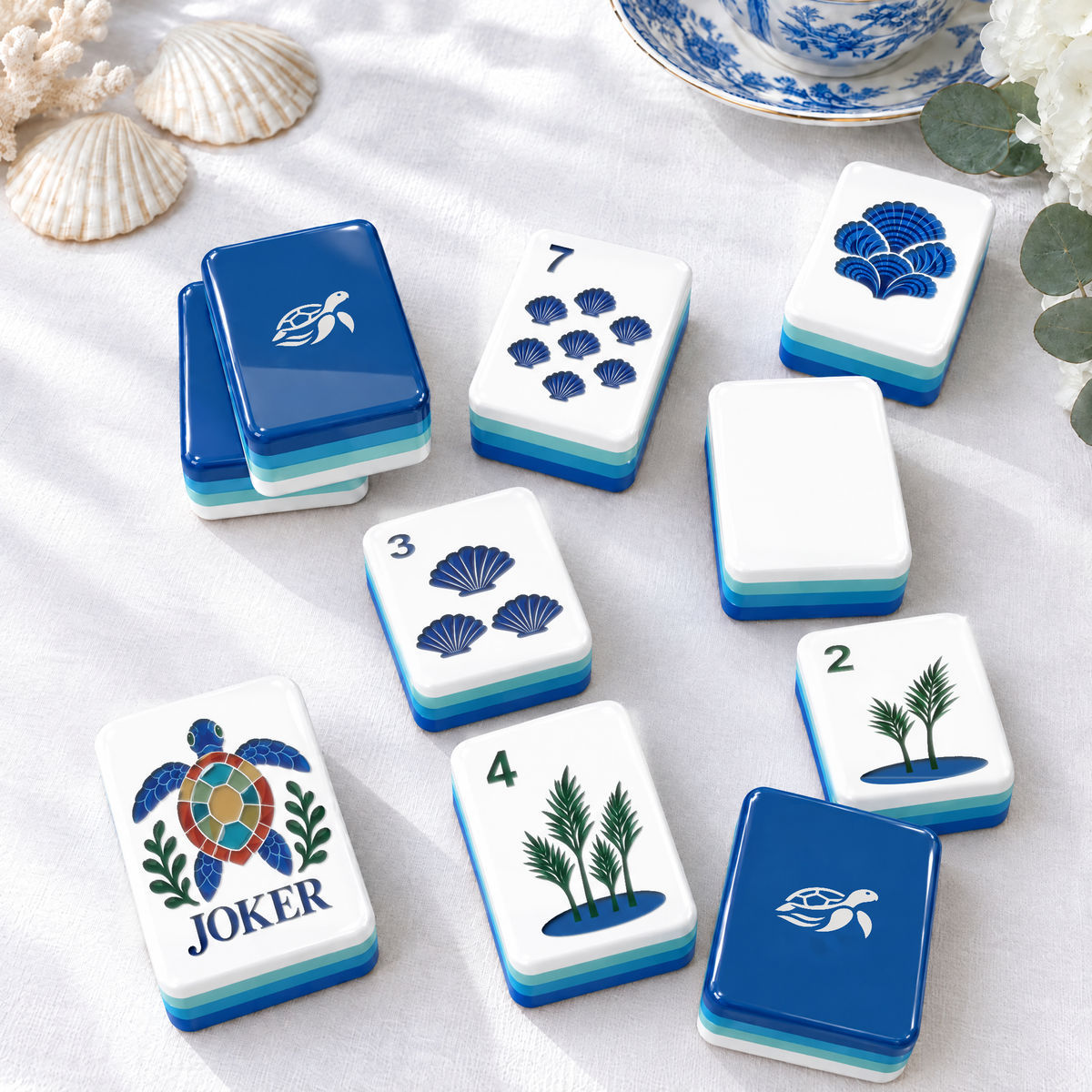
Los Angeles is home to dozens of casual and semi-competitive mahjong groups meeting in homes, community centers, libraries, country clubs, and synagogues throughout the city. To host a successful party, you'll need a flat play surface, a 160-tile American mahjong set (with four pushers and racks), a current National Mah Jongg League card, dice, and ideally a rack with pushers to make tile management smooth. Invite four players, conduct the Charleston (the tile-passing ritual before the first hand), and follow hands from that year's card only. Most LA parties run 2–4 hours with snacks and drinks. Avoid common beginner mistakes: never use house-made hands, always start with the Charleston, and keep a copy of the rules on hand. Mahstead ships complete sets with mats, racks, and pushers throughout LA within days, so you can be ready to host immediately.
Hosting a mahjong party in Los Angeles is simpler than many people think—but a few details make the difference between a frustrating evening and one your friends ask to repeat. We've hosted hundreds of games across the city, and we know exactly what works.
What equipment do you absolutely need to host?
Your foundation is a flat, stable surface at least 3 feet square—a dining table works perfectly. You'll need a complete American mahjong set with 152 playing tiles and spares, a current-year National Mah Jongg League card (updated every spring, available free online or in printed form), four pushers and racks to keep tiles orderly, and dice. A dedicated mahjong mat protects your table, keeps tiles from sliding, and signals "we're serious" to guests. Many LA hosts underestimate the mat's role—it genuinely reduces disputes over accidental tile movement and makes the game flow faster. If players bring their own sets, inspect them: mismatched tiles, missing jokers, or faded markings cause real confusion mid-game. Our best-selling sets are engraved for clarity and built to last through hundreds of games. Have a backup set on hand if you're hosting regularly.
🀄 Shop best-selling mahjong sets →

How do you find and invite the right players for a Los Angeles game?
Los Angeles has mahjong players everywhere if you know where to look. Start with community centers in your neighborhood—Santa Monica, Culver City, Burbank, and downtown all host open play hours. Public libraries often host mahjong nights or maintain bulletin boards listing groups. Synagogues, particularly in mid-Wilshire and West LA, frequently run regular games open to members and guests. Country clubs and retirement communities are obvious hubs; call ahead to ask about public sessions. Online meetup boards let you search "mahjong Los Angeles" and find ongoing groups; many welcome newcomers to a single session before committing. If you're starting from scratch, invite friends who enjoy card games or strategic board games—the learning curve is steeper than poker but shorter than chess. Four players is the only valid count for American mahjong, so plan exactly. Tell invitees the start time and mention that games typically run 2–4 hours; set expectations for snacks and drinks so people bring favorites. Never pretend the game is simpler than it is—a brief "we'll teach you the rules" signals respect and honesty.
What are the most common rules mistakes that wreck a beginner's party?
The biggest error we see in LA hosting is playing hands that aren't on the current year's card. American mahjong only uses hands from the official National Mah Jongg League card, updated annually. Newcomers sometimes assume any winning combination counts—this breaks the entire game. Hands on the card are color-coded (like one section for "Pungs in 1st and 2nd suits only") and change year to year. Learn how to read the card before your party so you can answer questions fast. Second mistake: skipping the Charleston. The Charleston is the ritual tile-passing before hand one, and it's not optional—it randomizes the starting tiles so the game isn't predetermined. New players think it's tedious, but it's essential. Third: allowing jokers in the wrong places. In American mahjong, jokers can never stand alone as a single tile or as a pair—only as substitutes within exposed sets of three or more identical tiles. Explain this rule before the first hand so nobody wastes energy on an illegal win. Fourth: confusing "pungs" (three identical tiles) with sequences. American mahjong has no sequences (chows)—you can only expose sets of three or four identical tiles, plus joker-enhanced sets. Showing your guests the full rules of American mahjong in advance prevents 90% of mid-game arguments.
How do you keep the energy and pacing right during a Los Angeles party?
Pacing breaks down when players take too long picking tiles or when one person monopolizes explanations. Here's how we keep rhythm: ask the fastest player to keep a gentle eye on decision time (roughly 10 seconds per pick). Designate one person—ideally an experienced player—to answer rules questions; if nobody knows, pause, check the card or online rules resource, then move on. Rotate winds so every player experiences each position (East, South, West, North). LA's diverse gaming culture means your guests might include Cantonese speakers, newer players, and competitive players—frame the evening tone early ("this is relaxed" vs. "we're tracking scores seriously"). Snacks should be light and not require both hands (pretzels, not pizza). Use a mat and racks with pushers so tile handling stays uniform and doesn't slow setup between hands. Track a few scores if players enjoy it, but don't mandate it for a casual party—recording winners each hand is enough. End on a natural break (often 6–8 hands) rather than letting the evening drag; people leave happier if they end before they're tired.
🎁 See our most-loved mahjong sets & accessories →

What hosting supplies and atmosphere details matter most?
Detail | Why it works | Setup tip |
Dedicated mat | Prevents tile slip, signals organized play | Place before guests arrive; dust it after |
Snacks within reach but not at table | Reduces crumbs, spilled drinks on tiles | Side table 2 feet away; use coasters |
Printed copy of current-year card | No endless phone scrolling mid-hand | Laminate or place in clear sheet protector |
Dim overhead lights, task lighting at table | Reduces glare, improves tile visibility | Clip-on lamp or adjust ceiling brightness |
Phone on silent, away from table | Prevents interruptions to flow | Ask guests to do the same |
Clock or phone timer visible | Lets players gauge pacing without asking | Set a soft chime for end-of-evening countdown |
The atmosphere that makes LA parties memorable is permission to laugh at mistakes and an explicit "no judgment" tone. Mahjong feels intimidating to newcomers; your confidence and humor defang it. Play music softly in the background if it suits your group—many LA players like it. Have real glasses, not red cups, because it signals respect. If someone loses decisively, acknowledge it without pity ("you drew tough tiles that hand"). The best parties repeat because people felt included, not because they won.
✨ Find your Mahstead set — free US shipping →
What should you check before you buy or bring out your set?
Before your party, inspect your tiles for damage: cracks, stains, or faded numbers reduce play quality and trust. Verify all four copies of each tile exist (36 Bams, 36 Craks, 36 Dots, 16 winds, 12 dragons, 8 flowers, 8 jokers = 152 tiles total). Count your jokers separately—you need eight for play. Test your pushers for smooth movement; stiff or warped pushers frustrate players and slow pacing. Confirm your mats have no tears or lifting edges that can trap tiles. If you're using a set borrowed from a friend, call ahead to confirm it's complete and ask about any quirks (missing flowers, non-standard dragon markings, etc.). New players often don't realize how sensitive mahjong is to equipment quality; a single missing tile or warped rack genuinely ruins confidence. If you're hosting regularly, invest in one quality set that lives at your place rather than borrowing.
Where in Los Angeles can you connect with ongoing game communities?
Start by visiting your local community center's recreation office—most LA parks departments maintain bulletin boards or online calendars listing mahjong sessions. Public library branches in neighborhoods like Koreatown, Westwood, and Long Beach frequently host open-play hours; call the branch to ask the schedule. Search meetup.com for "mahjong Los Angeles" to find groups that meet weekly or monthly; read the group description to confirm beginner-friendly vs. competitive play. Ask at local restaurants or dim sum spots in Chinatown, Koreatown, or Mid-City—many have hosting connections or know active players. Some synagogues and senior centers openly welcome members and interested guests to regular sessions; a phone call to the programming director gives you the entry point. If you want semi-competitive play that follows National League formats, contact your regional American Mahjong Association representative (search "NMJL" + "Los Angeles"); they maintain a directory. The beauty of LA's size is you'll find players at your preferred skill and intensity level within a few searches.

FAQ
Can you play American mahjong with fewer than four players?
American mahjong is strictly a four-player game by rule. Two- and three-player variants exist but follow completely different rulesets and hand patterns. If you have three people, search for "three-player mahjong rules" or use a Chinese variant that supports three seats. Don't adapt American rules for fewer players—it breaks the math and card validity.
What if your Los Angeles group speaks different languages—does that matter?
Tile names (Bam, Crak, Dot, winds, dragons) are English-labeled on standard American sets. Some older players use Cantonese terms, but the tiles themselves are universal. If your group mixes languages, print or project the tile legend once at the start, and let players use whatever terms they prefer. The card is the authority, not terminology.
How do you score American mahjong, and does everyone need to track it?
American mahjong scoring is based on the hand pattern on the card and varies by difficulty level. If you're hosting casually, you don't need to track scores—simply record the winner each hand. For regular or league play, every winner gets points; losing players may pay into a pool. See the official NMJL scoring chart or ask an experienced player to explain once; most LA groups use simplified scoring for first-time gatherings.
What's the difference between a mahjong mat and a table cover or cloth?
A dedicated mahjong mat has a felt or padded surface that grips tiles and prevents sliding; it's designed for the game. A table cover is purely protective and offers no grip. For serious hosting, a mat is worth the investment—it genuinely changes pacing and reduces tile disputes. Casual one-off parties can use a cloth, but you'll notice the difference.
Do you need to buy new sets every season, or does the same set work with the new annual card?
The same set of 152 tiles works every year and every season. The tiles themselves don't change; only the hand patterns on the National Mah Jongg League card change annually. Buy one quality set and keep it for years. The card is free to download or inexpensive to print; replace only the card, never the tiles.
How long does it take to teach someone American mahjong if they've never played?
Most newcomers grasp the basic mechanics (draw, discard, exposed sets) in 15–20 minutes. Reading the card and spotting legal hands on it takes another 10–15 minutes of practice hands. A full first game typically runs 45 minutes to an hour as people learn. By hand three, most players move at normal speed. Budget 2–2.5 hours for a complete first evening with four beginners.


View More
View More
View More
