
Mahjong Party Ideas in Chattanooga: Host & Learn
Last updated: Nov 23, 2026
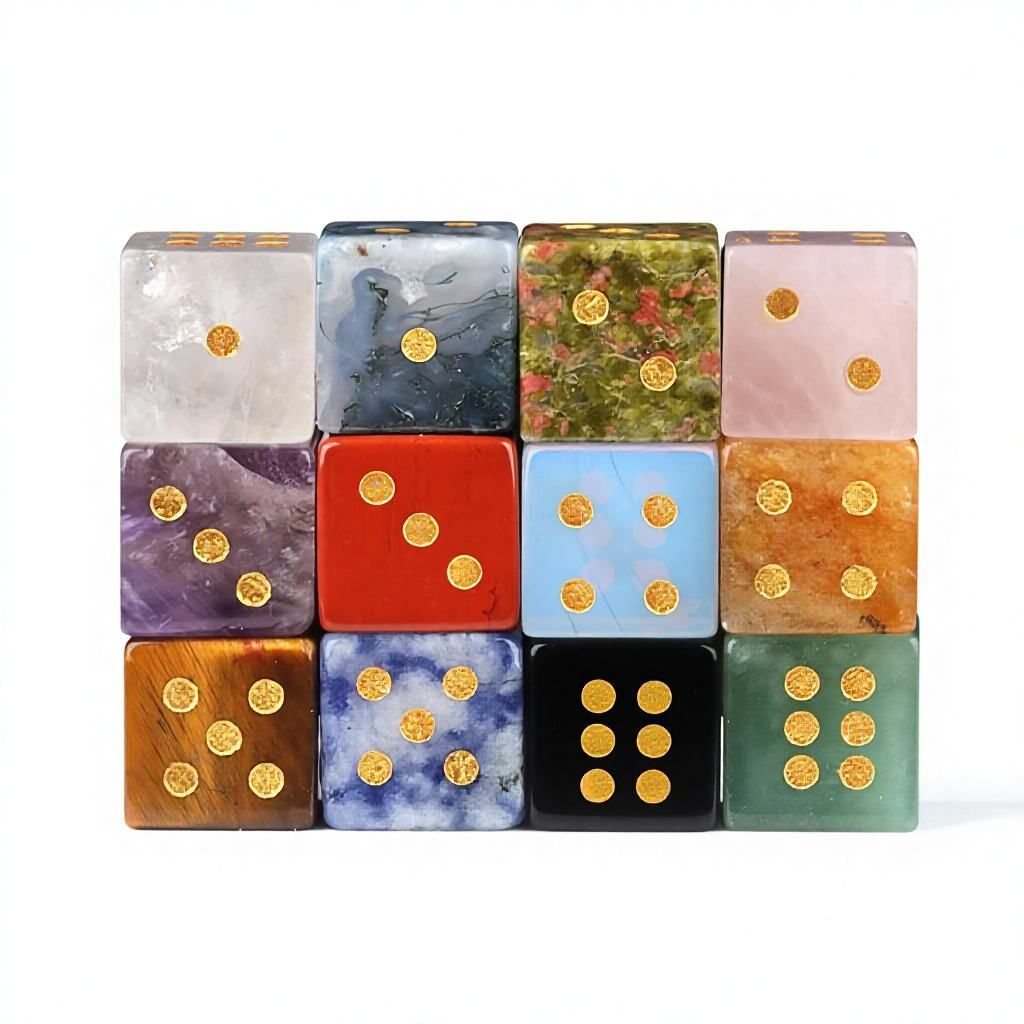
Mahjong in Chattanooga lives mostly in community centers, synagogues, libraries, and private home groups rather than dedicated halls. Finding your scene means asking at the Chattanooga Public Library system, checking community center bulletin boards, visiting local country clubs (many have games), or searching Meetup for "mahjong" or "mah jongg" groups in the 37402–37415 zips. Learning to host starts with one 160-tile American mahjong set, a mat to organize play, and the current year's National Mah Jongg League card—all available from specialists like Mahstead, which ships free across the US. Expect 3–4 hours for a casual game, house rules for scoring, and the ritual Charleston tile pass that begins every round. Cost varies by equipment; the learning curve is steeper than it looks, so connect with existing players first before hosting strangers.
Where do Chattanooga players actually gather?
Chattanooga has no dedicated mahjong parlor, but the city's strong tradition of civic clubs means games happen quietly in private homes and semi-public spaces. Start by calling the Chattanooga Public Library (downtown on Broad Street) and asking whether they host or post flyers for mahjong nights—many libraries across the US do. Next, ask staff at community centers like the Baylor School or Chattanooga Parks and Recreation about organized games or bulletin boards. Synagogues often host weekly games (Jewish cultural tradition runs deep in mahjong), so contact Temple Micah or other area congregations. Finally, check Meetup.com, Facebook groups (search "Chattanooga mahjong" or "Chattanooga mah jongg"), and Nextdoor for private groups. A single word of warning: never assume a game will welcome newcomers—ask first about house rules, stakes, and table dynamics before you show up.

What rules should a Chattanooga host establish upfront?
Every home game needs clarity on three points: the point system (American mahjong follows strict scoring rules from the NMJL card), whether you play standard four-player or house variants like 2–3 player, and penalties for errors (wrong discard, calling out of turn, exposing tiles incorrectly). Start simple: use the current-year NMJL card, play only standard four-player American mahjong, and agree that calling a discard wrong costs a tile penalty—the card itself will spell out point values. Write house rules on a notecard before your first game so no one guesses mid-hand. One cardinal rule: never mix American and Chinese mahjong at the same table, as hand patterns, tile counts, and calling rules are incompatible. Keep a phone camera ready to photo the winning hand before it scatters—disputes resolve fast when you have proof.
🀄 Shop best-selling mahjong sets →
What equipment makes a Chattanooga home game feel official?
A proper table setup signals to players that you take the game seriously and understand American mahjong. You need exactly 160 tiles (152 play tiles plus 8 spares), a mat that organizes the board into zones for each hand, racks with pushers to hold and play tiles neatly, two dice, and the current NMJL card (updated every spring). A mat prevents tiles sliding and keeps play orderly—especially crucial if your dining table wobbles or is crowded. Acrylic tiles with engraved characters are readable under lamp light and shuffle quietly, unlike bamboo. Include a quality carrying case or bag if you plan to host at different homes or bring sets to library events. Spend time learning what goes in an American set before your first game so you can answer questions confidently—players will ask "where's the soap?" (the white dragon), "how many jokers do we have?" and "why is this tile different?"
How do you teach newcomers without killing the vibe?
Teaching mid-game kills momentum; pre-teach the week before or 30 minutes early on game day. Cover five essentials: suit names (Bams, Craks, Dots), that jokers replace any tile you need but never sit alone or as a pair, that only pugs (3 identical), kongs (4 identical), quints (5), and sextets (6) can be shown—no sequences—how to read the card by section and pattern, and the Charleston tile-passing ritual. Pair each newcomer with an experienced player as their hand partner (optional but kind). Play the first game on "practice rules" where bad calls don't cost points. Hand out a simple one-page cheat sheet: "Your hand must match the card. You can only use tiles or jokers. Pung = 3 same. Kong = 4 same. Call 'Mah' when you win." Don't over-explain scoring—focus on winning the round first.
🎁 See our most-loved mahjong sets & accessories →
What's the host's role once play starts?
A good host referees lightly, keeps score clean, and lets players own their mistakes. Your jobs: shuffle tiles into the wall correctly (draw from the right end after the Charleston), make sure the current NMJL card is visible to all players, announce when someone has called out of turn or exposed tiles wrong, and settle disputes by checking the card and tile count (count twice). Keep snacks and water available but away from the table. Don't coach players on strategy—that's unsporting—but do remind new players of the basics between rounds. If a player is chronically slow, set a gentle timer (three minutes per turn). Stop play immediately if the tile count is wrong; never guess. One honest note: your first time hosting will feel chaotic. This is normal. The second game runs smoother. By the third, you're a veteran.

Beginner-Host Checklist: Chattanooga Edition
Setup Task | Why It Matters | How to Check |
Reserve 3–4 hours (not 2) | Shuffle, Charleston, 2–3 rounds, score entry | Set alarm before game; don't double-book |
Print current-year NMJL card (2026 spring edition) | Hand patterns change yearly; old cards = wrong wins | Order from NMJL or check your set's card packet |
Test your mat on the table in advance | Wobbling mat = scattered tiles = rage | Lay it flat, shuffle 20 tiles across it; re-seat if needed |
Verify tile count before inviting friends | Missing tiles = unplayable game | Count by suit: 36 Bams, 36 Craks, 36 Dots, 16 winds, 12 dragons, 8 flowers, 8 jokers |
Pick a scoring system and write it down | Confusion mid-game kills trust | Use NMJL card points; write down bonus/penalty rules on paper |
Test the racks and pushers in advance | Bent pushers or stuck tiles embarrass hosts | Dry-run a hand deal; pushers should slide smoothly |
Decide: house rules for errors (no call-backs? mis-discards?) | Players must agree before play, not after | Write 3–4 rules; read them aloud before round 1 |
What to check before you buy equipment
Tile quality: Acrylic tiles ring when shuffled; bamboo sounds duller. Both work, but acrylic reads faster under indoor light and is quieter on a mat. Check that characters are deeply engraved, not printed—printed tiles wear off in a season of weekly play.
Mat thickness & material: A felt-backed mat grips your table and muffles the sound. Thin mats slide; thick ones (¼ inch or more) stay put. Measure your table first; a mat that hangs off the edge is unsafe.
Racks and pushers: Test one before buying. Pushers that are too thin bend; too thick and they don't slide. Racks should hold 14 tiles easily without forcing tiles together.
Carrying case: If you'll host at multiple homes, a padded bag or hard case protects tiles from chipping. Soft bags invite spills; hard cases add weight but guarantee safety.
Card & rules: The NMJL card updates every spring; an old card is worse than useless. Always buy the current year.
Shop best-selling mahjong sets that include mats, racks, and the current card—all tested by players who host weekly.
Where to find Chattanooga-specific resources
Chattanooga's Riverwalk Community Center and James R. Vaughan Community Center (operated by Parks & Rec) sometimes host public games or let groups meet. The Chattanooga-Hamilton County Public Library's main branch posts community events; call 423-757-5317 to ask about mahjong. Synagogues including Temple Beth El and Temple Micah often maintain player lists or host seasonal tournaments—a quick phone call works wonders. Facebook groups for Chattanooga (general community, women's groups, and hobby pages) often have buried posts about games. Nextdoor, while imperfect, reaches neighbors who may already host in your zip code. Join one of these channels first; established players will invite you to games before you ever host.
Getting your first set: honest questions to ask yourself
Do I want to host weekly or just play monthly? If weekly, invest in a full setup with a mat and racks. If monthly, a basic set and the NMJL card suffice—use a folded towel instead of a mat the first few times.
Who will my players be—friends learning, established players, or a mix? Friends need teaching time and patience. Established players need a solid mat, real racks, and an up-to-date card or they'll judge your game. A mix means prep the space so it feels official, not casual.
Is my dining table sturdy and level? Warped tables make shuffling nightmarish. Test by laying a small ball on it—if it rolls, the table isn't level. A mat helps, but a bad table ruins the game.
Will I move the set between homes? If yes, a bag or case is essential, not optional. Tiles chip when tossed; a good case costs less than replacing tiles.
Do I know the rules well enough to teach? If not, spend two weeks learning the basics before hosting. Read the NMJL card sections. Watch one game at a library or club. Your credibility depends on clarity.
✨ Find your Mahstead set — free US shipping →
Equipment recommendations for Chattanooga hosts
Need | Best Type | Why It Works |
First set, casual home games | Complete, readable, quiet, durable for weekly play | |
Teaching newcomers | Set with an engraved title or joke design | Conversation starter; players remember a fun set |
Hosting at multiple homes | Same set + quality padded carrying bag | Tiles stay safe; you look professional |
Holiday or friend gift | Pre-packaged, comes with basics, no guessing | |
Upgrading from a worn set | Tiles are readable; fresher designs energize your group |

FAQ
Can I host mahjong in my apartment or just a house?
Yes. You need one steady table (36" × 36" minimum), four chairs, good light, and neighbors who won't mind quiet tile noise. Apartments work fine—mahjong is quieter than a dinner party.
Should I charge money to play?
That's between you and your players. Casual home games are usually free or "no-stakes." If money changes hands, decide the amount upfront (a point value converted to dollars) and write it down so no one claims surprise later.
What if someone accuses me of miscounting tiles mid-game?
Stop play immediately. Count the wall tiles, your hand, discard pile, and exposed melds aloud. If a tile is missing, abandon the round. If the count is correct, resume play. This is why counting in advance (before game day) saves drama.
How do I know if my mat is the right size?
A mat should cover the center 24"–28" of your table, leaving room for each player's hand and the discard pile at the edges. Measure your table and the mat's dimensions before buying; too small and tiles fall off; too large and it wraps over the edge unsafely.
Can I teach someone American mahjong in one hour?
Not well. Teach the names and basic rules in 30 minutes, then let them play practice rounds with a coach beside them. Learning the card, joker logic, and hand reading takes 3–4 games. Rush it and they'll feel lost and frustrated—better to prep them the week before.
What's the most common mistake new hosts make?
Not testing the set and mat in advance, then discovering mid-game that a pusher is bent or the tile count is wrong. Unbox everything a day early, shuffle the tiles, and play one practice hand with the racks and mat. This one-hour prep prevents chaos.


View More
View More
View More
