
Mahjong Open Play in the Woodlands: Find Games & Get Started
Last updated: Nov 23, 2026
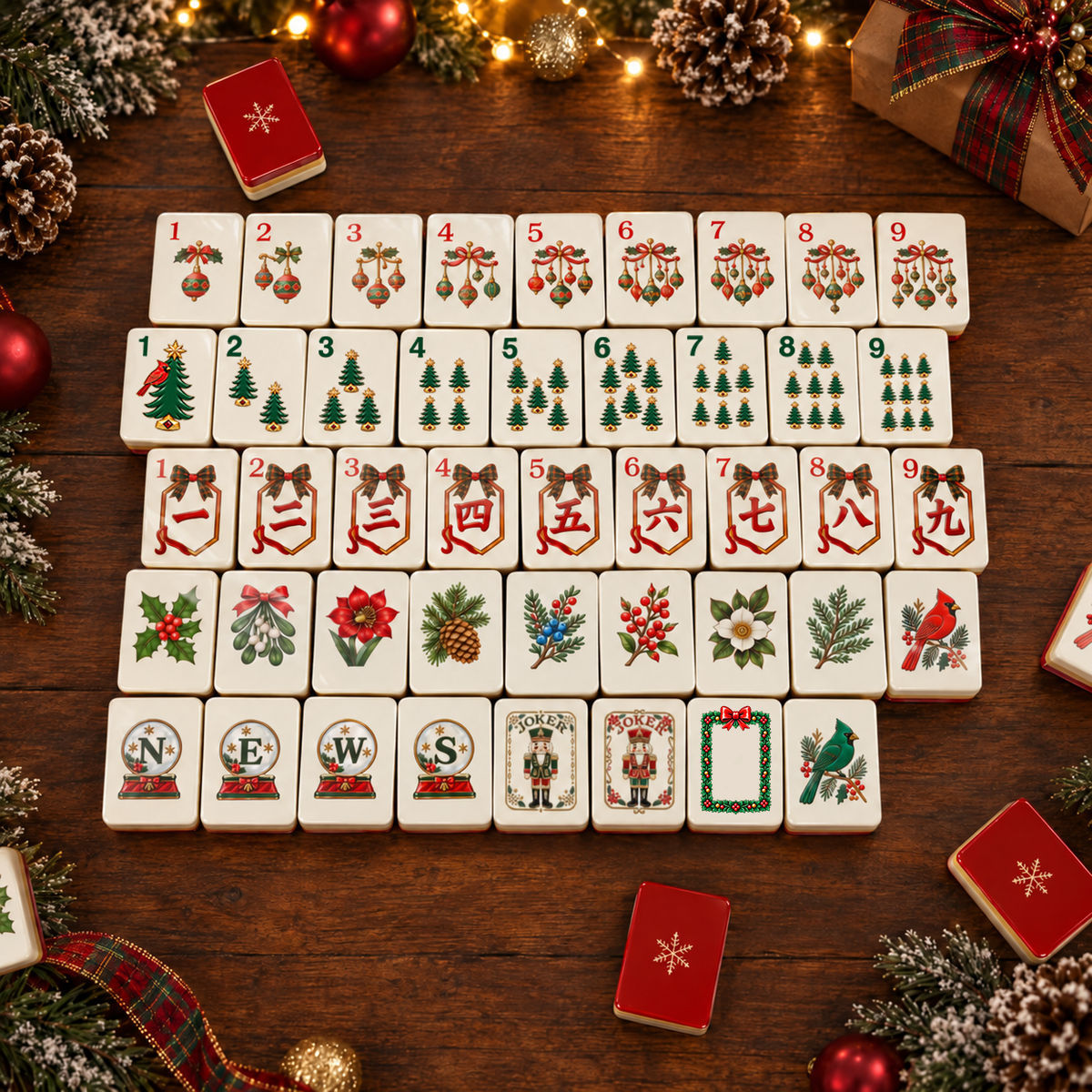
The Woodlands area has active mahjong communities centered around community centers, libraries, country clubs, and faith-based organizations. Games typically run weekly or twice weekly, usually in daytime or early evening sessions. Most open play welcomes beginners and experienced players equally—you'll find four-player American mahjong using the current year's National Mah Jongg League card. Start by calling local community centers and libraries directly, asking for "mahjong" or "mah-jong" rooms; check meetup boards and neighborhood Facebook groups. Bring or borrow a 160-tile set, and arrive 10–15 minutes early so players can run a Charleston (the tile-passing ritual that begins each hand). Most games charge a small table fee or play for nominal stakes; ask about house rules before your first hand. If you're brand-new to the rules, read the beginner's guide before you go—that 20-minute head start prevents awkward fumbles at the table.
🀄 Shop best-selling mahjong sets →
Where exactly do Woodlands players gather for open play?
Open play happens wherever four players and one set meet regularly. Community centers top the list—they rent rooms hourly and often host standing mahjong groups. Public libraries frequently host informal games; ask the reference desk or check event calendars. Country clubs and golf associations often have mahjong nights, usually open to members and their guests. Faith communities (especially synagogues and Buddhist temples) have strong mahjong traditions and welcome newcomers. Neighborhood Meetup boards, Facebook community groups, and Nextdoor often list game times and locations. Start by phoning or visiting the websites of three nearby community centers within a 10-minute drive; ask which rooms host mahjong and on what days. Don't email—call or visit in person, since schedulers often know the regulars by name and can tell you skill level and table fee upfront.

What's the actual time commitment for a typical session?
A standard open-play session runs two to four hours, with four to eight hands played per hour depending on pace and how much scoring debate happens. Most games meet once or twice weekly at a fixed time—say, Tuesdays 1–4 p.m. or Thursday evenings 7–10 p.m. New players should plan to arrive 15 minutes early for introductions and the Charleston; experienced groups sometimes skip chat and go straight to shuffling. A single hand takes 10–20 minutes for beginners (who read the card often and verify combinations carefully) and 8–12 minutes for seasoned players. Most casual games don't rush; if you need to leave after two hours, that's fine. Serious ranked or league play has stricter timings, but open recreational play is forgiving about pacing. Expect to lose money some weeks and win others—the swings are small in social games, typically a few dollars per session.
How do you know if you're ready to walk into a game?
You need to know four core things: hand identification (reading the National Mah Jongg League card), which tiles go where, how the Charleston works, and what jokers can and cannot do. You don't need to memorize scoring yet—players will tell you what each hand is worth when it wins. Spend one or two hours at home with a set, learning to set up a basic hand: three identical tiles (a pung), three in sequence (not allowed in American mahjong—only pungs, kongs, pairs, and quints), and a pair. Practice calling a Kong when someone discards a tile that completes your set of four. Watch a five-minute YouTube video of a full hand if reading feels abstract. Then go. Every table you join will have at least one player who remembers their first game and will help you if you stall. The biggest mistake new players make is not asking—good players want you there because empty seats don't earn anyone money.
Readiness Signal | What It Means | Go or Wait? |
You can read a hand from the card | You recognize pungs, kongs, pairs on the chart | Go |
You know what a Kong is and when to call it | You understand you discard one tile after adding a fourth tile to an exposed set | Go |
You understand a pair is two identical tiles | You know a pair cannot contain a joker in American mahjong | Go |
You've shuffled tiles and set up a hand once | You're not starting from zero at the table; you know the physical motion | Go |
You've never touched a set or read any rules | You'll spend 30 minutes of table time asking basic questions | Wait; use free resources first |
What does a beginner actually need to bring or own?
You need one 160-tile set—no more, no less. American mahjong always plays with exactly 152 tiles plus 8 jokers; a 160-tile set gives you the correct count plus spares. Bring the set in a bag or case if you're traveling between your home and the table; otherwise, leave it in the box. You also need the current year's National Mah Jongg League card—most players print it or buy a laminated copy. Some groups have a shared card at the table, but bring your own so you're never waiting to look something up. If you're new, don't buy anything fancy yet. A basic best-selling set with clear tile markings is all you need. As you play more, you might want a padded mat to protect tiles and reduce table noise, racks with pushers to organize your hand, or a nicer set as a gift to a friend or yourself. But on week one, one set is enough.
🎁 See our most-loved mahjong sets & accessories →

What house rules vary most between tables, and which matter for your first game?
Every open-play group has two or three unwritten rules that differ from the official rulebook. Some tables allow re-dealing if the game ends in a draw (no one goes out); others don't. Some tables penalize a player who wins with a single tile or a pair more heavily; others don't. Some groups play money only on winning hands; others use a complex point system. A few tables play with different joker rules or scoring tweaks for special hands. Ask the host or a regular player for five minutes before the first Charleston: "What's your rule if someone goes dead (draws a tile that kills their hand)?""Does everybody pay the winner, or do just the discarding player and the player to your right?""Do you use the League card, or house variations?" Write down the answers on your phone. By game three, you won't need to ask because the rules become automatic. The biggest mistake is assuming all American mahjong is the same—it's not, but every group will tell you their version clearly if you ask.
✨ Find your Mahstead set — free US shipping →
What to check before you buy your first set
Tile size and weight. American mahjong tiles come in two standard sizes: full-size (about 1.25 inches) and smaller minis (about 0.75 inches). Full-size tiles are easier to read and handle, especially for longer sessions. Check the product photos and dimensions.
Tile clarity. New players squint at tiles constantly. Make sure the Bams, Craks, and Dots are visually distinct, and that numerals are large and legible in person, not just in pictures.
Case or bag. If you'll transport your set, buy one with a carrying bag or case to avoid losing tiles. Many sets include a drawstring bag; some come with a hard case.
Joker count. A 160-tile set has the 152 tiles you play plus spares. You never need more than 8 jokers during a hand; the extras stay in reserve.
Spare tiles. The spare tiles (jokers or blanks beyond the 8 in play) protect you if a tile cracks at the table. You'll probably never use them, but they're there.
How do you handle mistakes or disputes at a beginner table?
If you call a Kong and the other players say you can't, don't argue—ask why. Probably you missed a house rule or misread your hand. If you think you've gone out but the card says the hand is illegal, the table is right. If you discard the wrong tile by accident and everyone notices before the next player draws, most casual games let you take it back—just ask. If you win a hand and someone questions whether it's legal, show them the card; if it matches the card, you won, and they pay. Never rage-quit or accuse someone of cheating on a social hand—mistakes happen, house rules vary, and tone matters more than being right. Most players assume good faith; match that tone. By game five, you'll know your table's culture and where the flexibility lives. New players are forgiven almost everything as long as they show up on time, keep their hand face-down until they call, and don't slow the table with long pauses.
How do you move from open play to joining a league or club if you want to?
After six to eight sessions, you'll know whether you want casual play for fun or competitive ranked play. The National Mah Jongg League is the official body for American mahjong tournaments and ranked play; their website lists affiliated clubs and tournament schedules. Leagues play by stricter rules (no house variations), use standardized scoring, and rotate seats fairly. Entry fees are higher than casual open play, but prize pools and ranking systems exist. Most leagues welcome new members and host beginner tournaments in spring. Your local community center or library may host a League-sanctioned club; ask when you scout for open play. Casual open play is perfect for life—many players never want organized league—but knowing the path means you can choose. The decision usually comes down to whether you play for social time or for competitive advancement; both are valid. Most thriving mahjong communities have both, so a person can flow between them as interest shifts season to season.

FAQ
How do I find the exact address and phone number of a mahjong open-play group near me?
Call your local community center and library directly and ask "Do you host mahjong?" Check Meetup.com and your neighborhood Facebook group for posts tagged "mahjong Woodlands." Ask friends who play—word of mouth is the fastest path. Some groups don't advertise online; in-person inquiry at a community center bulletin board often works best.
Do I have to pay to play open-play mahjong, or is it free?
Most open-play groups charge a small table fee (to reserve the room or split table rental) or play for nominal money (typically one to five dollars per hand). A few are completely free and run by volunteers at libraries or churches. Ask the host up front before you commit.
Can I borrow someone else's mahjong set for my first game, or do I need my own?
You can borrow for your first one or two sessions, but you'll want your own after that. A borrowed set gets shuffled fast at tables you don't control; you'll lose tiles or spend game time worrying. Buy a best-selling set once you're sure you'll play regularly.
What's the difference between American and other mahjong types played in the Woodlands area?
American mahjong uses a specific tile set (160 tiles total: 152 in play, 8 jokers) and only one official hand chart per year from the National Mah Jongg League. Chinese and Hong Kong mahjong have different tiles, hand combinations, and scoring. Riichi mahjong is Japanese and plays by entirely different rules. If you're new, start with American mahjong because that's what most Woodlands casual groups play; other variants require separate learning.
What do I do if I don't understand how to read the National Mah Jongg League card?
Before your first game, read our guide on how to read the mahjong card—it explains every column and hand type. Print or laminate the current year's card and bring it with you. Ask table players to show you a hand on the card the first time you're confused; they'll point to the chart and explain.
How many hands will I play in one session, and is there a time limit?
Most casual sessions run two to four hours and play four to eight hands per hour, so expect 8–32 hands depending on length and pace. There's no time limit in open play; you can leave whenever you want. Competitive league play has strict timing and rotation rules, but open play is flexible.
Should I own a mat and racks, or are they optional?
Optional for your first few months. Mats reduce noise and protect tiles; racks with pushers organize your hand and prevent accidental tile flips. Both make the game easier and more professional, but they're not necessary. Add them once you know you'll play regularly. --- ✨ Find your Mahstead set — free US shipping →


View More
View More
View More
