
Mahjong in the South: Why the Trend Is Taking Over
Last updated: Nov 23, 2026
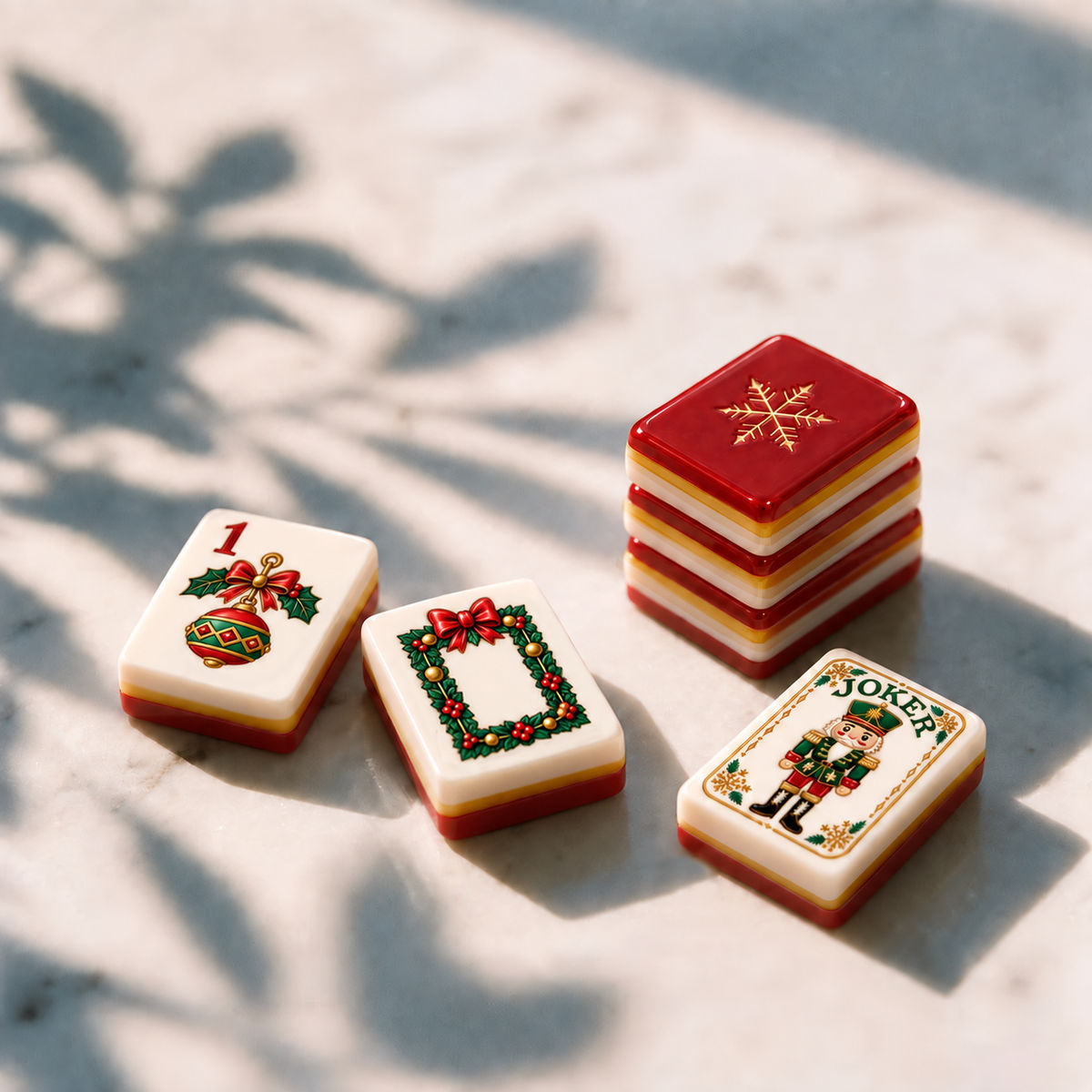
The Southern mahjong boom reflects a broader cultural shift: younger players and lifelong enthusiasts are seeking games that reward skill, build friendships, and offer genuine mental engagement. The trend spans Texas, North Carolina, Florida, Louisiana, and Georgia—cities with established Chinese communities, active synagogues, and retirement communities pioneering open play nights. American mahjong, played with 152 tiles and the current year's National Mah Jongg League card, requires no prior experience and fits perfectly into potluck dinners, book clubs, and casual game nights. A standard game takes 45 minutes to two hours. New players typically need four weeks of weekly play to internalize the hand patterns and scoring, yet can enjoy their first game within 30 minutes of instruction. The best-selling acrylic American mahjong sets from Mahstead serve Dallas-based players and ship free across the US, making it simple for Southern hosts to equip a proper game without local inventory constraints. 🀄 Shop best-selling mahjong sets →
Where Is Southern Mahjong Growing Fastest?
The South's mahjong explosion follows population and leisure patterns, not geography. Large metropolitan areas—Austin, Charlotte, Nashville, Atlanta, Houston, New Orleans—all report surging interest in community center classes and living-room games. Unlike the established Midwest networks, Southern players often discover mahjong through social media, book clubs, or a friend's recommendation rather than family tradition. The trend peaks in spring (when the National Mah Jongg League releases the new card) and summer (outdoor patios, vacations, weekend gatherings). Retirement communities and active-adult neighborhoods drive steady year-round play; younger professionals treat mahjong as an alternative to board games and trivia nights. To find a local group, check community center bulletin boards, library event calendars, synagogue and church social groups, and neighborhood Meetup or Facebook community pages.

What Makes American Mahjong Different from Other Variants?
American mahjong is the only variant played exclusively from a hand-selection card (the NMJL card, updated every spring). Unlike Chinese, Hong Kong, or Riichi mahjong—which allow chows (sequences like 1-2-3 in one suit)—American players may only form and expose pungs (three identical tiles), kongs (four identical tiles), and longer combinations like quints and sextets. Jokers are wild cards that substitute for any tile inside a pung, kong, or longer combo, but they never form a single tile or a pair. The game always uses exactly 152 tiles plus 8 jokers. No chows, no sequences, no single-tile jokers: this constraint simplifies learning while deepening strategy. The Charleston—a ritualized three-round tile-passing phase before play begins—adds a unique social and tactical layer that other variants lack. Understanding the Charleston is essential to American play and often differentiates experienced players from casual first-timers.
Why Is Mahjong Appealing to Southern Players Right Now?
Three factors converge: social connection, mental rigor, and accessibility. The pandemic normalized home game nights; mahjong filled that slot because it never went out of fashion in certain communities and appeals across age groups. Second, mahjong requires genuine attention and memory—reading the card, tracking tiles, calculating scoring—making it feel rewarding rather than luck-based (though luck plays a role). Third, the barrier to entry is lower than many assume: a single afternoon of instruction covers basic tile recognition, the hand-matching mechanic, and turn structure. A beginner can play competently within one or two games. Southern hospitality also plays a role—mahjong nights fold naturally into potlucks, holiday gatherings, and neighbor bonding. Finally, the game is portable: quality mahjong sets designed with acrylic tiles and travel bags mean a host can easily transport a full game to a friend's house or a community event, removing logistics friction.
🎁 See our most-loved mahjong sets & accessories →
What Equipment Do Southern Hosts Need to Start a Game?
A proper American mahjong setup requires only five items: a 152-tile set (8 jokers included), the current year's NMJL card, a mat for organizing tiles, racks with pushers to hold player hands, and seating for four. Most new hosts make one mistake: buying a set without checking that it contains exactly 152 tiles plus 8 jokers—miscount leads to mid-game frustration. A standard acrylic American mahjong set is durable, tile faces are legible across 3–4 feet, and the tiles don't wear through repeated handling. Engraved sets with custom titles or personal messages add character for a regular group but aren't necessary for casual play. The mat serves two purposes: defining the play space and preventing tiles from sliding on smooth tables. Racks with built-in pushers let players organize their hand quickly—amateur players often struggle with hand control in the first few weeks, and a good rack cuts that learning curve. A travel bag is optional but valuable if your group plays at multiple locations or you plan to host rotating games.
Equipment | Essential? | Why It Matters | Southern Use Case |
152-tile set with 8 jokers | Yes | Game integrity | Every game setup |
NMJL card (current year) | Yes | Hand validation | Without it, no legal hand |
Mat | Recommended | Tile organization & surface | Patio games, shared tables |
Racks with pushers (set of 4) | Recommended | Hand control | New players learn faster |
Travel bag | Optional | Portability | Multi-location game nights |
Dice (set of 2) | Recommended | Fair seating order | Drawing East seat |
How Do You Teach Mahjong to First-Time Southern Players?
Start with three rules: (1) all hands come from the card, (2) you build hands by collecting identical tiles or valid patterns, and (3) jokers substitute for missing tiles inside any pung, kong, or longer combo. Spend 10 minutes on tile names (Bams, Craks, Dots, Winds, Dragons, Flowers) and 5 minutes identifying suits by color and symbol. Then show the current card's layout and explain that each hand listed corresponds to a numeric value (points). The first game should be low-pressure: allow players to consult the card freely, call out tiles loudly so everyone hears the draw, and pause before each discard to explain the reasoning. Most groups adopt one house rule early on—often, beginners play the hand for free (no payment or scoring) in round one, then begin scoring in round two. A single session of two to three games plants enough familiarity that players want to return and practice. After four weekly games, most players internalize the card and play with confidence. Reading the card properly is the skill that separates early play from competent play; send new players a guide or watch a demonstration together before game night.
✨ Find your Mahstead set — free US shipping →
What Common Mistakes Do New Southern Hosts Make?
Tile count error: Buying a set advertised as "mahjong tiles" without verifying the exact count (152 tiles + 8 jokers for American play). Sets labeled differently by seller or region may have 144, 166, or other totals—a short or surplus causes disputes mid-game.
Skipping the card: A new host may assume players know hands or try to teach from memory. The card is the arbiter; every hand must exist on the current year's card or it is invalid. No house rules override the card.
Joker misuse: Beginners often assume a joker can stand in as a single tile or form a pair. In American mahjong, a joker only substitutes inside a pung, kong, quint, or sextet—never as a solo tile or in a pair.
No organized space: Hosting a game on a cluttered kitchen counter or small folding table creates chaos. A proper game needs 24–30 inches of clear table space per player plus a central wall. Southern patio games often fail if the table is too small; measure before you play.
Inconsistent scoring: New hosts may allow players to settle bets informally. Play one session with scoring disabled (free play) so everyone learns the hand patterns, then begin formal scoring in session two.

What Should You Check Before You Buy a Mahjong Set?
Checklist Item | Why | Red Flag |
Tile count = 152 + 8 jokers | Game legality | Fewer or more tiles unless "spare" |
Tile thickness & weight | Durability through repeated play | Thin tiles crack; light tiles shift |
Suit symbols clear at 3 feet | Legibility during play | Faded or tiny symbols cause disputes |
Racks & pushers included (optional) | Beginner-friendly | Missing racks slow play for new groups |
Carrying bag or case | Portability if hosting multiple locations | Loose tiles in a box invite loss & damage |
No blanks in the 152-count | Game validity | Blank tiles are spare only; they break the hand count |
Before your first game, count the set tile-by-tile: Bams 1–9 (four of each = 36), Craks 1–9 (36), Dots 1–9 (36), Winds N/E/W/S (four of each = 16), Dragons Red/Green/White (four of each = 12), Flowers 1–8 (8 tiles), Jokers (8). Total: 152. Any discrepancy halts play. If you host regularly, store the set in a bag or case to prevent tile loss—a missing single tile ruins a game.
How Does Southern Mahjong Culture Differ from Other Regions?
Southern mahjong tends to be younger and more diverse than traditional Midwest networks. New players often come from non-Asian backgrounds; the game is treated as intellectual recreation rather than cultural continuity. Smaller cities (populations 50,000–200,000) may lack formal clubs, so new-player momentum depends on one host or a small champion group. Southern players also favor casual, rotating-location games over fixed venues; this requires portable equipment and clear rules to ensure consistency across different tables. The season is less pronounced in warm climates—Florida and Texas play year-round, while cooler regions spike in spring and fall. Finally, Southern groups are more likely to embrace house-rule variations (free first round, optional scoring, flexible group size) to lower the barrier for newcomers. This openness accelerates adoption but also requires a "rules ambassador" at each table to keep games aligned. If you're starting a group in the South, make clarity your first priority: one consistent card, one tile set standard, and a written house-rule list that every new player receives on their first night.
What's the Best Way to Build a Regular Mahjong Group?
Start with four people you know well—friends, neighbors, or colleagues—and commit to a fixed schedule (e.g., every Tuesday at 7 p.m.). Invite one new person per session for the first month; growth too fast dilutes the learning environment. Create a simple group chat with the date, location, and any table updates. Before each game, confirm the NMJL card for the current year and agree on whether money will change hands (or not). Send new players a short video or one-pager on tile names and the basic turn structure—this cuts the first-night learning curve. After four weeks, many groups find a stable rhythm and natural size (often 6–8 regulars who rotate in and out). To expand beyond your circle, post a notice at local community centers, libraries, or neighborhood boards; word-of-mouth from satisfied players is your best recruiter. Some Southern hosts hold a "bring a friend" night once a month to introduce neighbors without formal membership.
How Do Jokers Actually Work in American Mahjong?
Jokers are wildcards with strict rules. A joker can only substitute for a missing tile inside a pung (3 tiles), kong (4 tiles), quint (5 tiles), or sextet (6 tiles). It cannot form a single tile by itself, cannot be part of a pair, and cannot substitute in a flower or wind combination unless that combo is part of a larger pung or kong. For example, if you need three 5 Dots but hold only two 5 Dots and one joker, the joker acts as the third 5 Dot (a valid pung). But if you hold one 5 Dot and one joker, that joker cannot stand as a "second 5 Dot"—you still need a real second tile to make a pair or begin a pung. New Southern players often ask, "Can I use a joker as my pair?" The answer is always no. Jokers also cannot be removed from a pung once placed; if you expose a pung with a joker substituting, that joker is locked in for the remainder of the game. This rule prevents players from "recycling" jokers mid-hand.
Where Can Southern Players Connect and Learn More?
Community centers across the South are now offering mahjong classes; check municipal recreation websites for your city. Libraries often host game nights or can connect you to local players. Synagogues and churches frequently organize mahjong groups as part of social programming—these are open to all, not members only. Retirement and active-adult communities almost always have mahjong available; if you live nearby or know residents, ask about open-play times. Online Meetup groups list mahjong players in most Southern metro areas; search "[your city] mahjong" to join existing groups. Social media: Facebook community pages and neighborhood Nextdoor posts often trigger mahjong conversations; starting a post about interest in learning can yield 5–10 local players within days. Vacation and retreat centers: Some Southern resorts now offer weekend mahjong clinics or open tables. For gear, Mahstead's best-selling acrylic sets are shipped free across the US, so hosting a game anywhere in the South requires no local supplier dependency.

FAQ
Do I need prior experience to play American mahjong?
No. A first-time player can learn the basics in 30 minutes and enjoy a full game. Most players feel competent after three to four sessions of weekly play.
Can I play mahjong with fewer than four people?
Standard American mahjong is designed for exactly four players. Two- and three-player variants exist but require modified rules and a different tile count; start with four-player games to learn the core game.
What does the NMJL card do?
The NMJL (National Mah Jongg League) card lists every legal hand for that year, organized by point value and pattern type. Without it, no hand can be validated as "winning." A new card is issued every spring.
How long does one game take?
A typical four-player game takes 45 minutes to two hours, depending on player experience and table size. Experienced players often finish in 45 minutes; groups learning together may take over two hours.
Are Southern mahjong groups usually free to join, or is there a cost?
Most casual groups are free; money may change hands in friendly bets, but no entry fee is required. Ask the host before joining. Formal clubs or classes may charge per session—check ahead.
What is the minimum equipment I need to start playing?
A 152-tile set (with 8 jokers), the current year's NMJL card, a table, and four seats. A mat and racks are recommended but not essential.
How do I know which set to buy?
Check that the count is exactly 152 tiles plus 8 jokers, tiles are thick and readable at a distance, and the set includes a carrying bag if you plan to move it. Mahstead's best-selling acrylic sets meet all these standards and ship free across the US.
Can I use a mahjong set I found online that says "166 tiles"?
A 166-tile set has extra tiles (spares). Only 152 tiles plus 8 jokers are used in any game; the extras sit out. If a set contains exactly 152 playing tiles plus 8 jokers, the total count is correct.
What is the Charleston and why is it important?
The Charleston is the tile-passing ritual before each hand begins. Each player passes three tiles to another player in a sequence. It is unique to American mahjong and significantly affects strategy and hand-building odds.


View More
View More
View More
