
Mahjong for Seniors: Why It Works & How to Start
Last updated: Nov 23, 2026
Mahjong for seniors works because it exercises memory, pattern recognition, and decision-making without requiring speed or physical strain. American mahjong, the most common variant played in the US, uses 152 tiles plus jokers and is played with exactly four people. A standard game lasts 30–90 minutes depending on pace and experience. Players draw tiles, form sets (groups of identical or sequenced numbers), and race to complete a hand that matches one of hundreds of patterns printed on the current year's National Mah Jongg League card. Many seniors play weekly in community centers, libraries, synagogues, and clubs; groups range from casual kitchen games to organized leagues. The learning curve is gentle—most new players grasp the basics in two or three sessions—and the social and cognitive benefits are well-documented. Our best-selling mahjong sets include everything needed to start: tiles, a wind indicator, dice, and jokers, all packed together so no setup is required.
Why is mahjong so popular with seniors?
Mahjong appeals to older adults because it exercises the brain without requiring fast reflexes or physical exertion. Each hand requires pattern matching, probability assessment, and memory—skills that keep the mind engaged and sharp. Unlike games that depend on luck alone, mahjong rewards strategy and observation, so experienced players consistently outperform beginners. The social element is equally crucial: a weekly mahjong game becomes a standing commitment, a reason to dress up, visit a friend's home, or attend a club gathering. Seniors often say the game itself matters less than the conversation, the laughter, and the continuity it brings to their week. Studies on cognitive aging suggest that games combining memory and social interaction may help maintain mental flexibility, though the primary appeal for most players is simply the joy of playing.
🀄 Shop best-selling mahjong sets →

What makes American mahjong easier for seniors to learn?
American mahjong has a lower barrier to entry than other variants because the rules are standardized and printed on a card you hold in your hand during play. Unlike Chinese or Hong Kong mahjong, where you memorize dozens of hand patterns, American mahjong gives you the National Mah Jongg League card every spring—you simply read it to know which combinations win. The game also uses jokers that can substitute for any tile except pairs, which gives beginners flexibility and reduces frustration when tiles don't fall as expected. Four players means everyone sits, watches continuously, and can follow the action clearly. The Charleston—the tile-passing ritual before each game—adds a social ritual that makes the setup itself a game. For seniors with arthritis or limited dexterity, many use racks with pushers, which hold tiles upright and make it easier to manage a full hand without hand strain. The predictability and accessibility of American mahjong make it the natural choice for groups of older adult players.
How do you set up for comfortable play at home or in a group?
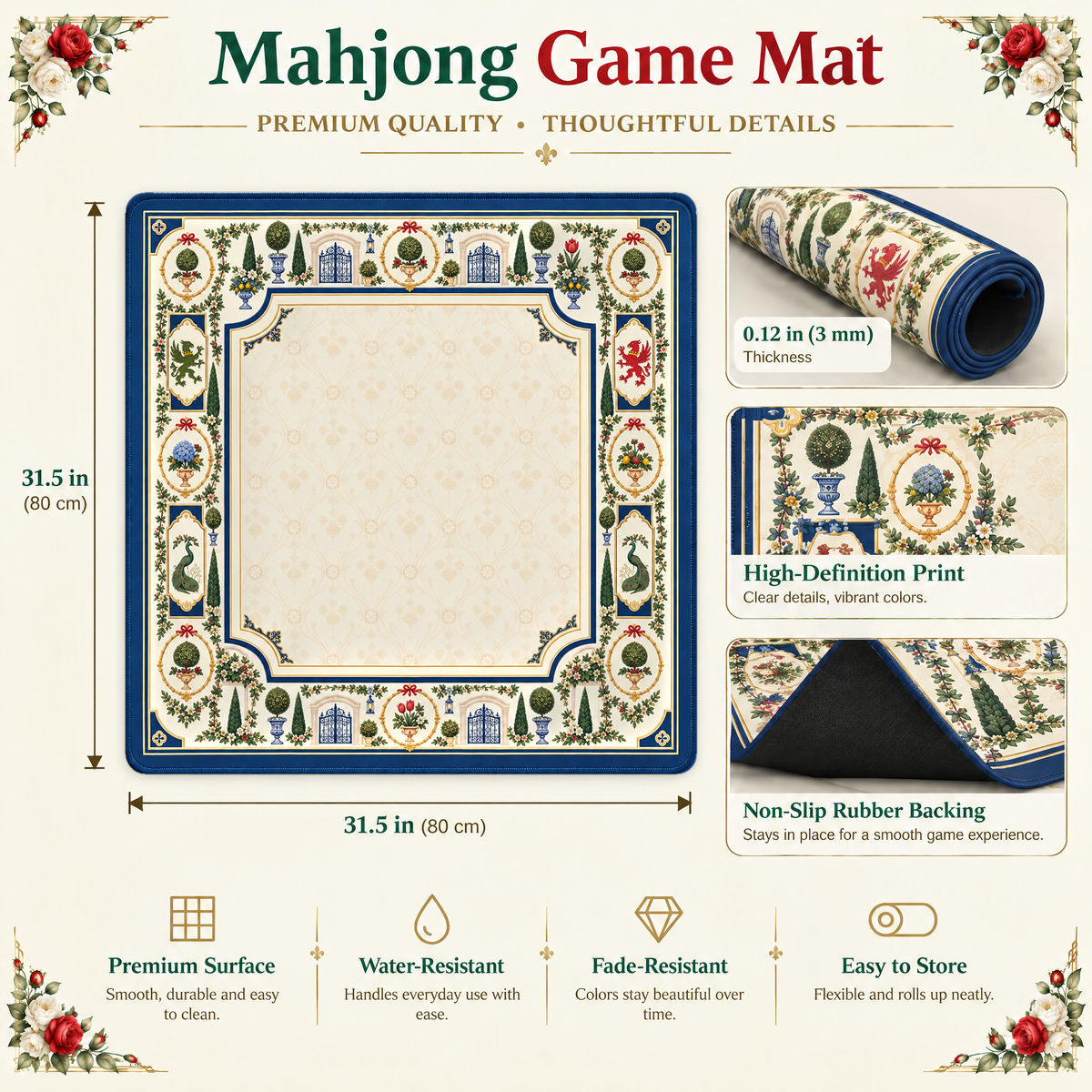
Comfort starts with the right table and mat. A mahjong mat provides a non-slip surface so tiles don't slide, marks the four positions clearly, and makes setup instant—no fumbling with towels or makeshift layouts. Tile racks with pushers are essential for seniors: they keep your hand upright and organized, reduce hand fatigue, and make it easier to see all your tiles at once without having to fan them. Good lighting is critical; many groups play with a lamp positioned overhead or to the side to eliminate shadows on the tiles. Consider the height of your playing surface: if you're using a dining table, add cushions to the chairs so elbows rest comfortably at table height. If you're meeting regularly, a dedicated travel bag or case keeps your set organized and makes transport to a friend's house or club painless. A set with engraved or colorful tiles is easier on aging eyes; our acrylic tiles in bold colors reduce eye strain compared to traditional bone and bamboo sets. Set the dice and wind indicator where everyone can see them. Most important: take breaks between games—mahjong demands concentration, and a 10-minute stretch keeps everyone comfortable during a longer session.

What if someone has never played before—where do they start?
The first step is finding a teacher or a friendly group willing to start someone new at a game. Ask at your local community center, library, synagogue, country club, or senior center—most areas have at least one weekly mahjong group, and groups often welcome newcomers. Bring or have the host provide a printed copy of the National Mah Jongg League card and a set of tiles; your hosts will explain the card format and show you a few winning hands. Play one hand while the others explain as you go—don't worry about winning. Watch how experienced players build sets, discard strategically, and track what tiles are in play. Most new players need two or three games before the patterns stick, and five or six sessions before they feel confident enough to play solo without constant reminders. Use an acrylic set with large, bright tiles—they're easier to read than bone and bamboo, especially under typical home or club lighting. Our best-selling sets are specifically designed for readability and durability, so tiles hold their color and clarity after hundreds of games. Ask your group if they have a house rule; American mahjong is highly standardized, but some groups modify scoring or allow certain exchanges during the Charleston. Once you understand the basic flow—draw a tile, make sets of three or four matching tiles, discard—you're ready to play.
How can you stay sharp and make the game more enjoyable long-term?
The mental edge sharpens with consistent play: the more games you attend, the faster you recognize patterns and read the card. Keep notes on your favorite winning hands and why they won—this trains pattern memory. Rotate who keeps score and who watches the wind indicator; switching roles keeps your brain engaged in different ways. Challenge yourself to remember which tiles have been discarded in the first few rounds, so you can predict what opponents need. If you play the same group weekly, vary your strategy: one week focus on early sets, another week on late-game flexibility. Play with friends who encourage you and who don't rush—mahjong is meant to be enjoyed, not stressed. Many seniors find that switching between American mahjong and reading a beginner guide deepens their understanding. Join a local league or tournament if you want to test your skills against new opponents—most offer beginner divisions with gentle, supportive atmospheres. Most importantly, stay consistent: a weekly game beats sporadic play for both memory and joy.
🎁 See our most-loved mahjong sets & accessories →
What to check before you buy a mahjong set as a senior player
Feature | Why it matters for seniors | What to look for |
Tile size & color | Larger tiles and bold colors reduce eye strain and make reading easier | Acrylic tiles 1.25"–1.5" in bright solid colors, not pale or faded |
Tile weight | Heavier tiles feel substantial and slide smoothly; too light and they're hard to manage | Acrylic or bone tiles 15–20g each; avoid very light plastic |
Racks with pushers | Essential for hand comfort and reducing fatigue during long games | Bamboo or wood racks with smooth pushers; height adjustable if possible |
Mat quality | Prevents tiles sliding and marks player positions clearly | Non-slip rubber backing, clearly marked four positions, at least 36" × 36" |
Carrying case | Makes transport painless for weekly games at different venues | Soft bag with handles or hard case, fits full set plus racks and mats |
Card holder | Keeps the National Mah Jongg League card visible without hand strain | Fold-out plastic stand or slot-in rack at eye level |
Setup time | Faster setup means more time playing and less time managing logistics | Pre-sorted sets with organized storage compartments inside |
Choose a 160-tile acrylic set designed for readability—all tiles are identical size and weight, making them predictable and pleasant to handle. Our sets include racks, a mat, and storage, so everything is ready for your first game. If you play in a group that shares a set, confirm before buying that your set matches the house standard; American mahjong is standardized, so any legitimate set will work with any other, but familiarity with the same set week to week matters for muscle memory and comfort.
✨ Find your Mahstead set — free US shipping →

FAQ
Is mahjong hard to learn if I've never played a card game before?
No. American mahjong is easier than bridge or poker because you don't memorize rules—you read the card and follow the printed patterns. Most seniors grasp the basics in two or three games. The first game feels overwhelming; by game five, you'll play confidently.
What's the difference between American mahjong and other types I've heard about?
American mahjong uses a printed card with hundreds of hand patterns, played with four people, and includes jokers as wild tiles. Chinese, Hong Kong, and other variants have different rules, hand patterns, and sometimes only three players. American is the easiest to learn and most common in US senior groups.
Do I need my own set or can I play at a group?
Both work. Many groups have a shared set, and newcomers just show up. If you play weekly, owning your own set makes it easy to host a game at home and transport to different venues. Our sets fit in a travel bag with handles.
How long does a typical game last?
A casual game with experienced players takes 30–45 minutes per hand, with breaks between. Complete games (three or four hands) run 90 minutes to two hours. Slower groups or beginners might take longer on the first hand.
What if my eyesight isn't great—can I still play?
Absolutely. Acrylic tiles in bold colors are much easier to read than bone and bamboo. Ask about sets with large print on the card, sit under good lighting, and use a rack so you don't have to hold and fan tiles. Most groups accommodate vision needs.
Are there mahjong groups specifically for seniors, or do I join mixed-age games?
Both exist. Some groups are entirely seniors (especially those at senior centers or synagogues), while others are mixed-age. Ask at your local community center or library to find groups in your area—nearly every community has at least one weekly game.


View More
View More
View More
