
Mahjong for Rummikub Players: Rules & Best Sets to Switch
Last updated: Nov 23, 2026
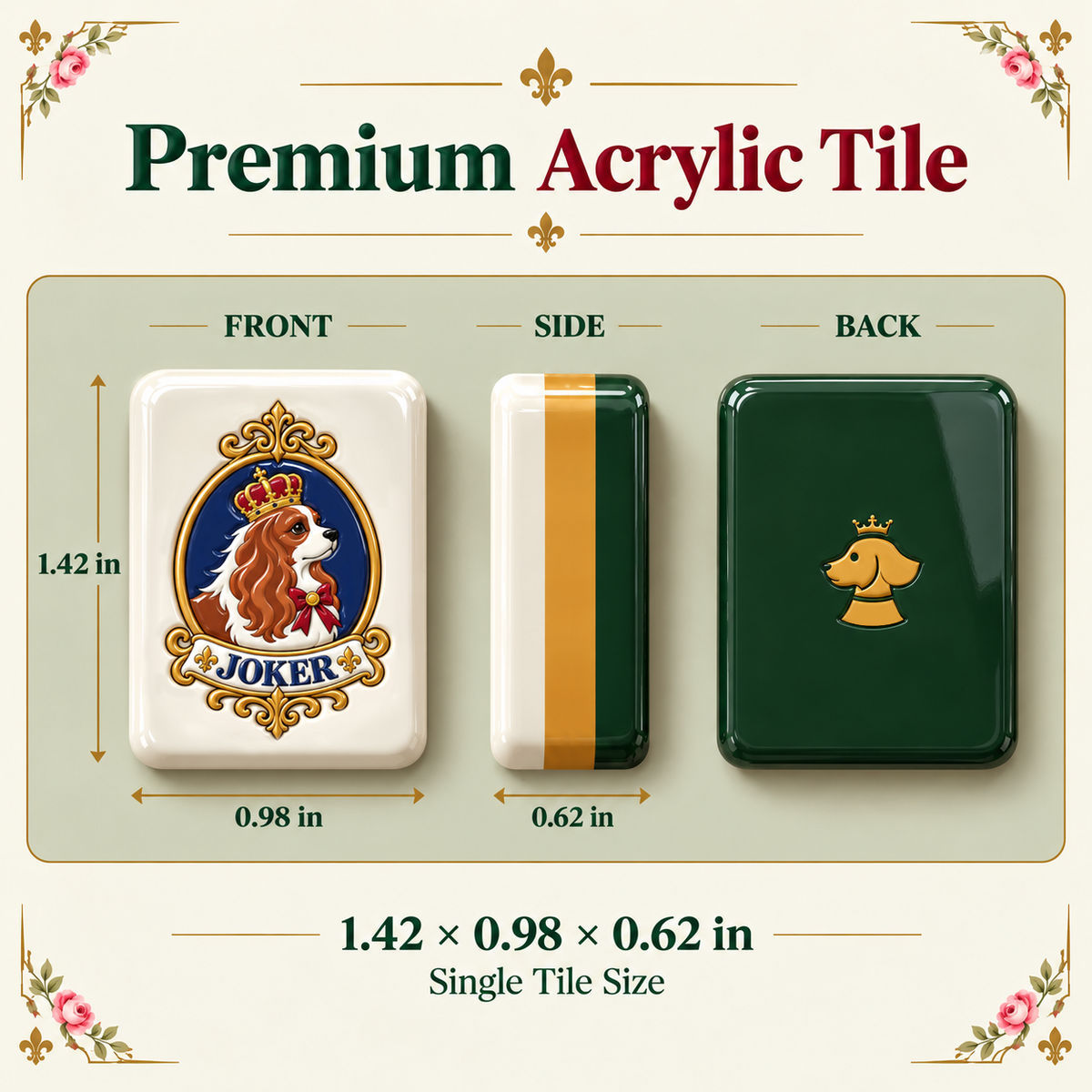
Mahjong and Rummikub share the tile-melding DNA, but American mahjong is a fixed-hand game played with 152 tiles and 8 jokers, where every legal hand comes from a single annual card published each spring—not sequences you create freely. Rummikub rewards improvisation; mahjong rewards pattern memory and the luck of the Charleston (the tile-passing ritual before play). Both have pungs (sets of identical pieces), but mahjong pungs are always three identical tiles—never 1-2-3 sequencing on the face. The game plays with four players in roughly 30–50 minutes per hand and costs anywhere from mid-range to high-end depending on the set's material and design. Mahstead offers hand-tuned acrylic sets designed for American play, with engraved tiles and free shipping. If you love Rummikub's social rhythm and pattern-hunting, mahjong will feel familiar enough to pick up in one evening, different enough to keep you thinking for years.
If you're a Rummikub regular eying mahjong at a friend's table or online, you're already halfway there. Both games live in the warm zone where tiles, skill, and luck collide. But mahjong isn't "Rummikub on a closed board." Understanding the real differences—before you buy your first set—will save you frustration and help you fall in love with the game faster.
What Skills from Rummikub Actually Transfer?
Pattern recognition is your superpower in both games. If you're the kind of Rummikub player who sees a run forming three tiles ahead, you'll thrive in mahjong. You already know how to spot melds, count what's left in play, and remember what's been discarded. You understand the psychology of holding tiles your opponents want. That muscle memory carries over one-to-one. The difference: in mahjong you're not creating melds; you're matching against a static card. Think of it as pattern matching on a smaller, fiercer canvas. Your speed and memory advantage will feel real in your first few games.

Where Rummikub Strategy Breaks Down in Mahjong
Rummikub's core genius is flexibility: you can rearrange, borrow, steal, and build sequences however you like. Mahjong has none of that. A pung (three identical tiles) is always three identical tiles—never 3-4-5 of the same suit. A kong (four identical) is four of the same. There are no chows (sequences like 1-2-3) that you can expose to the table; in American mahjong, sequences are interior to your hand only. This rigid structure means the game feels slower at first but sharper in hindsight—every decision has weight because you cannot undo it. If you've been playing Rummikub for years, expect the first 2–3 hands of mahjong to feel claustrophobic. By hand five, you'll see why the constraint is the whole appeal.
The Role of Chance: The Charleston vs. the Draw Pile
Rummikub starts with a random draw. Mahjong begins with the Charleston: four players pass tiles left, right, and across the table before a single tile is drawn. This ritual—choreographed, social, mischievous—is where mahjong's luck lives. Unlike Rummikub's passive draw, the Charleston lets you negotiate your starting position. It's a mini-game. You're not hoping for good tiles; you're trading bad ones. Players new to mahjong often underestimate the Charleston's impact. It can turn a weak start into a playable hand, or torpedo a strong opener if you're not careful. If you love Rummikub's "reading the table" element, you'll love the Charleston's psychology. Learn how it works before your first hand at the table—the Charleston explained walks you through it step-by-step.
The Hand Card: Mahjong's Constraint and Why It Matters
Every legal winning hand in American mahjong must appear on the current-year National Mah Jongg League card. That's roughly 3,000 hands across every combination of pungs, kongs, quints, and sextets. Rummikub is infinite; mahjong is bounded. At first this feels like a ceiling. In reality, it's a floor: it guarantees that every hand on the table is auditable, memorable, and fair. You can't argue about whether a hand is valid; the card settles it. Memorizing 20–30 hands in your personal style (the ones that match your play pattern) gives you an unfair advantage. Rummikub doesn't reward that kind of study. Mahjong does. If you're the type who loves mastering a rulebook, this is your game.
Decision Frame: Should You Make the Jump?
Trait | Rummikub | Mahjong | Choose Mahjong If |
Hand building | Infinite combos, rearrangeable | Fixed card, immutable once exposed | You love constraint and puzzle-solving |
Luck component | Draw pile only | Charleston + draws + card scarcity | You enjoy negotiation and trade |
Memory load | Low (current state + recent plays) | Medium (hands, the card, prior discards) | You enjoy pattern memorization |
Play time per hand | 20–40 min | 30–50 min | Similar; mahjong slightly longer |
Social rhythm | Turn-based, medium pace | Turn-based, strategic pauses | They feel nearly identical |
Learning curve | 1–2 games | 2–4 games; card reading adds depth | Quick, but card learning is lifelong |
If you see yourself in the "Choose Mahjong" column, you're ready.

What You'll Need to Get Started
Your first investment is a best-selling American mahjong set—acrylic is standard, engraved sets make tiles easy to read after years of play, and 160-tile sets include the full 152 playing tiles plus extras. A mat keeps tiles in place and quiet (good manners at the table), and racks with pushers spare your hands from carpal strain during a long evening. A bag or case protects your set if you're hosting weekly games and carrying between homes. None of this is mandatory for a first game—borrow a set from a friend—but if you're going to play more than three times, owning your own set pays for itself in confidence and speed.
🀄 Shop best-selling mahjong sets →
Reading the Card: The Biggest Rummikub-to-Mahjong Gap
Rummikub players often stumble on the mahjong card because it uses shorthand. The card lists hands in sections—like "2024 Like Numbers" or "Consecutive Pungs"—with symbolic notation. Learning to read it takes 10–15 minutes per card. The payoff is enormous: once you can read the card, every hand is auditable and every winning combination is visible. This is where mahjong's promise of fairness lives. No surprises, no "I think that's valid." The card is the law. How to read the mahjong card gives you the decoder ring; 3–4 hands at the table and you'll stop thinking about the card's logic and start thinking about your tiles instead.
The Joker Paradox: Why Mahjong Jokers Are Different
Rummikub lets you use wildcards almost anywhere. Mahjong jokers are stricter: they substitute for a single tile inside a pung, kong, quint, or sextet—but never as a standalone tile or a pair. This constraint means jokers are simultaneously more valuable (because they unlock hands) and more fragile (because misusing one breaks the hand). Rummikub players often overbid on hands with jokers; mahjong demands more precision. How jokers work in American mahjong covers the mechanics in detail, but the core rule is simple: a joker is a tile-inside-a-meld, not a tile-by-itself.
What to Check Before You Buy Your Set
Tile size and weight: Acrylic tiles should feel substantial (not hollow), roughly the size of a large postage stamp. Engraved text should be legible without glasses from two feet away.
Joker count: A 160-tile set includes all 152 playing tiles plus spares. Make sure the listing confirms "160 tiles"—older sets sometimes sold with fewer.
Storage: If you're hosting weekly games, check that the set ships in a bag or box you can reuse. Mahstead includes practical storage with most sets.
Customization: If you love personalization (a theme, initials, a joke), engraved American mahjong sets let you carve your identity into the game.
🎁 See our most-loved mahjong sets & accessories →
From Rummikub Night to Mahjong Night: The Transition
Your first mahjong evening should feel like a friend invited you to a Rummikub variant—because that's what it is. Invite the same people. Play one hand for free (no points), so everyone can ask questions. Have the current year's card printed or displayed. Let someone explain the hand-building logic once; the card will make sense after you see one winning hand explained. By hand two, you'll stop comparing it to Rummikub and start playing mahjong on its own terms. Most Rummikub players report that mahjong clicks by game three or four. The bones are similar enough that your instinct helps; the flesh is different enough that you stay engaged. If you want guidance on hosting mahjong for beginners, that covers everything from explaining the Charleston to scoring your first games.
✨ Find your Mahstead set — free US shipping →

FAQ
Can I use my Rummikub tiles to play mahjong?
No. Rummikub uses different symbols and a different tile count (106 tiles vs. 152 in American mahjong). You need a mahjong set.
Is mahjong harder than Rummikub?
Not harder—different. Mahjong has more memory (the card, hand patterns) but less improvisation. Most Rummikub players find mahjong faster to learn but deeper to master.
How long does a mahjong game take?
One hand is 30–50 minutes on average. A "game" is typically 4 hands (one per wind position), taking 2–3 hours. Rummikub hands are similar in pace.
Do I need to memorize the card before I play?
No. Start with a printed or displayed card at the table. Memorizing hands takes months of weekly play. The card is your reference tool, not a barrier to entry.
What's the Charleston and why does it matter?
The Charleston is the tile-passing ritual before play—players exchange tiles left, right, and across the table. It's where you negotiate your starting luck. It's unique to mahjong and makes the opening social and strategic.
Can I play mahjong with fewer than four players?
Yes, but the rules change. 2 and 3 player mahjong rules are playable but less common. Four players is the standard and most rewarding format.


View More
View More
View More
