
How Much Money Do You Need for Mahjong
Last updated: Nov 23, 2026
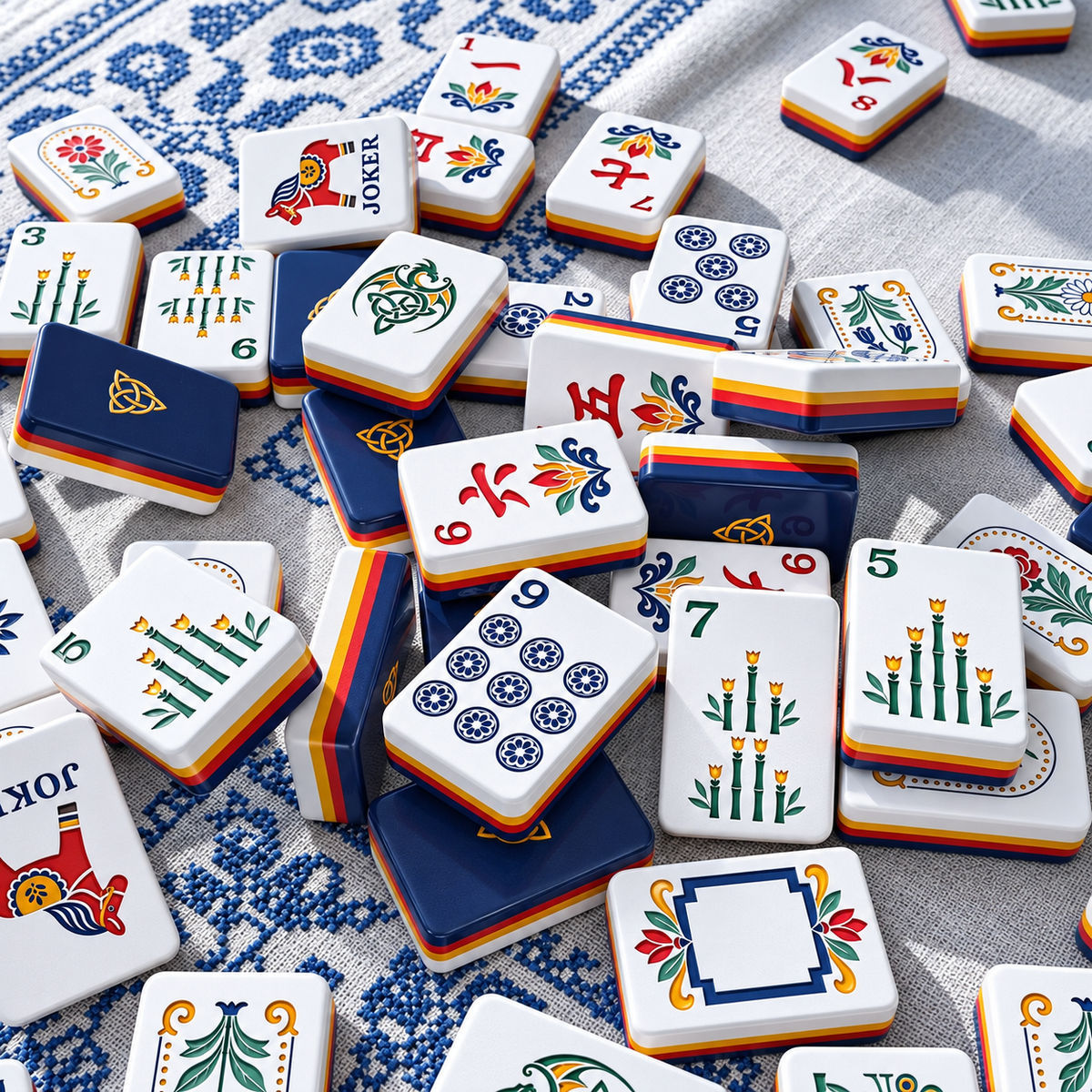
To play American mahjong, you need a 152-tile set with eight jokers (or a 160-tile set with spares), a current year's National Mah Jongg League card, and a flat surface—that's the minimum. Most players also add a rack with pushers to organize tiles and a mat to protect the playing surface and define the game space. A quality acrylic set from our best-selling mahjong sets costs reasonable money (see current price on the product page), a mat ranges by size and material, racks vary by personal preference, and the annual card is typically inexpensive. Starting costs depend on whether you buy separately or as a bundled package, and ongoing expenses are minimal—just the new card each spring. We recommend buying once from a trusted maker rather than replacing cheap sets frequently.
You don't need to spend a fortune to play mahjong. Here's the honest breakdown of what matters most and where to invest wisely.
What is the absolute minimum to play one game?
You need a 152-tile American mahjong set with eight jokers, the current National Mah Jongg League card, and a table or floor. That's it. No mat, no rack, no case—just tiles, card, and a surface. Many players start this way: a friend brings her set, you gather around a kitchen table, and someone prints the current year's card. The card changes every spring, so check the league website for the newest version before you play.
🀄 Shop best-selling mahjong sets →

What does a basic home setup cost?
A starter setup includes a set (160-tile acrylic, ready to play), the current card, and a mat—the three things that make the experience smoother. Acrylic sets hold value and last decades with care; price varies by design and customization. The mat protects your table and lets players see tiles clearly. A simple, durable mat costs far less than a set. You can add racks with pushers later once you know your comfort level—many players organize tiles by hand for months or years before upgrading. Total for set, card, and basic mat: budget modestly, see current prices on each product page.
Does everyone need a personal set?
Not necessarily. One set serves four players for a full game; two sets let you host back-to-back rounds or teach two tables at once. Some groups share one household set, rotating who hosts. If you host weekly, owning your own set ensures consistency (same tiles, same feel, your rules). If you play once a month at a friend's house, you may never need to buy. Owning a second set makes sense only when you host regularly or travel to tournaments. New players often borrow before committing—a sign of a welcoming group.
What features add real value, and which are nice-to-have?
The table below breaks down mahjong accessories and when each matters:
Feature | Who it's for | Why it works | Can you skip it? |
Acrylic tiles (engraved) | Anyone serious | Lasts 20+ years; easy to read | No—tiles are the game |
Rack with pushers | Regular players | Organizes hand; protects back; saves wrist strain | Yes, for casual play |
Mat (cloth, rubber, or bamboo) | Hosts or tournament players | Protects table; defines play space; reduces sound | Can use a towel |
Travel bag or hard case | Players who move sets | Protects tiles in transit | Only if you travel |
Extra jokers (in a 160-tile set) | Beginners | Replaces lost jokers; keeps spares | Yes, but useful |
Engraved or personalized design | Gifts or collectors | Unique; commemorates a group | No—gameplay unchanged |
The core is always the set and card. Everything else depends on how often you play and whether you value convenience.
How does bulk-buying or grouping lower the per-person cost?
When four players each buy their own set, each person pays the full cost. When one person hosts and owns the set, they bear the cost alone but can spread it over years of games. Some groups pool money to buy a shared house set or donate sets to a community center. If you organize regular games at a synagogue, library, or community center, ask whether the venue owns a set already—many do. Sponsorship or donation programs sometimes exist: check local Jewish community organizations, senior centers, or recreation departments. Splitting the cost of one premium mahjong mat among four players is far cheaper than each buying their own for home use.

What hidden costs should I watch for?
The annual card is the only true recurring cost (buy a new one each spring). Everything else is one-time or optional. Avoid these traps: (1) buying multiple cheap sets thinking you'll upgrade—you'll end up with clutter; (2) replacing tiles after normal wear when a full set replacement is unnecessary; (3) assuming engraved or personalized sets cost dramatically more than plain acrylic ones (they often don't). Tiles don't wear out; bamboo mats may fray after five years of weekly play, but a mat is a table-care choice, not a game requirement. The only reason to buy a second set is to host two simultaneous games or for backup at tournaments—not for home play.
Should you invest in storage and travel gear upfront?
No. Buy the set and mat first; live with them for a season. After six months of weekly games, you'll know whether you need racks with pushers or a travel bag. If your wrists hurt or your tiles slide around, racks are worth it. If you always play at home, a case is unnecessary—store your set in a box. If you travel monthly to tournaments or a friend's house, a padded bag protects your investment. Buying everything at once wastes money on gear you won't use.
🎁 See our most-loved mahjong sets & accessories →
Real-world spending: three player profiles
Profile 1: The Social Guest Plays monthly at friends' houses. Buys nothing. Learns from others' cards and sets. Invests: zero.
Profile 2: The Weekly Host Hosts one game every Thursday. Owns one 160-tile acrylic set, a mat, a rack with pushers, and always prints the current card. Sets up elegantly; players stay comfortable for 3–4 hours. Invests once, then buys the card annually.
Profile 3: The Tournament or Group Leader Hosts multiple games, teaches beginners, attends tournaments. Owns two sets (one primary, one backup), a premium mat, full racks for both, a travel case, and supplies extras for emerging players. Invests more upfront but recoups value by teaching and hosting events that draw people to the game.
Most of us land between profiles 1 and 2. Profile 3 is rare and worth it only if you love hosting.
What to check before you buy
Do you have access to a current card? No set works without it—check the National Mah Jongg League or ask your group. If no one has a card, print one online before buying tiles.
Will you host or always play elsewhere? Hosting justifies buying a set; regular travel means a case matters.
What's your wrist comfort level? If you have arthritis or prefer not to shuffle tiles by hand, racks save strain—buy them at the start. Otherwise, try without first.
Are you buying a gift or for yourself? Engraved or personalized sets add meaning without changing cost much. See our engraved American mahjong sets for designs that suit the recipient.
How often will you play? Weekly play justifies a mat and nice racks. Monthly play is fine with a towel and bare-hand organization.
✨ Find your Mahstead set — free US shipping →
Start by getting a set and card; the rest follows naturally as your group grows.

FAQ
Can I start playing with just a borrowed set and a printed card?
Yes. Many players borrow a set and card for their first month. You'll know whether you like the game and want to buy before investing.
Is an engraved set more expensive than a plain acrylic set?
Engraved acrylic sets do not cost significantly more than plain ones—personalization is part of the design process, not an add-on fee. See current prices on each product page.
Do I need a mat to play, or is a towel enough?
A towel works fine for casual play. A mat is better for regular hosting because it protects your table, reduces tile noise, and keeps the game space defined. A quality mat is a long-term investment.
What happens if I lose tiles or jokers from my set?
Tiles are rarely lost in play. A 160-tile set includes spare jokers; use those to replace any damage. If you lose a matching set tile (e.g., a 5 Dot pung), you've lost the usability of that tile—this is rare and not worth replacing the entire set.
Should I buy a second set if I host multiple games?
Only if you host two tables simultaneously or attend tournaments where you might need a backup. One set per group of four players is standard; two sets make sense for event organizers or serious collectors.
How often does the mahjong card change, and do I need to buy a new one each year?
The National Mah Jongg League issues a new card every spring. Buy one each year—it's inexpensive and essential. Your hand combinations change yearly, so old cards are not usable for current play.
Are bamboo or felt mats better than rubber or cloth ones?
It depends on your table and preferences. Bamboo rolls up and stores easily; felt or rubber lays flat and stays in place. See our guide how to choose a mahjong mat for a full comparison.
Can I host a game with no racks or pushers?
Yes. Racks organize tiles and reduce wrist strain, but many players organize by hand. If you host weekly and players have arthritis or wrist issues, racks are kind. Otherwise, buy them only after you know your needs.


View More
View More
View More
