
Exposure Mahjong Rule Explained: When to Call & Score
Last updated: Nov 23, 2026
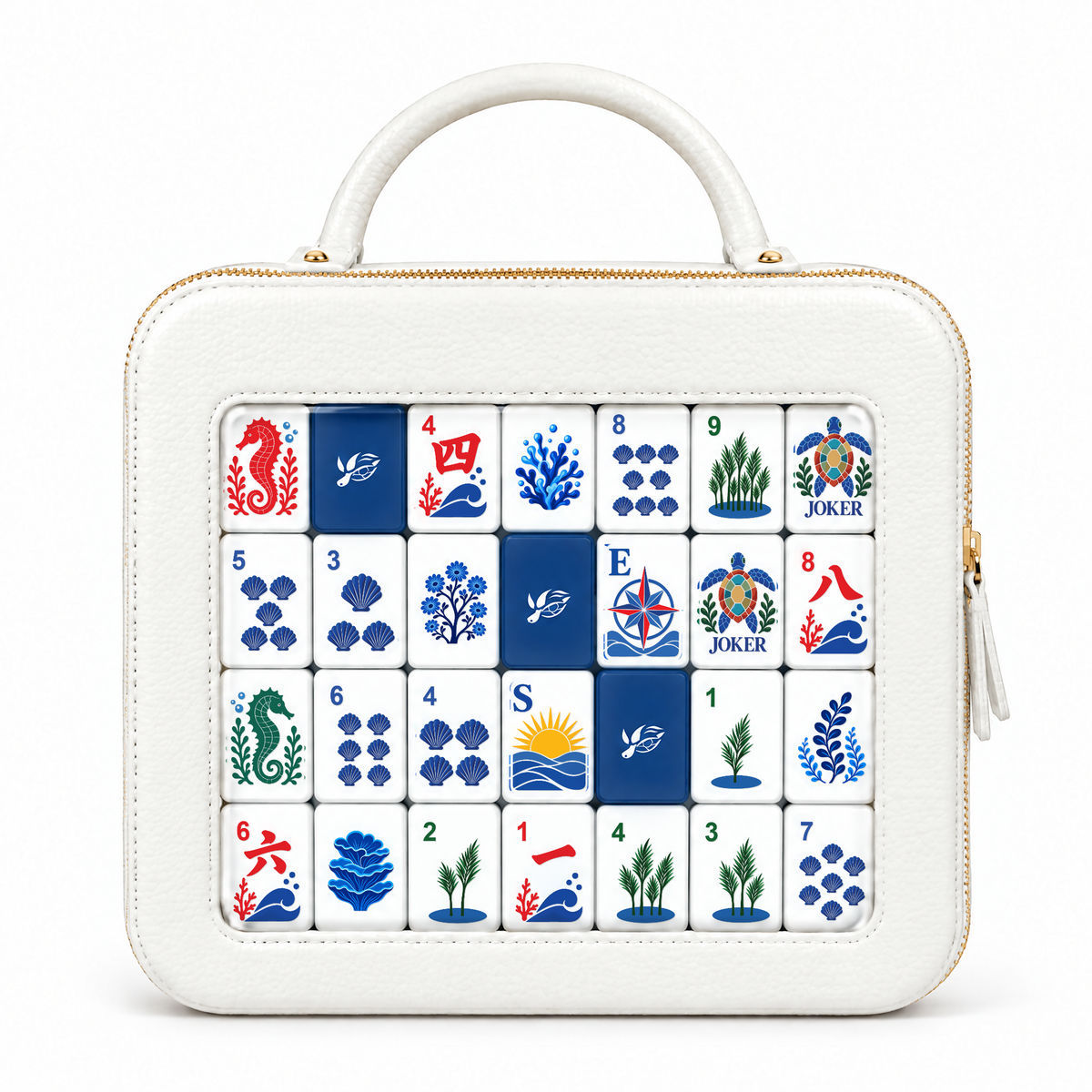
An exposure in American mahjong is any group of identical or matched tiles you declare and place face-up on your rack during play. You can expose a pung (three identical tiles), kong (four identical), quint (five), or sextet (six)—but never a pair, single, or chow (sequence). Once exposed, other players see your grouping and can call the discard you need to complete your hand. You cannot expose a pair to show you're collecting toward it; jokers filling gaps in exposed groups are allowed, but a joker can never form a single tile or pair by itself. Exposures are strategic: they telegraph your progress and let opponents block you, so timing matters. Learn the rules thoroughly with a quality American mahjong set so your table plays correctly every week.
In American mahjong, exposure is one of the most misunderstood rules because it shapes both strategy and scoring. Many new players expose tiles too early or incorrectly, costing themselves points or accidentally breaking hand rules. We've played thousands of games and seen exposures go sideways—here's how to master this rule.
What exactly counts as an exposure?
An exposure is a declared group of tiles you place face-up on your rack where all players can see it. You can expose a pung (three identical tiles), kong (four identical), quint (five), or sextet (six)—the only valid grouped shapes in American mahjong. You cannot expose a single tile, a pair, or a sequence (chow). Once a group is exposed on your rack, you've signaled to the table that you own those tiles and are collecting toward your hand. Other players then know they should not discard a tile that would complete your exposure to a higher group, and they can use your exposed tiles to block your hand if strategic. The full American mahjong rules cover exposure timing in detail.

Can you expose tiles at any point in the game?
No. You can only expose a group when you have drawn a tile that completes it into a valid pung, kong, quint, or sextet. You draw from the wall or claim a discard, and only then—if that tile completes a valid group—can you declare and expose. You cannot expose a partial grouping to signal you're working toward it. For example, if you hold two 5 Dots and want to show you're collecting 5 Dots, you cannot expose those two tiles; you must wait until a third 5 Dot enters your hand (by draw or claim). Once you expose, you're locked into that grouping for the rest of the hand unless you use a joker to convert it or, rarely, disassemble it during a kong play (if your house rules allow). Exposing early is risky because opponents know what you need and can block the discard you're fishing for.
How do jokers work in exposures?
Jokers can replace any single tile within an exposed group to fill a gap or complete a shape. If you expose a pung of 3 Craks but one tile is missing, you can place a joker in that slot. Jokers in exposures make hands more flexible and powerful, which is why they're tracked carefully. However, a joker can never form a single tile by itself or be part of a pair; it must be part of a pung, kong, quint, or sextet. So you cannot expose a joker alone, and you cannot use a joker as one half of your pair (the pair must be two identical tiles). Many players mistake this rule and try to fill a pair with a joker—not allowed. Jokers also cannot be recycled out of an exposure once placed; once a joker is in a group on your rack, it stays there until you win. Understanding joker rules is crucial, so we've written a detailed guide to how jokers work in American mahjong.
What happens when you expose tiles?
Once you expose a group, two things happen. First, your hand becomes partially public; other players see which tiles you hold and can infer what you need. Second, you become vulnerable to blocking: if another player discards a tile that would complete your hand (called the "wait"), you cannot claim it. For example, if you expose three 7 Bams and are waiting for a 9 Bam to complete a hand, and another player (not the player whose turn it is) discards a 9 Bam, that 9 Bam goes to the wall—you can't claim it out of turn. Only the discarder's next-turn player can claim a discard. This dynamic makes exposures both powerful and risky: they accelerate your hand but also telegraph your strategy and give opponents a roadmap to block you. Skilled players expose only when the reward (points, flexibility) outweighs the risk (giving away your plan). Timing and table read are everything.
How do exposures affect scoring?
In American mahjong, exposures lower your score because exposed hands are less complex than concealed hands. The National Mah Jongg League card lists hands with point values, and each hand's value assumes a certain number of exposures or concealed groups. If a hand allows one exposure and you expose two groups, your score is penalized. Conversely, if you win without any exposures (a concealed hand), you often earn bonus points. Each hand description on the card tells you how many exposures are allowed and where: for instance, "one exposure" means you can show one group; "all concealed" means all tiles must stay hidden until you win. When you lay down your winning hand, the scorer checks your exposures against the card and applies the correct value. This is why reading the card carefully before exposing is critical—many players drop points because they exposed more than the hand allowed. If you're unsure whether a hand allows an exposure, ask the group before you expose; once exposed, the penalty stands.

Common mistakes players make with exposures
Exposing a pair by accident. New players sometimes place two identical tiles on their rack thinking it's a pung, not realizing they need three. The moment a second tile of the same kind appears, it looks like a pair—which is illegal. Always count to three before you move tiles to your exposure rack.
Mixing up joker rules. Players often try to use a joker as a single tile or as part of a pair. A joker must be part of a group of three or more. If you draw a joker thinking it will help your pair, it won't; jokers only work in pungs and larger groups.
Exposing before reading the card. Many players expose a group early, only to discover later that the hand they're targeting doesn't allow that exposure. Always cross-check your target hand on the card before you expose. If the hand says "all concealed," do not expose anything.
Exposing when blocking would be smarter. Sometimes blocking an opponent's discard is more valuable than exposing your own tiles. If another player is one tile away from winning and you can prevent their win by not claiming a discard, that's often the right play—even if your hand grows slower.
Forgetting that exposed tiles can't be unclaimed. Once a joker is in an exposure, it cannot be removed or swapped. Plan your exposures carefully because you're committing those tiles and that joker to the rest of the hand.
Decision table: to expose or not?
Scenario | Exposed Group | Opponent's Status | Recommendation | Why |
Early game; you have 3 identical tiles; hand allows exposure | Pung | Far from winning | Expose | Accelerates your hand; opponents not yet dangerous |
Mid-game; you have 4 identical tiles; one joker in the group | Kong | One player one tile away | Hold (don't expose) | Blocking their discard is worth more than showing your group |
Late game; you have 5 identical tiles; joker fills gap; hand requires 2 exposures | Quint | All players far from winning | Expose | You're safe; quint is powerful and needed for the hand |
Early game; you have 3 identical tiles; hand says "all concealed" | Pung | Varies | Do not expose | Penalty; hand cannot be scored if exposed |
🀄 Shop best-selling mahjong sets →
Reading the card before you expose: a checklist
Before you place any tiles on your exposure rack, take three seconds and do this:
Identify your target hand. What hand are you building toward? Make sure you have one.
Locate it on the current year's card. Find the exact hand description in the card's index.
Check the exposure rule. Read the hand's notation. Does it say "all concealed," "one exposure," "two exposures," or a specific type (e.g., "one pung exposed")?
Count your current exposures. How many groups are already face-up on your rack?
Verify you stay within the limit. If you expose the new group, will you still meet the card's requirement? If yes, expose. If no, hold your tiles.
Check joker usage in the exposure. If a joker is in the group, confirm it's part of a pung (three+), not a single or pair.
If you're unsure about any step, ask the group before you expose. Once tiles are face-up, the decision is final.
Why exposure rules vary by mahjong variant
American mahjong exposure rules are specific to the American game. In Chinese mahjong, you expose tiles (called "melding") differently and can call sequences (chows), which American mahjong does not allow. In Hong Kong mahjong, exposures are called "pungs" and "kongs" similarly, but the scoring and hand structures differ widely. In Riichi mahjong, most tiles stay concealed until you win, and exposure is minimal. If you play multiple variants at your table, clarify the exposure rule before the first hand—American mahjong's rules are stricter about what can be exposed and when.
🎁 See our most-loved mahjong sets & accessories →
What to check before you buy your mahjong set
If you're hosting games and want to teach exposure rules reliably, a high-quality set with clear tile markings helps everyone see exposed groups without mistake. Look for:
Large, legible tile faces. Smaller tiles are hard to read when stacked on an exposure rack; big numbers and suit symbols reduce errors.
Durable acrylic or wood construction. Sets that last through weekly games stay clear and don't fade, so players always see tiles correctly.
Matching racks with pushers. A dedicated mahjong rack collection keeps exposed tiles organized and visible, preventing confusion about which groups are exposed.
A padded mat. A mat keeps tiles stable and reduces accidental spills that reset a half-played exposure.
Our best-selling sets are designed with exposure clarity in mind: acrylic tiles are easy to read, racks are deep enough to hold exposures without crowding, and tile weight keeps groups from shifting during play. If you play weekly, investing in a reliable set pays off in fewer rule disputes and faster games.
The strategic side of exposure
Skilled players use exposures as a signal and a trap. By exposing a pung early, you tell the table what you're collecting—but you also subtly suggest you're not collecting other suits or numbers, which might be a bluff. Good players read these signals and block accordingly. In high-stakes games, some players delay exposures to keep opponents guessing about their hand until the last moment. Others expose aggressively to lock down a fast win before opponents block. The rule itself is neutral; how you use it determines your edge at the table.
✨ Find your Mahstead set — free US shipping →

FAQ
Can I expose a single tile to show what I'm collecting?
No. You can only expose a pung (three identical tiles), kong (four), quint (five), or sextet (six). A single tile cannot be exposed; you must wait until you have at least three identical tiles before you declare an exposure.
What happens if I expose a group that doesn't match my hand on the card?
If your target hand says "all concealed" or doesn't allow that type or number of exposures, your hand is void—you cannot win. Always read the card before you expose.
Can a joker be part of a pair?
No. A joker must be part of a pung, kong, quint, or sextet (three or more tiles). A joker can never form a pair by itself or be one half of a pair with an identical tile.
If I expose four identical tiles as a kong, can I draw a fifth tile later and turn it into a quint?
Yes. If you draw a fifth identical tile (or a joker), you can add it to your exposed kong, turning it into a quint. The exposure grows as your hand builds.
What's the penalty for exposing more groups than my hand allows?
Your hand is void, and you cannot win with that hand for the rest of the round. The tiles stay on your rack, and you continue drawing until you either discard to restart or the round ends. Always verify the card's exposure rule before exposing.
Can other players claim a tile from my exposed group if I discard a tile?
No. Once a tile is part of an exposure on your rack, it's locked in place and cannot be claimed by other players. Only tiles you discard from your hand (not from an exposure) can be claimed by the next player in turn or, if they call "mahjong," by any player.
If two players both need the same discard from an exposure I made, who gets it?
This doesn't happen in American mahjong. Tiles in your exposure are not discardable; they're locked on your rack. Only tiles you actively discard from your hand can be claimed.


View More
View More
View More
