
Mahjong for Moms: How to Host Your First Game Night
Last updated: Nov 23, 2026
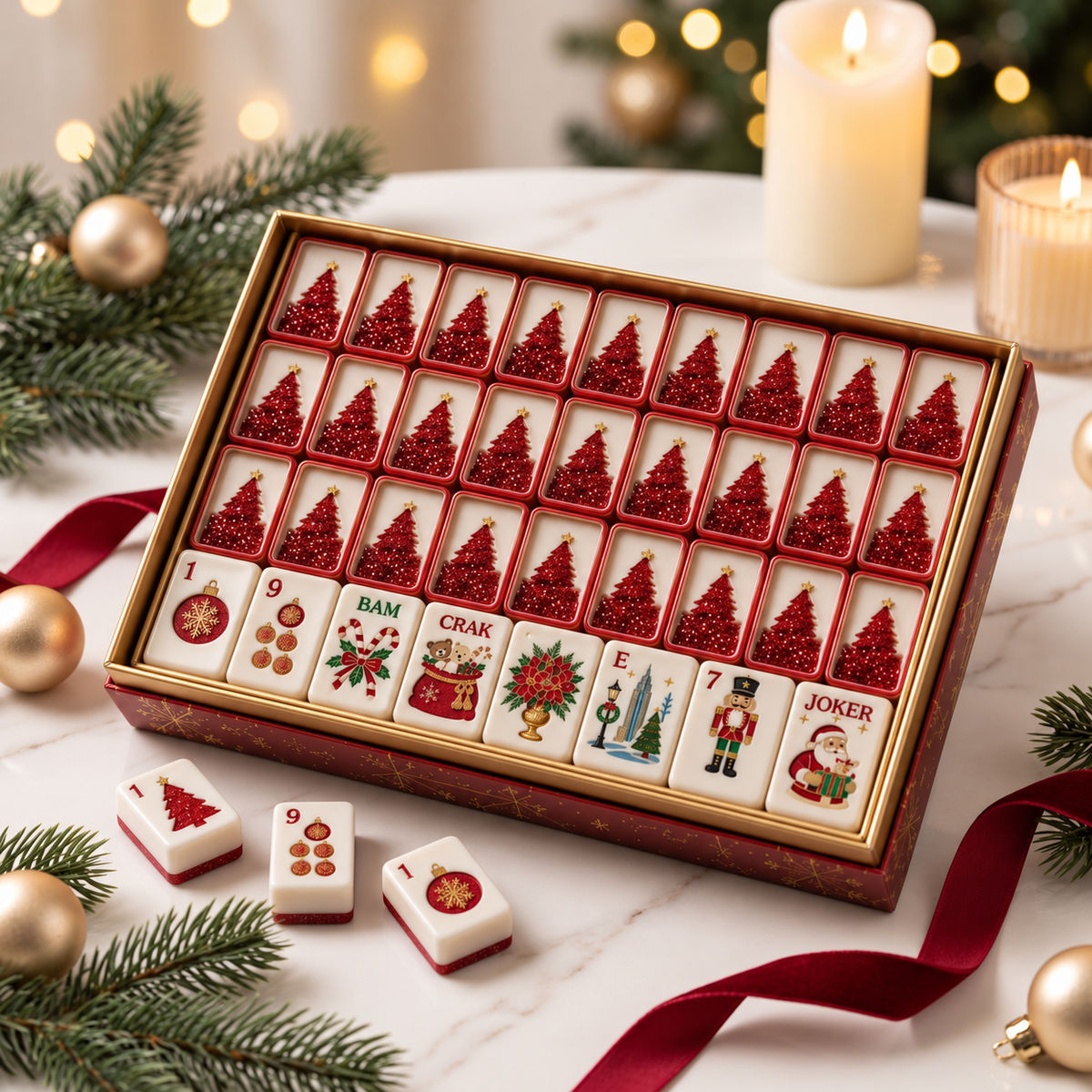
Mahjong for moms is a four-player tile game (152 tiles, 8 jokers) you play with the current year's National Mah Jongg League card to form winning hand patterns. Games last 1–2 hours; a typical mom's night includes four 20–30 minute rounds plus snacks and chat. You need a best-selling mahjong set, a mat (optional but saves your table), racks to hold tiles upright, and a scorepad. No experience required—the card does the thinking. Most groups meet weekly at home; some play in community centers or clubs. Start with the official American rules, learn the tile-passing ritual called the Charleston, and you're ready. Mahstead offers engraved sets, mats, and racks designed for exactly this: a four-player game that brings a room together every week.
Can a beginner actually host a mahjong night?
Absolutely. You don't need to memorize anything—the card tells you which tiles win. Four moms, one set, 90 minutes, and everyone leaves feeling like they've unplugged. The hardest part is learning to read the card, not remembering rules. We've seen moms who'd never played host a game the week after learning; the card does the heavy lifting. Start with the basics, print out a beginner's guide to American mahjong, and let the card be your referee.

What's the real time commitment each week?
A single round takes 20–35 minutes depending on your group's pace. Most mom groups play four consecutive rounds in a 2–3 hour window, which includes the Charleston (tile-passing ritual) at the start of each round. Setup takes 10 minutes if you've played before; cleanup is five. If you're meeting weekly, after the first two games you'll know the rhythm and won't need to check rules constantly. The biggest time saver: racks with pushers, which let players organize tiles silently while others think. One night a week is the sweet spot—often Wednesday or Thursday evening.
Which tiles and layout should I use for American mahjong?
American mahjong uses exactly 152 tiles: three suits (Bams, Craks, Dots) numbered 1–9 with four copies each, sixteen winds (four directions), twelve dragons (three types), eight flowers, and eight jokers. The layout never changes—each player gets thirteen tiles, and a dealer (East) draws a fourteenth; you play by calling winning patterns from that year's card. The card dictates which tiles go where; you don't choose. What's in an American mahjong set covers tile distribution and why the count matters. A 160-tile set from Mahstead contains all 152 playing tiles plus spares—more than you need for a single game, which protects against loss.
How do I actually read the card without getting lost?
The card shows hundreds of winning hands grouped by section—like "one pung, two pungs, three pungs," "like numbers," and "consecutive sets." Each hand is a picture of tiles arranged in the exact order you'll hold them. To win, your thirteen tiles must match one hand exactly, or your fourteenth tile (your draw) completes one on your card. You're not memorizing patterns; you're matching what's in your hand to the photo on the card. Start by learning pungs (three identical tiles) and kongs (four identical tiles); those cover half the beginner hands. How to read the mahjong card walks you through the card layout, the sections, and a step-by-step matching process that takes two minutes per hand once you've seen five hands.
What gear makes hosting easier and less stressful?
Here's what every mom hosting mahjong actually needs:
Tier 1 (essentials):
A complete 160-tile mahjong set with racks included
A scorepad or printed scoresheet
The current year's National Mah Jongg League card (printed or laminated)
Tier 2 (comfort—worth it):
A mahjong mat (protects the table; defines the playing space)
Separate racks with pushers (not always included in basic sets)
Dice to determine seating order
A case or bag if you're rotating the set between homes
Tier 3 (luxury—nice to have):
An engraved set with a funny phrase or family name
A second mat or a tablecloth for decoration
Tile racks that match your décor
The best-selling mahjong sets from Mahstead come with racks and everything a group needs to start. A mahjong mat is optional but prevents tiles from sliding, contains the noise, and signals to everyone that "we're playing now." For moms rotating hosting duties, a travel bag or case keeps the set safe and organized—tiles won't scatter in the car.
🀄 Shop best-selling mahjong sets →
What's the one hosting mistake every mom makes on night one?
Forgetting to do the Charleston. The Charleston is the tile-passing ritual before round one—each player passes three tiles to the right, then three to the left, then three across. You don't skip it. Without the Charleston, the tiles are biased toward the dealer and the game unfolds predictably; with it, the tiles are truly mixed. The second mistake: not using a mat or a defined table area. Tiles slide everywhere; someone knocks over a rack; chaos. The third: not printing a copy of the card or using one that's too small to read. After the first two rounds, have a strategy: print a large card, tape it near the scorekeeper, or open the digital card on a tablet. The Charleston explained shows the exact tile-passing steps and why each one matters.

Should I host with a table cover, cloth, or a proper mat?
A mat is better than a cloth, and a cloth is better than bare wood. A mat has a rubber backing, non-slip surface, and raised walls that keep tiles contained and quiet—ideal if you're playing in a living room or dining room weekly. A cloth or tablecloth covers the table for decoration and prevents tiles from scratching wood, but tiles still slide and bounce. Bare wood lets tiles scatter and creates noise. If you're hosting once or twice, borrow a mat; if you're committing to weekly games, a mat is a one-time buy that transforms the game. Compare comfort, noise, tile control, and portability in our guide on mat vs. table cover to see which fits your space.
Game-Night Setup Checklist
Before the first player arrives:
[ ] Set table with mat (if using) and racks at each seat
[ ] Place tile set in the center, organized by suit
[ ] Print or display current year's mahjong card (large enough to read from across the table)
[ ] Set out scorepad and pen
[ ] Have dice ready to assign seats and determine dealer
[ ] Print a one-page Charleston guide to display or hand out
[ ] Test that everyone can read the card
[ ] Have snacks and drinks set up away from the tile area
What to Check Before You Buy a Set
Feature | Why It Matters | Our Advice |
Tile Material | Acrylic tiles are durable, light, and quiet; resin can crack with heavy use. | Acrylic lasts for years of weekly play; resin works for occasional games. |
Included Racks | Racks hold tiles so your hands are free to think and talk. | Check that racks are included; if not, separate racks are a smart add. |
Tile Count | 152 tiles = one game; 160+ tiles include spares in case of loss or breakage. | 160-tile sets from Mahstead are standard; spares protect your investment. |
Case or Bag | Without one, tiles scatter in transit between homes. | If you rotate hosting, a case or bag is essential. |
Engraving Option | Custom text on the case makes a great housewarming or friend gift. | Funny or family names are most popular; engraved sets take 1–2 weeks. |
Aesthetic | You'll look at this set weekly; it should make you smile. | Choose a color, finish, or design you'll still love in a year. |
🎁 See our most-loved mahjong sets & accessories →
Why Moms Stick With Weekly Mahjong (Hint: It's Not Just the Game)
The pattern is predictable: first night is nervous ("Will I embarrass myself?"), second night is fun, by week four it's non-negotiable. Moms cite the mental break (the card forces you to focus on one thing for 90 minutes), the same faces every week (the routine itself is the ritual), and the talking that happens between rounds. Mahjong isn't competitive most nights; it's social. You're not trying to win—you're trying to beat the card and spend time with people who get you. That's why Friday or Thursday nights fill up fast and why groups have waitlists.
Hosting a Multi-Generational Game: Moms, Daughters, Grandmoms
Many mom groups expand to include adult daughters or aging parents. The game doesn't change; four players, one card, same rules. If you're bridging generations, take 15 minutes before the first round to let anyone new read the card and see a few example hands. Use racks with pushers—they make holding and reading tiles easier for anyone with arthritis or vision challenges. Slower play is not a problem; everyone is there to be together. An engraved set with a family name or inside joke becomes a keepsake if three generations end up playing.
✨ Find your Mahstead set — free US shipping →

FAQ
Do I have to teach everyone the rules before we start?
No. Teach the Charleston (tile-passing), explain that the card shows which hands win, and let the first two rounds be slow and guided. By round three, the pattern clicks. Use the card as your rule book; you don't need to memorize anything.
What if someone wants to play but can't come every week?
Rotate players in and out. The game is designed for exactly four, but if you have five or six moms interested, two groups run simultaneously or you rotate who sits out. Many groups have a core of three regulars and a rotating fourth to keep it fresh.
How do I know if I bought the right set?
The set works if it has 152 tiles, racks, a mat (optional), and tiles you can read. If tiles are too small, hard to shuffle, or racks feel flimsy, you'll notice by game two. Mahstead best-selling sets are sized and weighted for comfort over 2+ hours of holding.
Can we play if someone is learning English or is deaf?
Yes. The card and tile layout are visual; no spoken instruction is required. Deaf players often say mahjong is easier than many games because it's tile-based and silent. English learners just read the card; the game is pattern-matching, not conversation.
What if we want to switch to a different mahjong variant later?
American mahjong is the best entry point. If your group later wants to learn Chinese or Riichi, that's a separate skill set and usually a separate tile set; this 152-tile American set remains your tool for American mahjong. Most mom groups stick with American for years.
How much does it actually cost to get started?
See current price on our best-selling collection page. A quality 160-tile set, mat, and accessories are one upfront cost; after that, the only expense is snacks. Compared to many hobbies, mahjong is affordable and lasts decades.


View More
View More
View More
