
8 Bam Mahjong Tile Symbol Explained: Bird & Meaning
Last updated: Nov 23, 2026
The 8 Bam is a numbered tile in the Bamboo suit (called "Bam"), displaying eight bamboo stalks or a related symbol on its face. It ranks alongside tiles numbered 1–9 in the Bam suit; you'll have four copies of the 8 Bam in a standard American mahjong set of 152 tiles. The 8 Bam appears in many hand combinations on the current year's National Mah Jongg League card, often as part of pungs (three identical tiles) or in longer sequences within exposed melds. Unlike the 1 Bam—which famously shows a bird instead of a single stalk—the 8 Bam displays its number clearly. From Mahstead, best-selling acrylic sets feature clear, high-contrast Bam symbols so you can spot your 8 Bams instantly during fast-paced games.
The 8 Bam is one of nine numbered tiles in the Bamboo suit (called "Bam"), displaying eight bamboo stalks or a related symbol on its face. It ranks alongside tiles numbered 1–9 in the Bam suit; you'll have four copies of the 8 Bam in a standard American mahjong set of 152 tiles. The 8 Bam appears in many hand combinations on the current year's National Mah Jongg League card, often as part of pungs (three identical tiles) or in longer sequences within exposed melds. Unlike the 1 Bam—which famously shows a bird instead of a single stalk—the 8 Bam displays its number clearly. From Mahstead, best-selling acrylic sets feature clear, high-contrast Bam symbols so you can spot your 8 Bams instantly during fast-paced games.
Why does the 1 Bam show a bird, not a bamboo stalk?
The 1 Bam's bird symbol is a direct inheritance from classical Chinese mahjong tile art. Ancient carvers believed a single upright line looked incomplete or unlucky; adding a bird—often a sparrow or pheasant—filled the space and made the tile aesthetically balanced. Early European and American sets imported this same design. Today, the bird on the 1 Bam is not ornamental—it's a live rule. In American mahjong, the 1 Bam is still called "the bird" at many tables, and its distinctive appearance helps newer players instantly recognize it during the shuffle or when reading hands off the NMJL card.

How does the 8 Bam differ from other numbered Bams?
Each Bam tile from 1 to 9 displays its numeral count visually. The 8 Bam shows eight bamboo stalks (or decorative segments), the 7 Bam shows seven, and so on. The 2 Bam through 9 Bam all follow the same pattern: a simple, repeating icon that matches the number. The 1 Bam alone breaks this rule with its bird. This visual consistency—except for the 1—makes it easy for players to scan their rack and quickly identify which Bams they're holding. In our best-selling sets, each Bam tile's tile design uses uniform stroke weight and colors so the number is unmistakable even under dim table lighting.
Where does the 8 Bam appear on winning hands?
The 8 Bam, like all numbered Bams 2–9, can appear in any winning hand combination that the current year's National Mah Jongg League card permits. Winning hands are drawn from the card alone; you cannot invent a hand. The 8 Bam most commonly appears as part of a pung (three 8 Bams) or as a single tile in a pair. Because American mahjong does not allow open sequences ("chows")—only pungs, kongs, quints, and sextets of identical tiles—the 8 Bam cannot "flow" with a 7 or 9 Bam in an exposed meld. However, it can be hidden in your closed hand while you hold other melds on the table. For a complete guide to how hands work, see how to read the mahjong card.
What's the difference between Bam, Crak, and Dot suits?
American mahjong uses three numbered suits: Bam (Bamboo), Crak (Crack, traditionally "ten thousand" in Chinese), and Dot (Circle, traditionally "coin"). Each suit contains tiles numbered 1–9, and you have four of each number in play. The 1 Bam is unique: it bears a bird. The 1 Crak typically shows a decorative symbol as well. The 1 Dot is a simple circle. Beyond the 1s, the suits differ only in their symbol family—stalks, cracking lines, or solid dots—but they are never mixed in a single pung or meld; a pung must always be three identical tiles, never "three different suit 8s." Learning which suit is which speeds up hand recognition.
Suit | Symbol Family | 1 Tile | Used in Play | Notes |
Bam | Bamboo stalks | Bird | Yes, 4 copies | Most recognizable on first glance |
Crak | Lines or symbols | Often decorative | Yes, 4 copies | Medium visual contrast |
Dot | Solid circles | Single circle | Yes, 4 copies | Can blend together; use good lighting |
🀄 Shop best-selling mahjong sets →

How do I identify the 8 Bam in a crowded rack during play?
Speed matters in weekly games. The 8 Bam's eight stalks are easier to count than the Dot suit's small circles; one solid glance tells you what you have. Many players arrange their rack by number within each suit, so the 8 Bams cluster together naturally. Lighting is critical: under poor overhead light, even clear acrylic tiles can blur. Our engraved sets and popular picks use high-contrast designs and thick, recessed engravings so each tile's identity pops. If you're upgrading from a worn or opaque set, a new acrylic set will cut identification time by half. During the Charleston (the tile-passing ritual at the start of each game), you won't need to identify the 8 Bam quickly, but once play begins, seconds count.
🎁 See our most-loved mahjong sets & accessories →
What mistakes do new players make with Bam tiles?
New players often confuse the 1 Bam's bird with a flower or wind tile. It is neither—it is always a Bam. Another common error: mixing up Crak and Bam symbols when tiles are worn or faded. On the National Mah Jongg League card, each hand is written in a shorthand that lists the suit (Bam, Crak, or Dot), the number, and the quantity. If you misread "8 Bam, 8 Bam, 8 Bam" as "8 Crak, 8 Crak, 8 Crak," you'll expose the wrong tiles and dead your hand. The safest practice: read the card aloud before calling your meld. Use a mat with printed suit symbols and numbering guides if the card's abbreviations feel unclear. For a deeper dive into using the card, read how to read the mahjong card.
What to check before you buy a new set
Clarity under table light: View a sample in the room where you play, not just indoors. Suit contrast: Bam stalks should stand apart from Crak lines and Dot circles at a glance. Tile size: Standard American mahjong tiles measure roughly 1.25" wide; confirm the set fits your racks. Engravings: Recessed (carved into the tile) symbols are more durable than printed ones. Spare tiles: A 160-tile set includes spare jokers and blanks; you'll play with only 152 tiles, so extras won't interfere. Storage: Check if you have a bag or case to keep tiles from scattering.
✨ Find your Mahstead set — free US shipping →
What you'll need
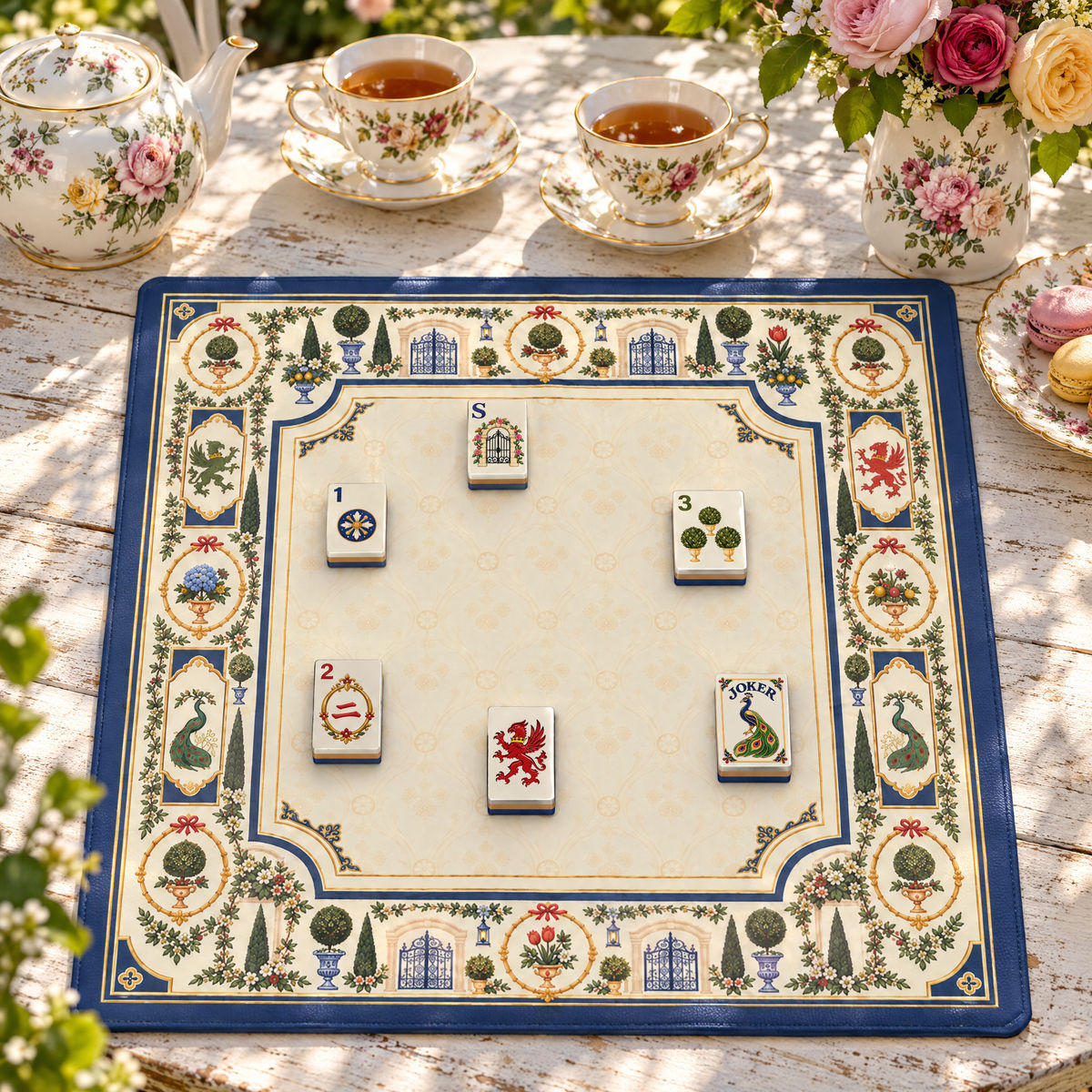
If you're building your setup or refreshing a worn set, start with one of our best-selling mahjong sets—they're acrylic, durable, and come with clear symbol contrast. Add mahjong racks with pushers to organize your tiles and speed up play. A mat protects your table, keeps tiles from sliding, and often includes printed scoring references. For travel or protection, a bag or case keeps everything safe.

FAQ
Is the 8 Bam the same in Chinese, Hong Kong, and American mahjong?
The 8 Bam exists in all variants and always shows eight bamboo symbols. However, Chinese and Hong Kong games allow open sequences (chows), so the 8 Bam can pair with 7 and 9 in exposed melds—American mahjong forbids this. The tile itself looks identical across variants.
Can I use a Joker in place of an 8 Bam?
No. In American mahjong, Jokers substitute for tiles only within an exposed meld (pung, kong, quint, or sextet), and only for tiles other than the pair. You cannot use a Joker as a single 8 Bam or as part of a pair. For full Joker rules, see how jokers work.
Why is the 1 Bam called "the bird" at the table?
The bird symbol on the 1 Bam tile has been traditional for centuries; players simply adopted the name. Saying "bird" is faster than "one Bam" during quick hand callouts, especially in competitive games. It also avoids confusion with the number "one" spoken aloud.
How many 8 Bams are in a standard American mahjong set?
Exactly four 8 Bams. Every numbered tile (1–9 in each of three suits) appears four times in the 152-tile playing set. This ensures fair distribution across all four players and balanced hand possibilities.
What's the difference between a printed 8 Bam and an engraved one?
Printed symbols sit on the surface and can wear off after hundreds of plays. Engraved (recessed) symbols are carved into the tile, so they last the life of the set. Our engraved sets use deep carving for durability and clarity.
Where can I find a tile labeled "8 Bam" if I've lost one?
Reputable mahjong retailers sell individual replacement tiles or spare-tile packs. Contact your set manufacturer or visit a mahjong specialty store (community centers and libraries often have information on local resources). Do not mix tiles from different sets; manufacturing standards vary and tiles may not align or shuffle evenly.


View More
View More
View More
