
Mahjong Classes for Beginners in San Jose: Where to Learn
Last updated: Nov 23, 2026
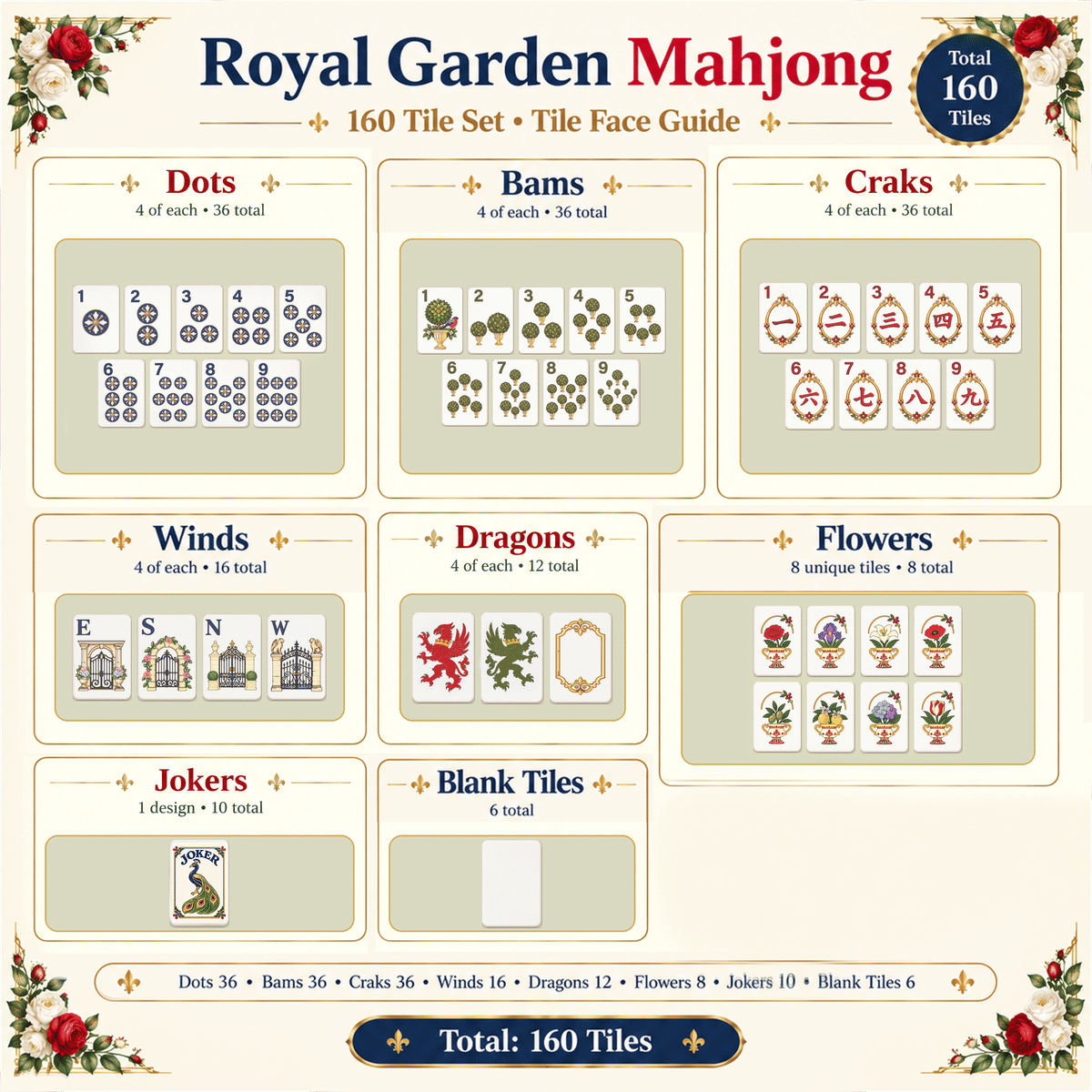
San Jose beginners find classes primarily through community centers (check the San Jose Parks & Recreation and Santa Clara County library systems), local senior centers, synagogues, country clubs, and private instructors advertising on community boards and Meetup. A typical beginner class runs 6–12 weeks, meeting once or twice weekly, and is free or low-cost. American mahjong has one rigid rule set tied to the current-year National Mah Jongg League card, so every lesson must teach from that card and spend time on the Charleston (the four-player tile-passing opening). You'll need a 152-tile acrylic set with pushers or racks to practice at home; buy your set before your first class. Avoid outdated rules books, instructors mixing American and Chinese rules, and playing without the card—those mistakes slow learning. Most players play their first real hand by week three and join a regular game within two months.
How do I find a mahjong class near me in San Jose?
Search your San Jose Parks & Recreation website's class listings (most offer beginner sessions September through May). Call or visit your nearest county library branch—many host free or donation-based open play and some run structured lessons. Check synagogues and country clubs; they often host resident or community instructor classes. Post on neighborhood Nextdoor or Meetup asking "beginner mahjong class in [your neighborhood]"—you'll usually hear back within days from private instructors. Visit local senior centers; instructors often teach there or can refer you. A quick call confirms whether the class teaches American rules from the current-year card (not Chinese or historical variants).
🀄 Shop best-selling mahjong sets →

What exactly does a beginner class cover in the first four weeks?
Week 1 focuses on tile names, suits, honors (winds and dragons), flowers, jokers, and how to spot them fast. Week 2 teaches the Charleston (passing rounds) and wall-building. Week 3 introduces the National Mah Jongg League card—how to read it, spot patterns, and declare a winning hand. Week 4 covers hand-building, basic discarding strategy, and your first mini-games. By week 4, you'll know why American mahjong has no sequences (chows), how pushers and racks speed up play, and how to hold 14 tiles without signaling. Most instructors use engraved sets with tile names so you learn faster and stop confusing Bams with Craks.
What's the difference between American mahjong and what's taught elsewhere?
American mahjong uses exactly 152 tiles, plays with the National Mah Jongg League card updated yearly, allows no sequences (chows), and restricts jokers to pung/kong/quint/sextet combinations only—never in a single tile or pair. Chinese and Hong Kong mahjong use sequences heavily, often have fewer tiles, and don't need a card. Taiwanese mahjong differs again. Riichi (Japanese) is points-based, not card-based. A San Jose class advertising "mahjong" without specifying "American" may teach a different game entirely—always ask which rule set on your first call. You'll waste weeks unlearning if your instructor starts with Chinese and pivots; insist on American from day one or find a new teacher. How to play American mahjong covers the full ruleset if you want to preview before your first class.
Variant | Tile Count | Has Card? | Uses Sequences? | Learning Curve (weeks) |
American | 152 | Yes, yearly | No | 3–4 |
Chinese | 136 | No | Yes | 4–6 |
Hong Kong | 152 | No | Yes | 4–6 |
Riichi (Japan) | 136 | No | Yes, points-based | 5–8 |
Taiwanese | 144 | No | No | 4–6 |
American mahjong's rigid rule set means you learn once and play the same way everywhere; other variants have regional tweaks that confuse beginners.
🎁 See our most-loved mahjong sets & accessories →
Should I buy my own set before or after my first class?
Buy before your first class. A 152-tile acrylic set with racks or pushers lets your hands learn tile weight, speed, and how pushers cut discards cleanly. Playing on the instructor's classroom set for two weeks then switching to yours feels awkward and slows muscle memory. Bring your set to week 2 or 3 and you'll spot hands faster because you're used to your tiles' feel. If your budget is tight, borrow a classroom set for the first session and buy your own by week 2—don't wait until week 6. Acrylic sets from our best-selling collection ship free across the US and include a mat, racks with pushers, and a carrying case, so you're ready to practice immediately after class. Many beginners regret not buying early because they fall behind in speed drills.

What else do I need to practice at home after class?
You need the current-year National Mah Jongg League card (your instructor usually provides or tells you where to buy; it's inexpensive and updated every March). A mahjong mat keeps tiles from sliding and protects your table. Racks with pushers speed up play and prevent hand fatigue—this is not luxury, it's essential for learning. Dice are included with most sets. A carrying case or bag protects your set if you attend weekly games at a friend's house or a community center. Never play from a shoebox or loose tiles; you'll lose pieces and slow down. If you're serious about joining a regular game (most players do within two months), invest in a complete set upfront—it signals to instructors and other players that you're committed.
✨ Find your Mahstead set — free US shipping →
How long before I'm ready to join a regular game group?
Most beginners play in a regular game by week 8–10 of lessons. By week 4, you know how to declare and why hands fail. By week 6, you're spotting patterns on the card in real time. By week 8, you're not the slowest player at the table. Week 10–12, you're competitive—not winning yet, but holding your own. Don't jump into a game too early (week 2–3); other players will get frustrated with stops and questions. Ask your instructor when they think you're ready; they know your pace. San Jose has plenty of open-play groups at libraries and senior centers—your instructor can introduce you or you can post on Nextdoor asking "where do people play mahjong in [your neighborhood]?" Most weekly games are casual, forgiving of minor mistakes, and the same people show up every week, so it's easy to improve steadily.
What mistakes do San Jose beginners make that slow them down?
Buying a cheap or incomplete set and swapping sets between class and home. Mixing American and another variant mid-learning. Not memorizing the card layout (the card's sections, not every single hand—just the patterns). Holding tiles so others can see your hand. Discarding too predictably (throwing same suit every turn). Not asking questions in class because you're embarrassed (never; every beginner is confused at week 1). Skipping weeks. Playing without a proper mat or racks (tiles slide, you lose focus). Buying a new card mid-year (the card is fixed from March; don't update until next March). The biggest trap: waiting too long to play your first real hand. Convince your instructor to let you play in week 3, even if you're slow. Speed and confidence come from reps.
What to check before you buy your first set
American tiles only: confirm 152-tile acrylic sets with Bam, Crak, Dot suits and eight jokers.
Racks or pushers included: essential for home practice; don't buy tiles-only.
Mat included or available separately: a proper mat prevents slides and teaches you to hold tiles lower.
Carrying case or bag: you'll want to bring your set to friends' houses and games.
No blanks or extra tiles in active play: a 160-tile set includes spares; only 152 tiles play per game.
Joker clarity: check the joker design; bright red or engraved jokers are easier to spot fast.
Pusher quality: look for smooth plastic or wood pushers that don't stick or warp.

FAQ
Do I need to know anything before my first San Jose mahjong class?
No. Bring a pen and paper to take notes on tile names. Wear comfortable clothes so you can sit for two hours. Eat a light snack before; classes are mentally intense. Arrive five minutes early to introduce yourself to the instructor. Don't worry about speed—beginners are always slow; the class expects it.
Can I learn mahjong from a book or YouTube instead of a class?
Unlikely to stick. Books and videos miss the live feedback loop—you'll misread the card, hold your hand wrong, or mix American rules with Chinese ones and not know. A teacher catches mistakes in real time. Video is great after your first four classes to reinforce, but not as your first teacher.
How much does a beginner mahjong class cost in the San Jose area?
Free at most libraries and senior centers (donation-optional). Community center classes through Parks & Rec often cost a modest enrollment fee per session or per six-week block; call your local center for specifics. Private instructors charge hourly or per-class; ask directly. Always confirm upfront so there's no surprise.
What if I don't have 3 other people to play with yet?
Your class is your group. You'll play practice hands with the same two to three other beginners every week. By week 6–8, ask the instructor if anyone wants to form a weekly game outside class. Post on Nextdoor or Meetup: "Looking for a beginner-friendly weekly mahjong game in [neighborhood]." You'll hear from other class alumni fast.
Is American mahjong hard to learn compared to other board games?
No harder than poker or bridge. The first four weeks feel dense because you're learning tile names, card reading, and hand-building at once. By week 5, it feels natural. By week 8, you're having fun. Mahjong players often say the learning curve is steep at first then flattens fast—most of the effort is front-loaded in weeks 1–4, then it's just reps and strategy.
Can I practice alone, or do I need other people?
Solo practice is weak because you can't complete a hand (four players required). Use solo time to: memorize tile names, study the card by spotting random hands you've drawn, drill pusher speed, and read how the card is organized. Real games with three other people are where learning accelerates. Solo drills are warm-ups, not the main event.


View More
View More
View More
